


Drop-in pistons have become quite popular over the past decade, and for pretty good reason. All forms of bolt-on parts exist, and have existed, for decades. So, it only stands to reason that the whole “bolt-on” movement would find its way into the short-block market.
First, let’s define what a drop-in piston is. A drop-in piston is designed to work with all of your factory components without the need for machine work or rebalancing. The realm of a drop-in is one where the piston is the only non-factory major component. We say “major” component, because it would make no sense not to upgrade your bearings as well, while you were in the short-block.
A drop-in piston matches the OEM connecting rods’ pin bores, and will often times have upgraded wrist-pins as part of the package. The drop-in pistons are also designed to work with your existing bore size, eliminating the need to resize the cylinder bore for new pistons. And probably most importantly, drop-in pistons eliminate the need to take your entire rotating assembly to the machine shop for a costly and often time-consuming rebalance. Have you seen wait times lately? But, let’s focus on the lack of need to rebalance for a minute.
It’s A Balancing Act
Weve gone really deep into the science of balancing a rotating assembly before, so rather than get into the minutiae here, we’ll link those articles. But, to quickly summarize, for your rotating assembly to be considered balanced, you need your rod and piston assembly to match the weight of the crankshaft’s counterweights.
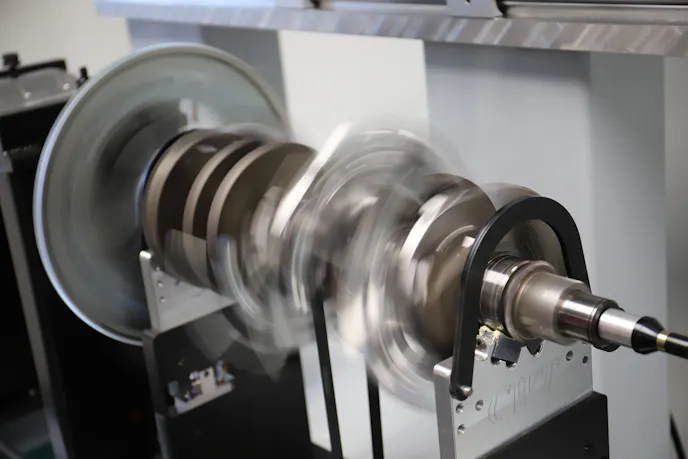
When balancing the assembly, every little component is taken into account: The piston, the piston rings, the wrist pin, the wrist pin locks, the connecting rod, the rod bolts and the rod bearings are all weighed and accounted for in balancing a rotating assembly. The math even goes so far as to weigh the big end and small end of the connecting rod separately, since there is a difference in math between rotating and reciprocating mass.
We’re explaining all of that to highlight just how finely balanced your rotating assembly is from the factory, and that just slapping a new piston into the mix could drastically unbalance your rotating assembly and lead to your engine eating itself alive.
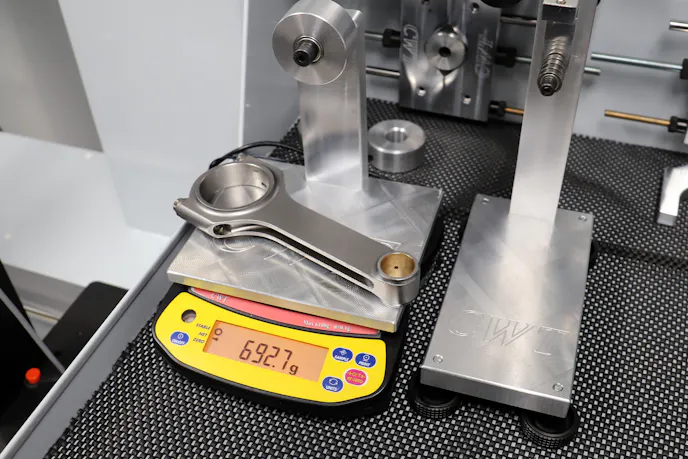
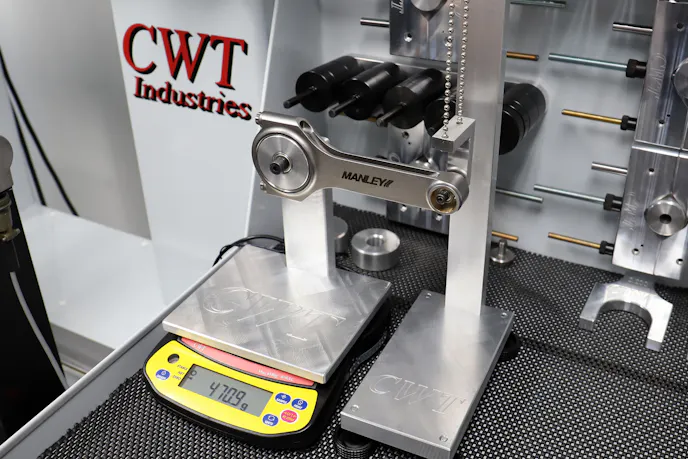
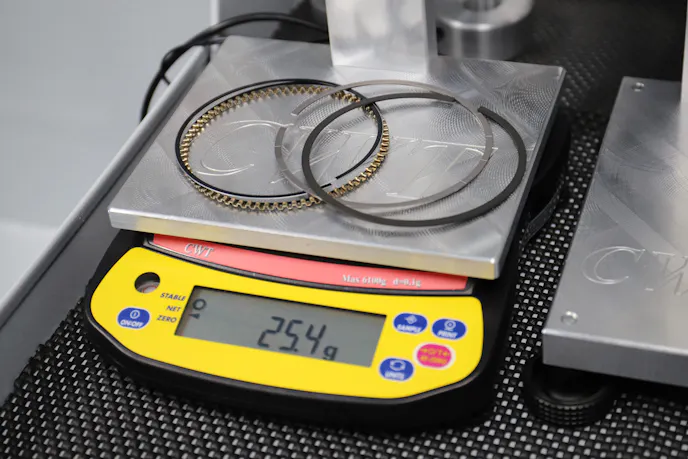
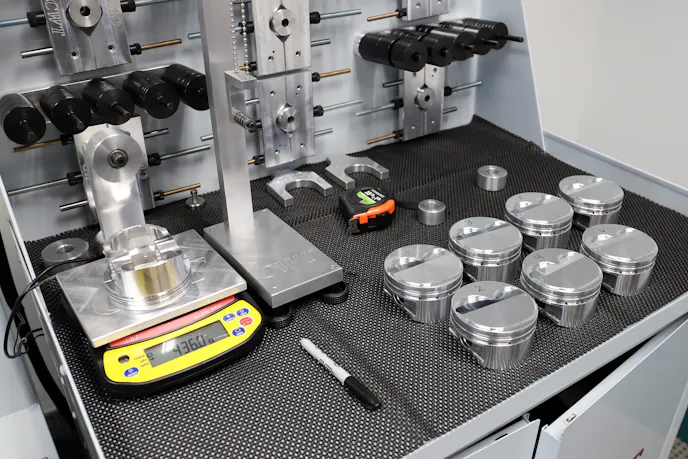
OEM balancing has become incredibly good over the past decade. That is due, in part, to their ability to produce components to the exact same dimensions — especially mass, in this case specifically — time and time again. For example, you know that an OEM L83 piston is going to be 474 grams. Not a sloppy mix of piston and rod weights off the assembly line that are close enough to OK to be fixed in the assembly facility’s balance shop.
That manufacturing precision has created the ability for companies like MAHLE to design an L83 piston replacement that weighs exactly 474 grams.
Ok, so they can make a piston that weighs the same as the factory piston. What’s so special about that? Well, because they can make a BETTER piston, in a number of areas that weighs exactly 474 grams.
Making Improvements Without Adding Weight
There are four main areas in which you can improve a piston:
- Piston material
- Ring package
- Compression ratio
- Surface coatings and treatments
The material upgrades of a piston are pretty straightforward. Replacing a cast or hypereutectic OEM piston with a forged aluminum piston has a number of inherent strength benefits. While you’ll find most drop-in pistons made of forged 4032 aluminum, there are some applications where 2618 might be the right call.
The average drop-in application probably wouldn’t be at the level of needing the benefits of 2618 over the ease-of-use of 4032, but exceptions exist, and we’ve actually run a stock rod and forged 2618 piston combination before, to great success.
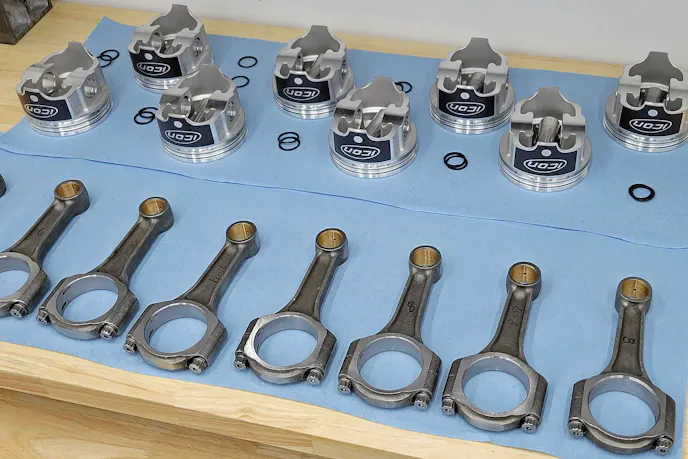
Now, sharp readers — which I expect are all of you, since you’re reading EngineLabs — will immediately note, “A forged piston needs more piston to wall clearance than a hypereutectic piston,” and you’re completely right. Luckily, the piston manufacturers are smart enough to consider that as well, when designing a drop-in piston.
To fit a given finished bore size, pistons made of different materials will expand at different rates. That means for the factory 3.780-inch bore, a factory L83 piston might measure 3.7785 inches at the datum point. That means a forged piston made from 4032 aluminum might measure 3.7765 inches for the same bore. Then a forged 2618 aluminum piston for the same bore size might need to be 3.7750 inches. All of those variances are accounted for in a drop-in piston’s final mass.
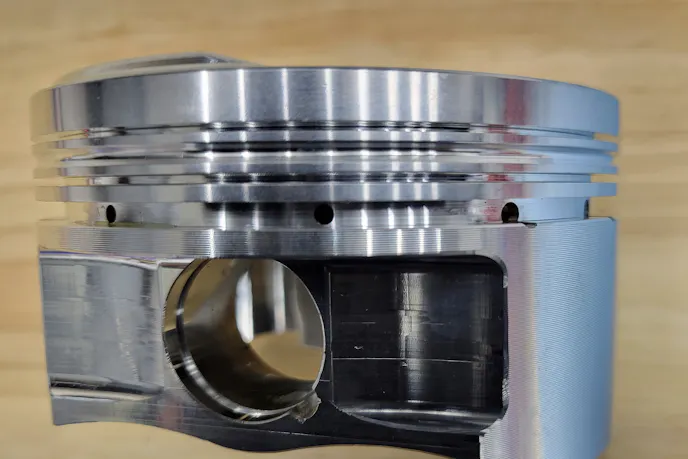
Moving to the ring package, a drop-in piston really has a full range of adjustability here, because, as in MAHLE’s case, they make the rings, too. The piston manufacturers are able to design an ideal ring package for the intended application, and then tailor other parts of the piston design to match the factory piston and ring weight exactly. That opens up the world of non-OEM piston ring packages as well as alternate piston ring locations, for your particular performance application. Just because a drop-in piston is trying to match OEM reciprocating mass, doesn’t mean you need to use factory rings. In fact, drop-in pistons usually don’t use factory ring packages.
Another area that can be modified on a drop-in piston is the crown, specifically the dome or dish of the piston, to increase or decrease the compression ratio. With today’s advanced modeling and design software, they can easily design a new piston crown that will work with a factory valve arrangement, while also adjusting the quench volume to increase or lower the compression ratio. Any resultant changes in piston weight can be accounted for elsewhere in the piston design.
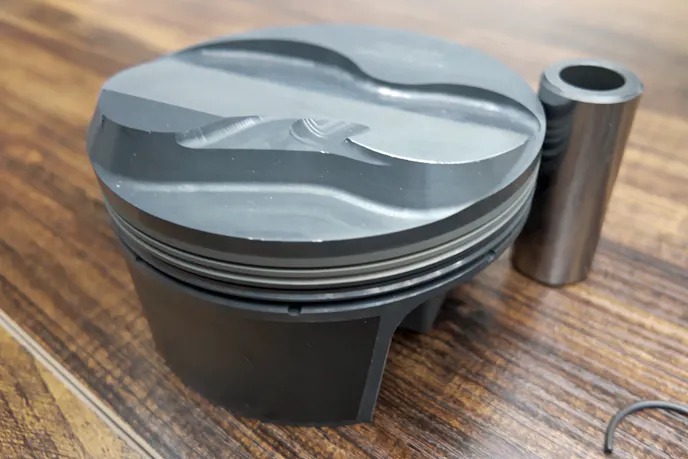
Performance Coatings Can Really Transform A Piston
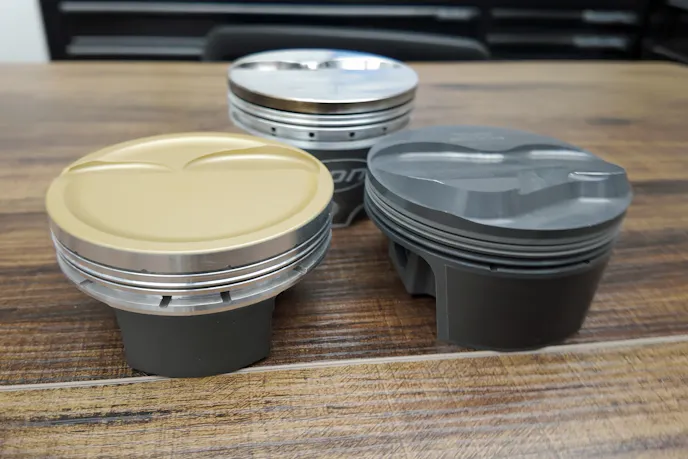
The fourth area that can be upgraded over a factory piston is the piston’s coatings. Everyone recognizes MAHLE’s phosphate coating and Grafal skirt coatings due to their unique appearance. Those coatings are more than just aesthetic choices. You are able to still reap all the benefits of aftermarket piston coatings — like thermal crown coatings, anti-wear skirt coatings, and hard-anodized ring lands — without having to rebalance your rotating assembly.
From the outside, you can’t tell a drop-in piston from any other aftermarket piston, especially with coatings applied. That key bit of magic is revealed by the scale. But, what is clear from the outside, is that a drop-in piston isn’t a factory piston. They are completely aftermarket pistons, with all the bells and whistles, just without the need to rebalance your rotating assembly.
You might be wondering why drop-in pistons are a thing at all. Well, continuing with the L83 example, the OEM Gen-V connecting rods and crankshaft are far superior to the factory pistons in that application. So, there exists a fairly wide performance envelope where just upgrading the pistons alone allows you plenty of room for more power, before needing other new rotating assembly components. 4
Don’t confuse a drop-in piston with a cheater piston. Drop-in pistons aren’t designed to look like factory pistons to get around a ruleset. Their objective is to offer you all the benefits of an aftermarket forged piston, without the need to run aftermarket rods or completely rebalance your rotating assembly. And as we’ve seen over the past few years, drop-in pistons do that very well.
Now, hopefully, you not only understand the intricacies of drop-in pistons, but also why they exist in the first place.
You might also like
10K Technology's Wild Aftermarket Godzilla Heads Flow Like Crazy
Ben Strader previews 10K Technology’s new Godzilla cylinder head at Holly Ford Fest, highlighting airflow and strength.