It’s easy to overlook the oil pan.
For many enthusiasts, it’s little more than the thing that keeps oil from spilling all over your garage floor. But as horsepower climbs, cornering loads increase, or a car starts seeing regular track duty, the oil pan becomes one of the most important components in the entire lubrication system.
That’s because an oil pan does far more than simply store oil. It also has to control where it all goes under acceleration, braking, and cornering. And it has to keep that oil around the pickup — nice and unaerated — so the oil pump can pull it up and provide your engine with a steady stream of lubricant. It has to survive encounters with speed bumps, road debris, and, if you’re a drag racer, the occasional hard landing after your excellent suspension tuning allowed you to pull your first wheelstand. It also has to fit around crossmembers, the steering linkage, suspension components, and make room for stroker crankshafts without creating installation headaches.
Then there’s the question too few of us actually spend any time thinking about: steel or aluminum?
Like most things in life, there isn’t a universal right answer. Each material has its own strengths and weaknesses. It’s up to you to figure out which fits your needs best.
Start With the Job the Pan Has to Do
Before talking about materials, it’s worth remembering what separates performance oil pans from the stamped steel pan that originally came on most production engines.
The biggest difference is oil control. When a car launches hard, dives into a corner or stands on the brakes, the oil inside the crankcase is still under the laws of physics and inertia and wants to slosh around just like you’d expect. If enough oil sloshes away from the pickup, even for a brief moment, the oil pump sucks air and oil pressure drops. Even if it’s just for a fraction of a second, do it enough times, and you end up with bearing damage, especially in a high-RPM engine.
That’s why performance pans use trap doors, kickouts, windage trays, crank scrapers, and carefully designed baffling systems to keep oil where it belongs. According to Brett Corriveau, the project manager at Moroso Performance Products, the amount and style of oil control depends entirely on how the vehicle will be used.
“A road race pan will typically have the most baffling, and a drag race pan will prioritize forward-backward oil control,” Corriveau explains. “Just factor in what you plan on doing with the vehicle and choose from there.”
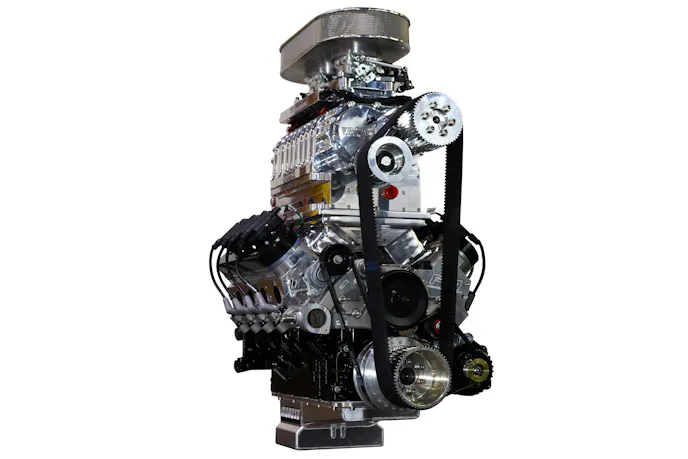
That’s one reason companies like Moroso offer such a broad catalog of pans instead of trying to make one design fit every application. A weekend cruiser, drag car, autocross machine, circle track racer, and marine engine all place very different demands on the lubrication system.
Why Steel Still Makes Sense
Despite aluminum getting much of the attention in performance circles, steel remains the workhorse of the oil pan world. For many street builds, it just makes sense.
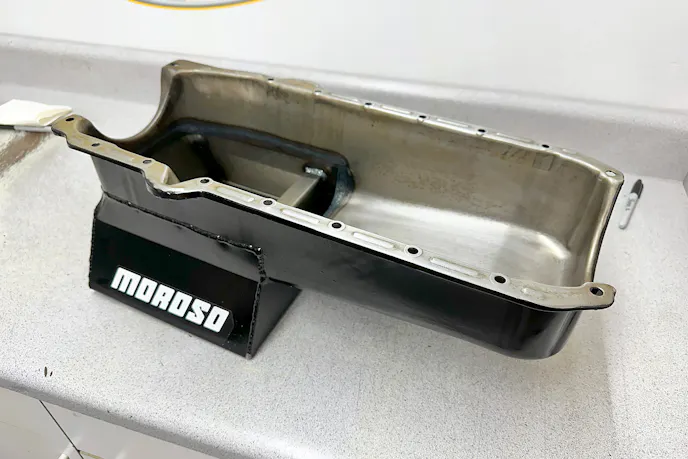
Steel oil pans generally cost less to manufacture, which makes them easier on the budget. Much of that savings comes from the fabrication process. Moroso’s steel components are MIG welded, which is faster than the TIG welding Moroso uses on aluminum, while still producing an exceptionally durable finished product. Another cost advantage of using steel pans is that you can start with a stock-style stamped steel pan, but cut out the bottom and modify it with kickouts and baffles for performance. The stronger steel still works as a pressed piece, while aluminum typically does not.
Moroso still uses that approach on a number of popular designs to help bring costs down for the customer. “The lower-end steel pans for certain applications will start with a steel stamping,” Corriveau says. “We’ll cut the bottom off those stampings and weld on our bent sheet metal after the fact.”
Perhaps the biggest advantage of steel is toughness. Street cars encounter potholes, speed bumps, rocks, trailer ramps, and all sorts of hazards that race cars rarely see. The oil pan is the lowest part of the engine, so it’s going to take most of the abuse. And steel is definitely tougher than aluminum when it comes to keeping all your oil where it belongs.
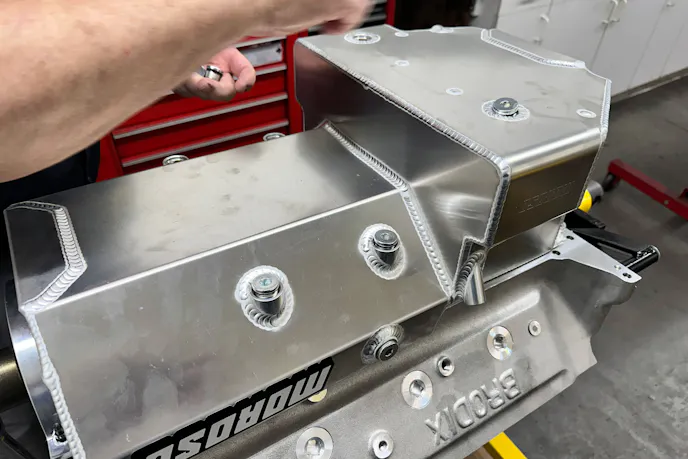
“If it’s more of a street car application, weight savings and heat dissipation aren’t normally as much of a concern, so we can point them toward a steel pan,” Corriveau says. “If something bounces up into the pan or the car bottoms out, steel is more resilient than aluminum.”
Moroso even varies the thickness of its steel pans depending on the intended application. Most performance street pans use 16-gauge steel to keep weight under control, while specialized applications like marine engines, tractor pullers, and monster trucks receive heavier 14-gauge construction to survive harsher environments.
Where Aluminum Takes the Lead
Move into serious racing, and aluminum oil pans quickly become attractive. And the first benefit is weight.
Although an aluminum oil pan won’t transform a car all by itself, every pound matters in competitive racing. Corriveau estimates that a comparable fabricated aluminum pan weighs roughly one-third less than its steel counterpart. The second advantage is heat transfer. Aluminum conducts heat significantly better than steel, allowing it to shed more heat from the oil into the surrounding air.
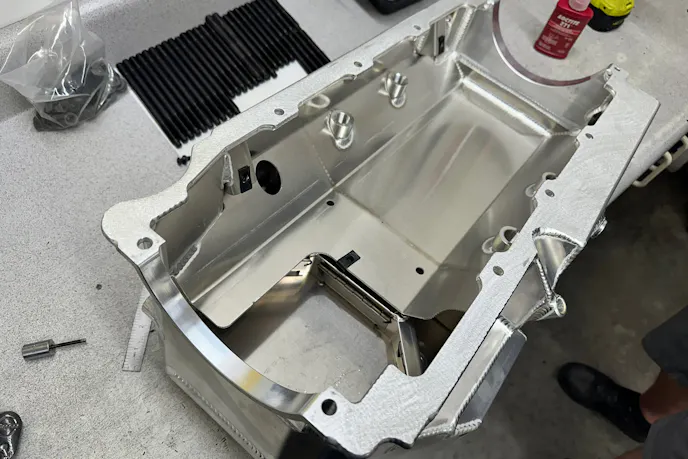
Corriveau cautions, however, that aluminum oil pans don’t replace a quality oil cooler. “It’s a factor but not a huge one,” he says. “The aluminum does help, but you’re not going to see nearly the results that you would from a dedicated oil cooler.” Still, every little bit helps, particularly during long track sessions where oil temperature continues climbing.
Some specialty Moroso applications push heat management even further. Their Subaru EJ25 rally pan incorporates a skid plate with integrated heat sink features, while certain transmission pans include cooling fins to increase surface area and improve heat rejection.
Why Aluminum Costs More
Anyone shopping for oil pans will notice that aluminum versions command a premium. There’s a good reason for this. Mainly because fabricating aluminum simply takes more time.
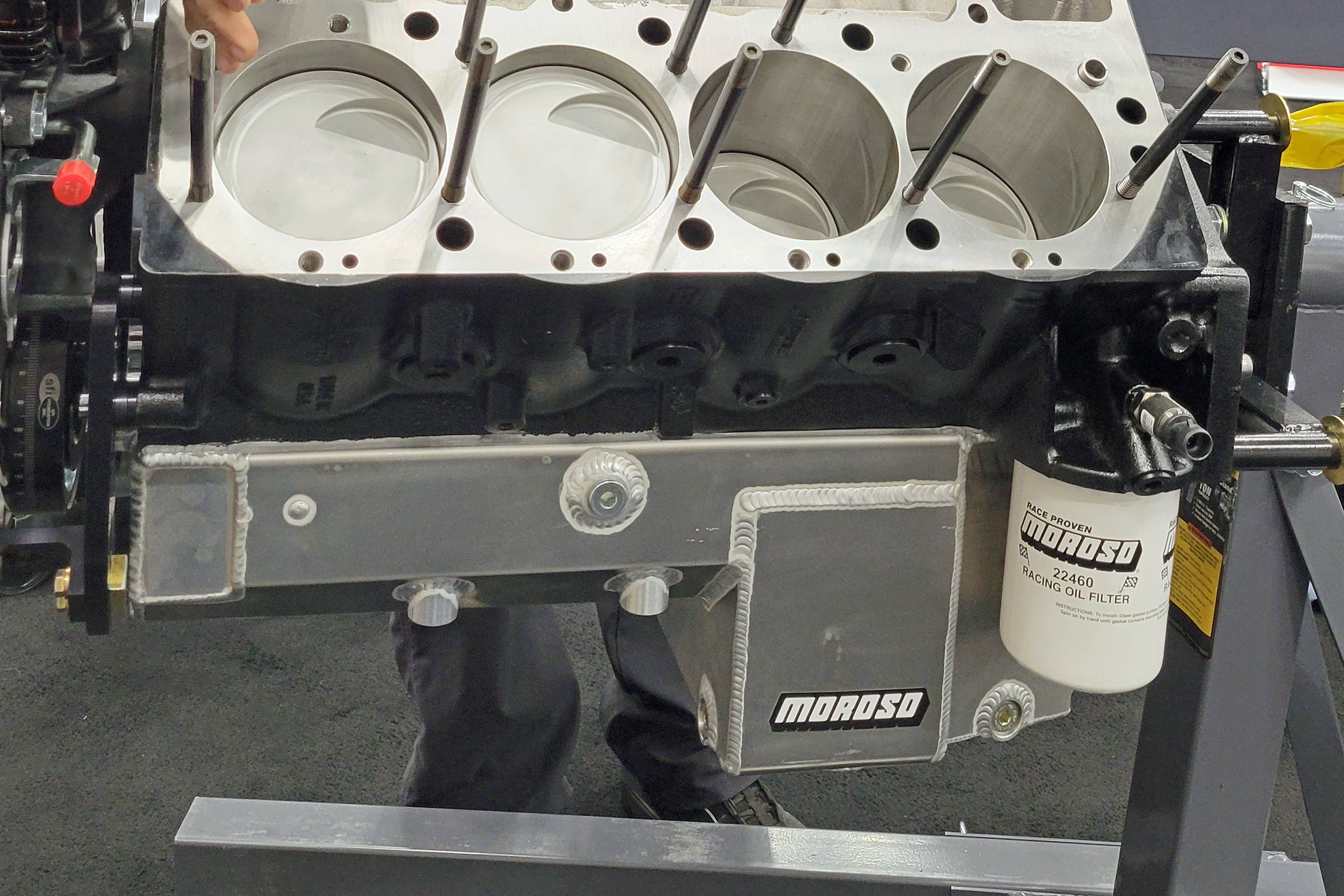
Every aluminum Moroso pan is hand TIG welded. When done right, TIG welding produces beautiful, precise welds. But it also requires considerably more time and skill than MIG welding steel. Many of the company’s premium aluminum pans also incorporate billet components and secondary machining operations after welding.
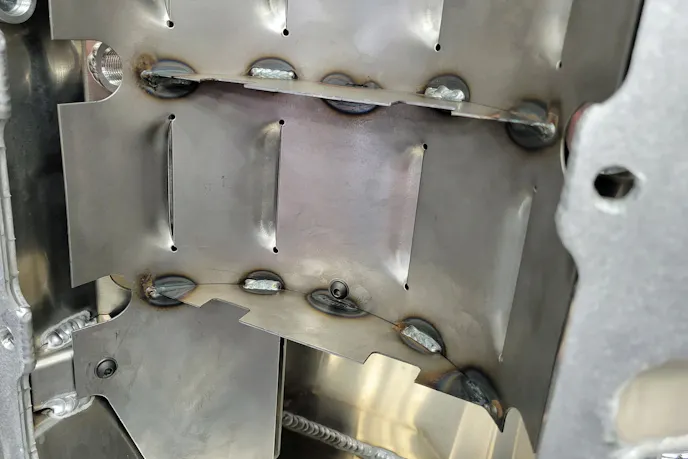
One particularly important machining step is surfacing the pan rail. After fabrication, Moroso machines many of its aluminum rails perfectly flat to ensure consistent gasket sealing. It’s an additional manufacturing step that adds cost, but it’s also important because aluminum has a tendency to warp when it’s welded. And this final step significantly reduces the chance of an annoying leak.
The company has also evolved its aluminum designs over the years by replacing thinner folded oil pan rails with thicker machined billet pieces. The result is a stiffer sealing surface that’s less likely to distort during installation and that also provides consistent gasket sealing pressure all the way around the pan. It’s one of those details many enthusiasts will likely never notice unless they compare parts side by side.
Material Doesn’t Determine Features
One misconception is that aluminum allows more sophisticated internal oil control than steel. According to Corriveau, Moroso applies essentially the same engineering principles regardless of material.
“I would say no,” he explains when asked whether aluminum offers more design flexibility. “We have the same kind of design that we implement across both steel and aluminum, so we can do all the same features, whether it’s trap doors, slosh baffles, or built-in windage trays.”
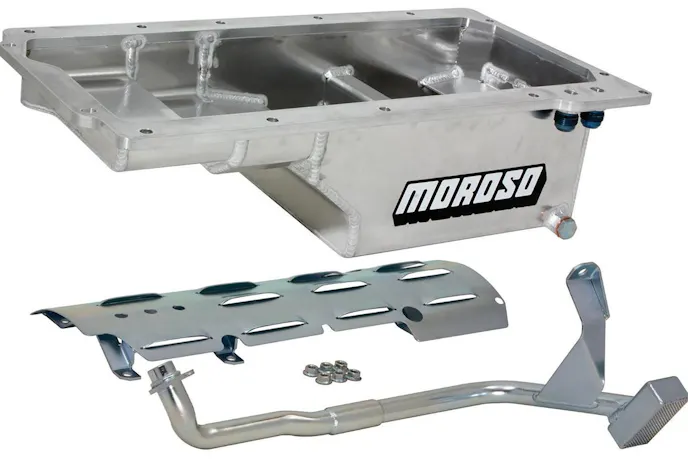
Don’t Forget the Pickup
A performance oil pan is only half of the equation. The oil pickup has to fit properly, or everything else is pointless.
Pickup-to-pan clearance directly affects how efficiently the pump can move oil from the bottom of the pan back into the engine where it is needed. Too much clearance can uncover the pickup under hard acceleration. Too little clearance restricts flow and may even allow the pickup to contact the bottom of the pan, cutting off flow entirely.
Moroso engineers design dedicated pickups specific for the pan in the vast majority of its offerings in order to ensure proper geometry. “We recommend about a quarter-inch gap between the pickup and the bottom of the pan,” Corriveau says. “If you use an OEM pickup or one from another manufacturer, you can run the risk of not having the correct gap.”
Cast Aluminum Has Its Place, Too
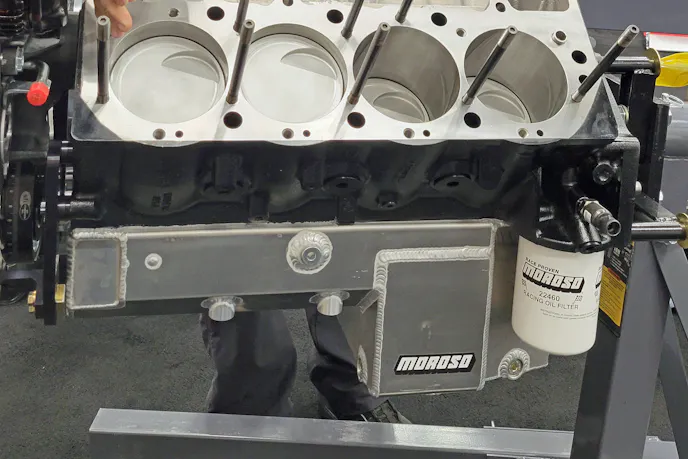
While fabricated aluminum dominates racing, cast aluminum has carved out an important niche. Moroso recently introduced cast LS swap pans that target builders looking for OEM-style appearance and straightforward installation. Instead of showcasing elaborate fabricated welds, these pans blend into an engine compartment while providing modern fitment and complete installation packages.
“They’re all kits,” Corriveau explains. “They’ll have the oil pan, hardware, pickup, all in one box. It’s kind of a one-stop shop.” That makes them especially appealing for driveway swaps and street-oriented projects where simplicity is just as important as outright performance.
Choosing the Right Material
So when it comes to oil pans, which material should you buy?
If you’re building a street car that occasionally sees spirited driving, steel is hard to beat. It’s durable, economical, easier to repair if something bad does happen, and more than capable of supporting serious horsepower when properly engineered.
If your car spends weekends chasing elapsed times, lap records, or every possible pound of weight savings, Moroso’s fabricated aluminum pans make a lot of sense. The lighter weight, excellent construction quality, precision machining, and additional cooling potential all become worthwhile investments.
But the reality is that the material itself is secondary to the oil pan’s engineering when it comes to choosing the right oil pan for your needs. Oil control, pickup design, baffling strategy, weld quality, sealing surfaces, and application-specific fitment will all have a far greater impact on performance or long-term engine health than whether it’s made from steel or aluminum.
That’s why experienced manufacturers continue investing in specialized designs instead of chasing a one-size-fits-all solution. Moroso, for example, hand-builds its fabricated pans in-house in Guilford, Connecticut, leak-checks them during production, and offers one of the broadest selections available for both domestic and import platforms. Just as important, the company’s technical staff regularly helps builders find just the right pan to fit their needs. According to Corriveau, it’s all in a day’s work.
You might also like
Engine Pro Releases Sportsman Series Flexplates And Bolt Kits
Engine Pro's new line of Sportsman Series flexplates proves that you don't need a big pricetag to handle big horsepower.