
Few things influence engine performance characteristics as much as the camshaft’s lift and duration. When selecting a custom cam, there are several key points to consider. Bobby Biancaniello and the crew at Cam Motion have the experience and expertise you can count on. They will help you make an optimized choice, reviewing your engine’s setup, suggesting the best cam for maximum power.
Camshaft Lobe Design
Have you ever wondered why one engine may idle smoothly and produce good torque at a lower RPM? While another may have a rough, loping idle and generate power at a higher RPM? Read on, and hopefully, we will shed some light on what your next build needs.
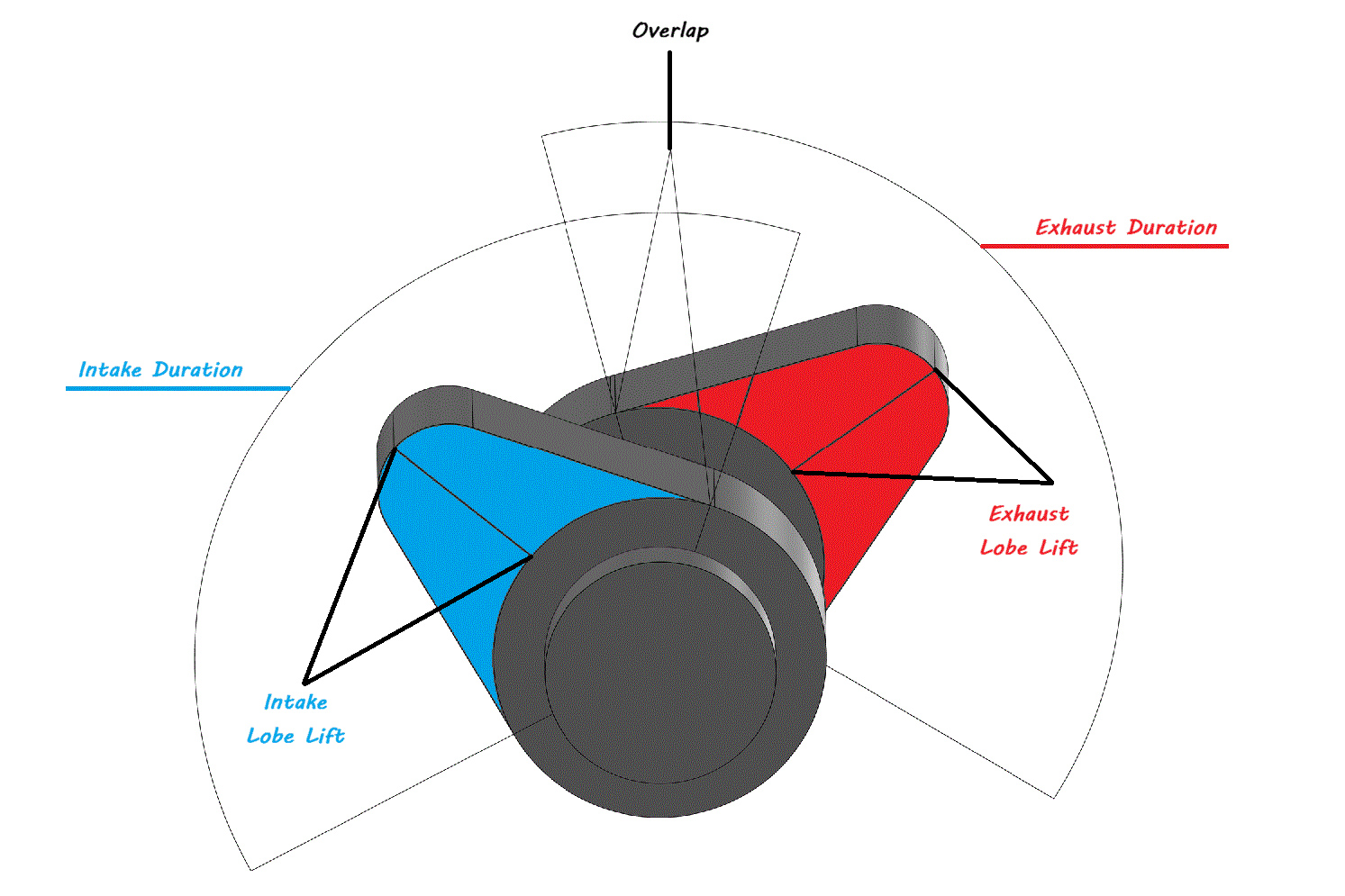
Each camshaft lobe controls when the engine’s intake and exhaust valves open and close. The design designates how quickly they move, how far they move, and the precise number of degrees they are open during each rotation of the crankshaft.
The individual valve events play a significant role in determining how well the cylinders are filled with air and fuel. Even slight adjustments to these events can affect where the engine will make its best torque and horsepower. When optimizing airflow, lift, and duration, among others, are two of the cam specs that require careful consideration.
Choosing the optimal valve opening and closing points is vital. It’s one of the first things considered and done early in the selection process. However, today we’re looking specifically at the partnership between lift and duration. Understanding the basics of these two specifications will help in explaining an engine’s characteristics.
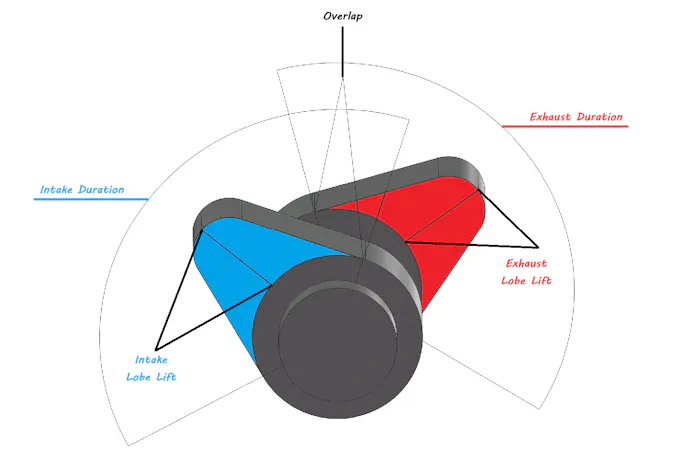
What is Lobe Lift?
Lobe lift is the amount the nose of the cam rises above the base circle. Looking specifically at overhead valve engines, the actual valve lift is greater than the lobe lift. Valve lift is calculated by multiplying the lobe lift times the rocker ratio.
For example, let’s look at one of the 6.2 LS “drop-in” Cam Motion camshafts, it shows .501 inch of valve lift and a 1.7:1 rocker ratio. If we divide the valve lift by the 1.7 rocker ratio, we end up with approximately .295 inch of lobe lift. This number matters because the valve lift represents the distance it moves away from its seat. It opens the path for air and fuel to enter or exhaust the engine.
In theory, increased lift allows for more airflow. When a valve opens more, a larger curtain area around the valve is exposed. This creates more area for the engine to breathe through. If the engine combination (cylinder head, intake manifold, exhaust system, and engine displacement) can use that airflow, this additional lift will increase torque and horsepower.
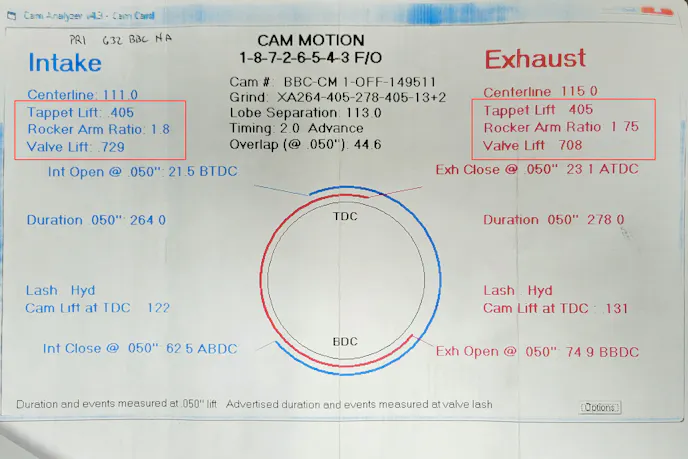
This is why performance camshafts often use more lift than stock cams; higher lift can help the engine fill the cylinders more completely. This improves volumetric efficiency, making each combustion event more powerful.
Biancaniello states that even though a cylinder head may only flow efficiently up to a certain point, opening the valve further, within reason, may still provide more power. Excessive lift can also create valve-related problems. Coil bind, retainer-to-seal contact, increased lifter and lobe wear, and the need for stronger valve springs and pushrods are on the list to review. A wise choice will consider the airflow capability of the heads within the intended RPM range of the engine.
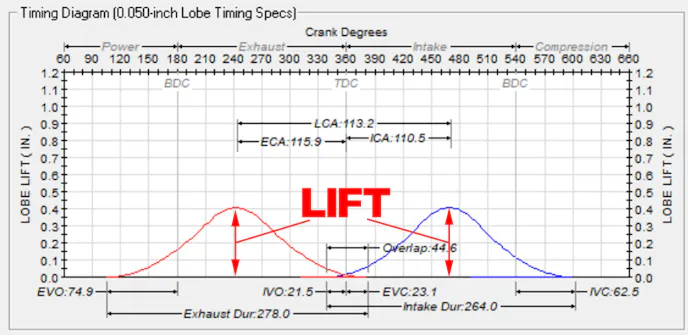
What is Duration?
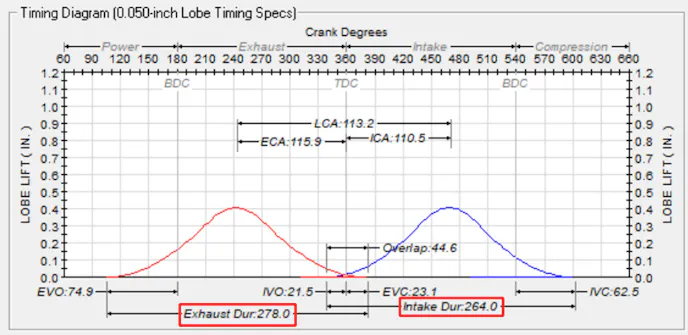
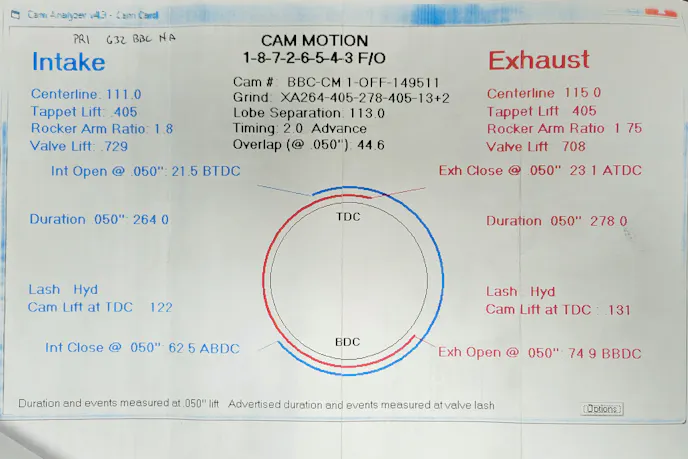
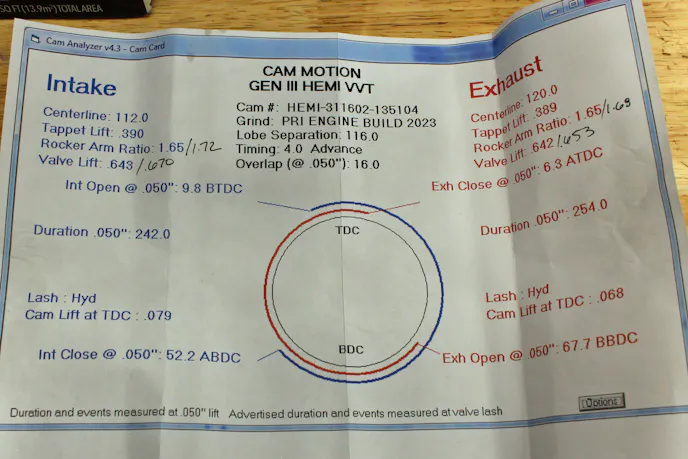
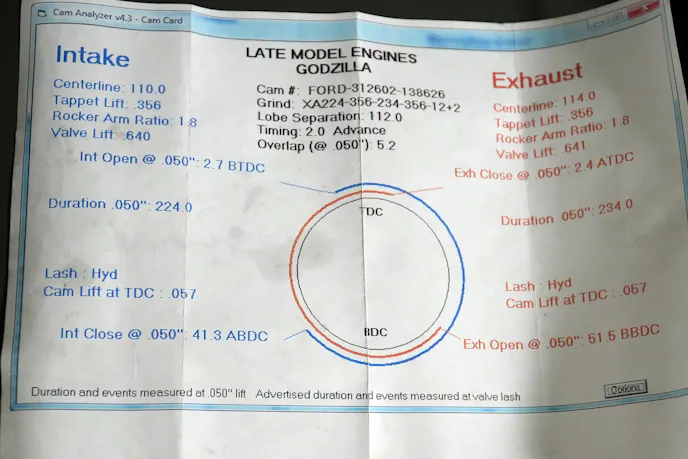
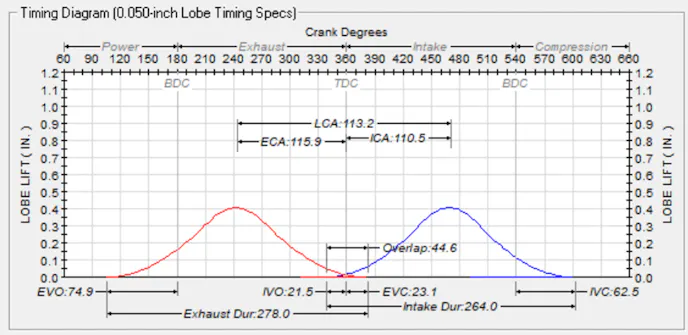
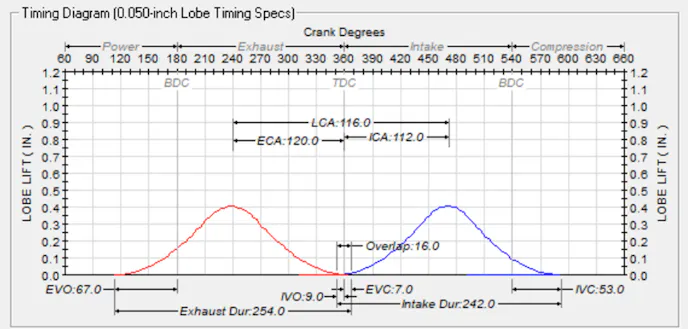
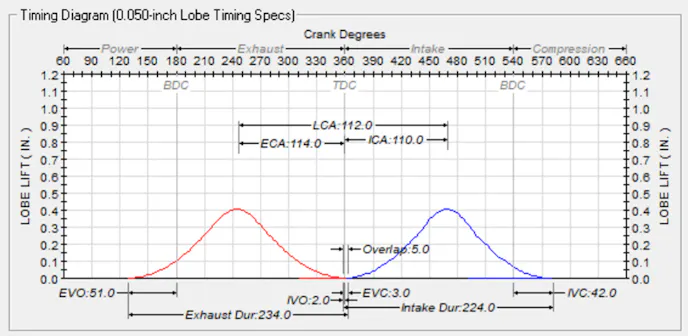
Duration is the amount of time that the valve remains open, and is measured in degrees of crankshaft rotation. The crankshaft rotates twice (720 degrees) for every one rotation of the camshaft (360 degrees) in a four-stroke engine.
A cam card may list both the advertised duration and the duration measured at .050-inch lift. Advertised duration measures valve movement from a much smaller lift point, which we know can vary by manufacturer. Measuring the duration at .050 inch of lobe lift is the standard and commonly used for cam comparison. It will give a consistent picture of how aggressive the cam really is.
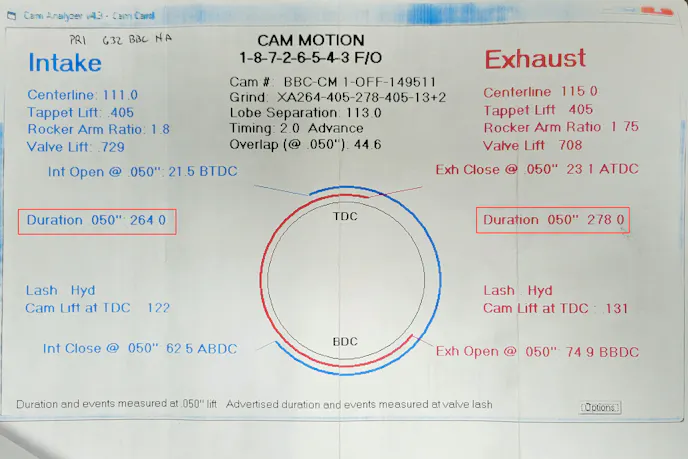
Biancaniello also shared that duration has a major effect on where an engine makes power; shorter durations keep the valves open for fewer rotational degrees, which can help maintain good air velocity at lower RPM. That usually improves throttle response, idle quality, manifold vacuum, and low-speed torque. This is why towing engines, daily drivers, and mild street engines often use conservative duration. They need crisp response and usable torque down low as opposed to horsepower made at higher RPM.
Longer durations hold the valves open for more crankshaft degrees. At higher RPM, the air entering the engine has inertia, which will keep filling the cylinders even after the piston reaches the bottom of the intake stroke.
Large durations have the potential to increase higher RPM horsepower, but in exchange, often reduce the cylinder pressure and torque at lower RPM. The result is an engine that may hesitate, stumbling at lower RPM, but comes alive as the engine speed increases.
How Lift and Duration work together
Lobe lift and duration should not necessarily be viewed independently. We know that lift controls how far the valve opens, and duration controls how many degrees the valve will stay open. Together, they determine the total moment of airflow for that engine cycle.
A cam with moderate duration and high lift can provide strong airflow without keeping the valve open, improving performance at lower RPM. In turn, a cam with long duration and moderate lift may favor higher RPM breathing but sacrifice its streetability around town. The right combination depends on several aspects: displacement, compression ratio, cylinder head flow, intake design, exhaust efficiency, gearing, vehicle weight, and intended use.
A street engine will probably spend most of its time between 1,500 and 5,000 RPM, benefiting from a shorter duration. On the other side, a high-performance engine designed to operate between 6,000 and 8,500 RPM will need a much wider duration. Matching the cam to the operating range of your engine’s application is paramount.
Benefits of Increased Lift and Duration
The main benefits of increased lift and duration we’re looking for are improved airflow. More valve lift can help the engine breathe better by having “more area under the curve.”
Increased lift allows for a cam designed making better power without adding excessive duration. This will help preserve some form of drivability while also improving engine performance.
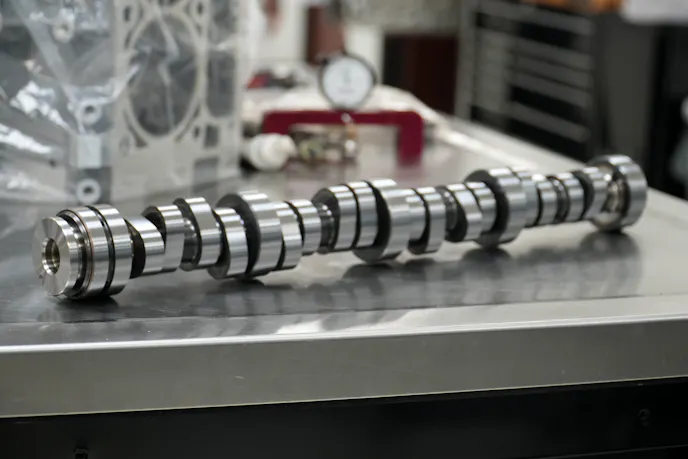
One of the main benefits of increased duration will be improved high-RPM power. This can be a bit tricky to understand, and you may not have considered duration this way. It’s not necessarily a measurement of time; more duration translates to increased degrees of the valves being open each cycle.
If an engine is running at a maximum of 5,000 RPM, it may be perfectly fine with 195 degrees of duration. That amount would starve a 9,000 RPM beast running at full tilt. When we increase RPM, we need more open degrees to fill the cylinder efficiently. Adding duration will raise the RPM range where peak torque occurs, and extend the power curve.
You could have two cams with the same duration and have wildly different valve events
Bobby Biancaniello — Cam Motion
Since horsepower is found by calculating torque and RPM, an engine that can produce peak torque at higher RPM will usually make more horsepower. This is why race engines often use longer-duration camshafts; they are designed to operate in a higher RPM range where airflow demand is the greatest.
Some of the trade-offs will show that increased duration can reduce idle vacuum, create a rough idle, lessen lower RPM torque. It will also require more compression, a lower rear gear, and a higher-stall converter.
More lift will likely require upgrading the valve springs, pushrods, and rocker arms. While sometimes mild lift cams with increased duration are marketed as not needing upgraded valvesprings, though they are always a good idea. Don’t forget to check the piston-to-valve clearance, as altering timing events of your engine can result in a situation where your valves and pistons want to occupy the same space at the same time. A camshaft should not be a stand-alone upgrade. It is just one vital link in the overall engine combination.
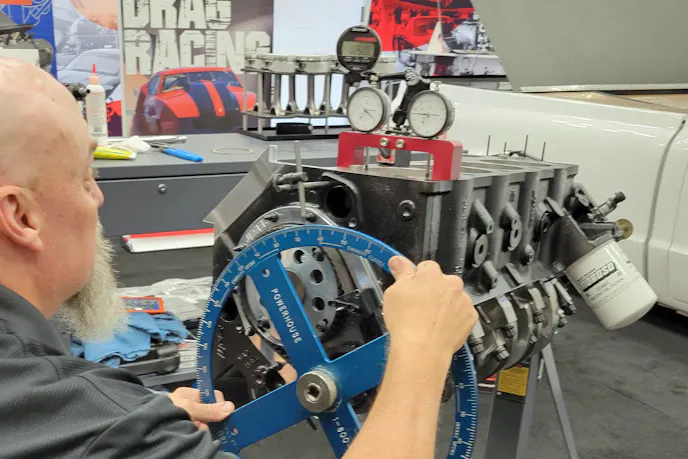
How the Camshaft Affects Horsepower and RPM
We know that horsepower is closely tied to airflow and RPM. Increased cylinder filling at higher RPM can help the engine make torque further up in its range.
Because horsepower equals Torque X RPM / 5,252, the ability to carry torque farther in the RPM range increases horsepower. That is the reason a longer duration cam may not produce low-end torque. The ability to move peak cylinder pressure higher in the power band produces a larger horsepower number at the top of the RPM range.
For example, a mild camshaft may produce peak torque early and feel strong from idle to the mid-RPM range, but its airflow and power will eventually diminish at higher RPM. A more aggressive camshaft should shift peak torque higher; it may reduce low-speed response, but will continue pulling past the point where the mid-sized cam is finished.
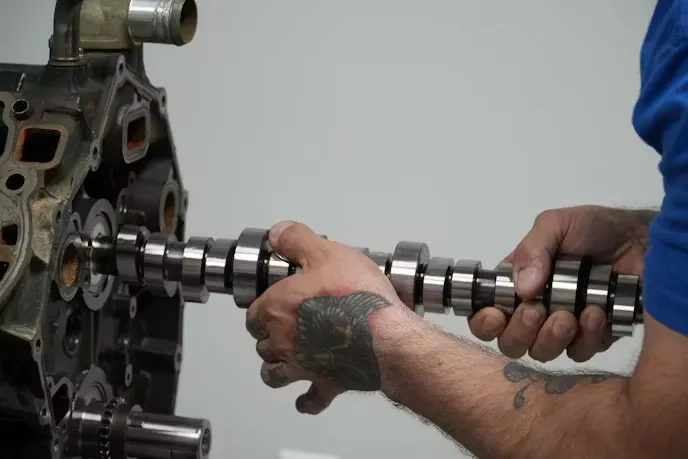
This does not mean an aggressive cam is always better. In a heavy street car with stock gears, the mild cam may prove to be the way to go, and more enjoyable because the engine spends more time in the lower RPM range. In a lightweight car with proper gearing and a manual transmission, the larger cam may deliver better acceleration because the engine can utilize its preferred RPM band.
Cam Selection
This is a topic of considerable debate and is influenced by numerous variables. I wish there were an easy formula to share, but that’s just not the case. You can have wildly different opening and closing points with the same duration. Having a good understanding of the valve events we need and how the process works will make all the difference. Without having experience, and even for some of us who do, it’s always a good idea to seek advice from the professionals at Cam Motion. They are located in Baton Rouge, Louisiana, and have over 40-plus years of experience in helping car enthusiasts build reliable, well-performing engines.
You might also like
Livernois’ 401-Cube Gen-III HEMI Gets A Stout Top End
With the bulletproof bottom end built, it was time to install the Livernois Stage 3 HEMI heads with plenty of enhanced airflow.