
The disappearance of an OEM performance part rarely makes headlines. Yet when General Motors discontinued the LS9 dry sump oil pump, engine builders suddenly lost one of the most respected lubrication components ever installed on a production LS engine. What followed was more than a search for a replacement. It became an opportunity to improve upon an already excellent design.
Katech Engineering
Katech Engineering was founded in 1977 by former McLaren engineers, Fritz Kayl and Warren Frieze. Based in Clinton Township, Michigan, Katech began as an engineering firm, specializing in precision machining, research, and high-performance engine development.
Those early years established a culture centered on durability, precision, and performance. As Katech expanded into professional Motorsports, countless hours of dyno testing and endurance racing deepened its understanding of lubrication, reliability, and engine performance.
Under the leadership of owners Mark and Lynn Rapson, the company continues to build on that foundation while expanding its reputation for advanced engineering, championship-winning race engines, and premium performance products. It also provides technical expertise and support throughout the automotive industry.
Today, Katech engineers, machines, assembles, and manufactures a broad range of high-performance engines and components under one roof. That vertically integrated approach allows engineers to control every stage of their processes while maintaining exceptionally high-quality standards.
After speaking with Lynn, one thing became immediately apparent: Katech isn’t driven by chasing the latest trend. Their priority is designing components that solve real problems, deliver lasting performance, and earn the confidence of customers. That commitment extends to manufacturing as well, with Katech prioritizing engineering, quality, precision, and consistency.
The LS9 remains one of the most iconic production performance engines ever built. — Mark Rapson, Co-Owner of Katech Engineering
The LS9 Legacy
Before discussing the aftermarket solution, it is worth understanding why the original LS9 pump earned such a loyal following among professional builders and racers.
Produced from 2009 through 2013 for the Corvette ZR1, the supercharged LS9 represented one of General Motors’ most advanced production engines. It featured a factory dry-sump lubrication system designed to provide stable oil pressure during aggressive acceleration, braking, and cornering.
Unlike a conventional wet sump system, a dry sump stores all the oil in a separate reservoir. A dedicated scavenge stage continuously removes oil from the crankcase while a pressure stage supplies filtered oil back to the engine. The design minimizes oil starvation and reduces windage around the rotating assembly. The factory LS9 oil pump quickly earned a reputation for exceptional reliability, making it a favorite among engine builders and racers alike.
From OEM to Aftermarket
Rather than reacting after the pump disappeared, Katech had already been studying its strengths and limitations for years. That head start would ultimately shape the TrackFlow program.
Although the LS9 pump developed an outstanding reputation, demand naturally declined after the LS9 engine production ended. From General Motors’ perspective, continuing to manufacture a specialized pump for a shrinking market eventually became difficult to justify.
The pump was not discontinued because of a design flaw. Instead, it served a limited production engine with decreasing long-term demand. Long before factory pumps disappeared, Katech recognized the potential. Beginning with the genuine GM LS9 pumps, the company carefully ported and blueprinted each factory casting to improve both pressure stage and scavenge performance. Those serialized pumps were sold through a core exchange program, appealing to serious performance enthusiasts.
The TrackFlow Evolution
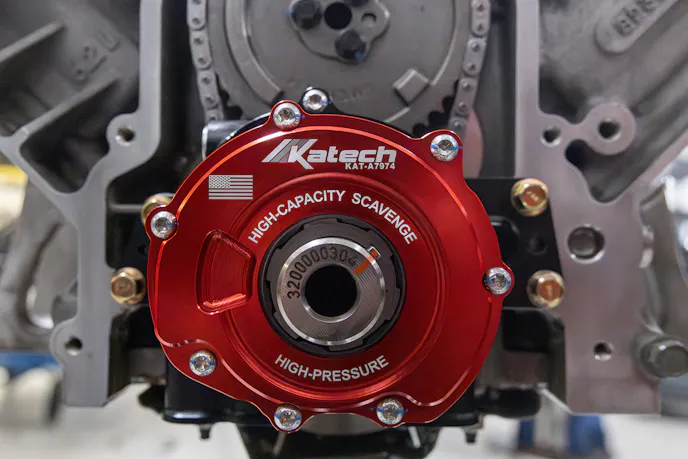
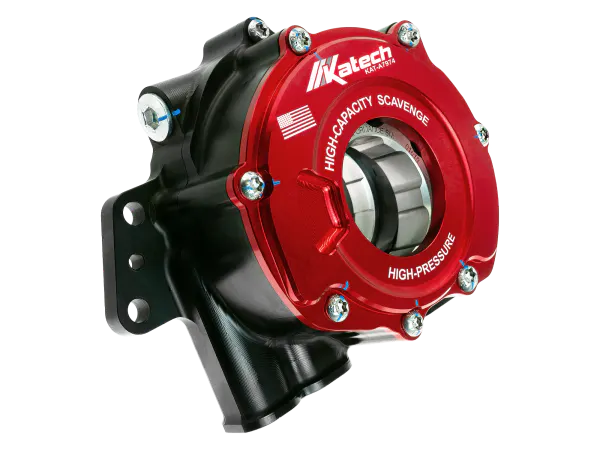
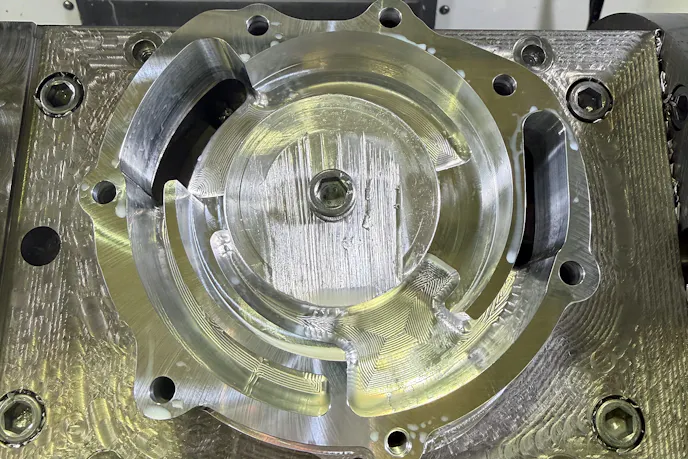
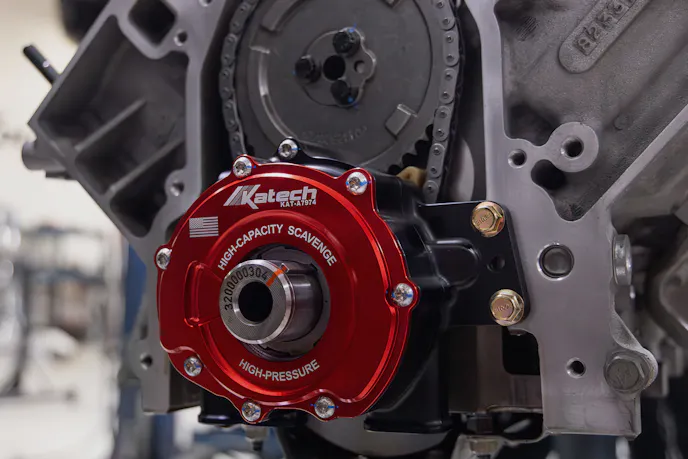
As factory castings became scarce, Katech faced a choice: depend on a dwindling supply of OEM cores or engineer an entirely new solution. The result was the TrackFlow billet LS9 pump. Rather than simply reproducing the factory design, Katech reevaluated the housing, passages, and internal geometry while maintaining a direct fit compatibility.
If “Made In The USA” is important to you, then you’re in luck. These pumps are billet construction, offering advantages beyond appearance. They machine all the pump components in-house, providing excellent dimensional consistency, tighter manufacturing tolerances, and improved structural integrity. Those qualities are especially valuable in demanding racing environments where reliability is every bit as important as horsepower.
Modern CNC machining allows extremely tight control of housing dimensions, rotor clearances, and critical oil passages. Careful inspection throughout production helps ensure that every pump performs consistently, eliminating variation from one unit to the next and supporting reliable operation in demanding environments.
Performance Where It Matters
Specifications alone never tell the whole story. The real measure of any oil pump is how consistently it protects an engine when conditions are at their worst.
Every one of Katech’s performance components must demonstrate its capabilities under conditions that exceed ordinary street use. Dyno testing, endurance evaluations, and real-world track experience help engineers verify oil pressure stability, scavenge efficiency, and long-term durability before a design ever reaches customers. That process provides confidence, and performance gains are backed by measurable results rather than theory alone.
According to Katech, one of the TrackFlow Pump’s biggest improvements is its 62-percent increase in scavenging capacity. Having a higher scavenge ability removes oil from the crankcase more efficiently. This helps reduce oil aeration and limits the amount of oil surrounding the rotating assembly.
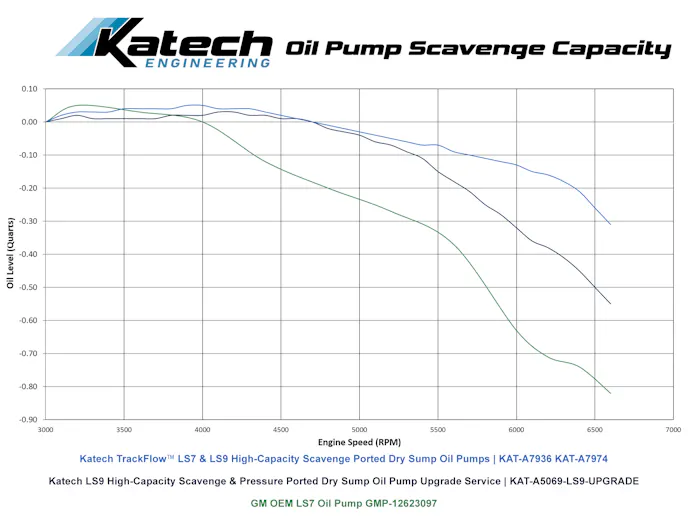
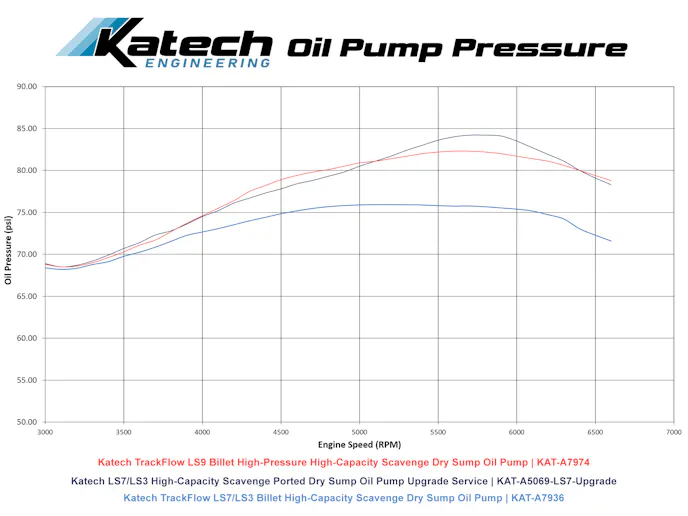
Better oil control contributes to more stable lubrication during sustained high-RPM operation and severe vehicle movement. Combined with an eight-percent increase in peak oil pressure, the improvements demonstrate that the TrackFlow pump is more than a replacement component. It represents an evolution of an already respected design.
Whether the application is endurance racing, road racing, drag racing, pro touring, or a high-horsepower street build, dependable lubrication remains one of the most important factors in engine longevity.
Final Thoughts
As original LS engines continue to power everything from weekend cruisers to dedicated race cars, aftermarket engineering has become increasingly important. Companies willing to invest in new designs help preserve these platforms for future enthusiasts and allow builders to continue improving engines that remain among the most popular performance combinations ever produced.
Katech’s TrackFlow story is not simply about replacing an obsolete component. It illustrates what can happen when experienced engineers are willing to rethink an already successful design instead of merely reproducing it.
The TrackFlow LS9 pump reflects that philosophy. It builds upon the strength of the factory design, while incorporating modern manufacturing techniques and decades of racing experience. For builders who demand reliable lubrication under the harshest conditions, it represents the next chapter in the evolution of the LS dry-sump oil pump.
You might also like
New Formula 1 and LIQUI MOLY Partnership Brings Multi-Year Renewal
The Formula 1 and LIQUI MOLY partnership expands through a new multi-year deal. The manufacturer now serves as an Official Supporter.