
Choosing engine oil once seemed simple: find the correct viscosity, change it regularly, and get back on the road. Today’s engines ask considerably more of their lubricants. Turbochargers, tighter tolerances, emission systems, and higher output have placed greater demands on modern engine oils. AMSOIL Synthetic motor oil formulations address these demands, with each product in its lineup engineered for a specific application rather than a one-size-fits-all approach.
We discussed those differences with Len Groom, AMSOIL’s Director of Product Marketing and Power Sports. Some readers may recognize Groom from his involvement with the Engine Masters Challenge competitions. He also spent years in technical production roles at AMSOIL, giving him a valuable perspective on formulation.
Founded in 1972, AMSOIL formulates and blends lubricants in Superior, Wisconsin. Its products serve everything from passenger cars to power sports and industrial equipment. As Groom puts it, “If it needs lubrication, we’ve got a product for it.”

Why Base Oils Matter In AMSOIL Synthetic Motor Oil
Before comparing product labels, consider what’s inside the bottle. Groom returned repeatedly to the importance of high-quality base oil. “Better base oils require fewer additives,” he said. Groom described engine oil as roughly 80 percent base oil and 20 percent additives, although actual proportions vary. A better base stock naturally performs well across a broader temperature range. That means chemists need fewer corrective additives to improve cold flow or manage viscosity at high temperatures.
This gives them more flexibility to use additives for other purposes, helping each formulation develop its own character. Detergents control deposits, such as varnish on hot engine surfaces. Dispersants help keep combustion-related particles and other contaminants suspended in the oil, preventing them from settling and accumulating. As the oil circulates, the oil filter captures particles within its filtration range. Corrosion inhibitors protect internal surfaces from moisture and acidic byproducts, particularly during extended storage. Anti-wear additives help limit damage when heavily loaded metal surfaces come into direct contact. This occurs when the lubricating film is insufficient to keep those surfaces separated.

One familiar anti-wear ingredient is zinc dialkyl dithiophosphate, or ZDDP. It’s especially important during boundary lubrication, such as the contact between flat-tappet cam lobes and lifters. Bearings rely primarily on hydrodynamic lubrication, where oil film strength and viscosity help separate loaded surfaces. Phosphorus helps protect against wear, but too much of it can reach the exhaust and damage catalytic converters. Groom described those competing demands as a “formulary box.”
The challenge is making each additive work effectively alongside the others. More oil additives don’t necessarily mean better protection. Another useful measure is total base number, or TBN. It reflects the oil’s reserve alkalinity for neutralizing acidic combustion byproducts. That reserve matters for extended service, but TBN is only one measure of an oil’s overall performance.
Choosing AMSOIL Synthetic Motor Oil By Application
The chemistry is the foundation. Each oil is formulated to meet the demands of different engines and driving conditions.

Signature Series: Premium Street And Track Protection
Signature Series sits at the top of AMSOIL’s passenger car lineup. It combines premium synthetic base oils with a robust additive system. Its appeal extends beyond longer oil-change intervals. AMSOIL rates Signature Series for up to 25,000 miles or one year under normal service conditions. That is a capability rating, not an invitation to run a track car for 25,000 miles. Modified and racing applications fall outside those extended drain recommendations. Proper oil filtration is also important when extending oil-change intervals. Groom emphasized that micron ratings describe particle size, while filtration efficiency measures how effectively those particles are captured. The filter must have enough capacity to retain those particles throughout the oil change interval.
Groom offered a more interesting example for performance enthusiasts. He discussed Lingenfelter’s experience using certain Signature Series viscosities in high-performance Corvettes, where they reportedly observed improved bearing life. He also mentioned powerful Hellcats that spend most days on the street. In an appropriate application, the same Signature Series oil can handle daily driving and occasional track duty. That means owners may avoid changing between separate street and track oils for every event. Oil selection and change intervals must still match the vehicle’s demands.

XL Extended Life: More Time Between Changes
AMSOIL XL Extended Life serves drivers interested in longer maintenance intervals. Its normal service rating is up to 20,000 miles or one year, whichever comes first. This isn’t Signature Series with a few ingredients removed. Groom explained that the XL uses different base oil combinations and additive chemistry. Its priorities center on extended service and dependable everyday protection. While both products maintain substantial alkaline reserves, a small TBN difference doesn’t actually make either formulation better.

OE Synthetic: Follow The Factory Schedule
For drivers who follow the manufacturer’s recommended oil change schedule, AMSOIL offers OE Synthetic. It is a full synthetic formulation tailored to factory service intervals and oil life monitoring systems. OE doesn’t utilize the same extended drain intervals as Signature Series or XL. Groom noted that common factory oil change intervals range from 5,000 to 10,000 miles, and OE is designed to handle those requirements. It also doesn’t require the specialized filtration associated with extended drain intervals, as long as the filter meets the manufacturer’s service requirements. The oil’s viscosity grade and the vehicle manufacturer’s requirements remain the deciding factors.

Synthetic Blends: An Economical Alternative
AMSOIL also offers synthetic blends for budget-conscious customers. Groom characterized that option as a way to serve drivers with different needs and preferences. These blends combine conventional group II base oils with synthetic components, although the proportions can vary. Groom also emphasized that synthetic blends remain a strong lubricant technology, even though they primarily serve customers who aren’t ready to switch to full synthetic oil. For a closer look at the differences between synthetic and conventional lubricants, you can read our article AMSOIL Discusses Synthetic Vs. Conventional Motor Oil.
European Synthetic Oils: Match The Manufacturer’s Specifications
European applications introduce another complication: approvals that go beyond viscosity. Turbocharger deposits, operating temperatures, and exhaust after-treatment systems can dictate a very different additive balance. AMSOIL offers full-, mid-, and low-SAPS European oils, labeled FS, MS, and LS. SAPS stands for sulfated ash, phosphorus, and sulfur. These components affect emissions-system capability, so manufacturers set specific limits. Even oils with the same viscosity grade can have different manufacturer specifications. For example, AMSOIL offers both 5W-40 FS and 5W-40 MS formulations to meet different requirements. Groom’s point was that combining too many requirements into one oil forces compromises. Before choosing an oil, check the specifications required for your BMW, Volkswagen, Porsche, or other vehicle.

High Mileage: Addressing An Aging Engine
High mileage synthetic motor oil addresses engine age rather than longer drain intervals. AMSOIL formulated its blend for vehicles with more than 75,000 miles, when deposits and aging seals may become concerns. Its tailored chemistry includes seal conditioners, cleaning additives, and anti-wear protection. That makes the formulation useful for engines facing different challenges than a new daily driver. High Mileage isn’t simply another name for XL Extended Life. While XL focuses on longer oil change intervals, AMSOIL High Mileage addresses wear, aging seals, and deposits associated with engines that have accumulated more time on the road.
Specialty AMSOIL Oils For Classics And Racing
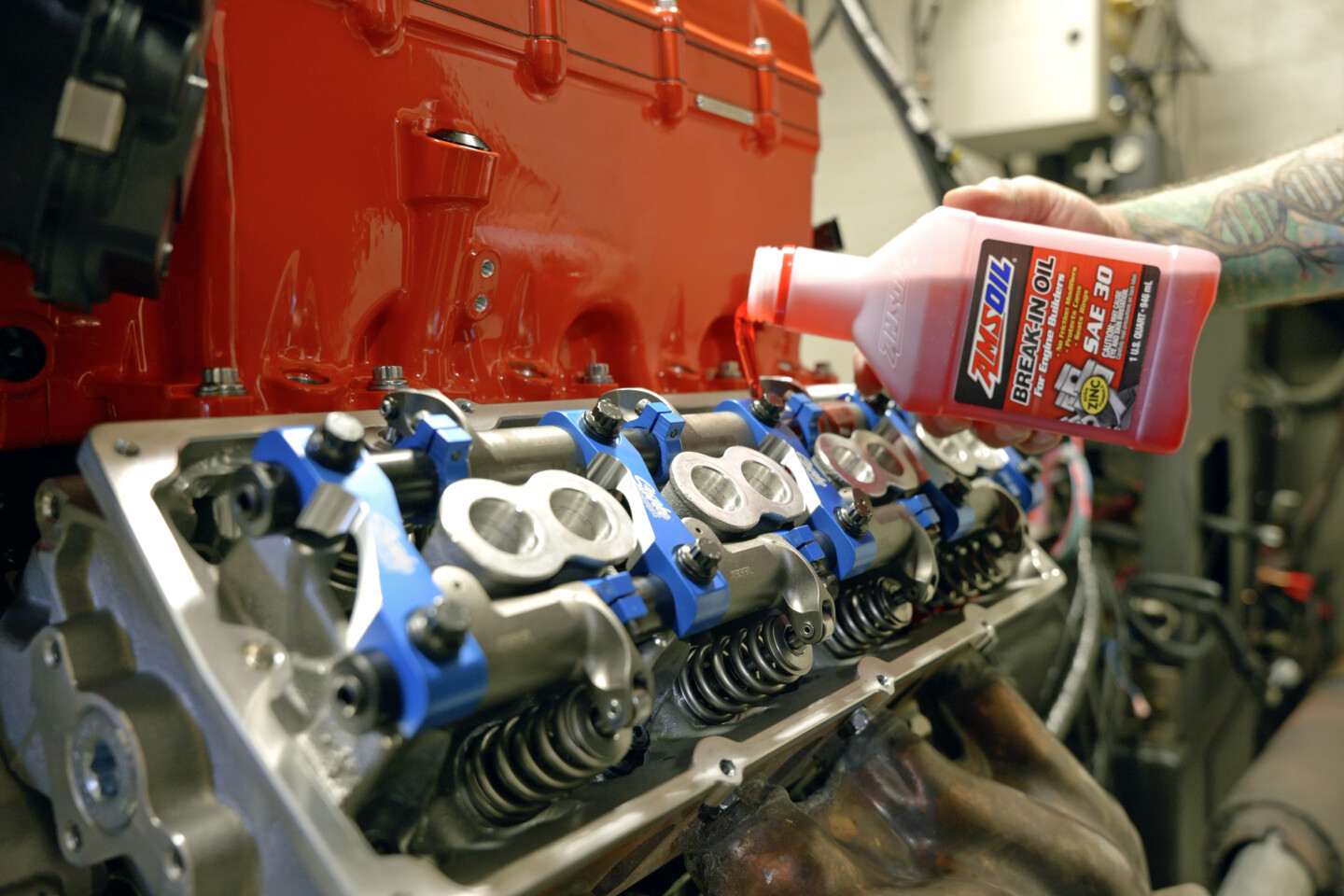
Classic and dedicated race engines sometimes require something else entirely. Z-ROD uses elevated ZDDP for applications including flat-tappet engines, with extra corrosion protection for long storage periods. Dominator Racing Oil prioritizes high-temperature operation, viscosity retention, and protection under sustained track loads. Groom explained that these oils use heavier base stocks and are formulated towards the upper end of their viscosity grades. This helps maintain oil pressure under extreme racing conditions. These specialized formulations demonstrate why choosing the right oil depends on how an engine is built and how it’s used.

Choosing The Right Synthetic Motor Oil For Your Engine
For demanding street use and occasional track days, Signature Series offers Excellent protection and versatility when it meets the engine specifications. XL targets extended everyday service, while OE aligns with factory oil change intervals. European oils meet specific approvals, and High Mileage addresses the needs of aging engines. Purpose-built classic and race cars also have their own specialized options.
The final decision begins with the manufacturer specifications, then considers mileage, modifications, driving conditions, and intended service interval. AMSOIL’s application guide and Technical Support team can help narrow the choice. As Groom made clear, it’s not simply about the oil you want. It’s about what your engine needs.

You might also like
Temu Vortec Heads: A Bargain Or Mistake? Weingartner Racing Finds Out
A $350 pair of Temu Vortec heads gets a thourough review on Weingartner Racing's Flow bench. Were they actually a bargain?