
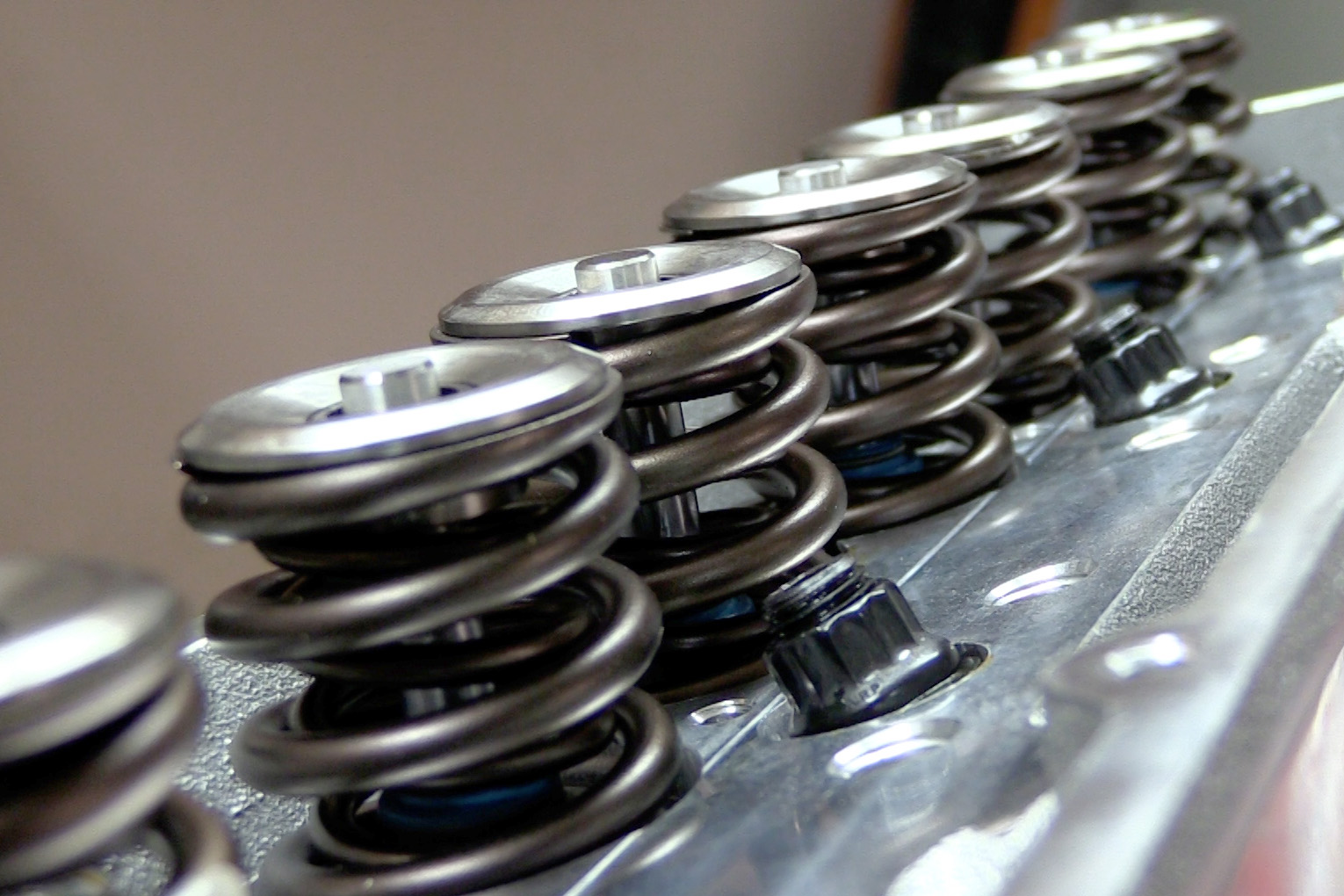
At first glance, an engine valvespring is just a piece of wire wrapped into a coil. But that simplicity is deceptive. Take, for example, an engine running at 5,000 rpm. Each valvespring is being compressed and released over 41 times every second — while trying to keep the valve, retainer, rocker, pushrod, and lifter following the camshaft exactly as intended. If any one of the 16 valves (assuming we’re talking about a traditional V8) loses control, even briefly, the best-case scenario is lost power while the worst is a blown engine and massive repair bills.
That’s why Erson Cams puts so much emphasis on the things you won’t even see the next time you pull a spring out of the box.
“First of all, we look for quality spring wire,” says Doug Buzzard of Erson, emphasizing both the material itself and the controlled treatments that come afterward. He says Erson’s engineers specify exact wire composition, surface finish, and shot peening as important parts of producing a durable spring. That’s because avoiding defects within the spring material can be as critical when it comes to avoiding failures as the design.
Valve Spring Material Matters
A valvespring lives a brutal life because it is a fatigue component. Over its lifetime, it will undergo millions of high-frequency stress cycles. A properly manufactured spring won’t normally fail because one compression event was too much. It fails after an enormous number of loading cycles, and any microscopic defect can speed up the failure since it can become the starting point for a crack.
That helps explain Buzzard’s emphasis on clean, high-quality wire. In a high-stress spring, inclusions or surface imperfections are potential stress risers. The better the base material and the more carefully it’s processed, the better the chances the spring has of maintaining its load and surviving repeated cycles.
The manufacturing processes after the wire is formed matter just as much. Shot peening blasts the coil to smooth out the surface and reduce inclusions. That helps resist the formation of fatigue cracks to improve longevity.
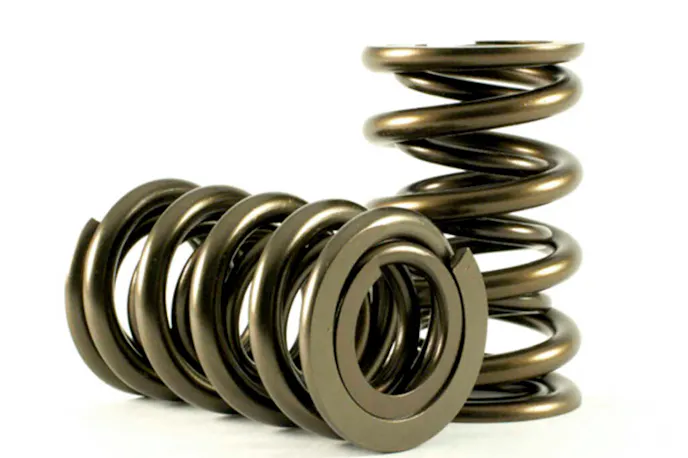
Buzzard says Erson tries to use the best material it reasonably can while keeping the springs affordable for the engine builder. But everything is on a sliding scale. On the upper end, Erson’s high-performance springs are custom wound and packaged in matched sets for load consistency. That’s important because it’s the weakest spring that becomes the limiting factor for an otherwise healthy valvetrain.
Valve Spring Installed Height
One of the easiest ways to get into trouble with valvesprings is to look at a catalog number for pressure on the seat and assume that’s what the spring will have after it is installed. That’s because the pressure is directly tied to installed height.
Installed height is the distance from the spring seat or locator to the underside of the retainer with the valve closed. Increase or decrease the installed height, and you change how much the spring is already compressed before the engine ever turns over. The relationship is straightforward. If a spring has a nominal rate of 500 pounds per inch, reducing installed height by .050 of an inch will add roughly 25 pounds of load at the seat. That same change also affects open load and, just as important, how much valve travel you have before the spring reaches coil bind.
A spring that is perfect at 1.900 inches of installed height may be a very different animal if it’s installed at 1.850 inches.
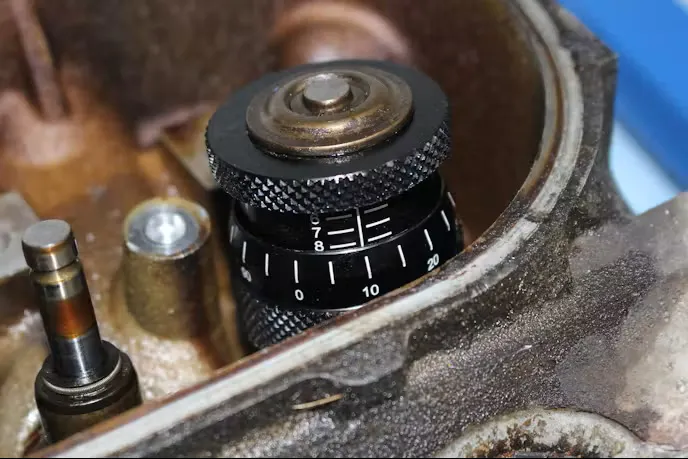
That is why installed height should be measured for every build rather than assumed. Retainers, locks, valve length, locators, and shims all affect the final number. On a serious performance engine, every spring should be checked. Shimming the spring so that it has a shorter installed height increases the load while also reducing the available distance to coil bind. Every change affects another part of the equation.
Buzzard says Erson has technical support available for builders who need help sorting through those variables. That matters because choosing a spring is rarely just a matter of matching one load number to a cam card. Lift, RPM, lobe acceleration, valvetrain mass, and intended use all play a role.
The Right Amount Of Spring Pressure
It’s tempting to think, if 180 pounds of pressure on the seat is good, 220 must be better. Valvetrain development doesn’t work that way. Buzzard says the goal is to use the minimum spring load necessary to maintain reliable valve control.
Too little spring can allow loft (where the valve continues to open even after the lobe has nosed over), bounce (where the valve opens slightly immediately after closing), or other forms of valvetrain separation. Once the lifter, pushrod, rocker, and valve stop following the intended motion of the cam, that means the spring has lost control. Power suffers, and parts start hammering one another. Inadequate open load can contribute to loft, while too little seat load can allow the valve to bounce after the camshaft drops it back down on the seat.
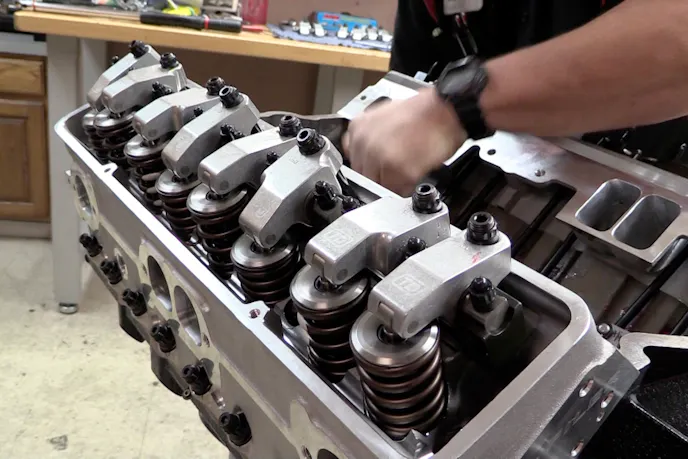
Excessive spring load has its own price. More load means more stress on lifters, pushrods, rocker arms, valve tips, valve seats, and the camshaft, plus additional power-robbing friction. The smart choice is the one that gives the valvetrain the control it needs without adding load simply because the bigger number looks impressive.
Single valve springs can work extremely well when the application allows it. But as RPM, valve lift, cam aggressiveness, and valvetrain demands increase, dual springs become increasingly useful.
Why Two Springs Can Be Better Than One
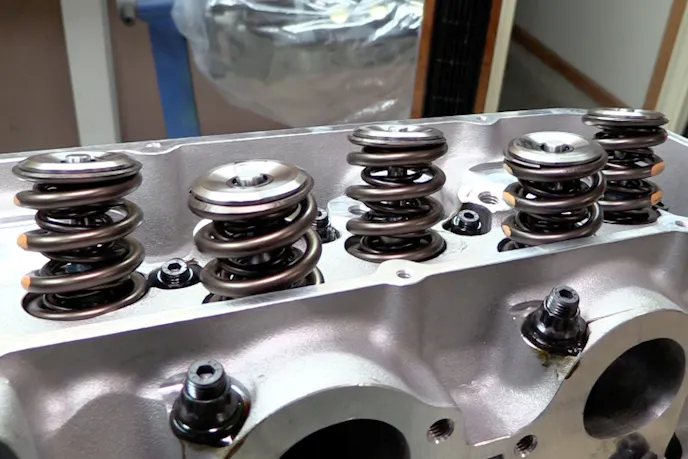
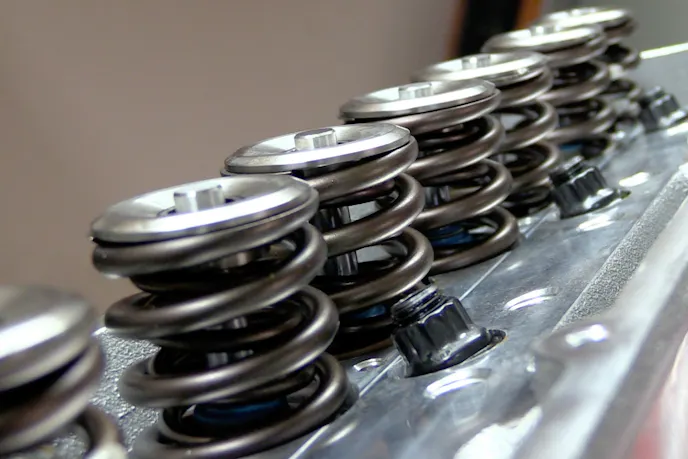
A dual valvespring nests a smaller spring inside the outer spring. Both springs contribute to total load, but the inner spring also brings a potential added advantage in better control of damaging harmonic vibrations.
Every spring has a natural frequency range where the wave running up and down the spring every time it is compressed will be timed perfectly, and each wave will build on itself. That’s when it’s in a harmonic state, and that can kill valve control in a hurry. But in a nested spring system, the inner and outer springs have different dimensions and different dynamic characteristics. So, they won’t go into a harmonic state at the same engine RPM. Now they can help dampen harmonics while also providing the increased load required for a more aggressive valvetrain.
Coil Bind Can Be Your Friend
Coil bind is usually discussed as something to avoid at all costs. And actual coil bind absolutely should be avoided. It occurs when the spring is compressed to its limit, and the coils physically stack together with no space between, turning a spring into a spacer. If the spring goes into coil bind and the cam is still trying to open the valve, broken parts are the result.
But the cool thing is, going into partial coil bind is a trick top engine builders use to help gain extra RPM. For performance applications, Erson recommends dialing in the valvetrain so maximum valve lift occurs around 0.050 to 0.060 of an inch from coil bind. As the spring approaches that point, the shrinking clearance between coils helps dampen unwanted oscillations and spring surge. Think of it as using the spring’s own geometry to help calm it down near maximum lift.
A Complete System
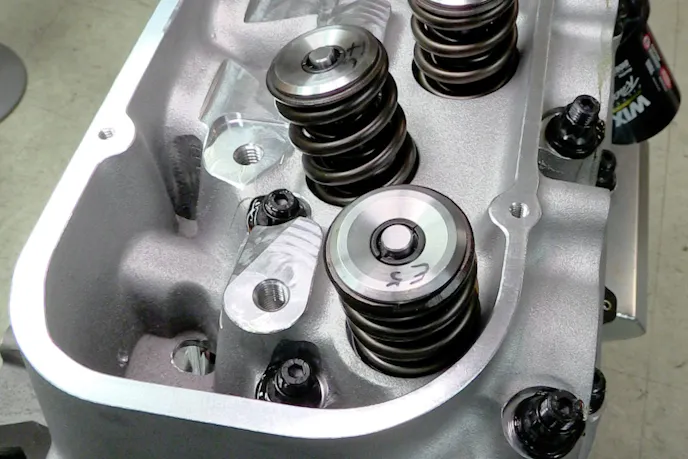
Of course, it gets really tough trying to consider the entire valvetrain as a system and do such things as setting the installed height so that the spring is within 0.060 of an inch of coil bind at maximum valve lift, if you are trying to source components from a variety of sources. That’s why Erson offers the hardware needed to build the entire valvetrain as a system, including everything from the camshaft to both steel and titanium retainers, ID locators, valves and, of course, springs. Buzzard says the company’s goal is to be a one-stop source instead of forcing builders to piece together components that may or may not play nicely together.
And if you are working with GM’s new LT engine family, this also includes you. Buzzard says Erson has introduced LT packages with either chromoly or titanium retainers, along with the required keepers, locators, and seals.
That may not sound as glamorous as a new cylinder head or a giant camshaft, but the valvesprings make sure that camshaft’s carefully designed motion actually reaches the valves. A good spring does its job day after day, and lap after lap in an environment that’s constantly trying to destroy it. Erson’s approach is to make sure the engineering is there long before the engine builder drops the first spring over a valve guide.
You might also like
Lake Speed, Jr. Puts Zinc Oil Additives And DLC Lifters To The Test
Lake Speed ,Jr. tested ZDDP oil additives and DLC lifters to see how oil chemistry affects flat tappet camshaft wear and engine break-in.