


Low-tension piston rings have become common in performance and racing engines. However, piston ring tension is more complex than the terminology might suggest. Choosing the correct oil ring tension isn’t as simple as picking a number from a catalog. Understanding what the number represents and how it was measured is essential when selecting the right ring package.
In Total Seal‘s recent video, Keith Jones, the company’s Director of Technical Sales, measured oil-ring tension and compared those results with typical shop tests. The key is understanding the difference between force and friction. Although related, force and friction represent different aspects of ring behavior.
Measuring Actual Ring Force
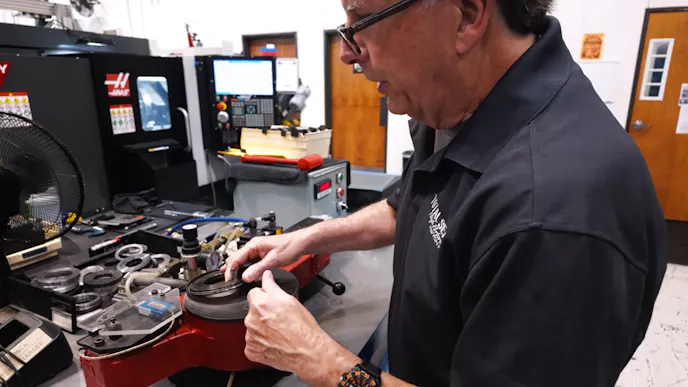
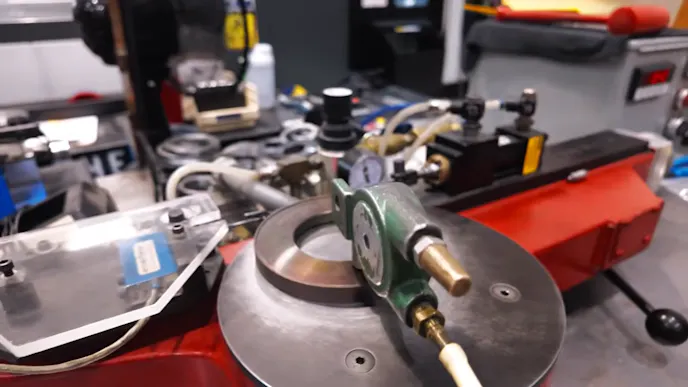
What does a four-pound or ten-pound oil ring actually mean? More importantly, how is that number measured? Total Seal measures ring tension using a specialized load-testing machine Jones calls “Big Red.” The machine has served the company for more than 25 years. Rather than measuring friction, the machine measures pound-force. Specifically, it measures the force required to compress a ring assembly to its specified bore diameter.
The demonstration uses an oil-ring assembly for a 4.195 inch bore. A certified 4.195-inch master gauge establishes the exact diameter before testing begins. Next, a slip ring surrounds the oil ring assembly. The machine then pulls the slip ring down to the predetermined bore diameter. For an oil ring, the assembly includes the expander and rails, which are mounted on tooling that simulates the piston’s oil-ring groove.
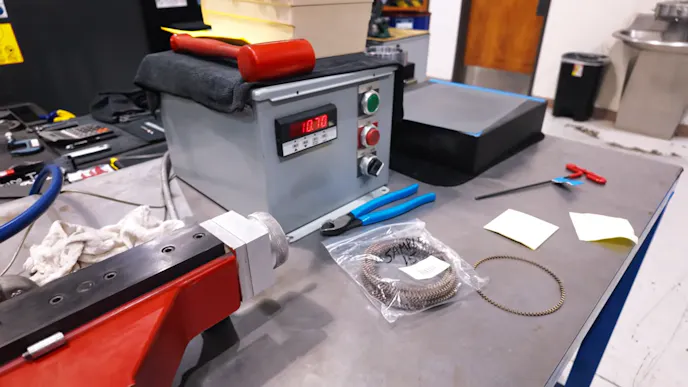
That tooling is intentionally undersized. This prevents the slip ring from contacting anything except the oil-ring assembly. Contact with the tooling would introduce another source of friction and produce a false reading. Total Seal also uses vibration during the test. This breaks the friction between the oil-ring rails and the slip ring. The machine can then isolate the force required to compress the assembly.
What Changing the Expander Does
The first test involved a 3mm oil ring assembly, which produced approximately 10.5 to 10.7 pounds of force. Moving to the next larger expander increased the force without changing the basic test procedure. The second combination produced the anticipated value of approximately 12.3 to 12.4 pounds, a jump of roughly two pounds. However, expanders do not always behave exactly as expected.
Jones emphasized that an expander is a spring, not a ring.
As springs, expanders can vary from batch to batch. Moving to another expander size does not guarantee an identical change every time. A particular revealing experiment showed just how sensitive that spring can be to modification. One complete section was removed from the expander that had produced approximately 10 pounds, and the modified part was tested again.
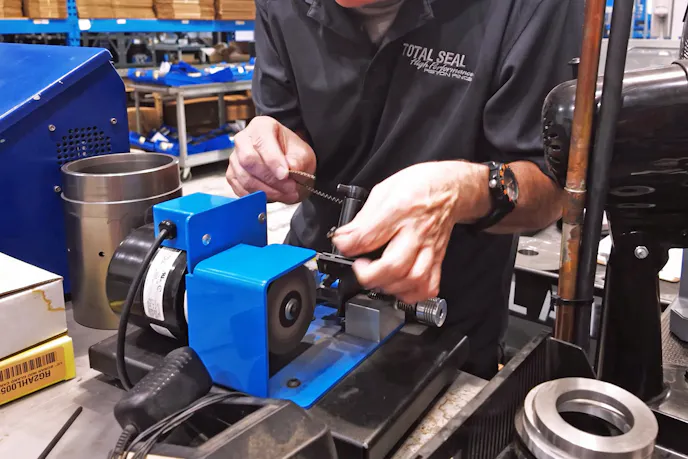
The result was dramatic. Instead of just over 10 pounds, the modified expander produced about one pound of force. Removing a seemingly small section dramatically shortened the spring and changed its characteristics. That demonstration provides an important warning for engine builders modifying oil ring expanders. Even a small change to the expander can significantly alter the force it produces.
Testing Ring Drag In The Shop
Most engine builders do not have access to the same specialized load testing equipment that Total Seal does. The machine used in the demonstration cost approximately $22,000 when Total Seal purchased it in the early 2000s. According to Jones, comparable equipment represents a significant investment.
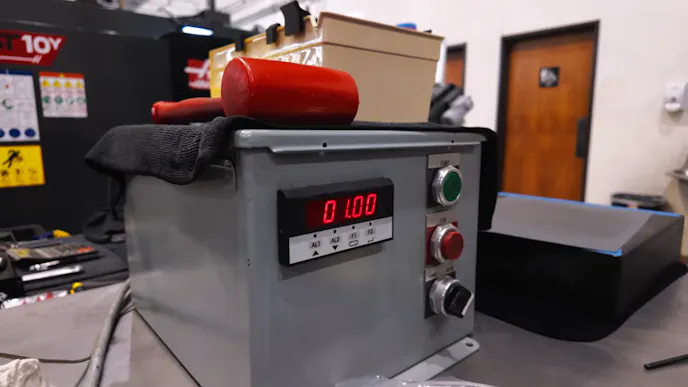
An engine builder can use a simple shop test to evaluate an oil-ring package. Often called “fish scaling,” the method uses an inexpensive hanging or digital scale – like a fishing scale. The test uses only the oil ring assembly, with the compression rings removed from the piston. The piston is then inserted into the dry cylinder bore. The builder hooks the scale onto the wrist pin and gently pulls the piston through the bore while watching the reading.
The initial breakaway reading is not the number to focus on. Starting the piston moving may require substantially more force than keeping it moving. For example, breakaway force might reach 15 or 20 pounds. Once moving, the piston might require only 10 or 12 pounds. For this test, the builder uses the force required to keep the piston moving. However, the fish-scale method measures friction rather than actual ring force.
Why Bore Finish Changes the Number
Total Seal refers to “fish-scaling” as a “dry-skidding test,” performed with no oil on the cylinder wall. Unlike the load tester, this method introduces the cylinder surface into the measurement. A rougher bore creates more drag and produces a higher scale reading. A smoother bore creates less drag and produces a lower reading. All while the oil-ring assembly itself remains unchanged. That makes cylinder finish a major variable when comparing results.
Jones recalled one example involving a customer who believed his oil-ring tension was too high, prompting Total Seal to supply lower tension rings. The customer later changed the cylinder bore finish. The resulting measurements moved in the opposite direction. The ring itself was not creating the difference. The change in bore finish had altered friction.
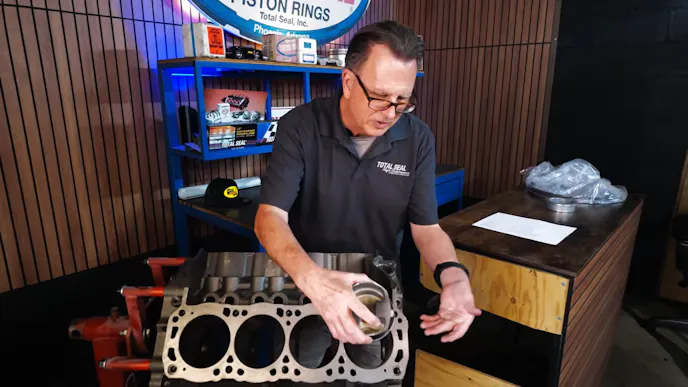
This distinction explains why Total Seal does not use the dry-skidding method to measure ring force during manufacturing. The company needs to know the force required to compress a ring assembly to its specified bore diameter. Introducing cylinder-wall friction would add an uncontrolled variable.
Force and Friction Are Not the Same
A fish-scale test can still provide useful comparative information for an engine builder. It offers an accessible way to gauge an oil-ring package without specialized equipment. However, that reading does not represent a laboratory measurement of ring tension.
The load tester measures the force required to compress the ring assembly to a specified diameter. The dry-skidding test measures the friction created while pulling that assembly through a finished cylinder. Bore finish, ring configuration, and other friction-related variables can therefore affect the fish scale measurement.
That distinction is critical when comparing ring packages or diagnosing unexpected drag. The expander experiment also demonstrates that seemingly minor modifications can produce major changes in actual ring force. Knowing what a test measures is as important as the resulting number.
If you’re unsure about the correct ring package or oil ring tension for an application, don’t guess. Total Seal can help determine the right ring combination for your engine.
You might also like
Beefing Up Gen-III HEMI Mains With Billet Caps And ARP Hardware
To withstand big cylinder pressure, Livernois makes a set of Billet main caps for the Gen-III HEMI that pair perfectly with ARP main studs.