
A valve is one of the simpler components in any engine. No electronics, no oil passages, and all of them basically look the same. But what we ask of the humble valve is pretty extreme. It must open and close dozens of times every second for hours on end, survive serious spring loads, seal combustion pressure, transfer heat into the seat and guide, and do all of that while living in a valvetrain spinning into the stratosphere.
That is why proper valve selection gets more critical as engine power and speed go up. According to Zeke Urrutia of Ferrea Racing Components, the first question usually comes down to material. Stainless steel and titanium dominate most high-performance applications, but the correct answer depends on more than simply how much horsepower the engine makes. RPM, valve size and weight, spring pressure, camshaft profile, combustion temperature, and even the seat and guide materials all play a role.
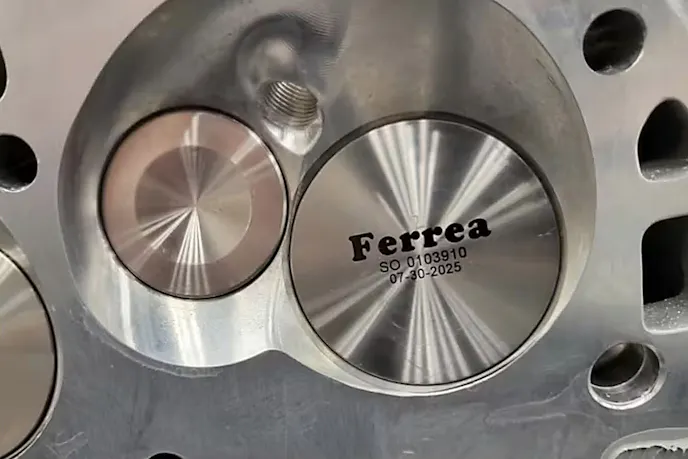
Ferrea’s approach is to treat the valve as part of a complete system. Valve weight matters, but so do stem diameter, spring pressure, cam profile, the valve groove, locks, and retainers. Get those pieces working together and the valvetrain becomes easier to control. Get one of them wrong, and the most exotic valve material in the world won’t necessarily save the combination.
Stainless Isn’t Standing Still
Stainless steel remains the workhorse material for performance valves, and there’s good reason for that. Stainless does a great job of combining strength, durability, and useful heat-transfer characteristics with a long service life — as long as the valvetrain stays in control. So, it just makes sense in engine builds for everything from your basic street engine all the way to serious race combinations.
The traditional knock against stainless when it comes to valves is weight. Compared with titanium, stainless steel is heavy. And even if the difference is just a few grams, it becomes a big deal because it has to be accelerated, stopped, and reversed by the spring. The good news, however, is modern valve design has been steadily chipping away at that disadvantage.
One of the biggest changes that helps cut weight is moving to smaller stem diameters. Ferrea points out that modern performance engines with precisely designed valvetrains are using smaller stems compared with the big-diameter pieces that were common years ago. Going to an eight- or even seven-millimeter stem diameter takes weight out of the valve while maintaining the inherent durability of stainless.
On the flip side, some race engine builders we’ve worked with have discovered that thicker valve stems offer greater benefits. That is because there are only two main areas where the valve can transfer heat into the cylinder head and eventually the coolant flowing through the engine. The main area of heat transfer is between the valve stem and the valve guide in the cylinder head.
The second area is between the valve and the seat, but that’s much less efficient because it’s a smaller area and only works when the valve is closed. Exhaust valves, especially in turbo and supercharged applications, see tons of heat, so sometimes going with a larger stem to provide more surface area for heat transfer becomes more important than shaving off a few grams of weight.
One area where we might be able to see the best of both worlds is Ferrea’s Competition Hollow Stem stainless valves. Its gun-drilled, micro-polished hollow-stem design can trim mass by roughly 20 percent compared with a conventional solid-stem stainless valve. The result is a super-light valve that also has a thicker stem for more rigidity and heat transfer.
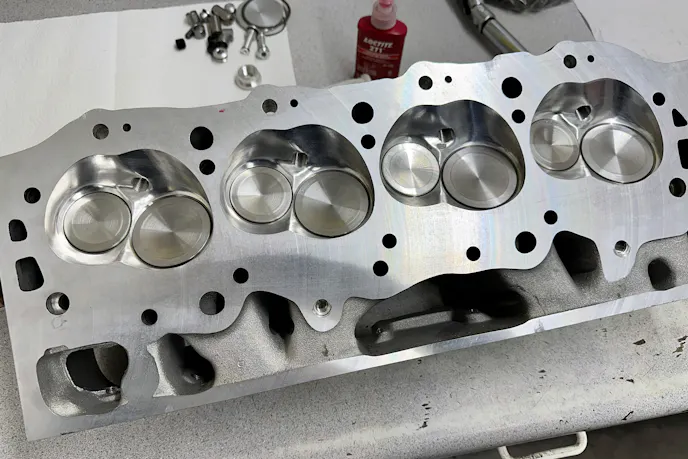
Stainless also shines when things get hot. Urrutia notes that it remains an excellent choice for exhaust valves and for boosted or nitrous-assisted engines where exhaust-gas temperatures can climb quickly. Ferrea even offers its Super Alloy line specifically for extreme-temperature applications, including supercharged, turbocharged, nitrous, and nitro-fueled engines. It is a much more cost-effective option than switching to exotic high-nickel Inconel designs.
Ferrea’s Competition Plus valves demonstrate how much engineering can be packed into what appears to be a simple component. The company uses aerospace-quality alloys, a two-step slow-forging process, heat treatment and stress relieving, along with hard-chrome stems and hardened tips. Those details may not attract as much attention as a shiny titanium valve sitting on a workbench, but valve life is usually won through a pile of small details.
Where Titanium Earns Its Keep
If stainless is the durable all-around choice, titanium becomes the ace card when valvetrain mass starts becoming the limiting factor.
“The biggest advantage of titanium is weight,” Urrutia says.
And we are talking about a lot of weight. When compared to stainless steel, an identical titanium valve can weigh approximately 40- to 42-percent less. That is a huge reduction for a component that changes direction every time the cam lobe comes around.
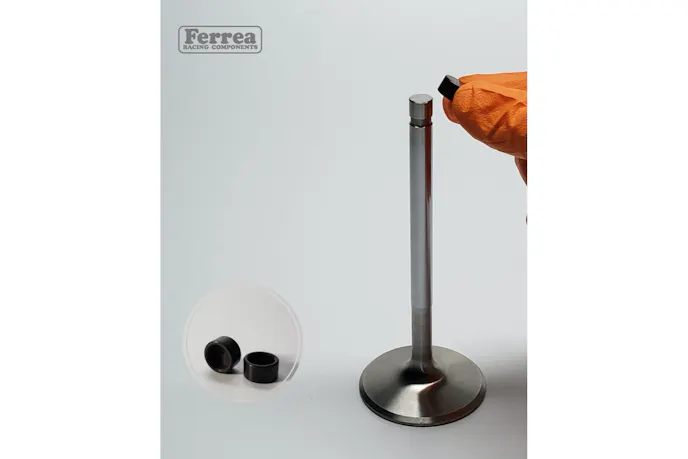
That is why titanium becomes especially attractive with big valves, aggressive lobes, lots of lift and serious RPM. Urrutia says as engine speed and camshaft demands increase, valve weight can become a greater limitation than the strength of the valve itself. But along with cost, titanium also asks for more attention in return.
Titanium lacks the great wear characteristics of stainless, and that will show up on the stem and valve seat. Ferrea addresses that with careful material selection, heat treatment, machining, and coatings. Its titanium valves receive a chromium nitride coating, or CrN, to improve wear resistance and reduce friction while helping control heat.
The seat and guide cannot be ignored, either. The hardness and material of the seat insert have to be compatible with the titanium valve, and the valve guide material and surface finish are also critical when it comes to durability.
This is also why mixing valve materials can make perfect sense. A high-output engine may use a titanium intake valve, where the larger valve offers the greatest opportunity to remove mass, and a stainless or super-alloy exhaust valve for greater heat tolerance. Ferrea recommends that strategy in applications where valvetrain weight matters but extreme exhaust temperatures make titanium a poor choice for the exhaust valves.
Don’t Forget the Valve Locks
One persistent myth says steel locks should never be used with titanium valves because the harder steel will automatically dig into the titanium groove. That used to be true, but it’s not necessarily the case anymore.
A properly machined radial groove on the valve stem changes how the load is transferred between the valve and lock. Instead of sharp edges concentrating force into a tiny area, modern grooves feature rounded surfaces that spread that load across a smoother contact area. That helps reduce localized wear and the stress that can eventually become failure points.
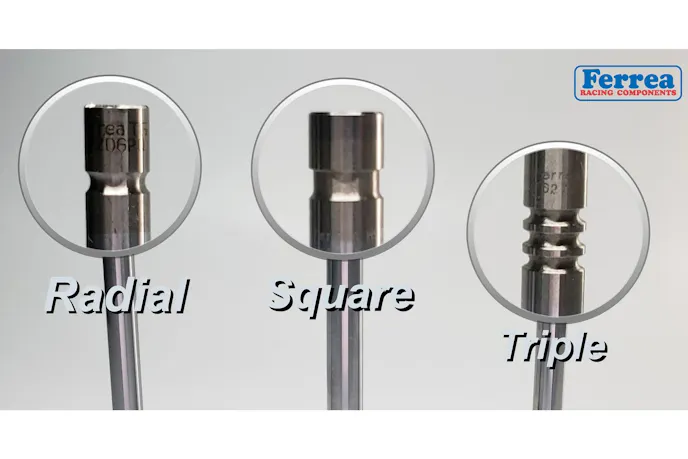
That means a correctly designed steel lock can work very well on a titanium valve. Ferrea currently offers radial-groove steel locks across numerous performance applications, often matched with titanium retainers. At the extreme end, titanium valves can also be paired with titanium radial locks and titanium retainers to pull still more mass from the valvetrain.
Interestingly, going the other direction makes less sense. Ferrea does not recommend pairing titanium locks with stainless valves because the harder stainless groove can wear the softer titanium lock over time.
Build the System, Not the Parts List
The easy temptation with a performance valvetrain is to buy the lightest valve, the strongest spring, and whatever retainer you can find that’s the right diameter, then assume the combination will sort itself out. That’s almost certainly leaving both power and durability on the table.
A high-performance, naturally aspirated street engine, or even a moderate-RPM race engine, will likely be happiest with a high-quality stainless valve, particularly now that smaller stems and hollow-stem designs can remove a surprising amount of mass. Meanwhile, a high-RPM drag or road-race engine will probably benefit considerably from titanium. A boosted gasoline engine may want titanium on the intake and more heat-tolerant stainless or super-alloy for the exhaust valve. Once that decision is made, the locks, retainers, springs, seats and guides should be chosen to maximize the strengths of the valve.
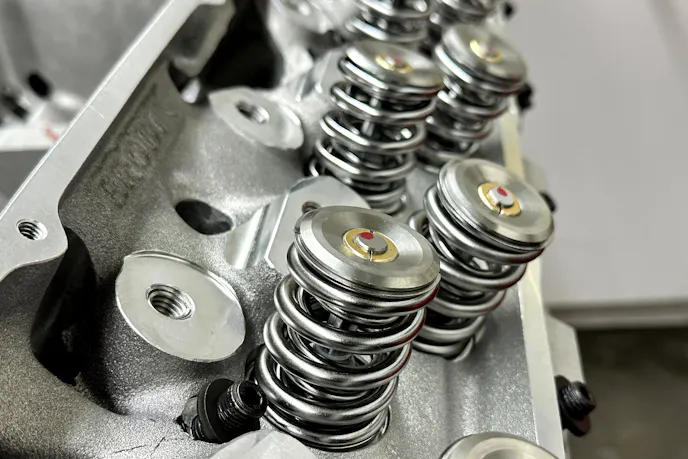
That system-level thinking is where Ferrea’s extensive valve lineup makes sense. The company offers everything from conventional stainless through hollow-stem designs, titanium and extreme-temperature alloys, but the interesting part is the engineering surrounding those materials, including forging processes, advanced heat treatment capabilities, CNC machining, coatings, reduced stem diameters, and groove designs intended to improve how the entire assembly carries load.
A valve may still look like a simple piece of metal with a round head on one end. At 75 openings and closings per second, however, there’s absolutely nothing simple about what you are asking it to do. Choosing the correct material, then surrounding it with the right hardware, is what’s going to keep your valvetrain doing exactly what the camshaft wants lap after lap and mile after mile for maximum performance.
You might also like
Valve Spring Retainers: Discussing Durability Vs. Mass With Melling
Valve spring retainer material choice is a balance of durability, weight, and fitment based on application and use.