


With the insane popularity of the LS platform, that’s almost all you hear about these days. Sure the Gen 1 SBC is far from dead (will the SBC really ever die?), but by and large it seems like the LS platform gets the bulk of the small-block Bowtie coverage anymore. Add in the introduction of the direct-injected LT1 platform, and now not only do we have another modern platform getting all the attention, but now we have another new GM platform utilizing a name that has been utilized twice-previously by the General.
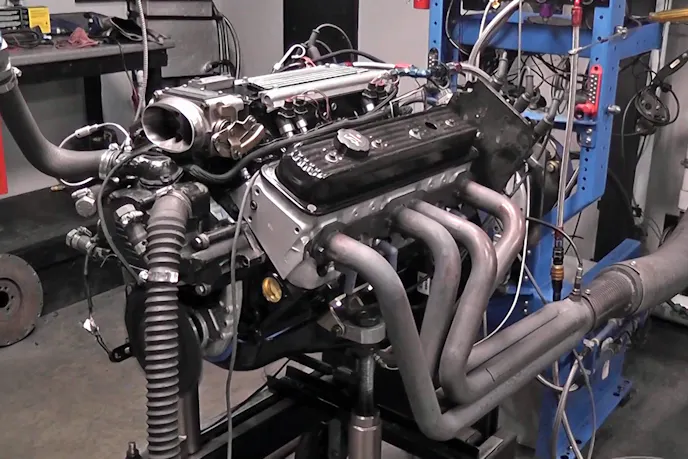
So when we saw our friends at Golen Engine Service recently post a dyno video of a classic Gen-II LT1 they built for a customer, it caught our attention. Maybe it’s because the mid-‘90s were some very formative years (automotively speaking) in your author’s life, and an LT1-powered Camaro played a role in that. Or maybe it’s just because a Gen-II LT1 is something different these days.
For Golen Engine, the Gen-II LT1 never fell off their radar, and they’ve offered a ready-to-go 383-cube street-oriented budget LT1 package for quite a while. They start off with a seasoned cast-iron factory block, which they bore and deck-plate hone to a 4.030-inch bore. The deck is then machined to match the pistons at zero deck height. Golen then adds aftermarket four-bolt main caps, and line bores and hones the whole assembly.
Into those mains, they drop a Scat Enterprises 9000 series steel 3.750-inch-stroke crankshaft, which is internally balanced front and rear. Attached to the Scat crank is a set of 6.000-inch Scat forged 4340 I-beam rods which have been upgraded with ARP rod bolts.
From there, a set of MAHLE forged 4032 aluminum pistons with Grafal anti-friction coating applied to the skirts are installed. With a dome volume aimed at a 11.5:1 compression ratio, the pistons utilize a standard set of MAHLE Plasma rings. To provide the lifeblood of the engine, Golen utilized a Melling Select Performance oil pump with Melling’s heavy-duty drive. The Melling pickup tube is fitted to the factory oil pan, and then TIG-welded in place to prevent any issues.
Moving to the top end, Golen took a set of factory aluminum LT1 castings and performed a three-angle valve job on them, as well as a stage-two runner and bowl porting process. Then the team installed 2.02-inch stainless Manley Performance intake valves and 1.56-inch stainless exhaust valves, and bolted the head to the short-block with a set of ARP head studs.
A set of 5/16-inch, .083-inch wall pushrods from Smith Brothers ride the Golen-spec camshaft ground by Comp Cams, while Ultra Pro Magnum 1.6:1 rockers actuate the valves themselves. Lunati polished double valvesprings control the valve motion, and lightweight hardened-steel locks and retainers keep the valvesprings in place.
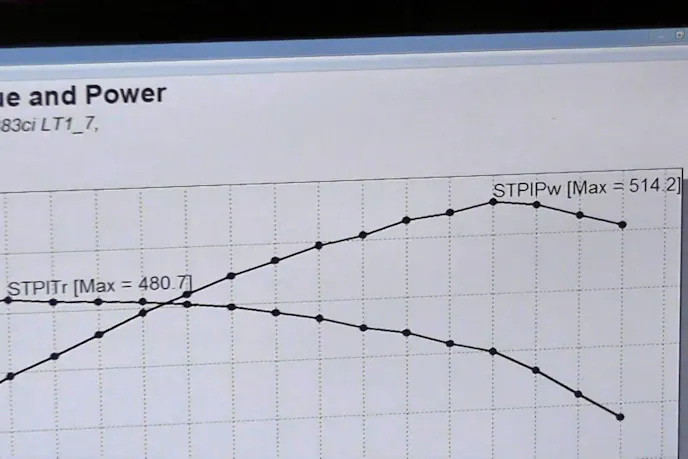
While Golen generally rates this package at 500 horsepower with a 2,300-6,500 rpm powerband, this particular example pushed the dyno to 514 horsepower at 6,000 rpm, with 480 lb-ft of torque at 4,900 rpm through the factory intake manifold and some dyno headers. Not too shabby for a vicenarian engine with some mild aftermarket parts and a warranty.
You might also like
Billet Bellhousing Spacers For Ford Modular And Godzilla Engines
Fix tight torque converter clearances on Ford Modular and Godzilla engine swaps using precision machined 6061 billet aluminum bell spacers.