


Following Stellantis‘ Hurricane turbo inline-six engine, they have announced a new four-cylinder version of the Hurricane, aptly named the Hurricane 4. The 2.0-liter design is intended to be a global platform, that will first see use in Jeep products. It boasts the highest horsepower-per-cubic-inch of any Stellantis production four-cylinder engine.
The engine’s undersquare 84mm (3.307 inches) bore and 90mm (3.543 inches) stroke layout results in a 1,995cc total displacement. While its total output of 324 horsepower and 332 lb-ft of torque is nothing to sneeze at, the power density of 162 horsepower per liter (or 2.66 horsepower per cubic inch) makes it the best in the market segment.
To achieve that efficiency, the engine is equipped with a variable-geometry turbocharger system and an air-to-water intercooler as standard. The variable geometry is designed to provide a wider torque band, so that power is broader and more usable, rather than a high peak for the sales brochure. The BorgWarner 50mm Variable Turbine Geometry turbocharger will produce 35 pounds of peak boost pressure. That’s a significant amount of boost from a production four-cylinder engine.
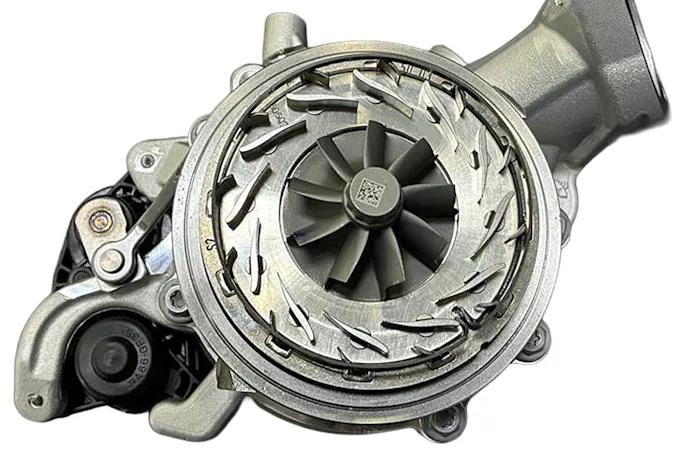
Besides variable turbine geometry, the turbo features advanced wastegate control for both performance and emissions concerns, and is the first time the company has incorporated both into a single turbocharger design. No small feat, especially considering the engine will operate on a variable Miller cycle, bringing even more electronic control complexity.
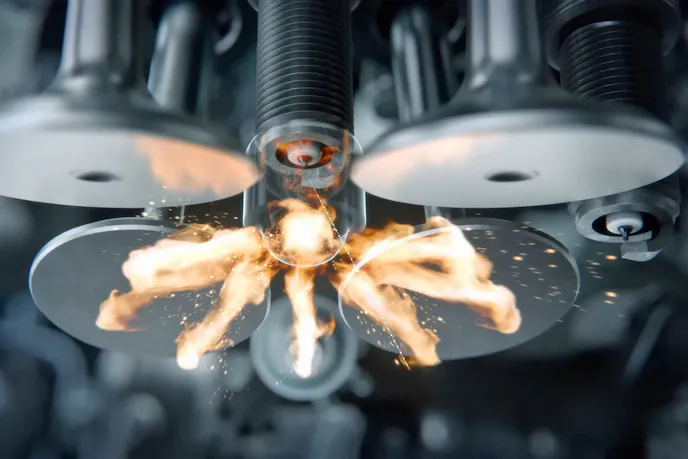
The F1-based passive pre-chamber plus turbulent jet ignition, coupled with 12.0:1 compression and both port and direct injection, makes for a system that readily accepts copious amounts of boost from the variable geometry turbocharger. It features four sodium-filled valves per cylinder, along with two spark plugs, and electronically controlled cam timing, BorgWarner’s eVCT system, to operate on the Miller cycle. An electric water pump and variable displacement oil pump add to the modern efficiency designs.
While the FCA Global Medium Engine turbocharged four-cylinder engine has been around since 2016 in the Alfa Romeo, Maserati, Dodge, and Jeep lineups, the Hurricane 4 (distinguished from the standard “GME-T4” engine with the designator “EVO”) is an updated version of the base Global Medium Engine, and is being touted as a significant improvement, due to debut in the mid-2026 Jeep Grand Cherokee.
This engine looks quite impressive on paper, but we’ll have to see if it lives up to the hype in the real world. There are a lot of claims being made, and if it delivers — which, based on the Hurricane inline-six-cylinder, it likely will — this could be quite an interesting four-cylinder powerplant.
You might also like
Valve Spring Retainers: Discussing Durability Vs. Mass With Melling
Valve spring retainer material choice is a balance of durability, weight, and fitment based on application and use.