


Well, he’s at it again. Lake Speed, Jr. — the Motor Oil Geek — has plenty to say about why some engines suffer from burning oil, and some do not. His experience in tribology will alleviate your curiosity and keep you from scratching your head in confusion. So let’s break this down: although Speed states, “there are no easy answers,” we do have a few key areas we need to be aware of when discussing why engines lose oil.
Possible Leak Paths
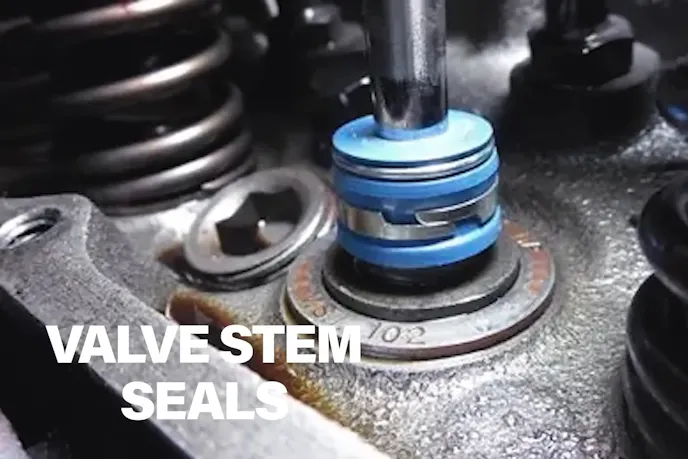
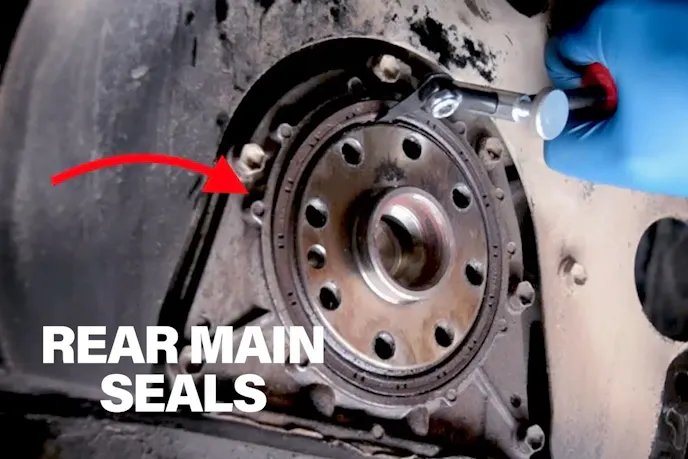
Much older engines used rope seals; they’re exactly what they sound like. These dinosaurs required a conventional oil with a much higher Viscosity to function properly. With the advancement in technology, newer motor oils are much thinner. Additives make these oils compatible with many different seal types. Take, for instance, high-mileage oil has a conditioner designed to soften seals slightly. Seals may become stiff over time, making them less effective at stopping leaks. The conditioner helps them regain that lost flexibility.
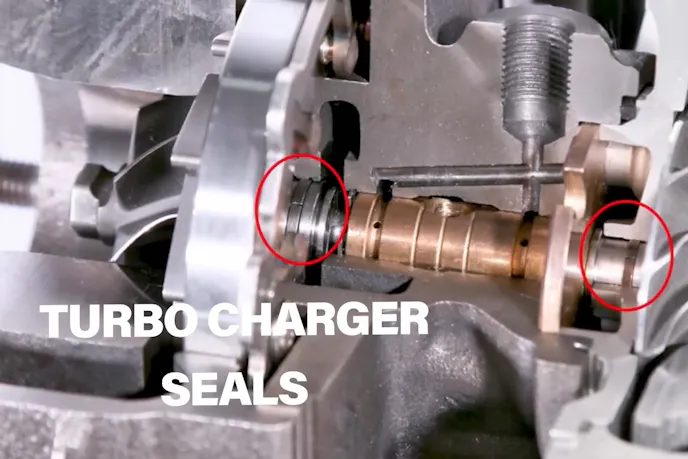
Having a PCV system in good working order would be another key component. This is an extensive subject worthy of its own article, so we’ll just hit the high points. Engine architecture and design play a significant role in why we need a PCV system. An opposed-cylinder Boxer-style engine is inherently going to use more oil than inline or V engines simply by design. The PCV system is there to evacuate any pressure and volatile fumes from the crankcase. Windage from the crank spinning will create a fine oil mist that also gets recirculated through the system, ultimately being burnt with the incoming charge. Ideally, we want this oil mist to fall out of suspension, returning to the sump. Using a catch can placed inline will help to separate the oil mist from the air before entering the induction system, thereby preventing the engine from burning oil.

Modern Viscosities
Newer oils are measured with the NOACK (ATSM D5800) volatility test. This test heats the oil to 250 deg Celsius for 60 minutes with a constant flow of air over it, and the fractional evaporation lost is the result. Speed goes on to say that with thinner viscosity oils, this isn’t the best test in simulating engine performance. The JASO GLV-2 (Modified D5800B) is an alternate test and runs at a much cooler 150 deg Celsius for 12 hours, better simulating actual operating conditions.
Speed’s thoughts on oil consumption:
- 1 quart or less in roughly 3,000 to 5,000 miles would be very good.
- 1 quart between 2,000 and 3,000 miles is perfectly normal.
- 1 quart or more in under 1,000 miles is a problem and would be considered abnormal.
Piston Rings Can Leak Oil
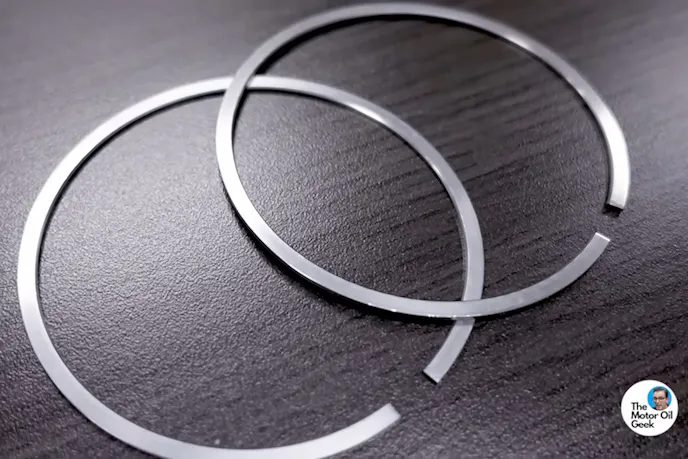
How piston rings function is next. They utilize cylinder pressure and ring tension. Cylinder pressure helps by pushing the ring out against the cylinder wall, creating a better seal. Ring tension is a built-in factor of the rings and is manufactured with different pressures based on a number of factors. Some design considerations are application, ring material, stroke length, and RPM.
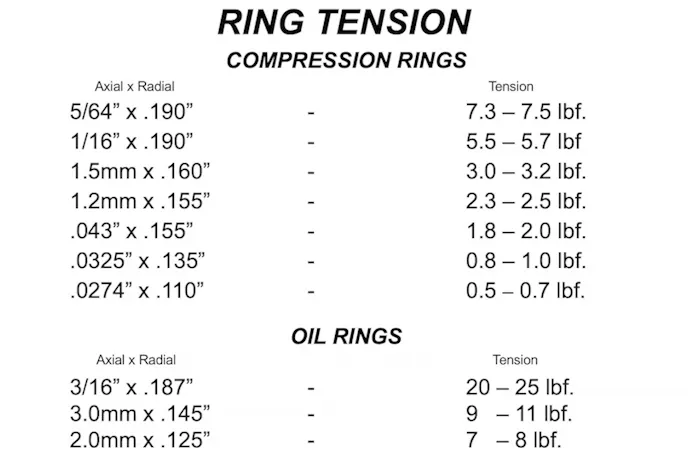
Newer engines take advantage of less ring tension. This is possible due to oil not staying in suspension well at pressures less than atmospheric. This less-than-atmospheric condition is created by the PCV system maintaining a vacuum in the crankcase. Rings with less tension equal a reduction in frictional loss. This reduction translates to better fuel economy and increased performance.
Now, while this sounds fantastic, there is a balance that needs to be kept. By reducing tension, we are also hindering the oil-controlling ability of the rings. One method that helps is using a Napier second ring. This ring face has a sharp hook design that scrapes oil from the cylinder wall back into the pan below. As this ring wears, its ability to control oil is diminished, leading to a higher oil consumption rate.
Deposits from burnt oil are also detrimental to the function of ring seal. These deposits can plug gas ports and foul ring grooves. In turn, this restricts their movement, creating more blow by fed to the PCV system.
There are a few things we can do to slow the process of oil consumption and wear. Keeping the engine clean internally with regular oil changes, using the correct oil and in the correct amount, along with using a top-tier fuel, will help minimize any deposit buildup and keep your engine from burning oil like it’s a heater.
You might also like
Diving Into What Synthetic Oil Really Is... And Isn't
Synthetic oil is one of the most debated topics in automotive. We break down API oil groups, base stocks, additives, and how to choose.