


In this episode of EngineLabs LABS, we headed to RPG Racing Engines in Modesto, California, to talk with Will Rollins to explore the differences in Ford’s 5.0-Liter Coyote engine blocks over the years. And now, as the Coyote market has grown, we’ll also dive into the various specialty and aftermarket block options.
Back in 2011, Ford debuted its next generation of dual overhead cam engine, this time with Twin Independent Variable Cam Timing (Ti-VCT) and an absolutely incredible cylinder head. The debut of the Coyote was also the resurrection of the legendary 5.0 nameplate, with a slight displacement increase over the previous generation overhead camshaft 4.6-liter Modular engines.
Over the past 15 years, the Coyote platform has only gotten better and better, as Ford has improved the platform over four generations of the Coyote, with several additional factory high-performance specialty variants thrown into the mix.
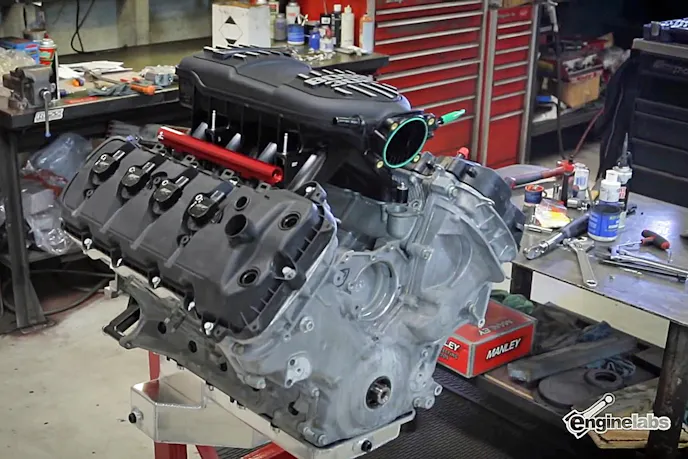
While the cylinder heads are the key to the killer power, the blocks are what let the combinations live at insane power levels, as we’ve seen on the racetrack time and time again. So, let’s dive into the differences between Coyote engine blocks.
What Changed Between The Generations Of Coyote Blocks?
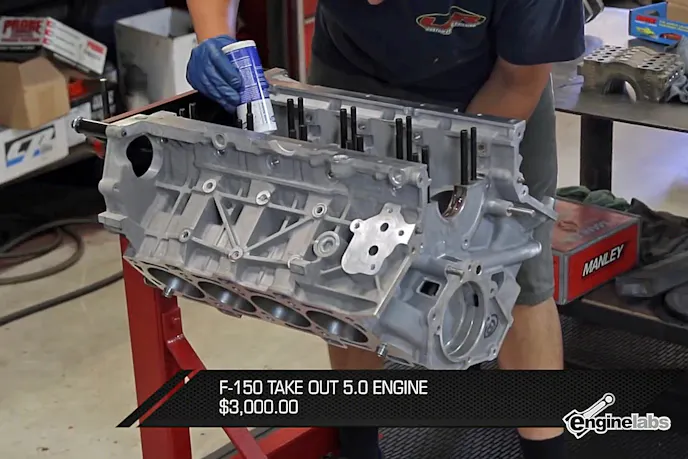
The first generation of the Coyote engine is known, unsurprisingly, as the “Gen 1” Coyote and existed in 2011 through 2014 model years of both the Mustang and the F-150. It features a 3.630 bore size, which was the smallest bore of the Coyote engine. “The Gen 1 block is, dare I say, one of the weaker versions of the Coyote block,” says Rollins. “To Ford’s credit, they weren’t expecting people to go out and make a thousand-plus horsepower out of one, either.”
Moving to the Gen 2 block, which was only produced between 2015 and 2017, the generational changes were largely in other areas of the engine. The Gen 1 and Gen 2 blocks share the same cylinder deck design as well as the Gen 1’s 3.630-inch bore size. However, the cylinder head fastener holes were threaded a little shallower than the Gen 1 blocks.
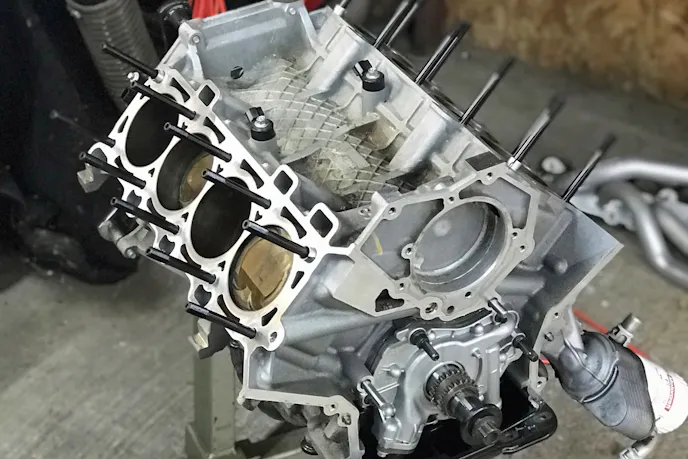
The Gen 3 engine block (2018-2023) is really where Ford started making substantive differences in the engine block. Starting with a slight increase in factory bore size, Ford added .031 inch for a 3.661-inch factory bore, along with a Plasma Transferred Wire Arc cylinder liner instead of the traditional iron sleeve. In addition to the new bore size, the design of the coolant passages on the deck changed as well, moving from a semi-closed deck to a semi-open design.
The Gen 3 block also moved to the larger 12mm cylinder head from the previous 11mm bolt holes. “That small change really increased the clamping force on the cylinder head,” says Rollins. “Between that and the larger bore, and some structural changes, it’s really a better block overall.
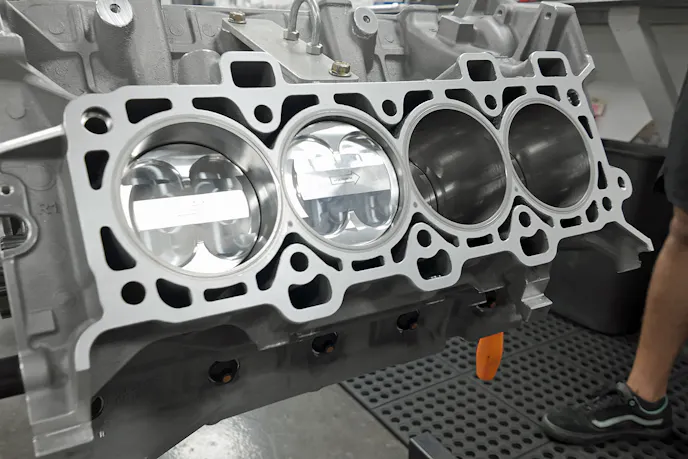
The Gen 4 Coyote block arrived in 2024 and is not to be confused with the 2021-2024 Gen 3 VDE (Variable Displacement Engine) Coyote (the F-150 community often incorrectly refers to the VDE engine as a Gen 4 engine). It features some additional webbing for stiffness and strength and longer 12mm head bolt holes. “Ford watched and saw the weak points of the Gen 1 and 2 blocks and addressed them in the Gen 3 and 4 blocks,” Rollins explains.
Deck Designs — Not All Coyote Blocks Are Created Equal
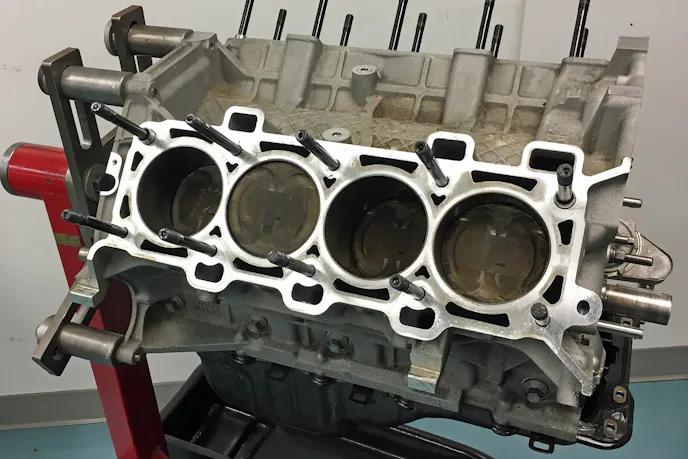
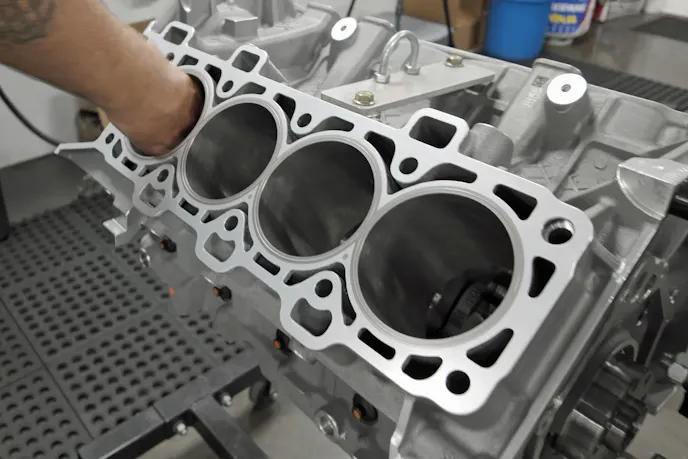
Between the four generations of Coyote engine blocks, there are two deck designs. The semi-closed deck of the Gen 1 and Gen 2 blocks, and the semi-open design of the Gen 3 and Gen 4 blocks. Those terms aren’t just glass-half-full semantics.
The early blocks do have more support at the top of the cylinder, with the tradeoff of less coolant flow. Conversely, the later blocks have slightly less support at the top of the cylinder, with a lot more coolant flow area. However, that semi-open deck design hasn’t really proven to be an issue, with Gen 3 blocks regularly being considered the performance choice for big power with durability.
What Is A 3-2-1 Coyote?
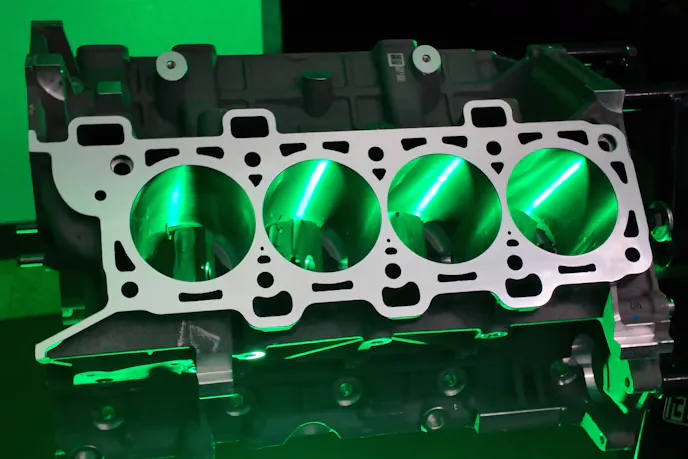
“The 3-2-1 build is actually a pretty cool option you see a lot of guys with a Gen-1 Coyote Mustang do,” says Rollins. “You take a Gen 3 short-block, so you get 12.0:1 compression and a stronger block. You use Gen 2 heads with Gen 1 timing components. That gives you a solid combination, making 500 horsepower all day long.”
Another benefit of a 3-2-1 build that comes with the use of Gen 2 heads is that it retains standard port injection, so in a car not originally fit with the dual fuel setup, it becomes a drop-in affair.
Truck Coyote Blocks Vs. Mustang Coyote Blocks
While the short-blocks out of an F-150 and a Mustang are slightly different, the blocks themselves are the same. “The F-150s have a little less compression and different camshafts,” Rollins explains. “The cores themselves can be built up just like a Mustang engine. You can use the same pistons, same valves, same springs, and you’re good to go.”
So, as a core for a build, whether the block comes out of an F-150 or a Mustang doesn’t matter. All that matters is the generation of the engine.
Stock Sleeves And Liners Vs. Aftermarket Sleeves
As standard aluminum blocks, all generations of Coyotes have some form of material added to the cylinder walls to handle the friction and pressure of combustion. Gen 1 and 2 Coyotes have traditional iron cylinder liners, while Gen 3 and Gen 4 engines use a sprayed-in cylinder liner. This isn’t like Rhino Liner, but rather a spray-welded plasma-transferred wire arc liner.
According to Rollins, the stock iron liners on Gen 1 and 2 aren’t the strongest, but will still handle 1,100 to 1,200 horsepower. “The pressed-in liner from Ford certainly isn’t as good as an aftermarket sleeve like Darton, but will handle some power.” One of the benefits of the stock liner is that it can be bored up to a .030-inch overbore.
The PTWA liners in Gen 3 and 4 Coyotes (as well as the 5.2 Predator blocks) had only taken a very mild clean-up hone; in the range of .0003-.0004 inch, according to Rollins. While the lining is very thin and allows a larger bore size from the factory, they can’t be opened up without aftermarket sleeving. “If something happens to a PTWA block, you either have to sleeve it or trash it,” says Rollins.
That said, the PTWA-lined blocks aren’t something to be avoided, but to just be aware of. “Surprisingly, it’s very durable. Done right with the right pistons and machined properly, they are as strong as any combination out there. We rate those in the 1,400 [horsepower] to the wheels range.”
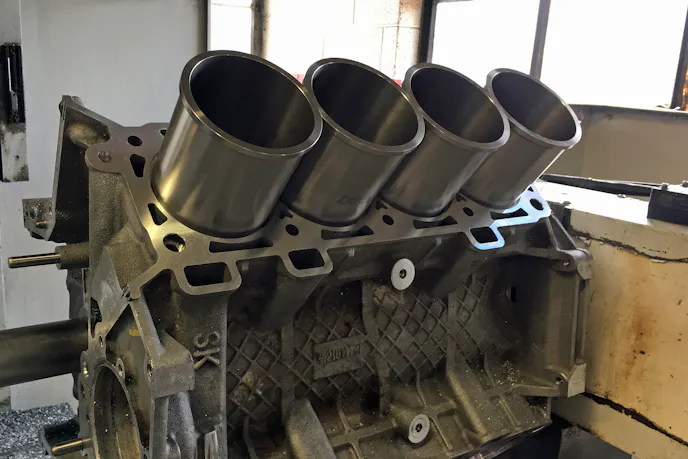
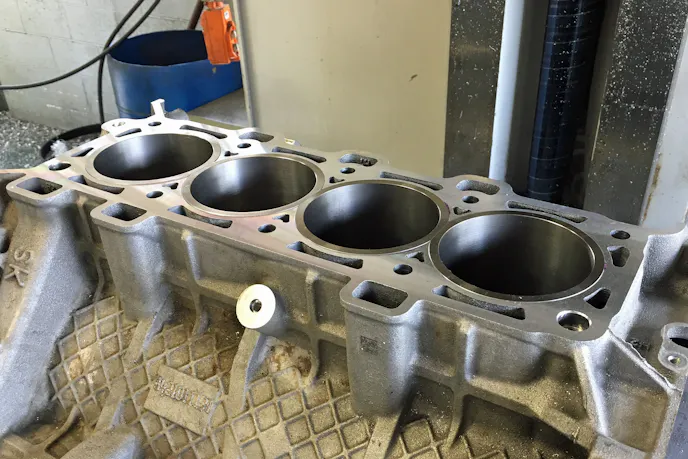
Once you ditch the factory sleeves or liners, the whole game is changed. By machining out the old cylinder liner and then installing a thicker liner made from a better material — usually ductile iron, like Darton Sleeves uses — the strength of the block is considerably enhanced. “Once we sleeve a factory block like that, we’re good to 1,800, 2,000, even 2,500 horsepower, depending on block generation,” Rollins reveals. “Generally, if you’re looking to make more than 1,500 horsepower, you should be sleeving your block.”
5.2 Liter Blocks — Voodoo And Predator
Getting into the special edition Coyote variants, both the GT350 and the GT500s came with 5.2-liter engines; however, they are very different engine configurations, and as such, the 5.2-liter blocks aren’t exactly the same. Both engines have a larger 94mm (3.700 inch) bore, a revised deck design leaning more towards the semi-closed design, and both have piston oil squirters. Because the Voodoo engine was a naturally aspirated flat-plane, RPM-happy engine, the block was designed to live in that environment.
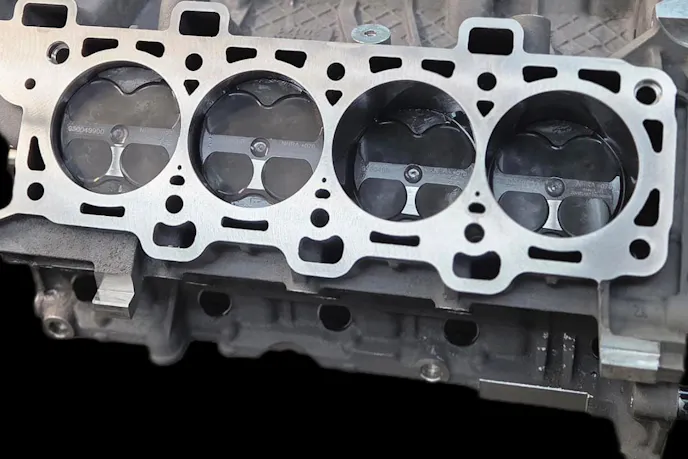
Since the Predator engine was designed to be a boost monster from the factory, it got strength and durability upgrades that most power-hungry enthusiasts appreciate, like additional webbing for more strength and rigidity, deeper head bolt holes, and main-fed oil squirters as opposed to the valley-fed squirters of the Voodoo. The 5.2L Predator block is a performance favorite of many Coyote builders.
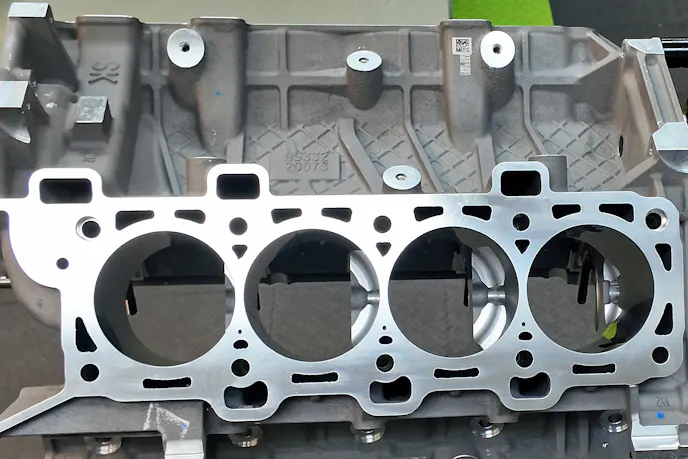
Aftermarket Coyote Blocks
When it comes to aftermarket blocks, while the Coyote options aren’t quite as plentiful as something like a small-block Ford or Chevy, there are a number of options on the market. However, Rollins points out there are diminishing returns if you’re not making 1,500-plus horsepower over multiple seasons.
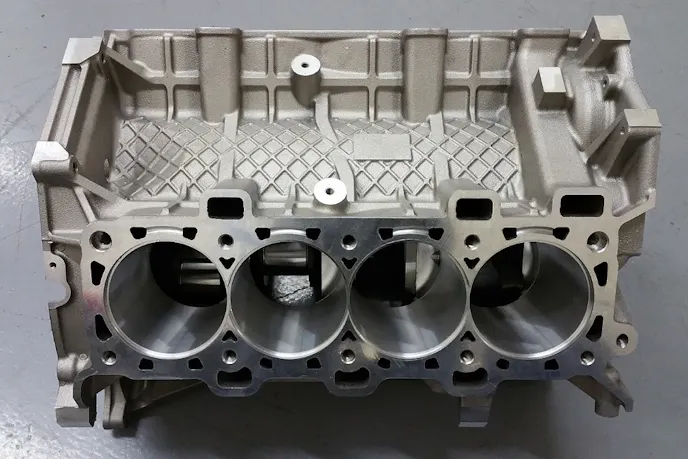
First up is the Bear Block Motors race block. “The Bear block offers a better, stronger aluminum alloy, with a lot more structural support, that is a good option for guys wanting to make over 2,000 horsepower,” says Rollins. The Bear race block offers features like oil squirters, remote oil filter fittings, 80-percent thicker sleeves, enlarged main caps with an additional pair of side bolts, along with the aforementioned additional structure and strength in the casting design itself.
Then, there is the lone iron block to discuss: Ford Racing Parts’ Werewolf race block. Designed as a race block and cast out of class 50 iron, the Werewolf allows a bigger 3.740-inch bore, will accept a 3.897-inch stroke, and has yet to have a power limit found. “We’re big fans of the block,” enthusiastically says Rollins. “Being a cast-iron block, it holds itself a lot truer. The cylinder bores don’t move; the main line bore stays true. When you’re making 2,000-plus horsepower, and nothing is moving, that keeps your head gaskets sealed, keeps your ring seal good, and makes for good serviceability.”
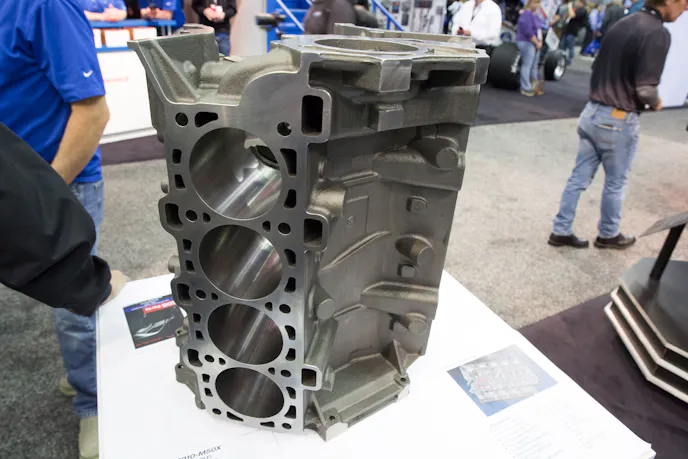
While the elephant in the room (no pun intended) is the iron block’s weight compared to aluminum, the bare block weighs in at 203 pounds. That’s approximately 90 pounds heavier than a bare OEM aluminum block. “If you’re counting every pound, that’s a lot. But the serviceability and reliability of it make us big fans, especially at the price point it’s at right now,” Rollins says.
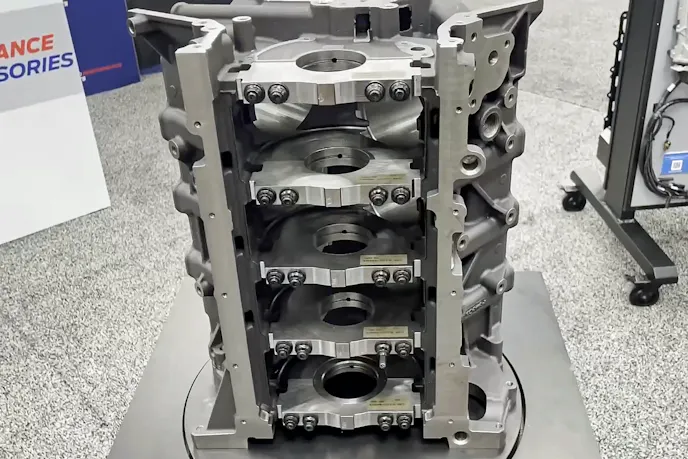
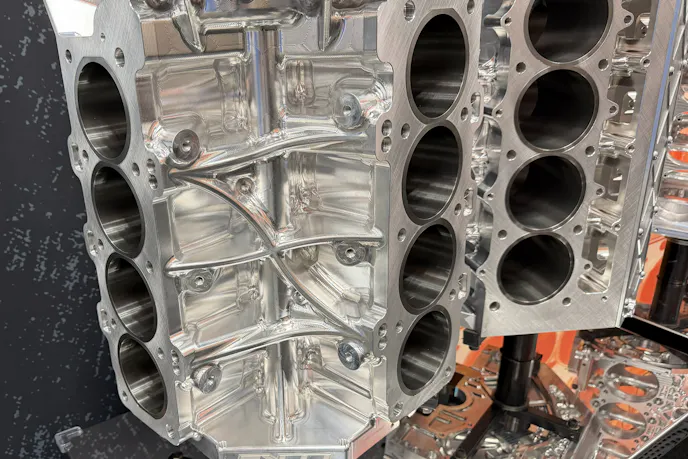
Finally, there are the billet block options. Reserved for the biggest power builds (or people who just have to have the best of the best, regardless of cost), billet blocks start life as a solid cube of aluminum and are then turned into a work of functional and aesthetic art. With a billet block, you have the option of both dry-deck and water jackets these days, allowing for more versatility from billet than the market has previously seen.
While the Coyote engine has proven to be incredibly capable straight from the factory, as we’ve seen here, there are a number of options based on what the final horsepower goal is with the Coyote engine. From one of the various OEM engine block designs to a sleeved stock block, the factory options are some of the most capable engine blocks ever designed. And for the real horsepower freaks, there exist a number of aftermarket options for the ultimate Coyote build.
What is absolutely amazing is what kind of power we are seeing from factory blocks. Even the “weakest” Coyote block is capable of supporting horsepower well into the four-digit range, with RPG rating some of the unmodified factory blocks in the 1,500 horsepower range. With some machine work, 2,500 horsepower is possible from a factory casting. And now, thanks to the aftermarket, the sky is the limit with aftermarket options. The Coyote engine really has come a long way in only 15 years.
You might also like
Valve Spring Retainers: Discussing Durability Vs. Mass With Melling
Valve spring retainer material choice is a balance of durability, weight, and fitment based on application and use.