


Whenever you hear the name Cosworth paired with an OEM, you know that the pairing is going to produce a pretty impressive powerplant. While General Motors isn’t the manufacturer-partner you’re most likely familiar with when you hear the legendary Cosworth name, the combination did produce an exceptional four-cylinder performance engine, largely under the Opal nameplate; the C20XE.
The C20’s Humble Beginnings
Before we can talk about the version of the C20 engine that Cosworth worked over into a nasty little powerhouse, we need to look at where the engine design originated. Debuting at the beginning of the 1980s, the GM “Family II” engine platform was designed by Opal engineers in the ‘70s to be GM Europe’s “mid-size” engine platform, with displacements ranging from 1.6 liters to 2.4 liters.
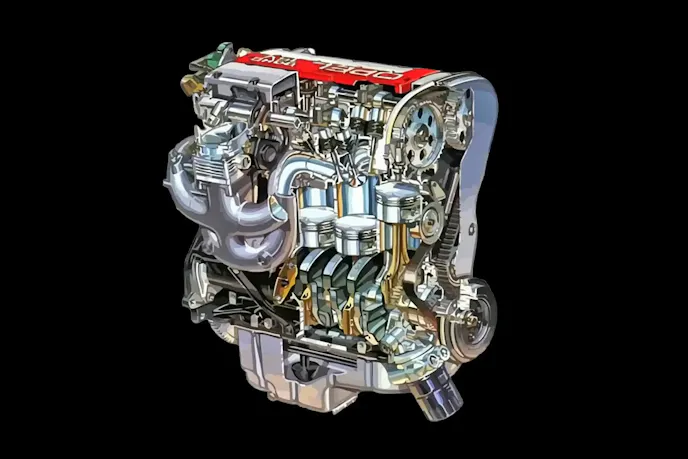
Originally an iron-block design with an aluminum single overhead cam cylinder head with two valves per cylinder, the Family II engines performed exceptionally well for GM throughout the first half of the 1980s. Even though the vast majority of the engine family only produced two-digit horsepower numbers, GM and Cosworth saw an opportunity to build a high-output version of the engine.
How the 20XE Improved On Everything Family II
About the only major component that the 20XE engine reused from its pedestrian counterpart was the engine block itself. Being a closed-deck iron block, it had plenty of strength and stability to build around. Cosworth designed an all-new belt-driven, dual-overhead camshaft, 16-valve cylinder head, which necessitated a new forged piston design with four valve reliefs. This upped the compression ratio significantly to 10.5:1, while keeping the base engine’s 86mm (3.386 inches) square bore and stroke, which yields an extremely popular 0.5-liter cylinder design.
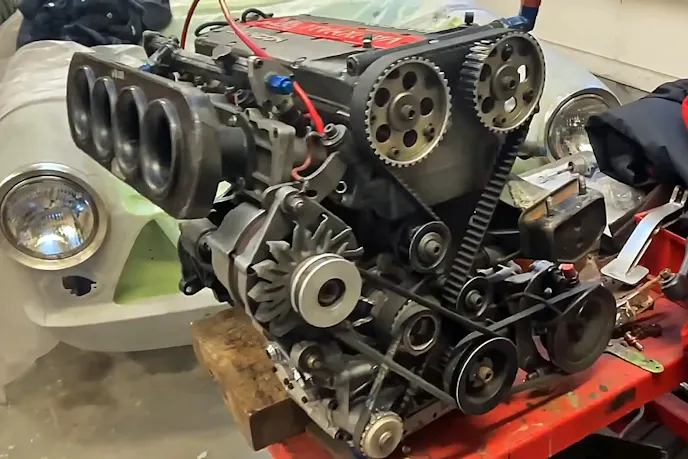
The new cylinder head design accounted for a significant improvement in overall engine efficiency, which was touted as 37 percent — an impressive number in the mid-‘80s. This all equated to 156 horsepower and 150 lb-ft of torque from a naturally aspirated 2.0-liter engine, using sequential multi-port fuel injection controlled by a Bosch Motronic 2.5.
Emissions Challenges Arise
Almost immediately the 20XE got a “C” in front of its name to denote that a catalyst and oxygen sensor had been added to comply with upcoming European emissions regulations. This resulted in a minor loss of six horsepower at the brochure. Further revisions to the roadgoing variant of the C20XE in the early ‘90s earned an additional suffix of “LN” for “low noise.”
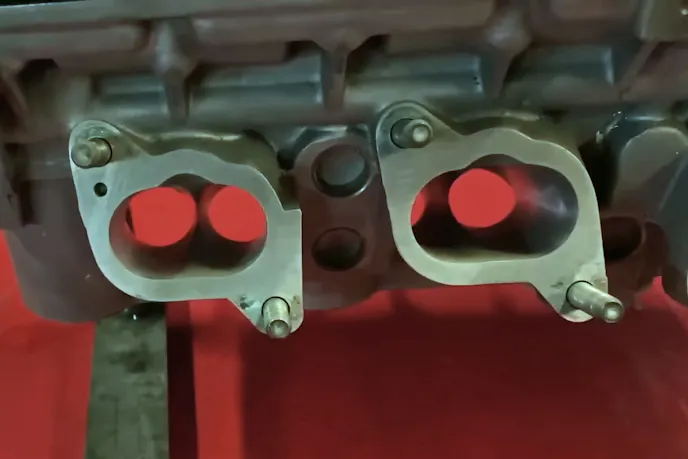
The Low-Noise variant moved from a forged piston to a cast one to reduce NVH as well as reduced cylinder head port size to reduce emissions. About the same time, the distributor was eliminated in place of a distributorless ignition system. Controlled by the Bosch Motronic 2.8 ECU, the coil-pack ignition was the largest visual difference between a standard C20XE and the low-noise variant.
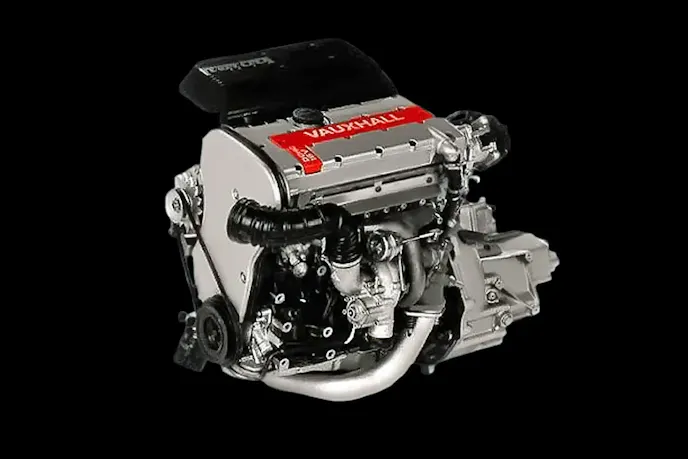
Then, as was popular in the early ‘90s, GM released a turbocharged version of the engine — the C20LET. It got forged pistons that brought compression down to 9.0:1 and brought horsepower and torque up to 200 each thanks to boost from a K16 turbocharger.
Getting Off The Road And Onto The Track
Obviously, with Cosworth involved, the engine immediately found a home in motorsports. It saw huge popularity in the European rally, hill-climb, and touring car worlds as a high-output, responsive 2.0-liter four cylinder engine. It also found it’s way into open-wheel racing, making 250 horsepower and powering championship Formula 3 programs.
Drawing parallels to similar Japanese four-cylinder engine programs, a healthy aftermarket developed around the platform, with tuners favoring the robust factory internals and taking the engines in all sorts of directions. Lotus even got in on the action, basing the next generation of engine, dubbed “Ecotec” (sound familiar?) on the C20XE.
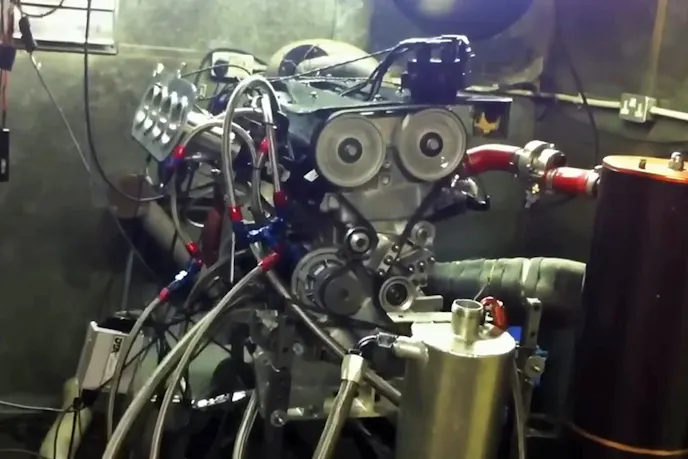
The naturally aspirated C20XE was renowned for its reliability, responsiveness, and overall robust performance characteristics. The turbocharged LET variant was loved for its ability to make 400 horsepower on stock internals, and almost double that once you added some aftermarket goodies. So, while the engine is pretty unknown in the US, the GM-Cosworth 20XE platform is quite a popular performance platform across the pond, and for good reason, while laying the groundwork for another generation of popular four-cylinder engines.
You might also like
Modern Gasket Sealing: How Today's Engines Changed the Rules
Elring and AERA explain how modern engines have changed the rules for gasket sealing, surface preparation, and installation.