


When it comes to the list of the top 10 most iconic engines, Jeep’s 4.0-liter straight-six definitely has earned a spot on there somewhere. That’s because it has been around forever (in fact, it began its life as an American Motors Company engine before AMC even bought Kaiser Jeep), there are a million of them still on the road, and they’ve been in everything from the so-ugly-it’s-cute AMC Pacer to the Jeep Grand Cherokee.
But the Jeep straight six is beloved by millions of people, not because of its power production, but because of its durability. No matter how much abuse you throw at it, the little engine just keeps running. And while it does make plenty of low-RPM torque, which is what you want for most off-roading applications, it has never been known for making big power.
That’s all changing with Newcomer Racing, which specializes in squeezing every last drop of power out of the venerable straight-six architecture. Company owner Keith Newcomer will tell you right up front that it hasn’t been an easy process. The 4.0-liter straight-six doesn’t enjoy the same aftermarket support as an LS, or a small-block Chevy, or many other engines that are popular with hot rodders. So, Newcomer has had to invent and find a way to build just about everything he needs.
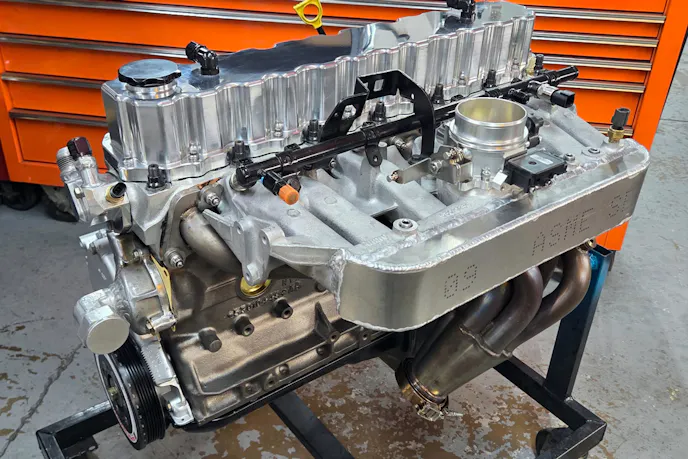
This includes everything from billet water necks that make room for high-rise valve covers, to fully fabricated high-flowing intake manifolds, and even a first-of-its-kind roller camshaft and lifter setup. He’s been so successful with his advancements of the venerable engine that he actually produced 1,082 horsepower with a turbocharged version on the dyno (which we covered here).
So, when we heard Keith was working on a new high-horsepower naturally aspirated build, we definitely had to check it out. This engine is being built for a dirt drag racer running a Jeep Cherokee. Keith knew right off the bat this engine was going to need to produce lots of torque on the low end to pull out of mud holes and also plenty of horsepower for top speed. That’s a tough task with a straight-six that has to be naturally aspirated according to the rules.
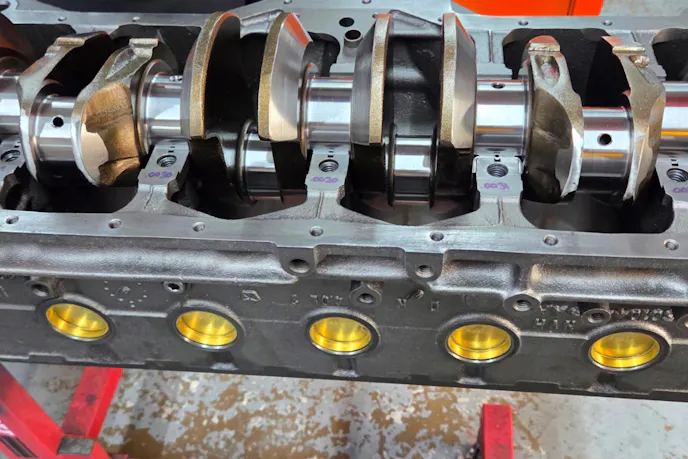
First up is the short block. For that, Keith used a newer block and matched it with a new Newcomer Racing crankshaft. These cranks are based on the tougher fully counterweighted Jeeps cranks, but they are brand new and not pulled from a junkyard engine. The extra counterweights give the crankshaft additional rigidity and help reduce windage, and Newcomer also knife-edged the counterweights to reduce windage while balancing to match the rods and pistons.
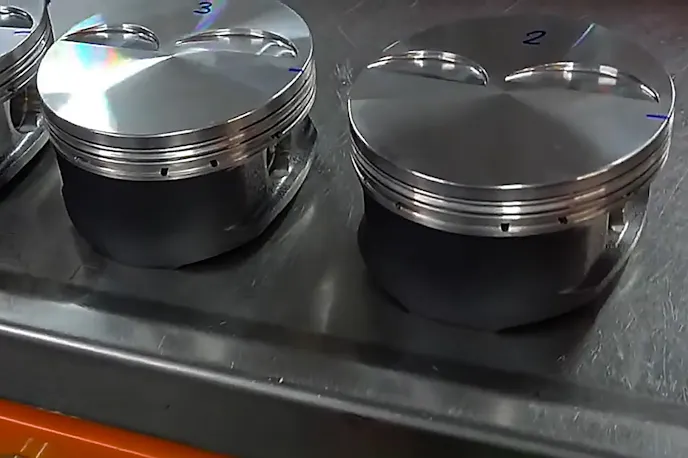
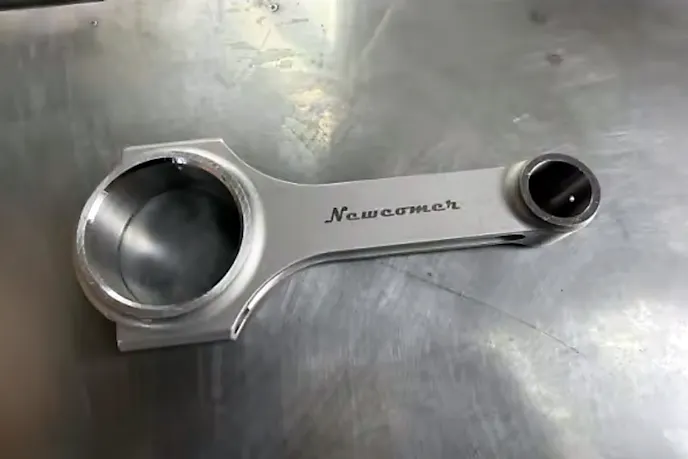
Completing the short block is a set of custom pistons and rods. The connecting rods are custom H-beam forgings that measure out at 6.125 inches center-to-center. These days, a lot of engine builders will just cut the crankshaft connecting rod journals down to Chevrolet size and run LS rods, but that’s not possible with the Jeep engine because the big ends of the rods have to be wider. So the newcomer had to have these made specifically for his needs. Likewise, the forged pistons from JE are also custom.
The pistons are 4.00 inches in diameter (stock is 3.88 inches) and, combined with the new 3.895-inch stroke (compared to 3.41 inches, stock), that brings total displacement up to 294 cubic inches or 4.8 liters. Also, the compression ratio is a very healthy 13.0:1. Since this is going into a race vehicle, that’s OK. Plans are for this engine to live on 118 octane race fuel.
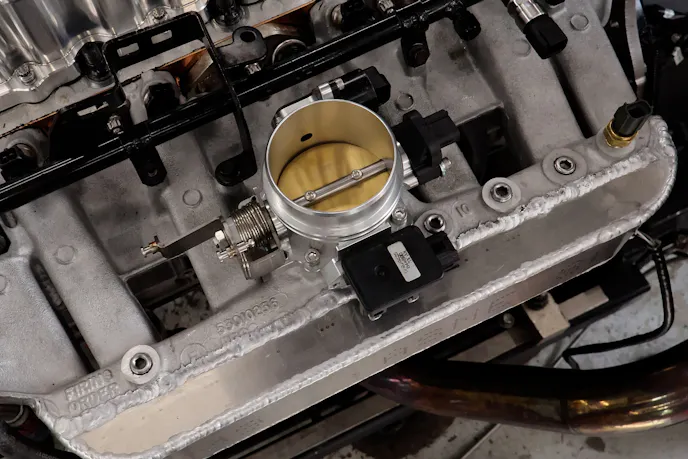
Up top, an aluminum cylinder head from Edelbrock is used and has been hand-ported for extra flow. Newcomer tested setups with both a carburetor and EFI, and different intake manifolds were used for each. To make extra power with the EFI setup, a Newcomer 75 mm throttle body (5 mm larger than stock) was used.
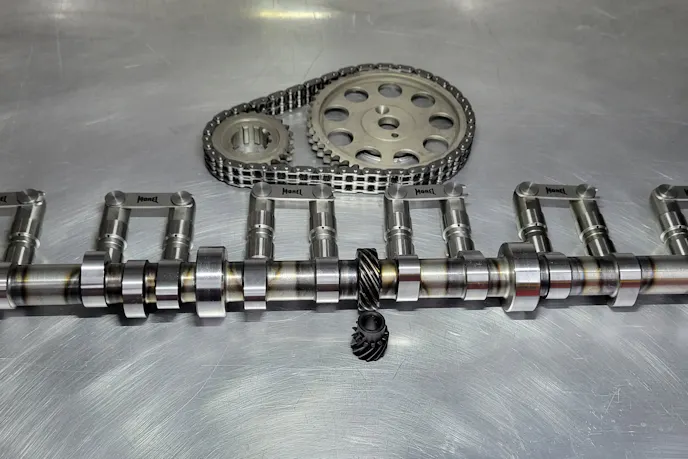
The valvetrain on this engine is truly unique. Jeep never outfitted its straight-six engines with roller cams. Other aftermarket companies have tried to come up with their own roller cam packages for this engine in the past, but Newcomer Racing is the first to actually build something that works. Newcomer designed a billet steel cam specifically for this application and has a handful of lobe designs for different applications.
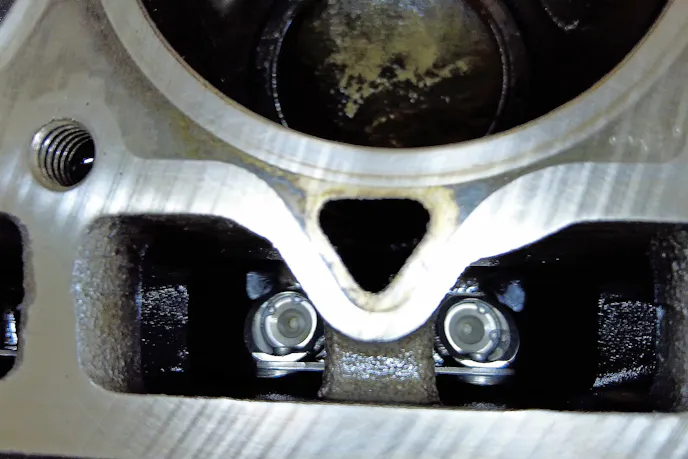
Another issue is that the lifters reside so deep in this block that they can’t be installed with a traditional tie bar setup. Instead, one end of the tie bar has to be slotted so that the mating intake and exhaust lifters can be installed separately and joined inside the block. This is also a newer block that utilizes a thrust plate for the camshaft, but Newcomer also designed a Torrington-bearing-equipped timing set to protect all of the components.
Because it’s a race cam, Newcomer didn’t want to give away all of the specs, but we do know it has about 230 degrees of duration at .050 tappet lift.
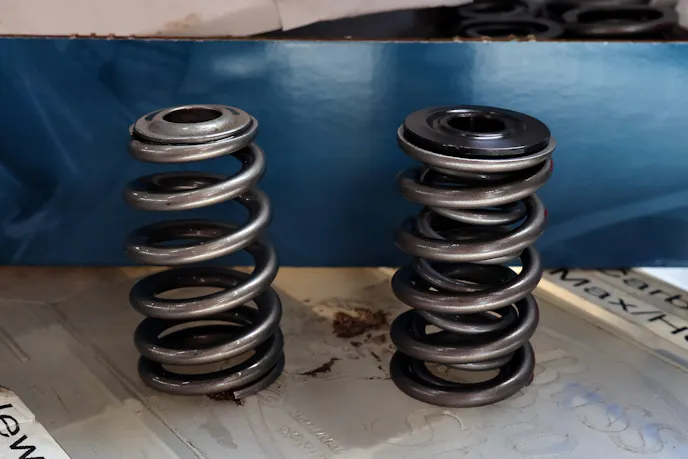
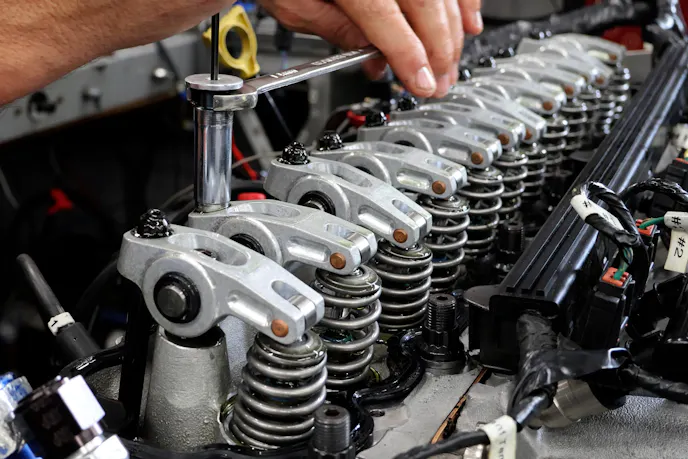
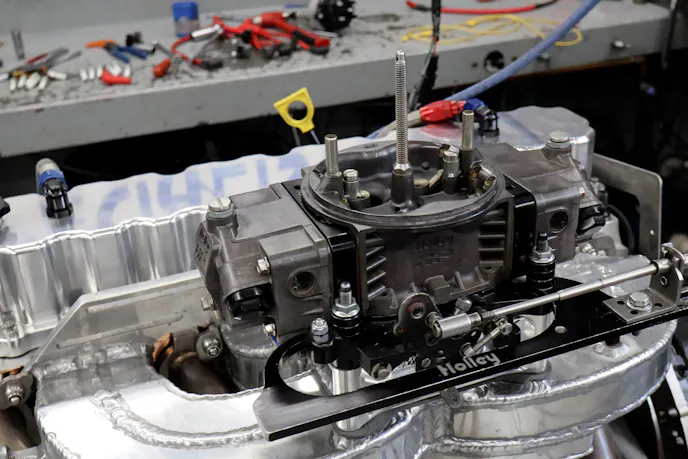
On the dyno, Newcomer started out with the carbureted setup, using a 650 cfm Holley XP to run the engine and confirm that everything was operating properly. Then we switched over to EFI. This included changing not just the carburetor but also the intake manifold. Interestingly, to help save the customer some money, they are using a stock ECU and even a stock wiring harness that’s been stripped way down to include only the engine controls they need. Newcomer used an HP Tuners setup to modify the stock ECU for the updated engine parameters.
We found that the peak numbers for the carbureted and EFI setups were virtually the same, but the EFI setup smoothed out the torque curve and removed dips that were there when running the carb. So, efforts continued to improve power, concentrating solely on EFI. Newcomer also tested different valvesprings as well as two sets of full-roller rocker arms (1.7:1 and 1.8:1 rocker ratios) to see how they affected the power curve.
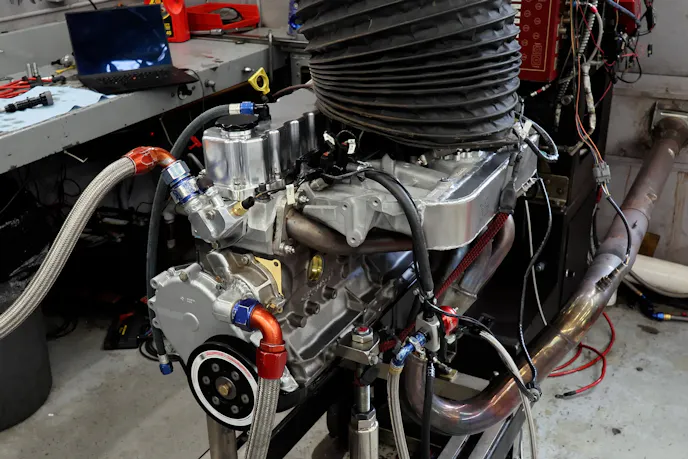
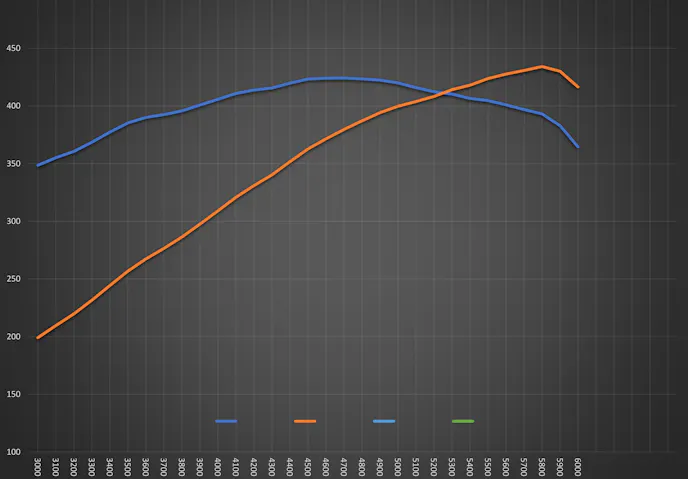
By the end of the day, Newcomer had the naturally aspirated stroker straight-six up to an astounding 424.2 lb-ft of torque at 4,700 rpm and 434.1 horsepower at 5,800 rpm. Now, if you are used to dealing with V8’s like the LS or boosted engines, this may not seem too impressive. But when you consider that the best the stock four-liter straight-six could produce over decades of production was 240 lb-ft of torque and 190 horsepower, that picture changes drastically. We say upping the torque by 184 and the horsepower by an astounding 244 is quite an achievement.
We’re betting that increase in power results in more than a few checkered flags, too.
You might also like
Livernois’ 401-Cube Gen-III HEMI Gets A Stout Top End
With the bulletproof bottom end built, it was time to install the Livernois Stage 3 HEMI heads with plenty of enhanced airflow.