
For anyone worried that the V8 was about to be shuffled off to the retirement home in favor of turbo four- and six-cylinder engines, Chevrolet just came through in the clutch (pun intended). After over a year of hints and rumors, they’ve officially debuted three new small-blocks, and the message is unquestionably clear: There’s still no replacement for displacement.
General Motors’ new sixth-generation small-block family now includes the Corvette LS6 6.7-liter V8 along with two new truck engines, the L76 5.7-liter and L78 6.6-liter. Let us go ahead and translate that European to USA English for you — that translates to 409, 350, and 400 cubic inches, respectively. Chevrolet didn’t choose those displacements by accident. Those are some great numbers when it comes to Chevrolet engine history, but the engineering underneath is thoroughly modern.
The two new truck-based engines are the ones Chevrolet gave us all the information for, so that’s what we’re going to concentrate on here.
More Stroke, More Torque
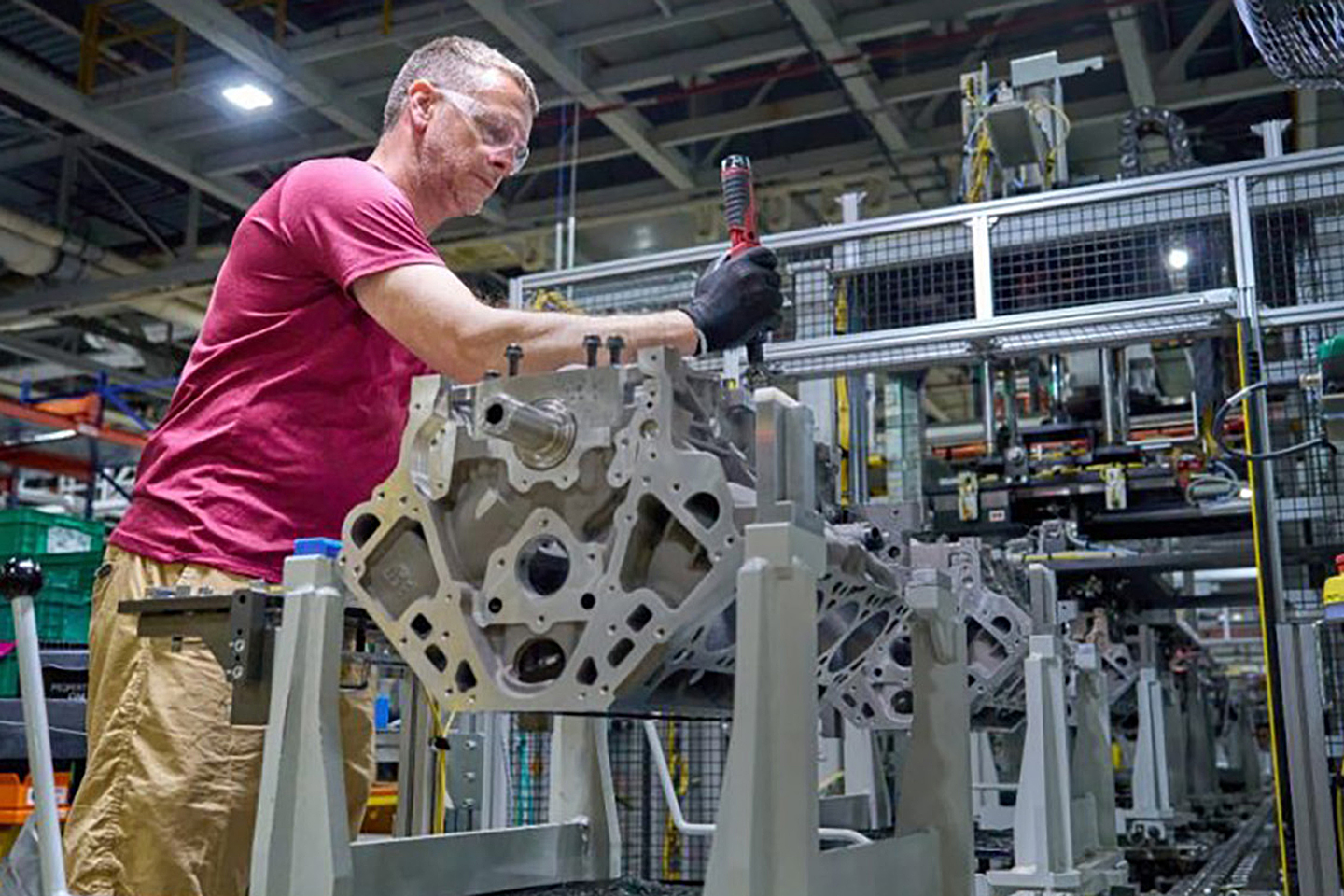
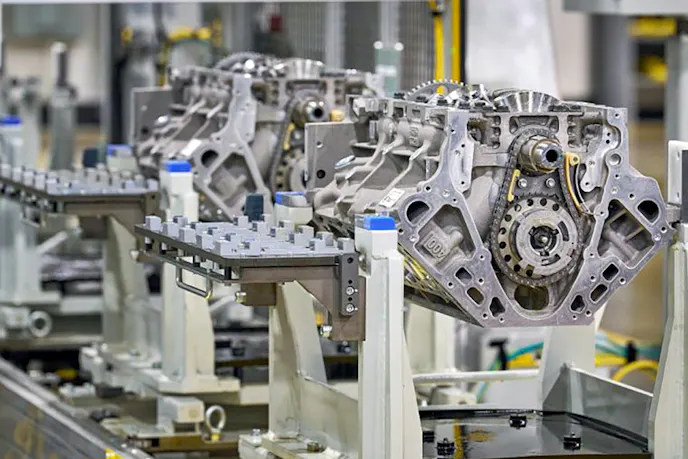
There’s a lot here that’s going to be familiar to the traditionalists. At the center of the Gen-6 design is a dimension that reaches all the way back to Chevrolet’s original 265 small-block introduced in 1955. The bore centers are still 4.40 inches apart, preserving the main dimension that defines a Chevrolet small-block.
Chevrolet also stayed with the cam-in-block, two-valve layout. In other words, this is still a pushrod V8, and that should make enthusiasts smile. A pushrod engine can squeeze a lot of displacement into a small space, keeps the center of gravity low, and allows for a low-slung hood by avoiding the bulk and width that comes with overhead-cam cylinder heads.
The truck engines replace the current 5.3- and 6.2-liter V8s, with most of the added displacement coming from a 6mm increase in stroke. The L76 lands at the magic 350-cubic-inch mark and produces 402 horsepower with 428 lb-ft of torque. The L78 stretches the formula to 400 cubic inches and produces 481 horsepower and 501 lb-ft of torque. GM says that makes the 6.6 the most powerful naturally aspirated V8 available in the truck class.
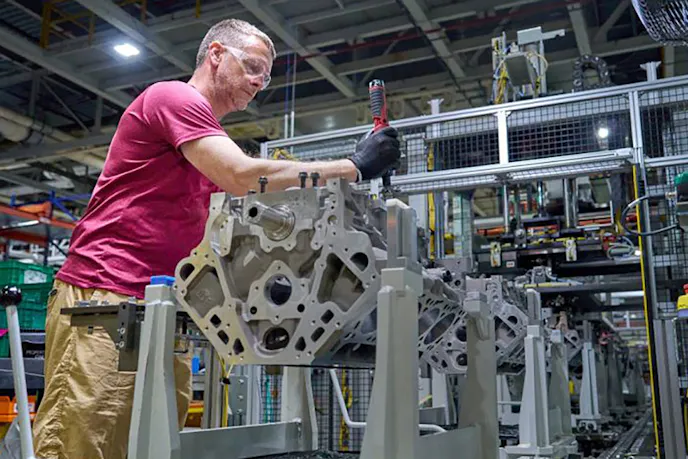
That is some serious power without adding boost. For comparison, the outgoing 5.3-liter truck V8 is rated at 355 horsepower, and the 6.2-liter makes 420 horsepower. More important for a pickup, the new engines should provide some serious torque throughout the RPM range rather than making an impressive peak number and then falling off on both sides of the dyno graph.
Old-School Layout, Modern Controls
The extra stroke gets much of the attention, but Chevrolet didn’t simply install a longer crank and call it a day. A mixture of both port- and direct-injection allows for higher compression ratios to improve combustion efficiency. And larger throttle bodies feed new intake manifolds with tuned runners. The goal is to move more air and use that airflow where a truck engine actually needs it.
Both truck V8s use a dual-fuel system combining direct injection with port injection. Direct injection can provide precise fuel control and charge cooling, while port injectors give engineers another tool for managing power, efficiency, emissions, and operating conditions. It also means the backs of the intake valves are sprayed with fuel, which helps eliminate the carbon buildups that plagued early DI engines.
The lubrication system received an equally serious rethink. A continuously variable oil pump can tailor output to the engine’s needs to save power. An engine-mounted oil cooler helps control temperature, and GM engineers say they’ve revised the oil-feed locations to help maintain more consistent pressure. That may not sound as exciting as another 50 horsepower, but we hope some of that means this new-generation V8 won’t suffer from the same oiling problems that resulted in many, many recalls for the previous design.
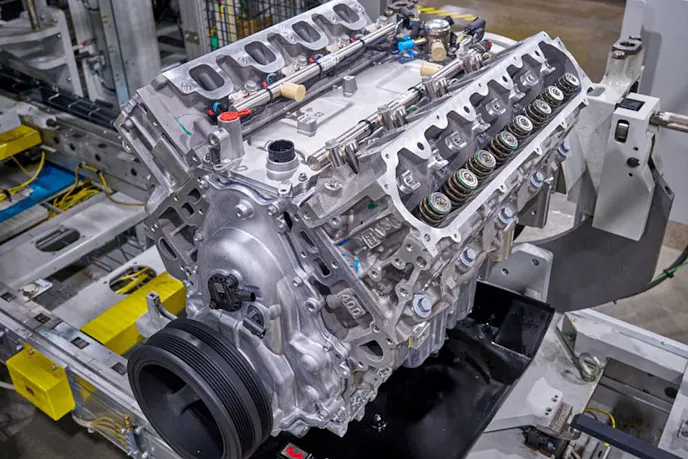
The Corvette Leads the Gen-6 Engine Charge
And although we don’t have as much information on it, we can’t forget the LS6. The first Gen-6 small-block will arrive in the 2027 Corvette. Its naturally aspirated LS6 displaces 6.7 liters, or 409 cubic inches, and is rated at 535 horsepower with 520 lb-ft of torque. It uses a 13.0:1 compression ratio, a 95mm throttle body, a tunnel-ram-style intake, and forged pistons and rods. The engine will power both the Stingray and Grand Sport, while the Grand Sport X combines the LS6 with an electric front drive unit for 721 total horsepower.
For hot rodders, the really interesting part is what Chevrolet has not announced yet. Every new small-block generation eventually inspires crate engines, controller packages, and swap combinations. GM has only detailed the production applications so far, but an architecture supporting 409 cubic inches, forged internals, dual injection, and improved oiling gives the aftermarket plenty to think about.
We can’t wait to see just how far engine builders and crafty tuners are able to push these new V8’s.
You might also like
Torque and Clamping Force: Why Lubricant Choice Matters
Engine builders depend on torque wrenches, but torque alone doesn't tell the whole story. Friction can dramatically change clamping force.