


When it comes to custom-built engines, one of the last things that many people think about is the dipstick. However, if you’ve made any modifications to the oil pan — be it modifications to the stock pan, or a completely aftermarket oil pan — the OEM dipstick is usually pretty useless.
Obviously, aftermarket dipsticks exist, but those are usually pretty universal options, which require modification to your specific combination. So we’re not only going to show you how to modify a universal dipstick to properly read your combination’s oil level, but we’re also going to discuss how to determine how much oil is right for your combination.
How Much Oil Is Too Much (Or Too Little)?
We’ve talked about windage control before, but, to recap, when we say windage in the engine, we are referring to the effect windage has on the oil in the crankcase. All that air movement generated by motion within the crankcase can have a negative effect on the oil in the system in a number of ways. Then there is the physical effect that uncontrolled oil in your crankcase can have on the rotating assembly — drag.
One of the biggest forms of windage control is to have the right amount of oil in your oil pan. Too little, and you can starve the engine. Too much, and you are creating unnecessary windage, as well as oil temperature. Lloyd “Senior” McCleary of Prestige Motorsports dives deep into the subject of oil level.
Starting with signs that you might not have enough oil in the oil pan, which is definitely the most dangerous of the two options, McCleary explains, “A loss of oil pressure is a big indicator. For the average Joe, who isn’t [actively in the process of] measuring power on the dyno, but is on the street, the lack of oil pressure, or it dropping away suddenly, is the big indicator that you might not have enough oil in your pan.”
Seems straightforward enough. As long as you have consistent oil pressure, you can cross “too little oil” off of your worry list. But, what about the other end of the spectrum? How can you tell if you have too much oil in your system? That’s where there are a lot of symptoms to look out for.
“Too much oil in your system can induce leaks as it creates windage,” McCleary explains. “When you create windage, you’re throwing oil at certain areas of the engine that aren’t used to it. Front seals, rear seals, and so on. We see that a lot when a customer overfills his engine thinking he’s being safe.”
However, leaks are only a minor concern compared to what else the windage is doing inside the engine. “Besides the leaks, you’re creating [oil] temperature,” says McCleary. “As you’re bashing more oil into the crankshaft as it spins, that’s friction and heat.” For a lot of projects, great care is taken to keep the oil cool through external oil coolers and the like. So, by simply having the proper amount of oil in the engine, you can help mitigate excess heat.
Finally, McCleary gets to the big one that everyone cares about. “Too much oil will decrease horsepower.” Think about being in a swimming pool. If you swipe your arm across the surface of the water, it splashes a little and then skips off. Now, do the same thing but while getting your hand deeper into the water. You can feel the amount of drag go up significantly. Now, multiply that by the number of counterweights on your crankshaft, and do it thousands of times per minute. Makes sense, right? “Too much oil is almost worse than too little,” states McCleary
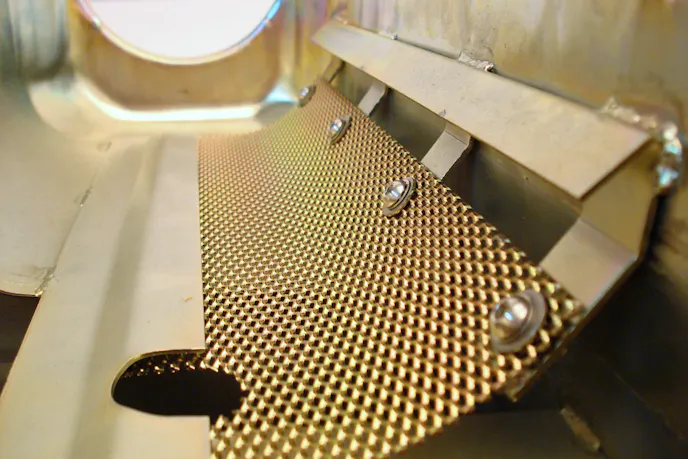
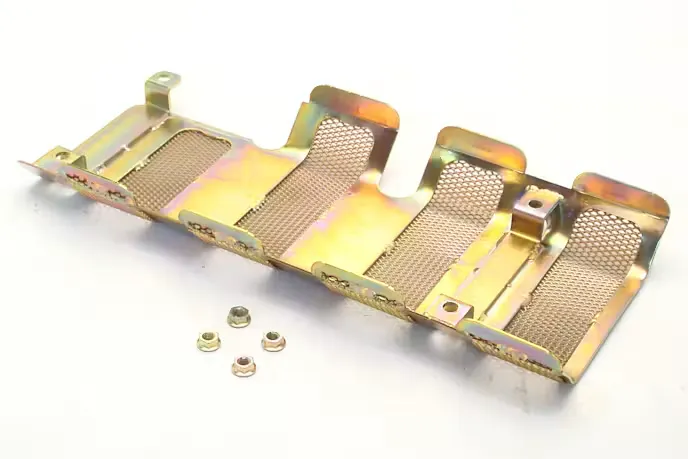
So, how do you know where to start? “We usually start off with the dipstick level with the windage tray, as a baseline. That’s kind of the theoretical ideal,” explains McCleary. However, the dyno can confirm, or it can deny that as the correct level. “If I get on the dyno, and start to lose pressure, which happens quite a bit, then I’ll start adding oil to the engine bit by bit.”
Just because the oil level is correct while the engine is static doesn’t mean it will be when everything is running. Besides the volume of the oil that is in the engine while running, a thirsty oil pump and loose clearances throughout the engine can take oil faster than it returns. “I’ll start adding oil a half-quart at a time, until I lose in the five to ten horsepower range. Then, we back up from there, and we know where the safe margin is. Unfortunately, the guy on the street doesn’t have that luxury,” McCleary says.
Customizing Your Dipstick
Now that you know how much oil is ideal, how can you check it? If you’ve changed your engine’s oil capacity, the OEM dipstick is only worth scrap value. The answer is an aftermarket dipstick. Of course, that’s a universal part and will require customizing. Luckily, aftermarket dipsticks from manufacturers like Moroso, Canton, or Lokar are specifically designed to be easily shortened to the proper length.
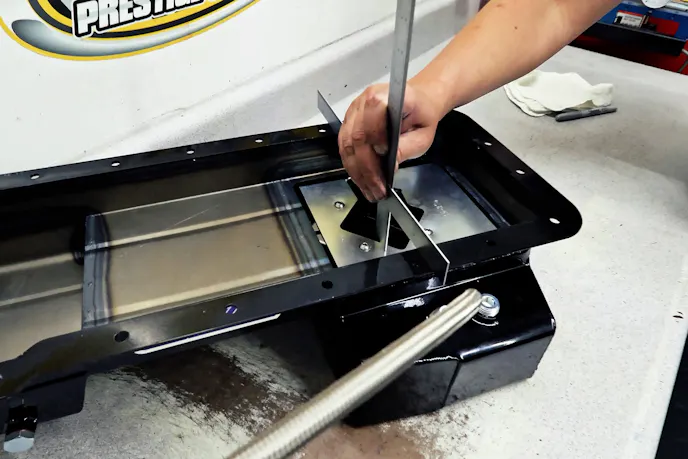
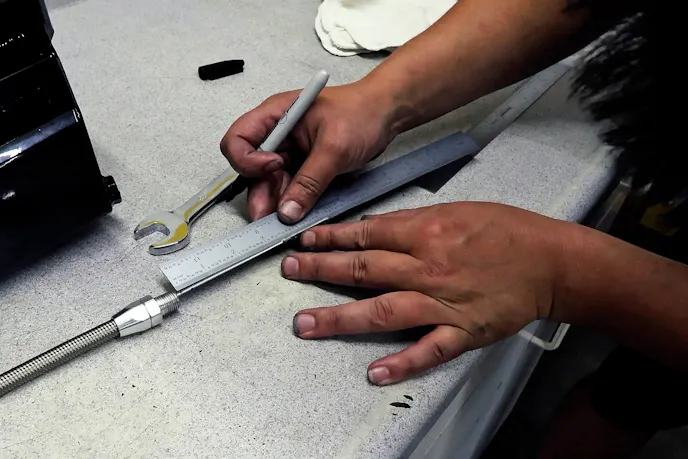
How do you figure out the proper length? Well, Cody from Prestige shows us in the video above how to measure using the shallowest point of the oil pan as a guide. Using that same method, you can set it to the bottom of the windage tray as McCleary explained as well, if one is fitted.
If you don’t have the luxury of having the oil pan on the bench, you can also fill the engine to the desired level and check the dipstick. Using the same measurements as Cody shows in the video, except using the oil reading as the marking point instead of rulers, you can easily set your new dipstick length.
Options For Controlling Windage
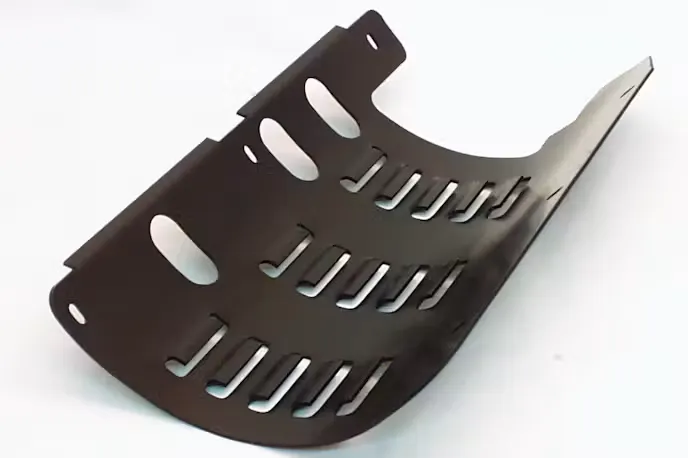
Windage is different not only for different engine families, but also between different block designs. “Oil is flinging everywhere. It goes up into cavities in the block, and how it returns from those cavities can affect windage,” McCleary says. “ A good windage tray is really, really valuable. Not just having a tray, but having a good tray. Their design and what they are made out of is important. We’ve had windage trays in here that don’t work and can actually cause more problems.”
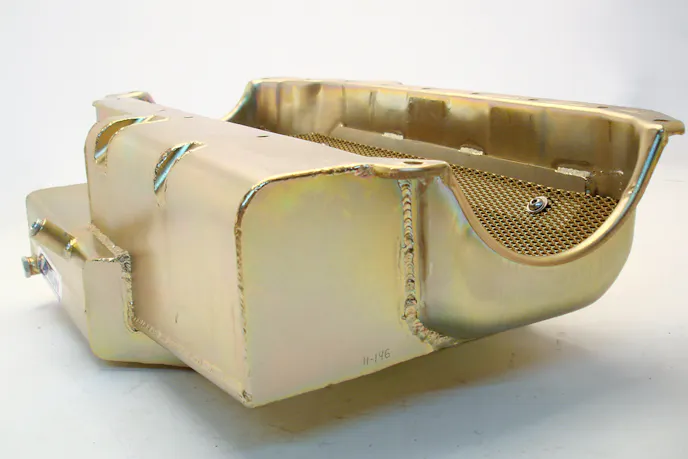
Another key to fighting windage is giving the oil somewhere to go. “Sometimes we’ll see a pan with a windage tray, but nowhere for the oil to go behind it,” says McCleary. “I highly suggest a pouch. A pouch is a remarkable thing. Especially if you don’t have a lot of depth to your pan.” The pouches, or kickouts, are located on the side of the oil pan, in the direction of the crankshaft’s rotation, and they give the oil being flung off of the crankshaft a place to go, without encountering the crankshaft a second time.
If you have room for a deep pan, that can help mitigate the need for a kickout, but as McCleary explains, not all applications afford you the room for a deep pan. “Marine pans can have a lot of depth, and they aren’t as picky about the kickout. Street cars really don’t have the luxury of a deep pan.”
You might also like
Engine Pro Releases Sportsman Series Flexplates And Bolt Kits
Engine Pro's new line of Sportsman Series flexplates proves that you don't need a big pricetag to handle big horsepower.