
If you’re a fan of Mustangs or even if you’re not, we’re taking a look at the results of a journey Austin Atwood has been on for the last few years. Pull up a chair, and grab some popcorn because this is kind of cool.
Why Do We Race?
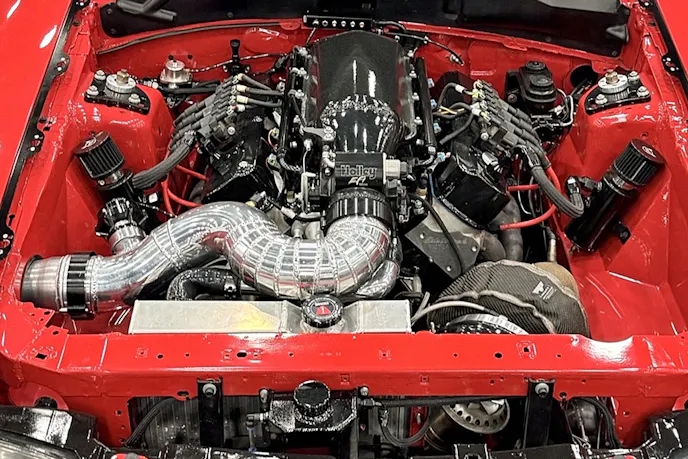
There must be an abnormal gene that explains why we decide to start drag racing. If you’re involved in the sport at all, you understand the late nights and expense. Atwood’s Mustang is a 1994 GT chassis with a 408 SBF, TH-400 automatic, and a good-sized turbo. What could go wrong?
This has been a four-year build, and his Mustang project has finally come to fruition. Atwood hadn’t made a pass in ten years, so his adrenaline was extremely high, to say the least. According to Atwood, the first run on his fresh build went down the track great, at just under 900 horsepower with an easy 6.08 in the 1/8th mile, coasting into a 9.76 quarter mile, before the problems started.
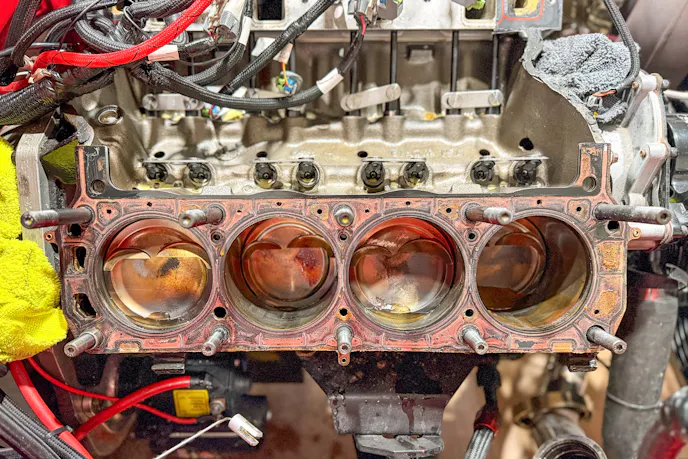
It hasn’t been all fun and games for Atwood. Pushing the limits, he was having a few issues and finding kinks to work out, like any new build. However, one major issue was with the head gaskets. He had run several different headgasket types and brands with no luck; they were repeatedly letting go.
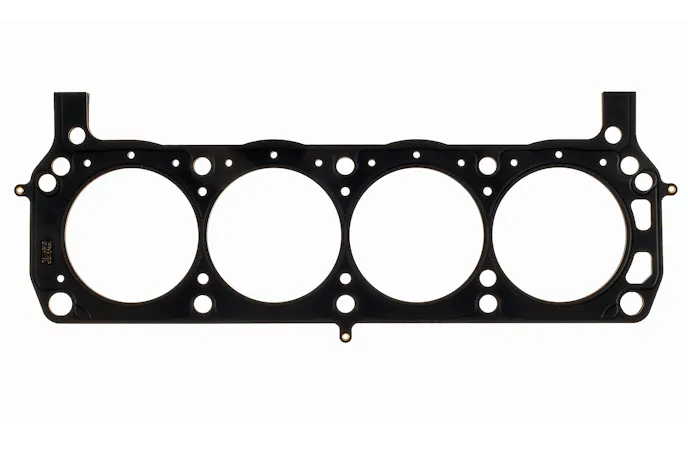
Because this is a real street car, he chose not to use an O-ring setup or go with copper gaskets to solve his issues. Instead, he reached out to Cometic Gasket, leaning into their MLX line of performance gaskets, hoping they would be the magic touch to solve his problem. He had tried several non-Cometic multi-layered steel head gaskets in the course of his struggles, and all had failed.
Head Gasket Technology
Some readers may not be aware of the difference between the MLS and the MLX. So let’s break that down. Very few new car manufacturers use traditional composite graphite/fiber head gaskets anymore. Several years ago, they switched to modern solutions and are taking advantage of what the MLS-style gaskets have to offer.
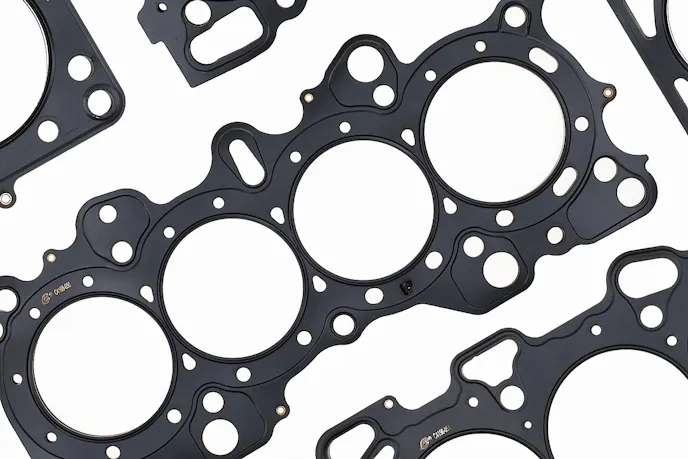
Modern engines need modern solutions due to the increased horsepower of today’s performance vehicles. The days of simple composite head gaskets, for the most part, have long since been left behind. MLS gaskets are the new generation of technology and an industry standard.
When it comes to performance head gaskets, Cometic is usually the first name that comes to mind. They have been an industry leader since opening their doors in 1989, and have been a clear choice among professionals ever since.
Multi-Layer Steel Gaskets
Using an MLS gasket provides several benefits. Generally, this style of gasket functions better with a higher layer count. They offer increased structural integrity, withstanding higher cylinder pressures than a composite style. In particular, they accommodate the thermal expansion of modern aluminum engines with an increased cumulative “spring” force.
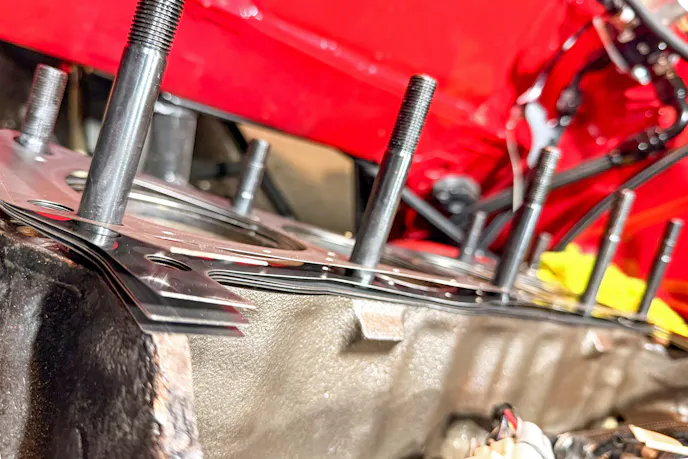
When selecting the right gasket for your engine combination, the MLS will most likely meet your needs. If you are pushing the limits, Cometic’s MLX (multi-layer extreme) line of performance gaskets can take you to the next level.
The Cometic MLS and MLX head gaskets closely resemble one another, each having an embossed outer layer and a proprietary high-temperature coating. They feature an internal set of shims as the center layer or layers, allowing for different thicknesses. This is especially valuable when trying to maintain your ideal quench requirements.
The construction of these gaskets is very similar, sharing several key features. But there is one important difference. The MLX adds an internal stopper layer. The stopper layer features a folded-over area specifically around the fire ring. This folded area is designed as a torque-limiting feature restricting overcompression of the gasket. It also offers increased sealing capabilities, kind of like how an O-ring works.
Why do I need an MLS or MLX?
It’s fairly simple: on standard engine applications, naturally aspirated, and mild-performance engines, the MLS will be your best bet and go-to gasket. The MLX gaskets, on the other hand, are designed and engineered for higher-performance loads, higher boost levels in turbo and supercharged applications, or nitrous engines. This is where they really shine. MLX gaskets are considered top-tier, and you’re definitely getting what you pay for. The technology and design that go into these gaskets will surely save you time and money in the long run.
As always, choosing the correct gasket will be a key factor. Selection is dependent on your engine and application. Are you taking advantage of forced induction? Are you going with a mild boost or swinging for the fences with several stages of nitrous? Whatever your choices are, the Cometic line of performance gaskets would be a wise investment, and their tech team is always happy to help you make the right call.
Sealing 408 Cubic Inches And A Turbo
Now that we understand the differences between the two versions of gaskets, their benefits, and how they fit into the engine equation. Let’s take a closer look at the mayhem that caused Austin’s previous issue, and why Cometic’s techs suggested the MLX gasket
Atwood’s combo is a 1969 Ford Windsor 9.5-inch deck engine block bored to 4.030 inches. The rotating assembly is by FordStrokers.com. The crankshaft is an internally balanced, 4340 forged material with a 4.00-inch stroke and 4340 forged H-beam rods. They are topped off with Wiseco forged pistons. Leveling it off at 408 cubic inches.
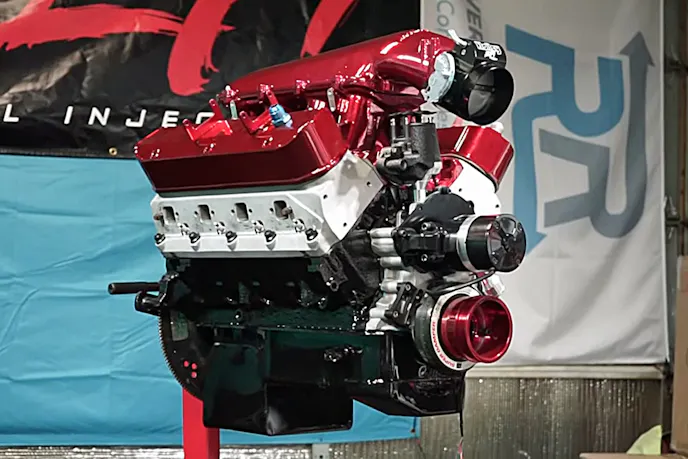
He decided to go with a custom Bullet Racing solid-roller cam, spec’d to his turbo setup. On top of that are Howard’s solid roller lifters, Trick Flow pushrods leading to Comp Ultra gold 1.6:1 rockers.
He also elected to run a pair of freshly ported Edelbrock Victor Jr. heads, setting him up with a 10.5:1 compression ratio. His choice of induction system starts with a VS Racing 88/96 mm turbo blasting into a Holley 105mm throttle body. This was in front of their High Ram Manifold and 120lb injectors. All being lit with coil-on-plug, a MSD Dual Sync distributor for EFI and Holley Terminator X ECU. Last but not least, the engine sports an industry-standard ATI damper and ARP fasteners throughout. Unfortunately, while those components all stood up to the abuse, all of his previous headgaskets did not.
Stopping The Leak
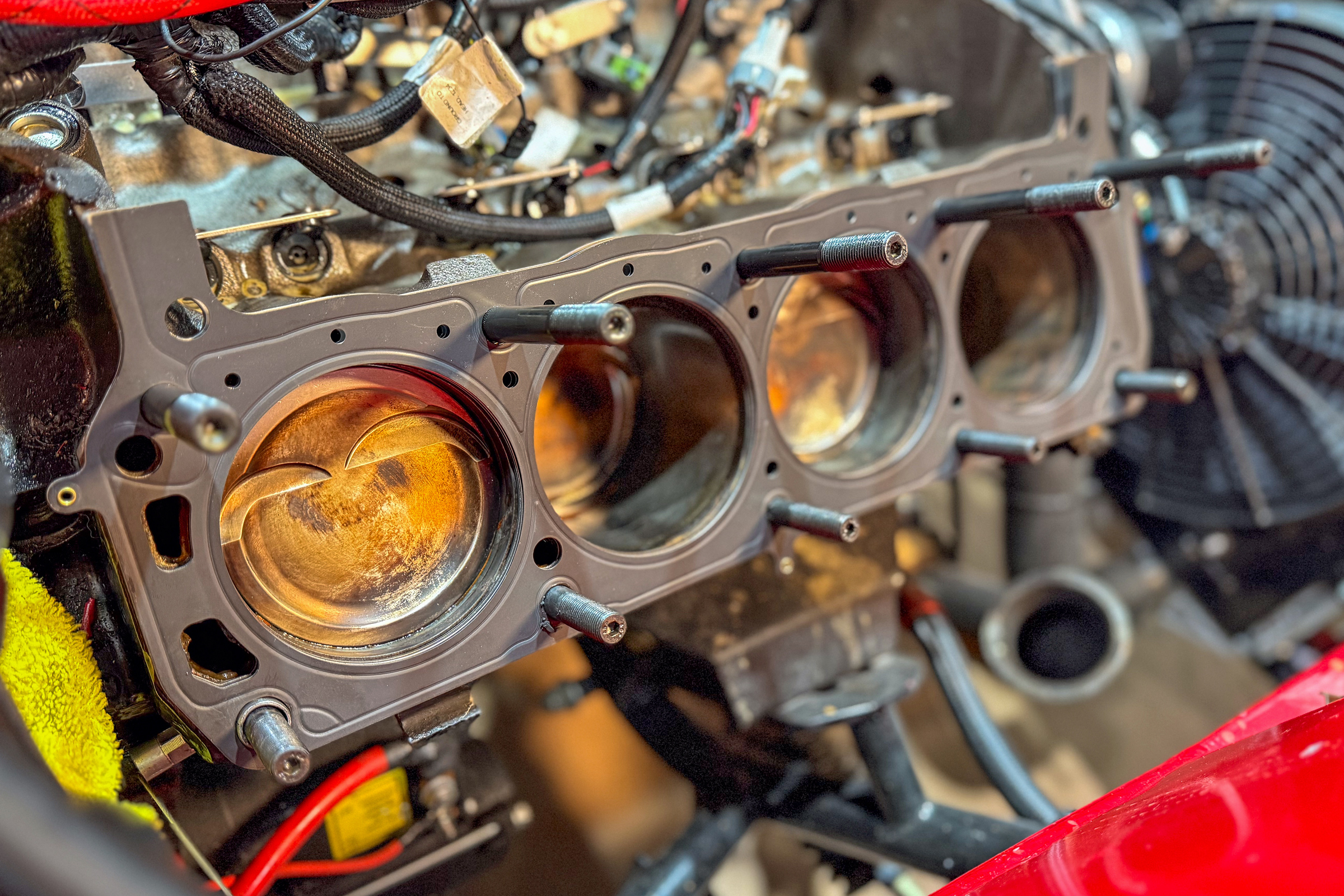
The MLX’s stopper layer offers extra sealing around the combustion chamber, which, in theory, keeps the combustion gases from finding their way out and torching the gaskets, or even worse, the head and block decks. That extra sealing was just the ticket to curing Atwood’s head gasket woes.
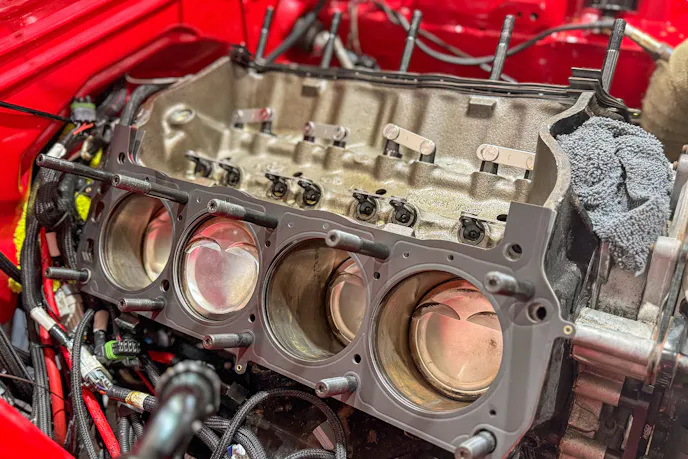
With the process of swapping gaskets becoming second nature to Atwood, putting the MLX’s on required no special preparation of the block or heads, and were simply a one-for-one gasket swap. Getting everything back together, he headed for Milan Dragway to see if his woes were fixed.
Atwood went easy on the initial passes with a few eighth-mile bumps. He limited the boost to just six pounds, getting a feel for everything. With all the gauges in the green and the engine sounding and feeling healthy, he declared his problem fixed and drove home.
As we all know, the boost bug is infectious and bites hard. With the gaskets finally holding, Atwood plans to increase the pressure to 15 pounds at the next dyno session, in search of the enticing 1,000-horsepower mark — at the wheels, mind you — and then aiming for an eight-second quarter-mile pass.
You might also like
BTR Simplifies Making Big N/A Power With Its 5.3-Liter SBE Power Packages
BTR's new SBE Power Packages make a budget friendly 5.3L short-block breathe like a monster with a single part number.