


If you’re into engine building, you know the name, Keith Jones. He is the Director of Technical Sales at Total Seal Piston Rings and has decades of experience supplying rings to racers across the globe. You are also probably familiar with at least a couple of these engine myths.
When you’ve been in the industry as long as he has, you’re sure to gain a wealth of knowledge, and in this video, Keith not only debunks some myths, but explains the actual science behind making the proper decisions.
#1 – Do tighter piston ring gaps make more power?
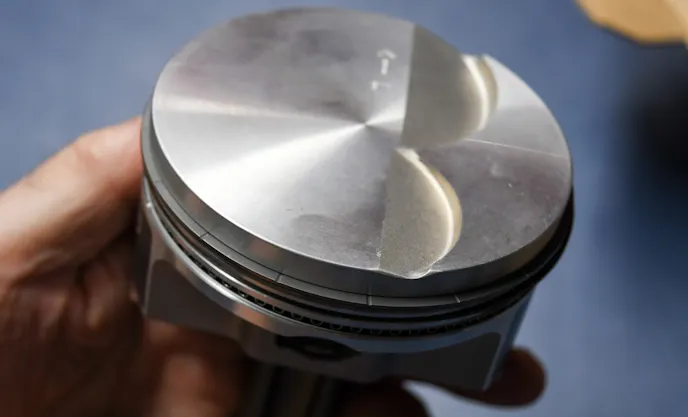
In Short, no; if a piston ring gap is too tight, it will cause the ends to butt together. This leads to serious engine damage. Too wide, and we open the door to higher blow-by numbers. Keith goes on to explain, we’re looking for the correct balance between the gap being too big and too small, for the application, at the power level you’re making.
Tighter end gaps may indeed lead to lower blow-by numbers. But, there are other options to minimize blow-by without risking too-tight of a gap, like using gapless rings. They can have a larger end gap without giving up those numbers. Another key point would be the intake stroke and how well the piston draws air into the cylinder. This is where more power will come from.
Ring Gap isn’t a dark art or Voodoo. If you’re unsure of what gap distance you should be running on your setup, reach out to the manufacturer or Total Seal, and they can make suggestions.
#2 – More oil pressure equals better lubrication?
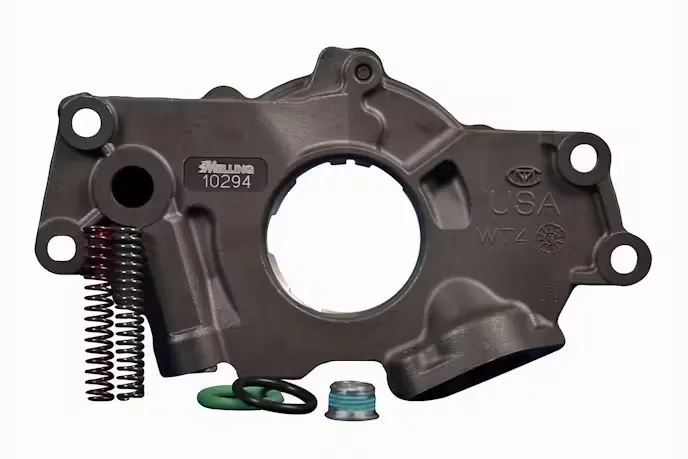
While this one may seem legit, there are a few factors we need to think about that lands it on the list of engine myths. Oil has the dual role of cooling, as well as lubricating, so having enough flow over the bearings and to the valve components is essential.
Pressure is a measure of restriction; with more oil volume through the engine and bearings, we will see a higher pressure. This is definitely an area worth understanding.
With increased pressure, we also suffer from a parasitic loss; it takes horsepower to turn the pump. If you’re making excess pressure, that makes it harder to drive the pump and causes extra power losses for no reason. A priority-main V8 pushrod engine may need a lower-volume pump than an overhead cam setup, as a modern OHC engine needs to supply the 32 lash adjusters and numerous oil-driven accessories in the valvetrain. Having just enough pump volume to meet our required demand, and nothing more, is nirvana.
#3 – Do you need the biggest cam possible for power?
This is one of the most pervasive engine myths on the list. You absolutely DO NOT need the biggest cam available to make the most power. In the video, Keith stresses that over-camming an engine kills horsepower. Most, if not all, cam companies will help you select the correct cam based on the specific application and needs of your setup.
Too much cam may sound cool, but when it comes time to “put up or shut up,” you don’t want to be looking at anyone’s tail lights! Over-camming will cause you to suffer at the lower end of the RPM range and only give you a small window of power, if any, in the upper.
Again, it’s all about balance. You need a cam that works with your engine and induction system to supply peak torque in the correct operating range, offering the best performance.
Let the experts help you out. — Keith Jones, Director of Technical Sales, Total Seal
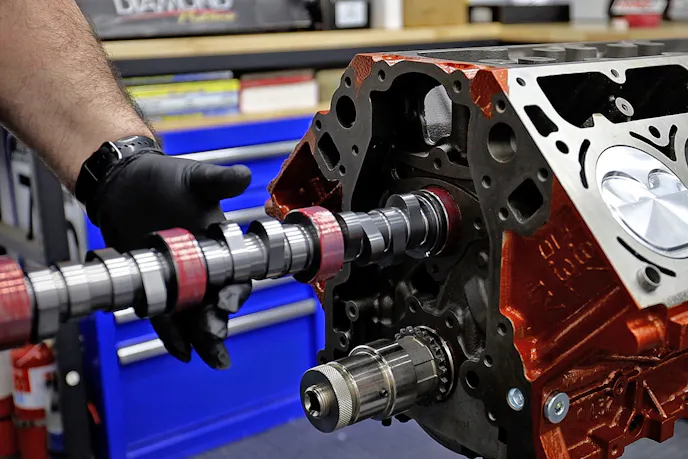
#4 – Does how freely an engine turns over indicate proper clearances?
The assumption that, “if the engine turns freely the clearances and tolerances must be right,” is false. This is one of those engine myths that couldn’t be further from the truth. You are the last line of defense when it comes to measuring. It only takes one missed step to destroy your investment and hard work.
The clearances of your engine will depend on several factors. Part selection, desired RPM range, application, Boost level, the type of oil, and fuel you will be running are just a few things to consider.
Measure, measure again, then some of us will measure one more time. Having the correct rod, main, and cam bearing clearance is just the beginning. Crank and cam end-play shouldn’t ever be overlooked either. Rod side clearance, wrist-pin, piston to wall, ring gap, lifter to bore are just a few more to name on the list. All are worth double-checking.
Having your chosen engine components work in synchronicity, along with the correct clearances for the application, will be a winning ticket for your build.
#5 – Forged vs. Cast Parts
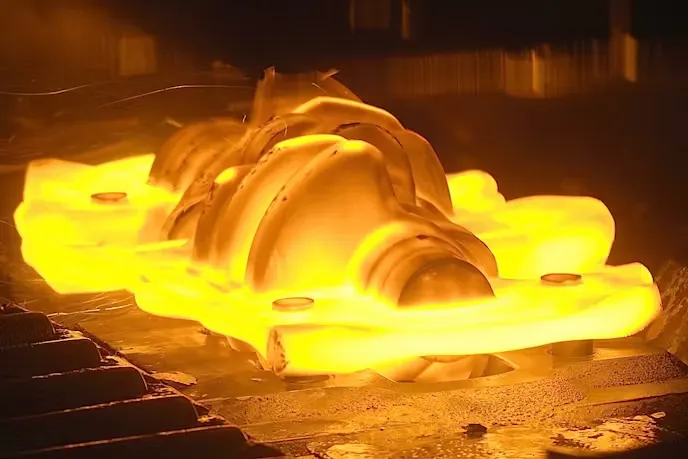
Forged parts differ from cast in many ways. One of the most obvious is in the name. Forged parts are heated to a malleable state and pressed or hammered into the desired shape.
This process retains a continuous grain structure. Having this grain structure aligned increases the tensile and fatigue strength of the part. This makes forged parts ideal for higher-stress areas, i.e., crank, rods, pistons, etc.
This process does drive the cost of manufacturing up. But, it’s the price you pay if your project requires the extra strength.
Cast parts are created from heating the alloy to a molten state and pouring it into molds of the desired shape. The grain structure is coarse and irregular, in part due to its uncontrolled formation when cooling. This random grain orientation, along with potential porosity of the casting, reduces the strength and ductility of the material. Cast parts are often less expensive because this manufacturing process is easier and cheaper to perform.
Does that mean forged parts are bulletproof?
So what does any of this have to do with you and your engine? Part selection is a big portion of your successful build. I don’t need to mention that choosing the wrong part will lead to catastrophic engine failure. The application has everything to do with the process. “Do you actually need a forged crank?” “Will a hypereutectic piston be OK?”
Working within a realistic criterion is essential. Having an honest view of what you can afford versus what you need will be a step in the right direction. As Keith says in the video, “Can I put a Bryant crankshaft in a Pinto? Sure. But do I need a five-thousand-dollar Bryant crankshaft in a Pinto”?
Again, it’s about picking the right parts within your budget that will be the best for your application.
It’s always a wise choice to reach out to a professional for advice. A great place to start would be a local brick-and-mortar speed shop or the manufacturer’s help line. Without having extensive part selection experience, choosing your own setup may be rolling the dice, especially with all the engine myths that have flooded the internet. Take the time to do your research; it will definitely pay off in the long run.
You might also like
BTR Simplifies Making Big N/A Power With Its 5.3-Liter SBE Power Packages
BTR's new SBE Power Packages make a budget friendly 5.3L short-block breathe like a monster with a single part number.