
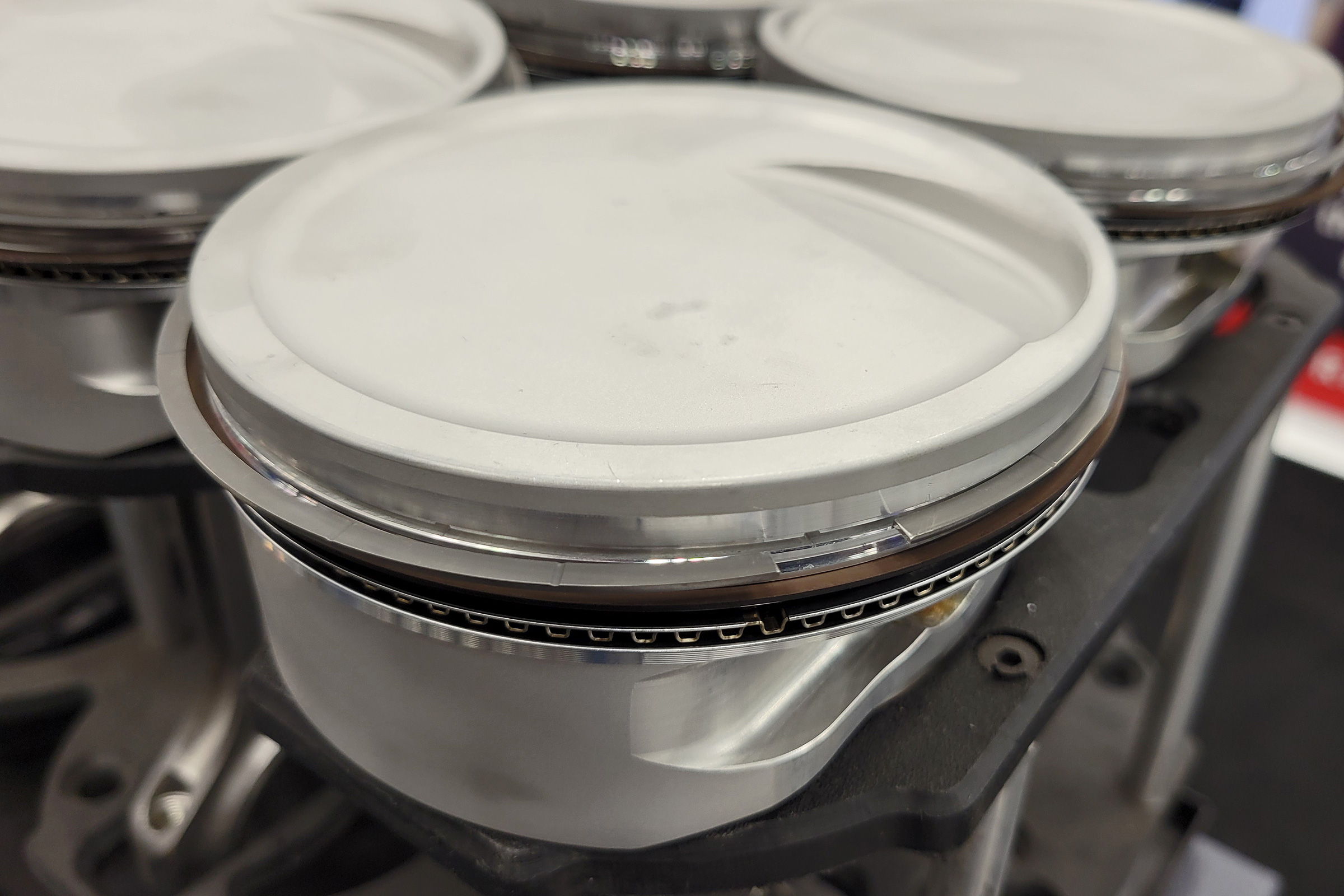
If you’ve spent any time around serious engine builds, especially in drag racing, then you know gas-ported pistons aren’t exactly new territory. Drill a series of small holes from the top of the piston down into the back of the top ring groove or laterally to make a groove in the top of the top ring land, and you use cylinder pressure itself to push the ring harder against the cylinder wall. The result is better ring seal, less blow-by, and even more efficient combustion.
But like a lot of things in engine building, once you think you’ve squeezed everything out of an idea, somebody comes along and finds an innovative combination of parts to make even more power.
That’s where our recent conversation with Keith Jones from Total Seal got very interesting, and we knew we had to share it with you.
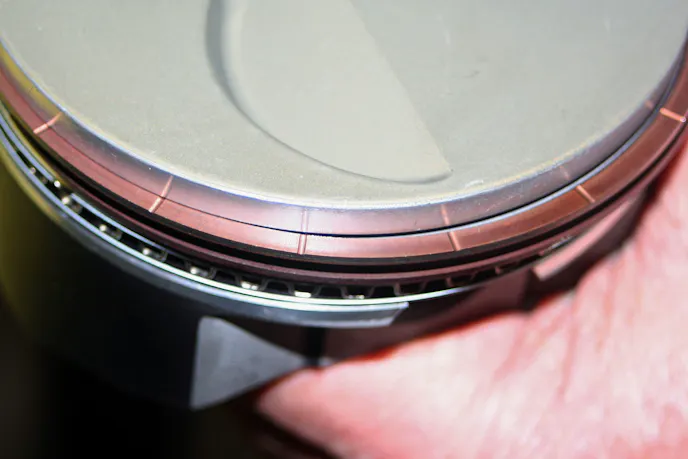
Total Seal began making gas ported piston rings a few years ago. The idea was to benefit racing classes where the rulebook limits engine builders to stock-style pistons without gas ports. So, as a workaround, the engineers at Total Seal found a way to put the gas ports into the rings themselves. And it worked. Ring seal improved, blow-by was reduced and the popularity of these specialized piston rings took off.
That’s the entire concept in a nutshell. Machine small, carefully shaped grooves into the top of the ring, and now cylinder pressure can get behind the ring directly — no piston modification required.
It sounds obvious once you hear it. But like most “simple” ideas, it took a lot of trial, error, and broken parts to get it right.
What Gas-Ported Rings Actually Do
At its core, nothing about the physics of gas ports changes. You’re still using combustion pressure to load the ring against the cylinder wall. What changes is how that pressure gets there.
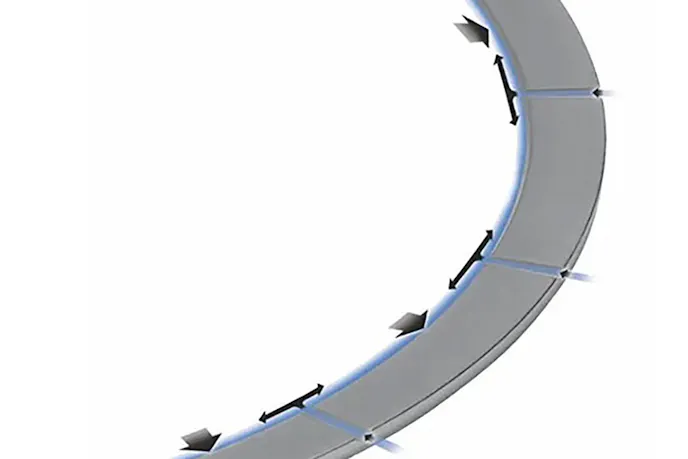
Instead of relying on a handful of fixed ports in the piston, gas-ported rings distribute pressure through multiple grooves cut across the ring itself. The result is more even loading and improved sealing efficiency. That matters more than it might sound.
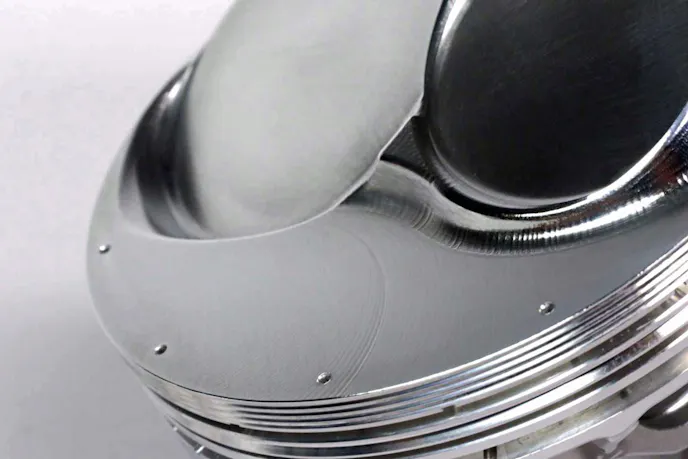
A traditional gas-ported piston applies pressure to the piston ring at fixed points around its circumference. But rings rotate as the air/fuel charge ignites in the combustion chamber and the piston moves up and down in the bore. And when gas-ported rings rotate in the piston’s ring lands, that pressure distribution moves with it. You’re not hammering the same spots over and over. As Jones puts it, you’re spreading the load instead of concentrating it.
And that has a handful of real-world benefits. There’s the improved ring seal, which we already mentioned. But gas ported piston rings also reduce localized bore wear, have less tendency for hot spots and improve long-term stability. Or, to put it into racer terms, the engine stays happy, longer.
Like a lot of good tech, gas-ported rings didn’t stay in one lane for long. They started mostly in NHRA Factory Stock and other similar classes. But once the concept proved itself, it didn’t take long for it to migrate. First into other restricted classes where you are limited to a shelf piston. And eventually into the wild west of boosted street and drag builds. That’s where things really get interesting.
Modern LS, Coyote, and modular Ford builds are living in a different world than stock-class engines. Thirty pounds of boost isn’t shocking anymore. Forty isn’t unheard of. And with that comes a whole new set of problems. Chief among them is ring seal.
Jones points out when you push enough boost, blow-by can become a serious problem. Gas-ported rings give builders a way to add that extra sealing force without throwing away a perfectly good set of pistons.
Doubling Up Works
Here’s where things take a turn.
If you already have a gas-ported piston, you’d assume adding gas-ported rings would be redundant. After all, you’re already feeding pressure behind the ring. Turns out that was Jones’ assumption too.
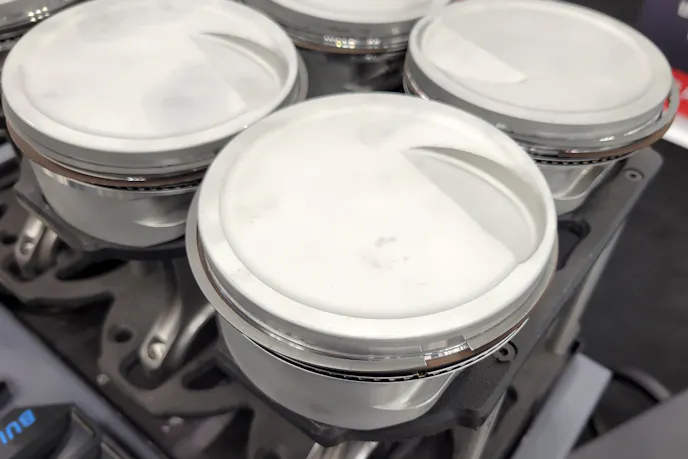
Then some inventive customers started letting him in on their discoveries. They were doubling up and running engines with both gas-ported pistons and gas-ported rings. Jones found the feedback was consistent, running both was providing better ring seal than ever before.
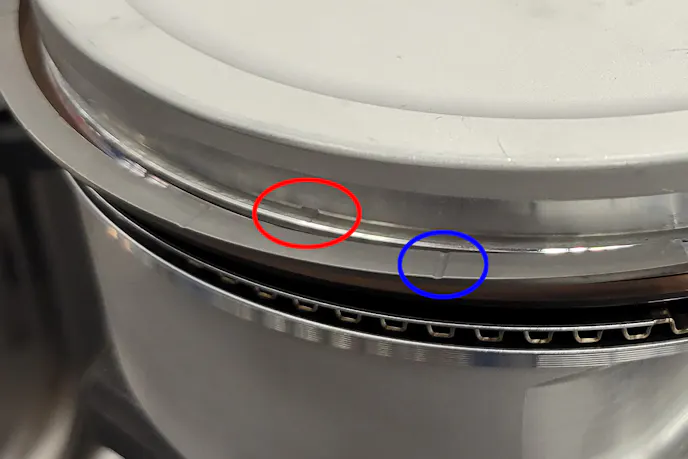
That reveals something important. Even with traditional gas ports in the piston, you’re not always getting enough pressure, either in the right place or at the right time. Add the ring-based ports, and suddenly you’re stacking the deck in your favor. More pressure gets behind the ring, faster, and more evenly.
The result? Less blow-by. In some cases, enough improvement that engines that previously struggled to maintain crankcase vacuum are now pulling it. And crankcase vacuum is like horsepower, a little is good, but more is always better.
How Do You Know It’s Working?
All of this sounds great, but how do you actually know it’s working? The good news is you don’t need a lab full of sensors to figure it out. Jones points out that there are a couple of dead-simple indicators that most engine builders already have access to.
First is fuel demand. If ring seal improves, the engine will pull harder on the intake stroke. That means it wants more fuel. On a carbureted engine, you’ll often see it immediately in the need to up jet sizes. On the engine dyno, this usually equates to an increase in the brake-specific fuel consumption, often simply referred to as BSFC.
The second, and more direct way, is to measure blow-by. A high-end electronic transducer will give you detailed data, but plenty of serious builders are still using basic manometer-style blow-by gauges. A simple ball-in-tube setup can show you exactly what’s happening in real time.
Less blow-by equals better ring seal. It’s that simple.
What About Ring Strength?
This is one of the most common questions people have when it comes to cutting gas ports into piston rings. We already know that thinner rings create less friction moving up and down the cylinder bore, which allows more power to make it to the crankshaft. So, since we’re already going to progressively thinner rings in modern engine builds, cutting grooves into those thinner rings sounds like a recipe for failure.
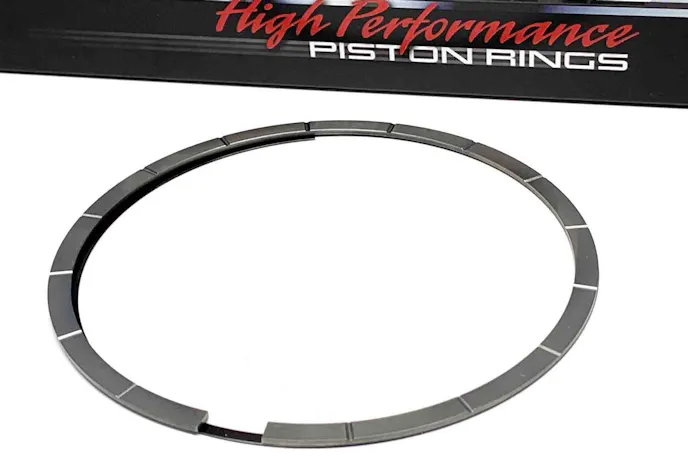
Jones admits early on that it was a real concern. Early gas-ported ring designs used square cuts and went too deep, which led to cracks in the rings. The fix turned out to be simple geometry.
After a bit of R&D, Jones says that Total Seal discovered they could solve the problem with shallow, radiused cuts that spread stress instead of concentrating it. If they are gas porting thinner rings, the ports get wider and shallower to maintain the same effective volume without weakening the structure. In other words, the design scales with the ring.
Besides ring thickness, material choice also plays a big role in whether they can be gas-ported. According to Jones, most steel rings with modern coatings, such as PVD, chrome nitride, titanium nitride, and others, handle gas porting just fine. Ductile iron plasma-moly rings also work well. Where things get tricky is if you are trying to run gas-nitrided rings.
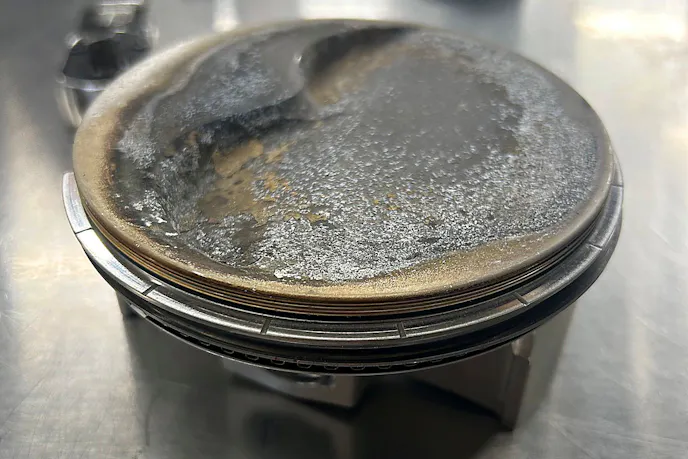
Unlike a coating, gas nitriding is a surface-hardening process. That’s nice when it comes to ring life, but when you harden a material, you almost always make it more brittle. So when you try to machine a gas-nitrided piston ring, it tends to chip rather than cut cleanly. The result is a high failure rate, which is why those rings are generally avoided for this application.
The takeaway is simple: not every ring is a good candidate for gas porting. But most modern performance rings are.
Street Cars, High-End Race Cars, and Everything in Between
One of the more surprising takeaways from the conversation with Jones is just how broad the application range for the gas-ported piston and ring combination has become.
Jones says they’re seeing gas-ported rings in a huge variety of conditions. This includes high-boost drag builds, restricted circle track engines, diesel pulling engines, and even street-driven boosted cars. That’s right, street cars turning lots of miles for years between rebuilds.
A typical boosted street car might spend 98 percent of its life cruising at low RPM with the turbos barely turning. But, when the driver leans on it, the engine’s cylinder pressure can spike to extreme levels. Gas-ported rings give you that extra sealing capacity when you need it, without compromising normal operation. And according to Jones, service life hasn’t been an issue.
It’s fascinating that the combination of gas-ported piston rings and pistons started as a workaround for a specific problem that has grown into something much more versatile. It gives builders another tool to improve ring seal without redesigning the entire combination.
At the end of the day, it comes back to the same goal we always have in engine building. Keep the combustion pressure on top of the pistons where it belongs. Because that’s the key to power. The interesting part is how many different ways there are to get there.
You might also like
Do Hub Dynos Make More Power? Big 3 Racing Plays "Mythbusters"
It is commonly believed that hub dynamometers make more power than a roller dyno, but less than an engine dyno. Is this right, though?