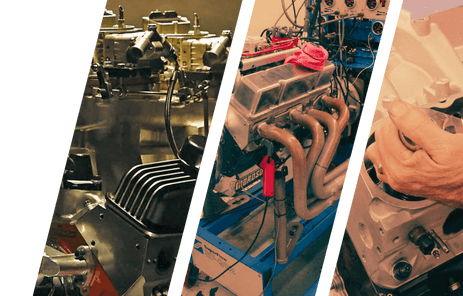



Quite a while back, we brought you an article on a relatively unknown in the US (at the time) dual-overhead cam inline six-cylinder engine from Ford Australia. Then, we brought you the story of someone we knew who built one in the US. It was about that time that we started looking into acquiring one of the engines. Here we are, six years later, with a unique episode of EngineLabs BUILDS.
In this installment of BUILDS, we aren’t actually building anything, but rather tearing down our latest project engine. This 4.0-liter BF Barra engine sailed all the way from Australia to California, before taking a trip on a semi-truck halfway across the US to Novelo Racing. You might recognize Fonzie Novelo from past projects of ours, or, if you are already a fan of the Barra, you likely know him as the builder and driver of the Barramont — his mid-eight-second Ford Fairmont, powered by a 1,000-horsepower turbocharged Barra engine, that he campaigned in the NMRA and various drag-and-drive competitions across the country.

What Is A Barra Engine?
First introduced in the 2002 model year by Ford Australia, as an Australian market-only powerplant, the Barra (which is short for Barramundi, not Barracuda) is a modern dual-overhead cam, 4.0-liter inline-six cylinder. Ford Australia loves its inline-sixes, with the Barra being a culmination of straight-six development leading all the way back to the Thriftpower Six that first saw use in the 1960 Ford Falcon.
While there are three distinct generations of Barra engines (The BA, BF, and FG) all the engines share some key attributes. All Barra engines have a 92.26mm (3.632 in) bore diameter. They all share the same 99.31mm (3.910 in) stroke length from a cast crankshaft. All Barras have an iron engine block and an aluminum cylinder head. From the factory, they range from 205 horsepower all the way up to 450 horsepower from some of the turbo variants.
Regardless of the generation or submodel, the Barra enjoys a reputation as an extremely robust workhorse of an engine, powering everything from taxi cabs and Ute work trucks to performance sedans for hundreds of thousands of kilometers. It’s also known as quite the performer when breathed on by its vibrant aftermarket. 1,000 horsepower Barra builds are not uncommon down under, and are becoming increasingly common here in the United States.

Barra Variations and Differences
The three generations of Barra engine dubbed the BA, BF, and FG, as mentioned earlier, are so named after the generation of Australian Ford Falcon they came in. There are accessory mounting differences between the generations, as well as certain notable hardware upgrades. While all Barras have variable cam timing, the BF generation saw the introduction of Twin Independent Variable Cam Timing (Ti-VCT, in Ford parlance). The FG cylinder head received a revised combustion chamber design to improve efficiency and emissions.
Besides the different generations, and more indicative of differences within the engine itself, were the valve cover colors. There were four main variants represented by five colors:

Silver Top Barra
Standard naturally aspirated variants across the generations. These featured flat-top pistons and pressed wrist pins for compression ratios ranging from 9.7:1 (BA) to 10.3 (BF, FG).
Green Top Barra
Barra E-Gas (Liquefied Petroleum Gas — LPG — known as “Autogas” in Australia). Had the traditional aluminum intake manifold without injector bungs (as the LPG was injected at the throttle body). It came with stronger connecting rods than the Silvertop, but they were still a pressed-pin design.
Red Top Barra
The standard turbo variant. Red top engines got Inconel exhaust valves, improved rods (BF and FG), dished pistons to bring compression down, and improved valve springs.
Black Top Barra
This one is tricky. Largely, it’s the same as a turbocharged red-top BF engine, but from the Territory Turbo. However, in the FG generation, the highest output turbo Barra variant (the 325T) wore a black valve cover.
Blue Top Barra
Blue valve covers signified the specialty FPV (Ford Performance Vehicles, similar to SVT in the US) variants of the Barra. They received stronger dished pistons and free-floating connecting rods.

In our case, the engine we received was a BF Green Top engine. That means we have the stronger connecting rods, but still with a pressed wrist pin and the weaker naturally aspirated pistons. Neither of those matters since we’ll be replacing both, but a good tidbit of information. Also, we have the aluminum intake manifold, without any injector bungs. So if we reuse the manifold, we’ll have to drill out the flats on the manifold to accept six fuel injectors and mount a standard Barra fuel rail.
Under The Valve Cover
The first major reveal when tearing down the engine is the valvetrain. One thing that is readily apparent to anyone familiar with Ford’s overhead camshaft V8s is just how similar the Barra is to its American V8 counterparts. The camshaft girdle configuration is incredibly similar, albeit slightly longer (thanks to the two extra cylinders per cylinder head).

Underneath the camshafts lies a roller cam follower and hydraulic lash adjuster setup that looks like it came straight out of a Cobra. However, due to the larger cylinder volume, the naturally aspirated Barra’s stock cams are notably larger than the Cobra’s, with .413 inch of lift (10.5mm) and 248 degrees of duration.
Once the camshafts were removed, the Barra’s 14 cylinder head fasteners were removed. From the factory, they are M12x1.5mm torque-to-yield bolts, and were discarded. They will be replaced with a head stud kit from ARP when we reassemble the engine.

With the cylinder head on the bench, Fonzie was able to tear down the head and inspect the valves and springs. As expected, being a CNG engine that was probably treated like a redheaded stepchild in a taxi fleet, the 35mm intake valves were caked with carbon. As we pulled the exhaust valves, we noted they were 32mm stainless steel valves, but we didn’t get lucky with a set of the turbo variant’s stock Inconel exhaust valves.
From the factory, the Barra’s cylinder head ports are nice, reportedly flowing in the area of 250cfm on the intake side and around 200cfm on the exhaust side. (For comparison, the ’03-’04 Cobra heads flowed in the area of 230/165cfm, and the early Coyote heads were in the 280/200cfm range.) We’ll be sending the cylinder head off to our friend Dave Localio at Headgames Motorworks to see what kind of magic he can work on it.

Exploring The Short-Block
Upon exposing the 92.26mm pistons, similar carbon buildup from the valves caked the crowns of all six pistons. This buildup would require some serious attention if we were reusing the pistons, but since we’ll be replacing the factory cast pistons with forged units, the buildup is simply a data point. One interesting note is that the factory pistons only have two valve reliefs on them — on the intake side. Not what you usually see in a 10.3:1-compression DOHC engine.

After pulling the rods and pistons, a quick inspection found some interesting features of the stock connecting rods. Most notably, a piston squirter drilled into the top of the big-end bearing saddle. Besides being a rather inefficient application location, it both bleeds oil pressure directly from the rod journal, as well as puts a hole directly in a structure that we will be stressing far beyond factory design parameters.

As expected, while the rods were indeed the beefier design, they still utilize a small torque-to-yield rod bolt and a .912-inch pressed-wrist-pin design. That means separating the piston and rod requires heat and/or a lot of force to push out the wrist pin. Generally, pressed wrist pins aren’t considered the best design for performance or serviceability.

With the cast aluminum oil pan and integrated windage tray removed, we got to take a look at the factory main caps. Secured by two 12mm bolts, the factory main caps are cast iron and have a robust design. They have proven themselves through the 1,000-horsepower mark, and beyond with aftermarket main girdles. While billet main caps are an option, we likely won’t be going down that road, sticking with the OEM caps.

The seven main caps retain the cast steel crankshaft. With its long 99.31mm stroke, on paper the undersquare engine design shouldn’t rev, and probably shouldn’t live at such elevated horsepower levels, but it does, and is used in every Barra variant. While the factory crankshaft is regularly used in 1,000-plus-horsepower builds, the general consensus is to keep it to 7,000 rpm. However, as Fonzie points out, his engine didn’t get the memo, as he was making 1,000 horsepower at the wheels, spinning 8,800 rpm through the traps with the factory cast crankshaft.

While those feats sound insane, part of it has to be the fact that an inline-six is an inherently balanced, smooth-operating design. Another part is that we all believe the Ford Australia engineers knew how popular the Barra would be, and intentionally overbuilt some of the key components in the engine.
Looking at the bare block, there’s obviously some surface corrosion, which is to be expected after living a hard life in Australia and then taking a leisurely 7,500-ish-mile cruise across the Pacific Ocean, along with another 2,500 miles across US highways. But the next step will be to clean everything up and crack-check the casting. Once that all checks out, we’ll clean up the cylinder bores, check all the mains, and deck the block in preparation for our build.
Make sure to stay tuned, because this build is going to be a fun one!


You might also like
Quick Tech: How A Piston Accumulator Groove Helps Maintain Ring Seal
A piston accumulator groove helps limit pressure between the top compression ring and the oil-scraping second ring, improving stability.