


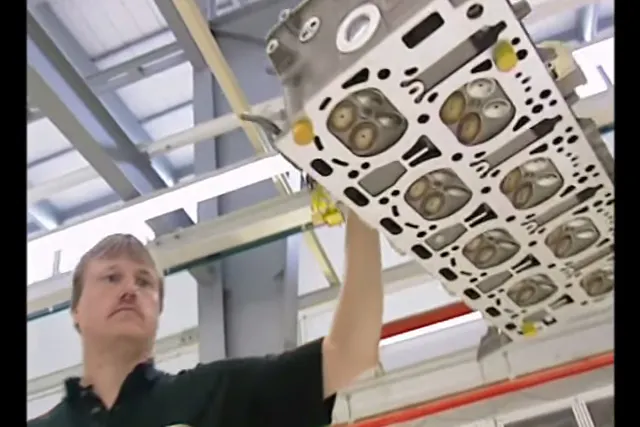
The Bugatti Veyron’s 8.0-liter W16 quad-turbocharged engine is an engineering marvel; it provides up to 1,200 horsepower depending upon vehicle model, and is the equivalent of two narrow-angle V8 engines coupled together. It uses four valves per cylinder for a total of 64 valves, and a VR8 configuration that permits each of the two overhead camshafts on each side to drive the valves on two banks of cylinders – there are four camshafts in total. The monstrous engine propels the vehicle to a top speed over 267 mph with a 0-100 km/h (0-62.1mph) figure as low as 2.2 seconds. The Veyron is considered to be the fastest production car in the world according to Guinness World Records.
In this video, we get a chance to follow one of these engines down the production line during the assembly process, from bare block to completed bullet.
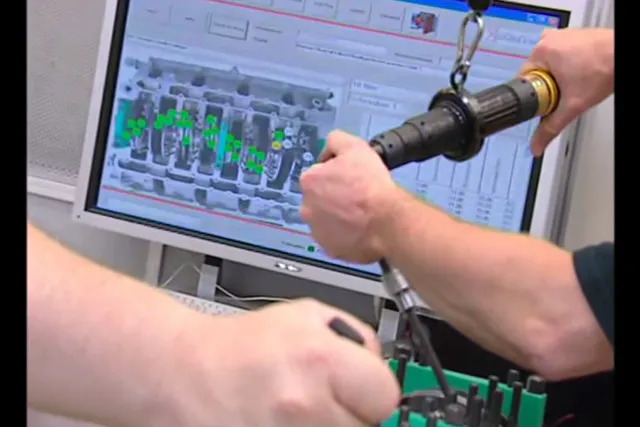 Each hand-built engine gets the white-glove treatment during the process, and the technicians make use of computer-aided technology to ensure that the fasteners are properly tightened during each step – with 32 connecting rod fasteners on deck, the computer technology provides assistance as the technician follows the torque sequence.
It doesn’t appear that speed is of the essence here; rather, it is more important that each step is followed down to the most minute detail to ensure that the engine is assembled properly the very first time. There’s even a chance to see some of the details of the engine’s cold-test process before vehicle installation.
There’s no music, and it’s not a flashy video, but it does give a neat look behind the scenes at the creation of one of the most powerful passenger car engines ever produced.
You might also like
Engine Pro Releases Sportsman Series Flexplates And Bolt Kits
Engine Pro's new line of Sportsman Series flexplates proves that you don't need a big pricetag to handle big horsepower.