


Plenty of opinions exist about choosing a camshaft for GM’s supercharged LT4. Griffin Motorsports and Flag Motorsports decided to put some of those opinions to the test. They spent five days at Westech Performance testing an LT4 with several bolt-ons and six different camshafts.
In the video above, which is part two of a three-part series, Griffin Motorsports and Flag Motorsports put seven LT4 Camshafts to the test. Gabe from Griffin Motorsports and Evan from Flag Motorsports focus on the Dyno results. The first video covers the setup, testing methodology, and variables involved. A planned third video will dig deeper into the results and which combination is best suited for different LT4 builds.
Building the LT4 for the Shootout
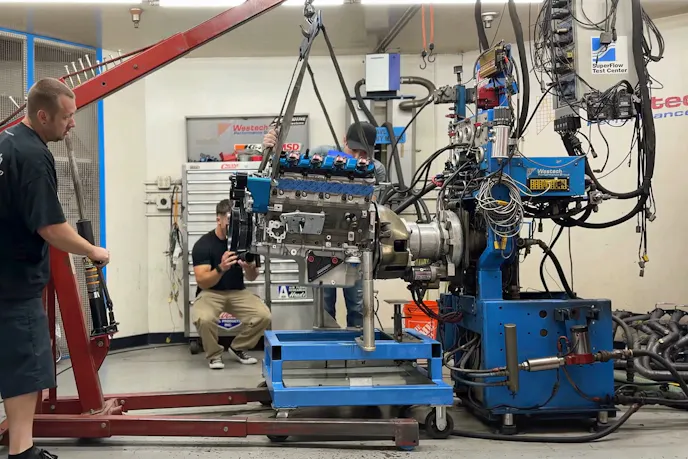
Before comparing all seven cams, the team first built the LT4 into its final test configuration. They started with an engine as close to stock as practical. They added a slightly overdriven ATI balancer and several other aftermarket parts listed in their first video. Next, they installed one of the largest cams in the test, without adding supporting modifications. That step was intentional. It shows what a large cam could do on a relatively stock combination.
The camshaft alone added 76 horsepower and roughly 500 rpm of usable range. Boost also dropped from 12.2 to 8.7 psi. That drop demonstrated an important point about supercharged engines. Boost pressure can represent restriction. Improving airflow through the engine can increase power and airflow while reducing measured boost. From there, the team increased blower speed with a 10.00-inch, 25-percent overdrive lower pulley. Power climbed another 29 horsepower. However, the engine lost some of the additional RPM the cam had provided.
Removing the Airflow Restrictions
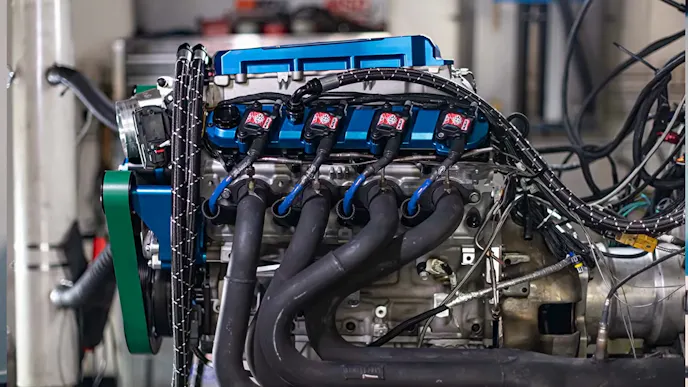
Ported Flag Motorsport cylinder heads came next, followed by the Kong X-Port 1.7-liter supercharger. These upgrades addressed the breathing restrictions revealed by the larger cam and increased supercharger speed. In one comparison, the cylinder heads alone added roughly 100 peak horsepower and another 500 rpm of useful range. At 7,000 rpm, the advantage grew to around 150 horsepower.
The Kong X-Port was the final step in preparing the engine for the cam comparison. It produced the largest A/B gain of the entire test. The ported blower added 161 peak horsepower. It pushed the LT4 beyond 1,000 horsepower on 15.5 psi boost. With the engine now in its final testing configuration, Gabe and Evan began swapping the remaining six cams.
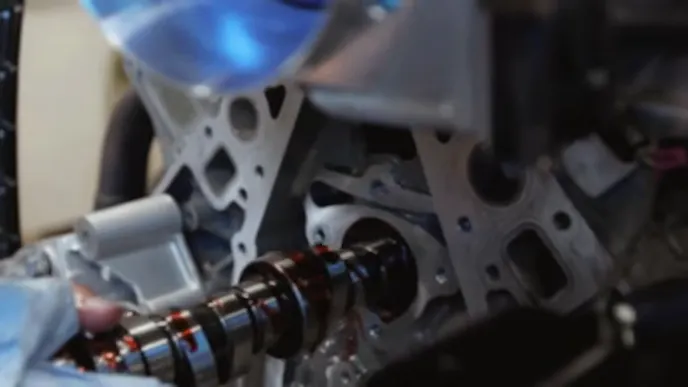
7 Cams, One Engine, One Dyno
Consistency matters in any comparison. Gabe and Evan ran all seven cams during the same calendar day. That helped keep conditions as consistent as possible between pulls.
Cam #2: BTR‘s Stage 0.5 – Despite its mild specifications, it produced 950 horsepower and 829 lb-ft of torque at 17.5 psi. Its 829 lb-ft torque figure led the group. It also retained stock spring compatibility and features a 38-percent fuel lobe.
Cam #3: BTR’s new Stage 1 V3 camshaft generated 981 horsepower and 831 lb-ft at 16.3 psi boost. It also produced one of the flattest torque curves of the cams tested. Evan noted that the cam carried power farther into the upper RPM range than expected.
Cam #4: Summit Racing’s Pro LT SUM-8767 came next. It produced 983 horsepower and 837 lb-ft at 16.8 psi. It had a strong torque average; however, its power curve began falling off earlier than some competitors. Evan considers it a strong street choice up to about 6,500 rpm.
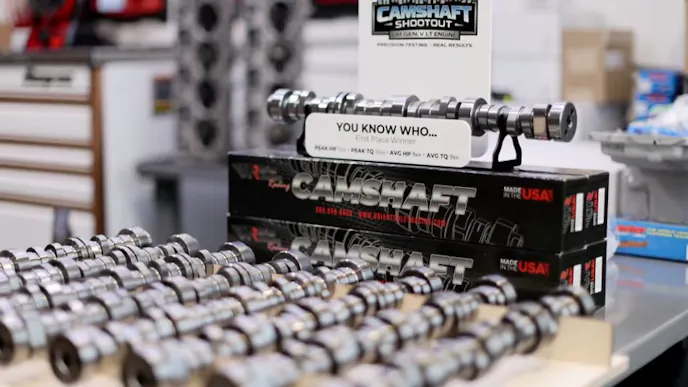
Cam #5: Late Model Performance supplied its Apex Cam for the test. This cam approached the 1,000-horsepower mark and pulled cleanly to 7,000 rpm. The exact numbers read 999 horsepower and 835 lb-ft at 16.0 psi boost. It sacrificed some low-end output compared with the smaller cams but performed strongly at higher engine speeds.
Cam #6: The oddball of the group. The team nicknamed a $100 Facebook Marketplace cam the “Zucker.” It filled the gap for a cam with more than 230 degrees of intake duration. Despite its bargain-bin origin, the Zucker exceeded 1,000 horsepower and pulled cleanly to 7,000 rpm. It made 1,003 horsepower and 837 lb-ft on 16.2 psi boost. All while being a little softer on torque in the lower range.
Cam #7: Rick Crawford’s “Slick Rick” cam took its turn. It won the peak-horsepower contest with 1,006 horsepower and 830 lb-ft at only 15.8 psi. This was the lowest boost among tested cams. According to the team, that combination delivered efficient breathing with minimal restriction. It also avoided a major low-speed torque penalty. Three cams ultimately made peak power at 7,000 rpm, including the Crawford combination.
Going Bigger With Whipple
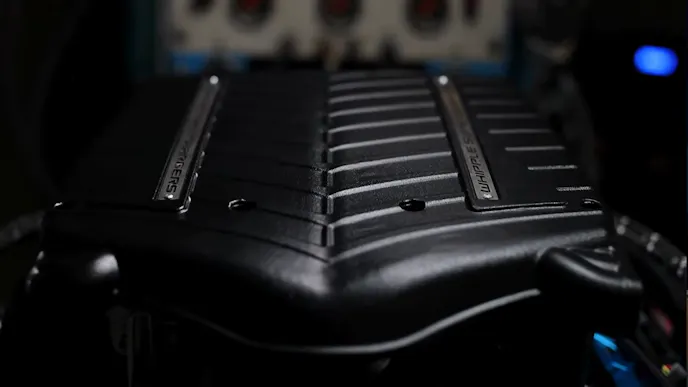
The LT4 camshaft shootout technically ended there, but the testing did not. The team replaced the Kong 1.7-liter unit with a Whipple 3.0-liter Supercharger. They ran this combination with the “Zucker” cam rather than the Crawford Cam. This combination yielded 1,101 horsepower and 845 lb-ft on 15.6 psi of boost. The larger Whipple added more than 100 horsepower while operating at a substantially lower supercharger speed. The smaller blower reached roughly 28,000 rpm near the end of the pull, while the Whipple reached only about 17,000 rpm, producing similar boost. Post-compressor charge temperature also dropped about 40 degrees with the Whipple.
The results showed the increased breathing demands created by the modified LT4. More importantly, they reiterated that peak horsepower tells only part of the camshaft story. The seven cams produced different torque curves, in different RPM ranges, with different airflow characteristics. Determining which cam is actually “best” depends on what you want the LT4 to do. Gabe and Evan plan to explore that question soon, in the third video.
You might also like
Engine Pro Releases Sportsman Series Flexplates And Bolt Kits
Engine Pro's new line of Sportsman Series flexplates proves that you don't need a big pricetag to handle big horsepower.