


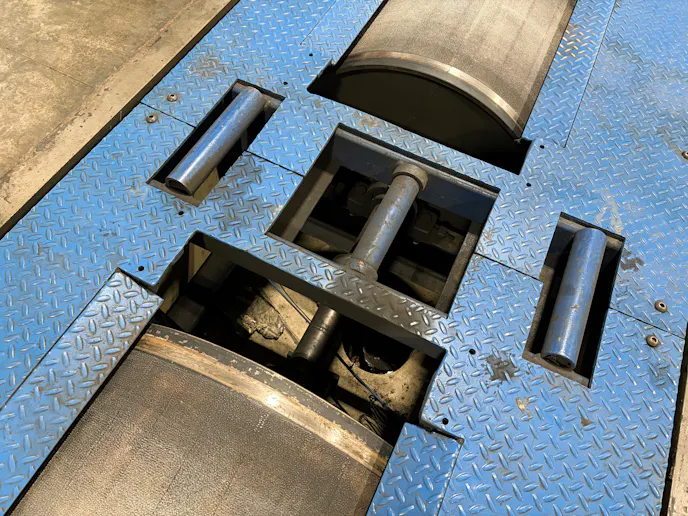
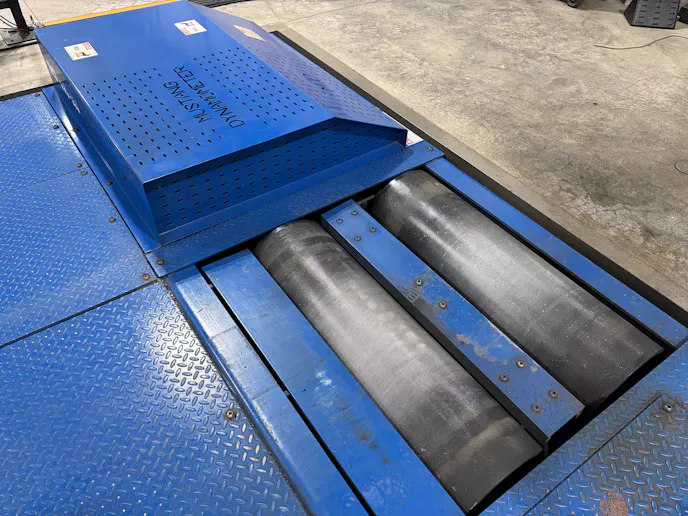
It is commonly believed that hub dynamometers make more power than a roller dyno, but less than an engine dyno. Logically speaking, the traction on the rollers, weight of the drum, and weight of the wheel and tire combo would significantly reduce the amount of power that a roller dyno would make compared to a hub — right? Wrong.
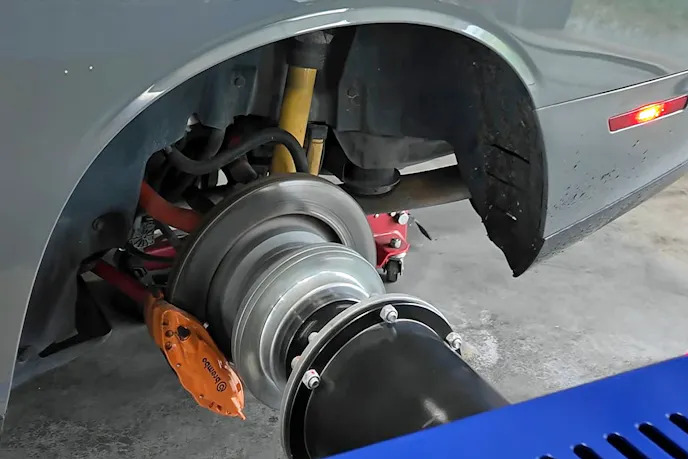
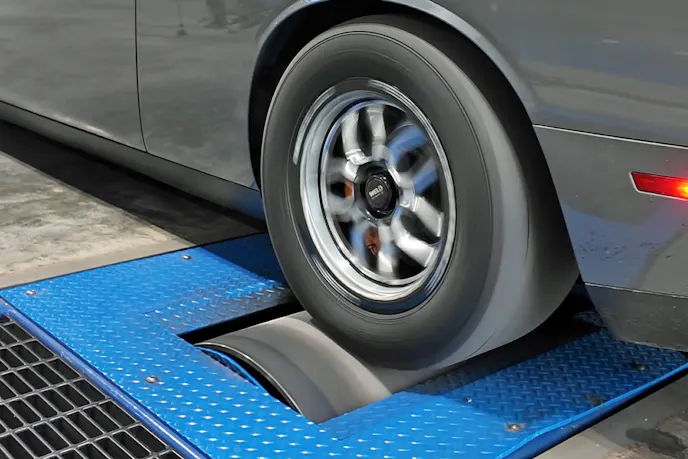
Big 3 Racing in West Salem, OH has, in-house, two roller dynos and a hub dyno. So what better place to put this to the test? Head tuner Rick Trunkett put his Hellcat Challenger on their Mustang roller dyno within an hour of bolting it up to the Mainline hub dyno. This minimizes the effects of the correction factor for weather or elevation. Additionally, he was able to apply the same load on both dynos — exactly the same. It is also worth noting that this was not a 2,000-plus horsepower car that is fighting for traction on a roller dyno.
Spoiler alert: there was very little difference between the two dynos. In fact, only five horsepower. Watch the whole thing and see for yourself (it’s less than 5 minutes and you could do this in one sitting on the can).
Do Hub Dynos Actually Suck?
It is very easy to start throwing some serious doubt into the relevancy of hub dynos after watching this, or to call shenanigans on Big 3 Racing. However, a more rational approach may be to consider that the gap between an Eddy current or load-bearing dyno may simply have been smaller than anyone thought, but probably still larger when compared to an inertia-based dyno (be sure to let us know if you are going to recreate this test on an inertia-based dyno).
Perhaps the real strength of the hub dyno is in high-horsepower drag cars, and their ability to get an accurate reading when a roller dyno might struggle for traction. And it’s less about getting a higher number for bragging rights, but simply getting an accurate reading without sixteen straps, two lumberjacks in the trunk, and a silent prayer to the horsepower gods.
Any Corvette tuner can tell you the lengths they’ve gone to over the years on roller dynos. Hub dynos like the Mainline unit that Big 3 uses not only solve traction issues, but they also have a brake capable of reading up to 6,000 horsepower (far beyond roller dynos). Many combinations previously never saw a dyno because of this, but now, with a hub dyno, they can even simulate a drag strip pass and go to their first event with a lot of great data.
You might also like
LT4 Camshaft Shootout: Flag And Griffin Motorsports Dyno Test 7 Cams
7 LT4 cams hit the dyno as Griffin and Flag Motorsports compared horsepower, torque, air Flow, and a final whipple 3.0-L combination