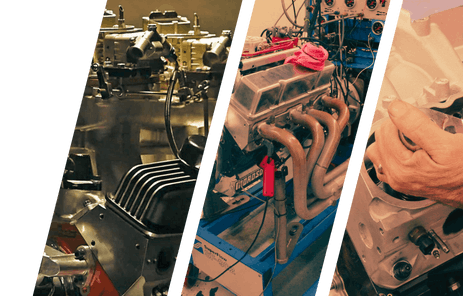

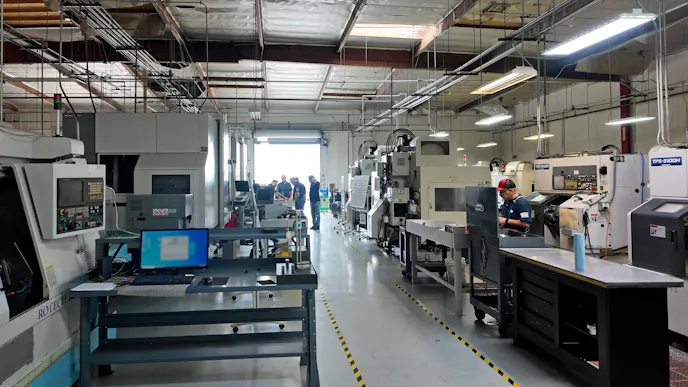
SCAT builds high-performance rotating assemblies with systematic precision, and we recently walked through their manufacturing facility to observe their operational flow firsthand. Walking past organized machining stations, we immediately noticed how the company treats engine component production like an efficient assembly line rather than a typical, disorganized machine shop. Technicians move raw materials through dedicated stations with careful repeatability. Every single step in the production process focuses on extremely tight tolerances, giving engine builders rotating components that drop straight into custom high-horsepower engine builds.
Precision Rod Honing and Hardware Installation
Starting on the connecting rod line, technicians begin assembly by threading ARP bolts into the rod forgings. Operators torque each heavy-duty fastener down to precise mechanical specifications before moving the assemblies further down the floor. Next, specialized honing machinery finishes both the big crankshaft journal ends and the small wrist pin ends. Operators monitor tolerances constantly throughout the entire honing process, bringing every opening to exact dimensions. Completing the sizing phase allows the finished rods to transition immediately over to the sorting station, where structural balance becomes the top operational priority.
SCAT Precision Weight Matching for Balanced Assemblies
Moving over to the weighing bench, operators arrange finished connecting rods in clean, sorted stacks across the table. Precision scales record three individual metrics for every single piece: total overall weight, big-end weight, and small-end weight. We also watched technicians stack these components 16 units tall, organizing two balanced V8 engine sets into unified groups. Sorting rods to such strict tolerances saves performance engine builders massive amounts of prep time during final balancing and installation.
Raw Billet Machining and Crankshaft Shaping
Transitioning across the main factory floor, we observed billet crankshaft production starting directly from solid steel bars. Workers shape these heavy metal rods into complex, high-strength crankshafts through multistage machining processes. At stage three or four of production, pre-heat-treat billets show roughed-in counterweights alongside partially formed main and rod journals. Operators carve away all unnecessary metal material before sending the structural component through specialized surface-hardening treatments. Viewing finished crankshafts resting right next to midstage billets highlights how the entire facility turns raw steel bar stock into fully functional race hardware.
Manufacturing Discipline Defines Component Production
Observing the entire production cycle gives us appreciation for standardized manufacturing discipline in bottom-end engine components. Pairing rigid bolt torque procedures, double-end honing accuracy, gram-scale weight sorting, and billet crankshaft shaping, SCAT delivers balanced rotating hardware for demanding engine builds. Every workstation on the factory floor operates with clear structural purpose, completely eliminating disorganized chaos from the manufacturing equation.
You might also like
Piston Ring Tension: Understanding Force and Friction
Piston ring tension is more than a catalog number. Learn how force, friction, and testing methods affect your ring package.