


Some rivalries seem destined to continue. At the top of that list are General Motors and Ford. Now GM is having a little fun with one of its oldest competitors in the truck world, and this time it has brought a Mongoose to hunt a Scorpion. General Motors has confirmed an all-new 8.3-liter Duramax Turbo Diesel V8 called the “Mongoose” for the refreshed 2027 Silverado HD and GMC Sierra HD.
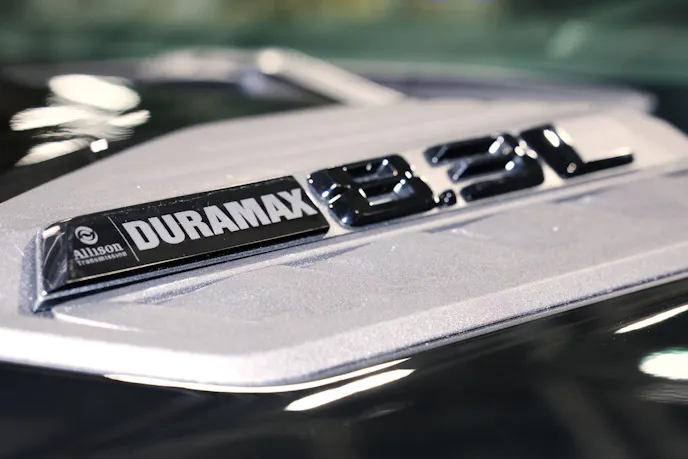
The name isn’t accidental. Ford developed its 6.7-liter Power Stroke under the “Scorpion” codename. In GM’s press release, they specifically referenced the Scorpion, saying the Mongoose was created because “nature always engineers a better predator.” Beyond that competitive trash talk, GM is keeping some of the important numbers under wraps. We do know that the new Mongoose will have 555 horsepower and 1,230 lb-ft of torque off the showroom floor. But, bore and stroke, compression ratio, and turbocharger configuration have not yet been released.
What we Know
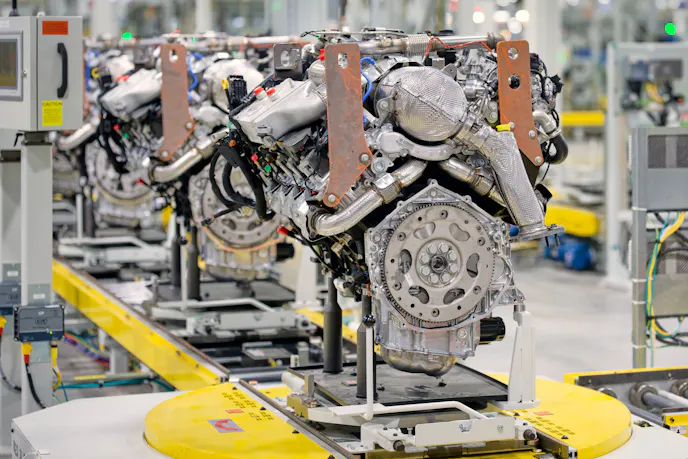
What GM has confirmed is significant enough. At 8.3 liters, the Mongoose has approximately 19 percent more displacement than Ford’s 6.7-liter Power Stroke. Ford currently rates its high-output Power Stroke at 500 horsepower and 1,200 lb-ft of torque. The Mongoose displaces 8.3 liters, or roughly 506 cubic inches, compared with the Power Stroke’s listed 406 cubic inches, from an all-new architecture built around a compacted graphite iron (CGI) engine block and forged steel crankshaft and connecting rods, along with steel pistons.
That additional displacement and heavy-duty internals, along with advanced cooling and turbocharging systems, gives GM considerable engineering room. One way to illustrate that is brake mean effective pressure, or BMEP, which compares torque output to relative engine displacement. For a more in-depth BMEP explanation, take a look at a complete breakdown here.
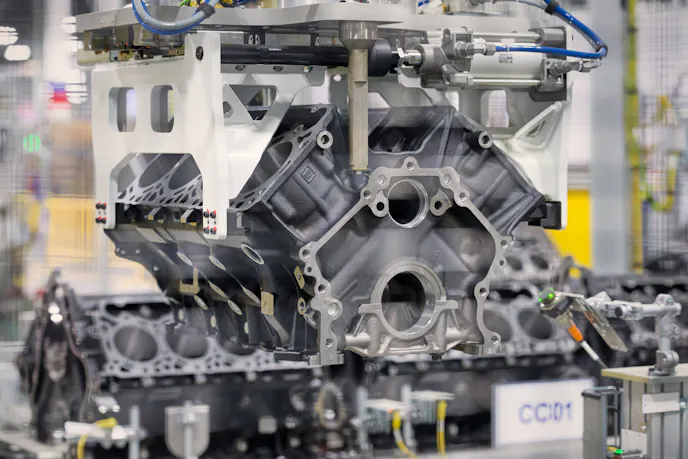
At 1,200 lb-ft, Ford’s 6.7-liter produces approximately 30.5 bar BMEP. An 8.3-liter engine producing1,230 lb-ft of torque would require only 25.25 bar, roughly 19 percent less. That doesn’t translate directly into 19 percent lower peak cylinder pressure. Boost, compression ratio, injection strategy, combustion timing, and other factors influence actual cylinder pressure and thermal loading. But the additional displacement gives GM the option of producing substantially more torque before reaching the same BMEP.
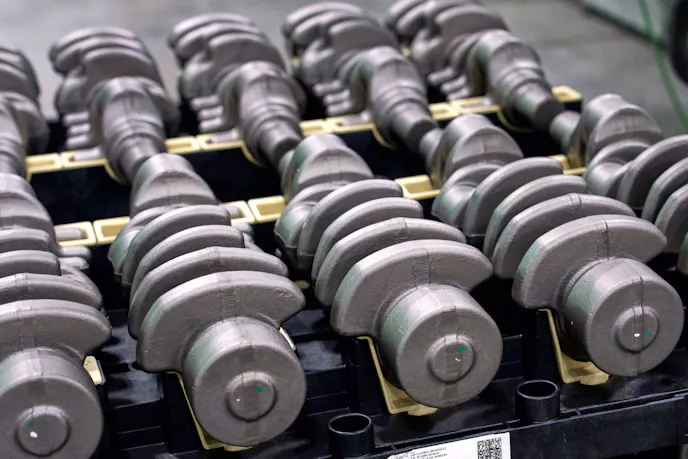
With approximately the same BMEP as Ford’s current 1,200 lb-ft engine, an 8.3-liter engine would mathematically produce substantially more torque. That’s not a comment on the Mongoose’s factory output. It simply illustrates the potential of its greater displacement. Whether GM uses that capacity for higher peak output in the future, or is content with the reduced engine stress, greater sustained towing performance, remains unknown.
For now, GM has shown its hand: 8.3 liters, 555 horsepower, 1,230 lb-ft, turbo diesel, V8, Mongoose — and Ford’s Scorpion is clearly the target.
You might also like
Do Hub Dynos Actually Record Higher Numbers? Big 3 Racing Plays "Mythbusters"
It is commonly believed that hub dynamometers make more power than a roller dyno, but less than an engine dyno. Is this right, though?