


Lake Speed, Jr. has a well-known reputation in the performance automotive world. He has been applying the science of tribology to engine development and professional motorsports for over 20 years.
He’s been doubling down ever since founding SPEEDiagnostics Oil Analysis. His family’s business has been providing accurate information to consumers like you and me since 2018. Direct oil analysis is the best option for providing lubrication data on your vehicle.
As time moves forward, Lake’s company is amassing quite a database of used oil samples. It currently tops 20,000 samples, all from different makes, models, and applications. Within that database, they have over 2,000 used oil samples specifically from Porsche engines. In his latest video, Speed aims to take on a discussion currently taking place in the Porsche community: bore scoring versus engine oil viscosity. Both of which are near and dear to his heart.
Bore Scoring
Before we take a deeper look into the engine oils, let’s discuss a very real problem of bore scoring. This is a trait often seen, but not limited to, Porsche engines. Blackstone Laboratories reports that about two percent of the samples they’ve seen from Porsche M96 and M97 engines show signs of bore scoring.
Bore scoring is a term easily tossed around. A rough description is just what it sounds like, simply abnormal cylinder wear. It has specifically affected Porsche, BMW, Audi, and Mercedes engines made with Alusil or Lokasil engine blocks.
These engines differ from regular aluminum cylinder blocks, which typically have iron or steel sleeves. They are made from 100-percent aluminum containing a high silicon content. The silicon can be distributed throughout the entire alloy of the block, or focused just around the cylinders. This is a key technical difference that will be evident once we move forward.
Alusil vs. Lokasil
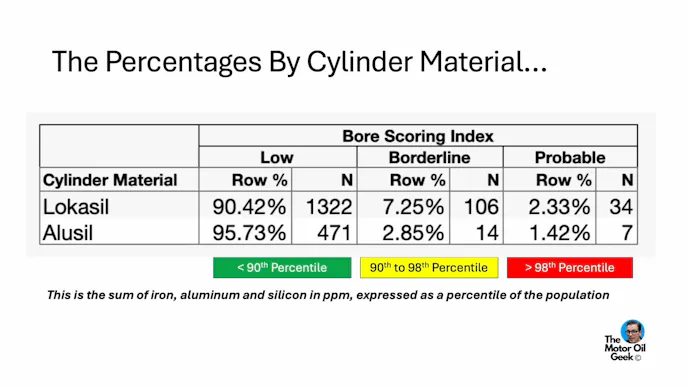
To be more specific, the Alusil blocks have the silicon distributed evenly within the cylinder block. The Lokasil blocks are different; their higher silicon content is dispersed only near the cylinder bore. How this is achieved in the manufacturing process is worthy of research; it may surprise you.
Knowing the type of alloy in these components is important. As the engine wears, particles are distributed in the oil and can be identified with an oil analysis.
Many piston skirt coatings have a high iron content. Knowing the alloy of the cylinder blocks gives us a view of what is happening with the oil. If we see a high amount of silicon, aluminum, and iron, we can make a strong assumption. This is a good indication of bore scoring in these engine types.
Data without the proper context can be misleading
Lake Speed ~ SpeeDiagnostix
Oil Analysis
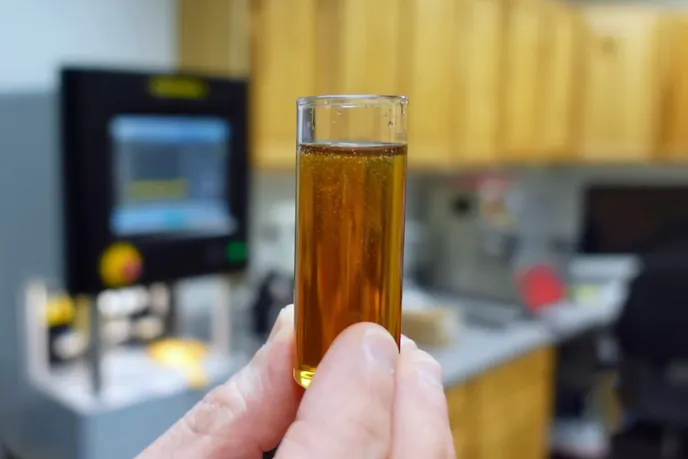
Companies like SPEEDiagnostix have the capabilities of evaluating your oil down to the molecular level. Used oil has suspended fine wear particles that may not be visible to the naked eye. With an analysis, you can get a good idea of the condition of your engine. Possibly heading off any potential issues. This information is also valuable in leading to an accurate fault diagnosis. Lake does an amazing job breaking this technical information down in his video “The Big Lie About Thick Oil”
Looking at the SPEEDiagnostix data, he describes the trifecta of wear material in the samples from these blocks. You can also see that the tendency for bore scoring is higher in the Lokasil block engines.
Context Matters For Two Percent
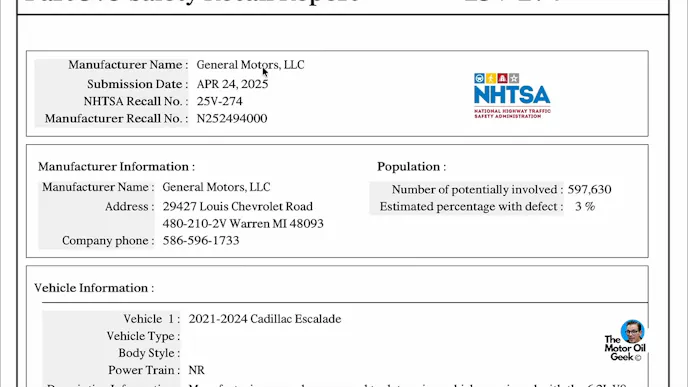
Per Speed, Blackstone Labs dismisses the two percent of Porsche engine oil samples as insignificant. To counter that, Speed discusses several NHTSA (National Highway Traffic Safety Administration) bulletins in the video. They show the GM L87 problem affects three percent of its engines. Toyota isn’t immune either. Their recall for the V6 engines was an estimated one percent of all Toyota engines. The point being, two percent of Porsche engines showing signs of bore scoring is a substantial amount of engines. Looking at his data further, Speed states that there is another seven percent of engine samples showing abnormal cylinder wear. That’s almost a staggering 10 percent.
Is This A Viscosity Issue?
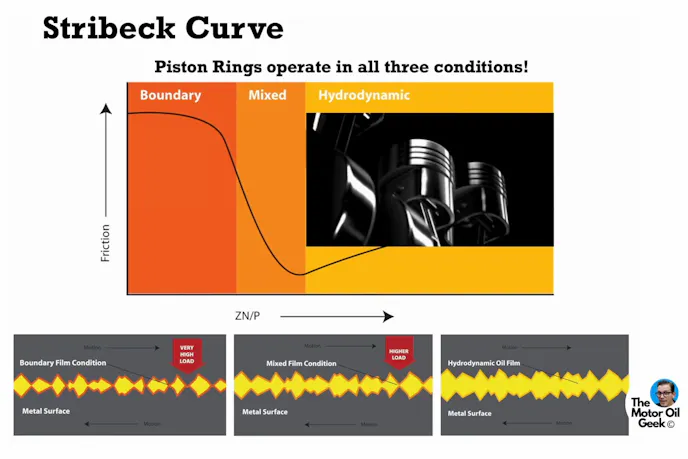
Does increasing viscosity reduce wear? Yes, and no. Diving headfirst down the next rabbit hole, we need to look at the three stages of lubrication. Full film lubrication is the hydrodynamic stage. Next is mixed film lubrication, and the last stage is a boundary layer film. They each have a very specific function, and viscosity plays a role.
Long story short, a good point that Speed makes in his video is this. He describes a water skier. They start submerged in the water, waiting for the boat to start pulling them forward. This would be the boundary lubrication stage. Next, as the boat accelerates, the skier starts moving, not out of the water yet, but rising up to the surface. This is the mixed film stage, a little of the boundary and a little hydrodynamic. Once the boat reaches a certain speed, the skier is up and out of the water; the hydrodynamic stage.
Stribeck Curve
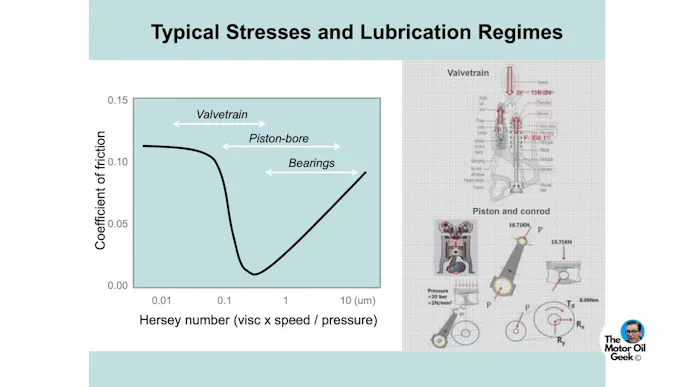
Determining when each phase of lubrication takes place is a specific function of the Stribeck Curve. The Stribeck curve is the result of the formula (Viscosity x Speed)/Load plotted against a friction coefficient. Those of you who are mathematically inclined are probably seeing how to manipulate the graph already.
Taking a look at the reality of increasing viscosity and reducing wear: Diesel engines have a higher compression (load) but reduced speed (RPM). Meaning the only way to move the Stribeck Curve is with viscosity. In this case, increased viscosity would reduce wear.
However, gasoline engines turn at a much higher RPM with less load (compression), therefore, they don’t want as much viscosity due to their increased engine speed. In a gas engine, increasing viscosity has the opposite effect on wear as it does in the diesel application
Starting to make sense?
The Big Lie…
Coming full circle to the reason Lake discusses the Porsche engines in particular. Based on the 2000 samples in the SPEEDiagnostix database, increasing the oil viscosity in these engines, even those run on the track, showed no significant difference in results.
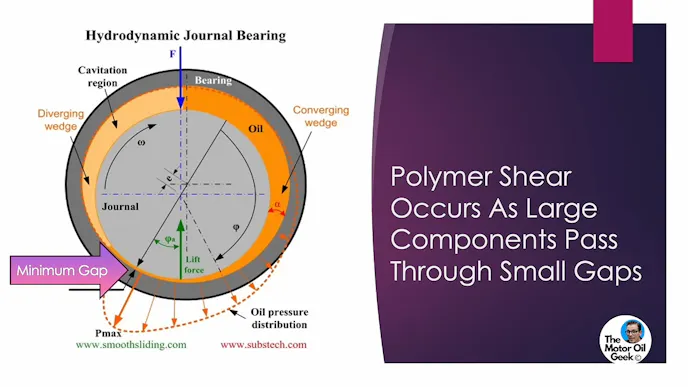
The smoking gun was in the oil chemistry. That is where the data shows higher instances of more wear. Molybdenum was the key; the higher the amount, the less the wear. Speed postulates that higher viscosity oils have more thickeners to artificially inflate their viscosity numbers. These thickeners lose viscosity under shear, and the result is that not all oils of the same viscosity have the same shear stability.
Having enough viscosity is the most important characteristic, but according to Speed, once that required viscosity level is reached, additive chemistry matters more than additional viscosity. Speed also states, oil pressure problems on the racetrack aren’t a viscosity problem; it’s an oiling system problem. Running a thicker oil is just a band-aid for an underlying oiling system problem.
4 R’s of Lubrication
Speed has said this repeatedly. What it all boils down to is the 4 R’s of proper lubrication:
- Right oil
- Right place
- Right time
- Right amount
Simply running a higher viscosity of oil isn’t a “fix” for anything. At best, it’s a band-aid for an oil system problem, and at worst it’s false confidence, if the thickener in the oil breaks down when it’s needed most. If there’s a problem, address it at the source, not just the symptoms.
You might also like
Valve Spring Retainers: Discussing Durability Vs. Mass With Melling
Valve spring retainer material choice is a balance of durability, weight, and fitment based on application and use.