
Alexander (Sasha) Selipanov is a renowned hypercar designer, working on vehicles like the Lamborghini Huracan, Bugatti Chiron, Koenigsegg Gemera, and now his independent Nilu 27.
Sasha and his wife, Inna, founded Nilu just a few short years ago. Their goal was simple: build a raw, analog-inspired hypercar unlike anything else on the road. They achieved that goal at an incredible pace. In only a few years, they transformed an ambitious concept into fire-breathing reality.
You’re going to want to check this out; pay close attention because the elegance and style of this vehicle are on another level. But what we care about here at EngineLabs is the bespoke powerplant designed for the car.
6.5-liter V12
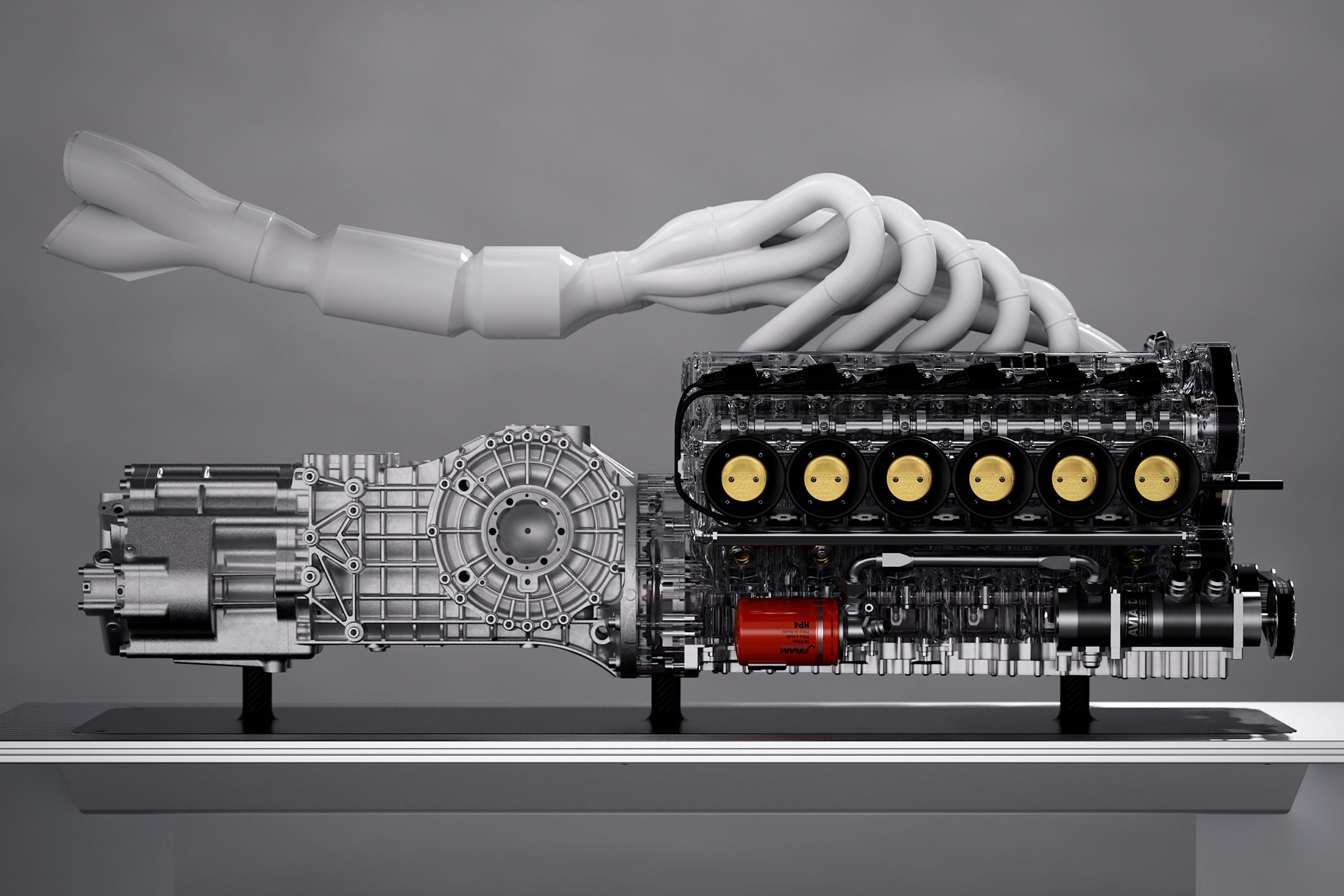
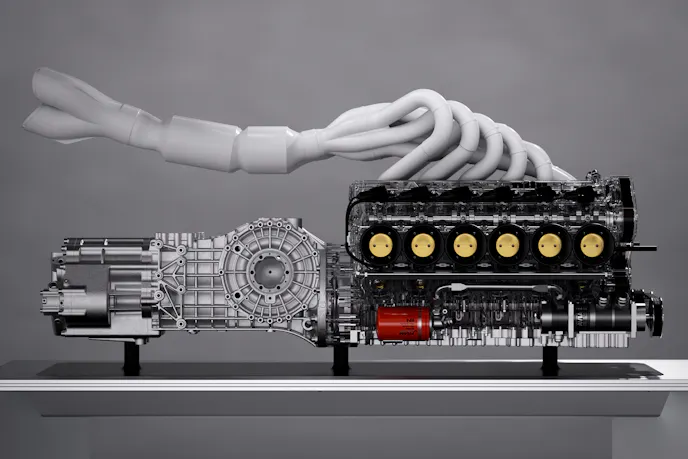
At the heart of this beast sits a naturally aspirated 6.5-liter V12. The engine uses a unique 80-degree bank angle, neatly packaged in front of a seven-speed manual transmission. On paper, the engine should produce 1,000 horsepower and spin to 11,000 rpm.
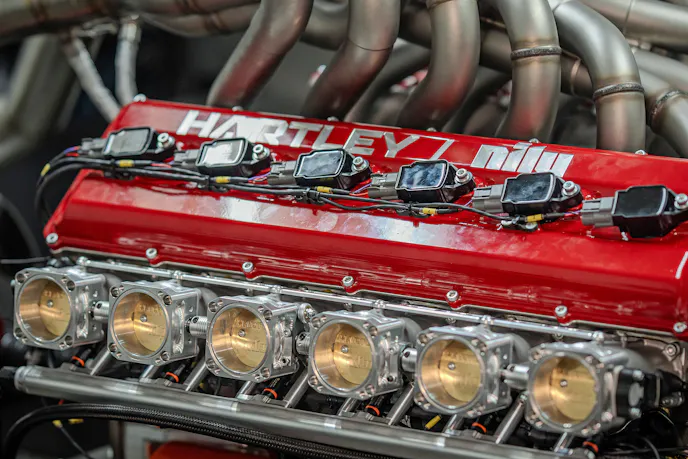
Developed by Hartley Engines, the engine is a magnificent work of art that complements the beauty of this vehicle. This incredible dual overhead cam engine is a naturally aspirated V12, configured in a “Hot V.” Some other features include 12 individual throttle bodies and a coil-on-plug ignition system. Hartley Engines is based in Palmerston North, New Zealand. They have been designing and building performance engines since 1995.
Nilu built the 27 with one goal in mind: challenge today’s obsession with technology. That may sound unusual at first, but it makes perfect sense once you experience the car. Instead of relying on modern convenience, Nilu prioritized a raw, unfiltered connection between driver and machine.
For this reason, they have chosen to deliberately minimize the reliance on technology. They are sticking with the good old-fashioned analog-style experience.
The Hot-V On The Dyno
The “Hot V” style of engine is a little different. In case you’re unaware, it’s a reverse flow from a typical V-style power plant. The exhaust is on top of the engine in the center of the valley, where the intake would be. In turn, the intake runners sit on the outside of the cylinder heads.
There are several reasons for this configuration; avoiding suspension geometry and allowing the exhaust heat to dissipate from the top of the engine unobstructed are just a couple. Besides, you have to admit this design looks really cool.
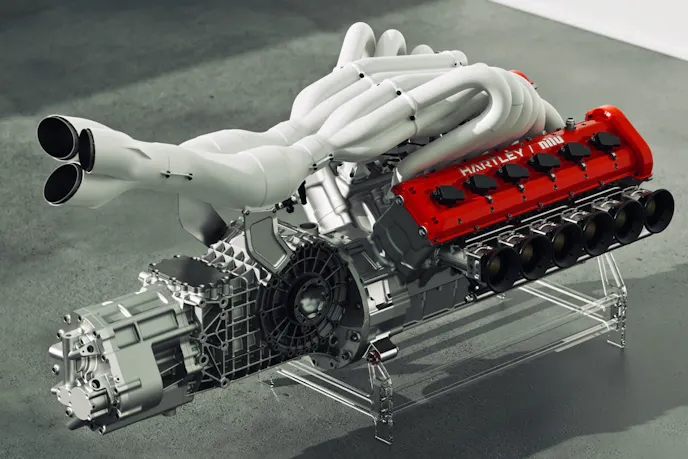
Recently, the engine program came to life, going from static parts and computer designs to a running, breathing engine on a dyno. Not only did the engine meet the design goals on its first trip to the dyno, it also exceeded them, making 1,070 horsepower and reaching 11,000 rpm engine speeds with ease.
“To see this bespoke V12 come to life after months of intense development is an indescribable feeling,” says Nelson Hartley. “This isn’t just an engine; it’s a piece of art that pushes the boundaries of what a naturally aspirated power unit can do. We knew we had something special on paper, but seeing it outperform expectations on the dyno right out of the gate is phenomenal.”
The Designer’s Thoughts
In their own words, the Nilu 27 is a uniquely eclectic design. They set out to create a car with an inevitable fresh yet strangely familiar appearance, something that will invoke a strong sense of déjà vu. The engine’s voice screams with a tone of authority demanding your focus. It also invokes something inside you, making you willingly give in.
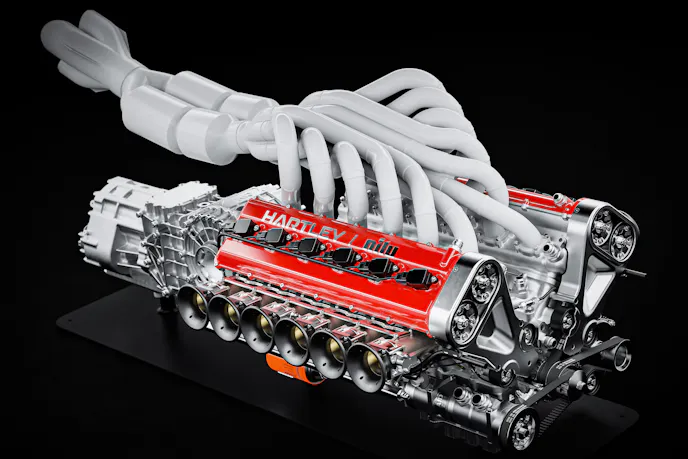
“This is the moment theory became reality,” said Selipanov. “By firing up this stunning V12, we didn’t only prove our engineering capabilities; we delivered the soul of the NILU. As most of the automotive world embraces digital and electric sterility, we’ve doubled down on the raw, visceral drama of high RPM, naturally aspirated internal combustion. The Nilu27/Hartley V12 will make our hypercar truly timeless. And we hope the video from our first dyno test will generate the same excitement among viewers as it did when we were present.”
“I’ve been in the automotive and hypercar industry for more than 25 years, and I’ve never seen a brand new engine configuration fire-up and run this smoothly on the first attempt,” said Simon Waegner, CTO/COO of Nilu27. “The precision of the engineering and the seamless integration between our team and Hartley Engines was highly impressive. This is a massive win for our production timeline and performance targets.”
You might also like
Torque and Clamping Force: Why Lubricant Choice Matters
Engine builders depend on torque wrenches, but torque alone doesn't tell the whole story. Friction can dramatically change clamping force.