


With EngineLabs spread across so many different outlets — The website, Facebook, Instagram, YouTube, the twice-weekly newsletter, and Lab Notes — it can be hard to keep up with everything going on in the EngineLabs world. So, we’re bringing you a new installment, known as Tech Talk. Here, we’ll discuss popular articles of the month, some quick news, a weird engine, a few project updates, and more. So read on, or watch the video above to stay up to date on the latest goings on.
Ferrari’s Dual Engine Hybrid
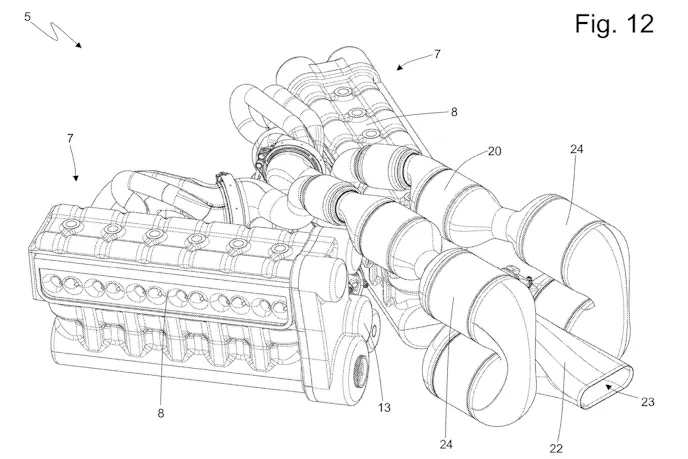
In this article, we dove into the recently published patent application from the US Patent and Trademark Office (US 2026/0077642 A1) for Ferrari’s unique idea to power two electric motors with a pair of inline-six-cylinder internal combustion engines. Besides the very unique arrangement angle of the inline sixes, the patent mentions sound 13 times in its 27 — yes, twenty-seven — pages
Specifically, the patent references controlling and altering the timing of the exhaust pulses of each engine in relation to one another, bringing them into and out of sync for different acoustic effects. Couple that with engine speeds in the 15,000-18,000rpm range, and electric motor speeds in the 28,000rpm range, and you can see why this is so interesting. But, you really do need to read the full article, and the patent, for yourself.
Gas Ported Pistons and Piston Rings
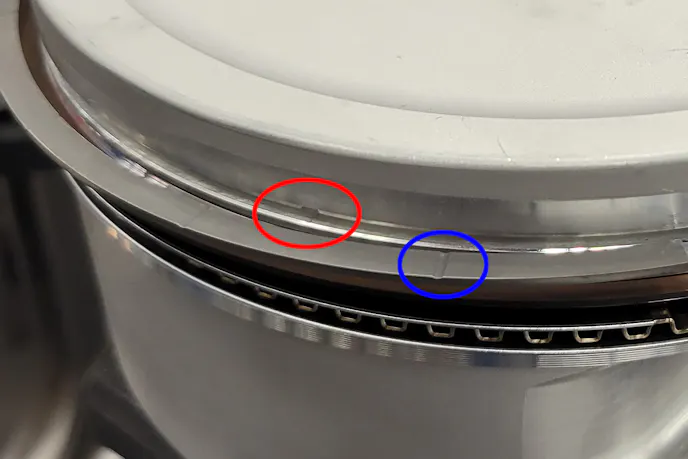
While you are likely familiar with both gas ported pistons and gas ported piston rings at this point, this article discusses the combination of both in the same engine. You might remember this from our EngineLabs Giveaway presented by Summit Racing, where we used both laterally gas-ported pistons with gas-ported piston rings.
We decided to dive deeper into the combination with Total Seal, only to find out that it’s a more common combination than the world knows about. At a high level, the benefits come from both additional sealing pressure on the rings, but also reducing the effects of fouling on gas ports via the rings’ constant rotation. It’s a really interesting concept that many people never thought would work.
LS5.0 Hits The Dyno
LS5.0’s dyno article was not only a top performer, but long-awaited as well. Project LS5.0 is the long-running project in which we attempted to build a 5.0-liter LS engine, to match the performance of a Gen-1 Coyote engine from the original LS Vs. Coyote Shootout.
After finally getting to the dyno, the engine performed flawlessly, however, not quite to the Coyote-matching level we had hoped. Well, until we brought out the secret weapon: A dual-quad intake lid. With that installed, we were able to match the Coyote almost identically. However, we wanted to accomplish that goal within the ruleset, so you’ll likely see a retest of LS5.0 coming soon.
Counterfeit Spark Plugs Are A Real Problem
In a recent video posted by the Torque Test Channel, the team purchased and tested $500 worth of various brands of Iridium spark plugs from various sources, only to find that a solid 1/3rd of the plugs tested were counterfeit.
They determined that by visually inspecting the plugs and packaging, measuring the plug gap, measuring resistance across the electrode, and finally running them and recording the spark on their high-speed video equipment, which was pretty illuminating (no pun intended) as to why you don’t want to run counterfeit spark plugs in your engine. Their channel is worth a follow, for sure.
Toyota Recalls Another 44,000 3.5L V6 Engines
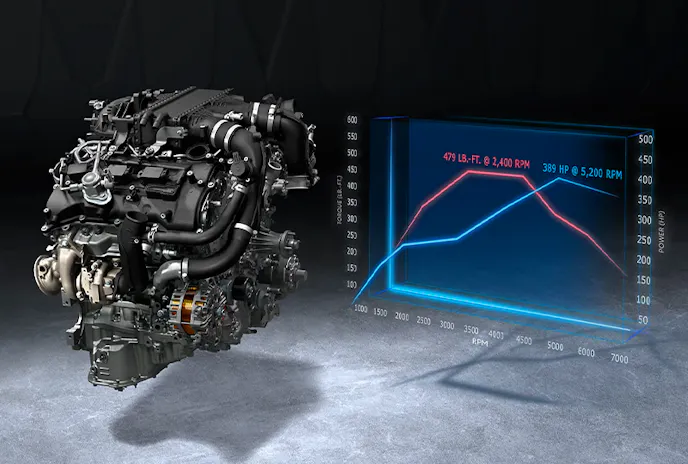
No, you haven’t already read this. This is yet another recall due to: “…a possibility that certain machining debris may not have been cleared from the engine when it was produced. In the involved vehicles, this can lead to potential engine knocking, engine rough running, engine no start, and/or a loss of motive power. A loss of motive power while driving at higher speeds can increase the risk of a crash.”
Now, 44,000 vehicles might not sound like a lot, but we need to remember that 127,000 vehicles with the same 3.5-liter V6 engines were recalled at the end of 2025. And if that weren’t bad enough, that wasn’t the first recall in the series. That occurred in July of 2024, when Toyota recalled the initial 102,000 2022 and 2023 model-year vehicles for the same exact issue in the 3.5-liter V6.
As with the previous recall, Toyota has identified that there is no repair possible for the issue, and affected vehicles need an entirely new engine. While the exact source of the “manufacturing debris” has never been publicly identified, it’s obviously something that is not only hugely damaging to the engines, but something that is far more difficult to remedy on the assembly line than ever thought.
Weird Engine: The Esso Cross

When it comes to engines, there are a lot of things that can be defined as “weird.” In this particular installment of Weird Engine Wednesday, we covered an engine with a number of features that fall squarely under the “unusual” category. So, let’s dive into the 1.6-liter Esso-Cross rotary valve engine.
The most immediate visual feature of the Esso-Cross engine is its cylinder configuration. While it could be classified as an X engine, it is far from standard, and the name “Cross” has nothing to do with the design itself. Each pair of aligned cylinders featured a pair of pistons connected not with traditional connecting rods, but rather a single bar that not only locks the pistons into a perpetual thrust and parry with each other, but also engages the crankshaft eccentric, providing rotational motivation.
Built in the 1970s to try and produce 90 horsepower per liter, unfortunately, it was only reported to have ever produced half that, or 72 horsepower total output, before fading away into the mist of history.
Adjustable Rods
It was posted in April, but not on the first. The Facebook page “The Blue Turd” is known for its posts on the edge of believability, and this one definitely caught our attention. While obviously not built to handle any real power, they likely could withstand combustion of some sort. However, if not just completely assembled as a joke, they are probably just a set of used-up aluminum rods, redesigned to check different rod lengths during mockup. Either way, it’s funny and cool at the same time.
Clarification On LS5.0’s Goals
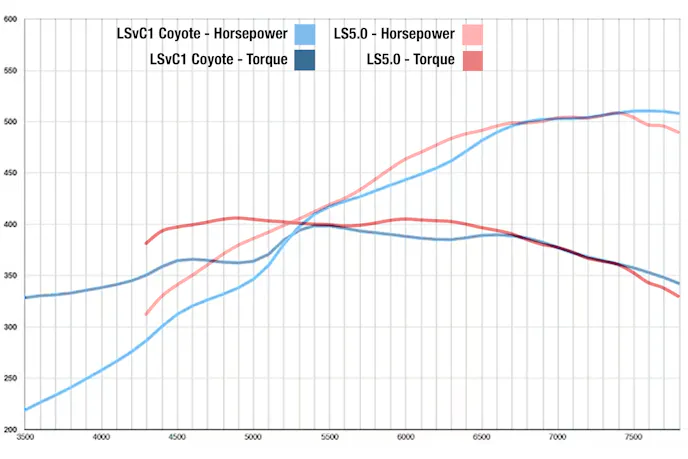
One thing that was pretty apparent in the comments section of LS5.0’s dyno, was that it wasn’t clear that LS5.0 was simply jumping in on a 10-year-old test. This wasn’t a recent, modern test, and all three engines operated under the same budgets and had similar parts. Of course things have evolved, technologically, since then, but the whole point is to try and match the engines on the same footing.
At the end of the day, even with the different intake manifold, we proved the point that dissimilar platforms of similar displacement and compression, will perform similarly, if their shortcomings are addressed. Of course the Coyote has the better top end. But taking “rules” out of it, we were able to match it, with the same budget, with smart parts selection.
Retro 5.0 Version 2 Is On The Way

You might remember Project Retro 5.0, where we took the mindset of the late 1980s and early 1990s (fashion and all) and built a 5.0-liter small-block Ford using the latest and greatest parts. That project was a resounding success as we made way more power than similar builds of the era, and more power than we even expected, maxing out the Vortech Si-Trim supercharger on the third dyno session.
Version 2.0 will ditch the stock block, crank, and rods, for much beefier aftermarket pieces, in the quest to make some serious power out of a still relatively simple supercharged combination. And don’t worry, we’re still going to try and stick to a similar inspiration as we did with the original. This should be a very fun project that will post some significant horsepower numbers.

You might also like
Livernois Motorsports Dives Into The Gen-III HEMI Market With A 401-Cube Short-Block
Long known for thier Ford products, Livernois Motorsports is diving headfirst into the Gen-III HEMI market.