


When it comes to advanced valvetrain testing and technology, the name Ben Strader is one that you likely know. Strader’s company, EFI University, has long preached the way for high-RPM valvetrain stability. Now, 10K Technology, which is the brainchild of Ben Strader and Robbie Blankenship (Robbie Blankenship Racing), is not only showing you the way, but building products to perform at those elevated engine speeds.
Ben has a long history and multiple awards under his belt; he’s considered a guru when it comes to high-RPM engine R&D and always has some interesting information to share. Today, we’ll cover his insights on valve springs.
We’ll review a spring setup example and some behind-the-scenes technology that you may not know or understand. One of the first things that I’m sure will fire up the keyboard warriors and break the internet is Ben noting springs are measured in pound-force, not pressure (pounds per square inch).
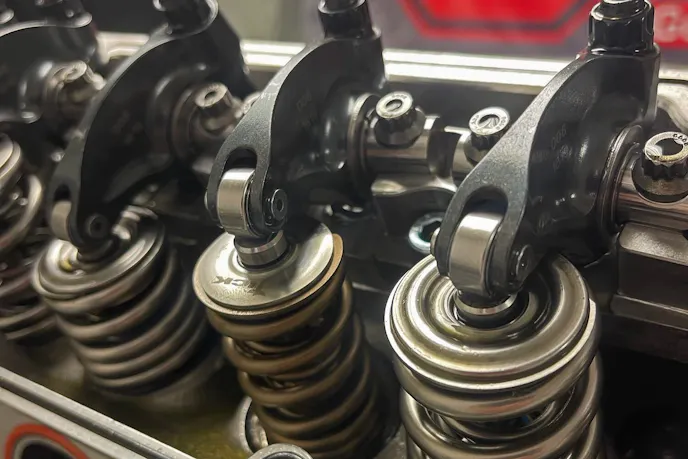
Correctly measuring valve spring parameters and their characteristics is just the tip of the iceberg. It’s a necessary step in setting up high-performance engine valvetrains.
Force Versus Pressure
Springs are measured in force (pounds or Newtons) per distance. This is known as the Spring Rate (force divided by distance). They manage a mechanical load through physical displacement.
Pressure, measured in PSI, distributes a force across a surface area (force divided by area), rather than a linear distance.
If your curiosity is engaged, take a look at Hooke’s Law.
Valve Spring Basics
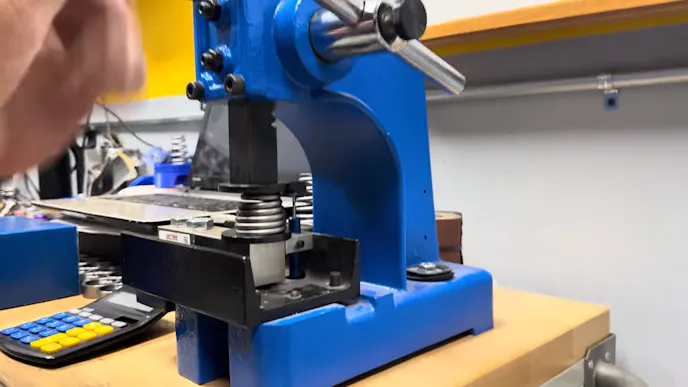
Although it may seem confusing, it really is fairly simple. We’re going to define coil bind, installed height, open height, and a few other specific factors. Be sure to take a look at this 10K technology video. Ben shows how to meet the recommended specifications set by the spring manufacturer. He even demonstrates correctly measuring the size and taper of retainers.
Coil Bind
What is coil bind, and how do we measure it? We find it by compressing the spring to a point where all the coils are touching, and it will not compress further without damage; that height is coil bind.
If we get the distance to coil bind wrong on the tight side when setting things up, you run the risk of significant damage. Damaged pushrods, lifters, rockers, cam, and valves are a real possibility. We need at least .010 inch of clearance per coil or .060 minimum overall; always follow the manufacturer’s recommendations.
Measuring Installed Height
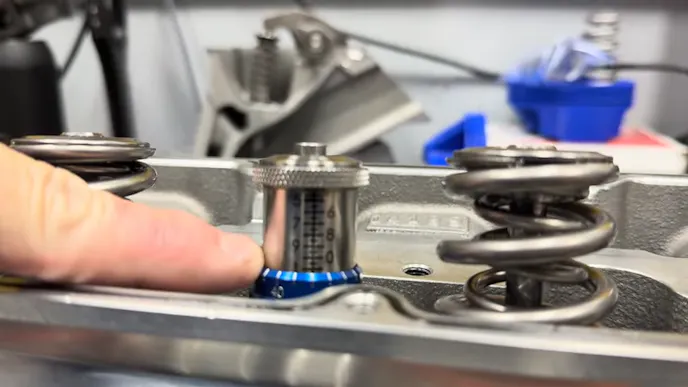
Installed height is fairly simple; it’s the height of the spring when installed on the valve, with the valve fully closed. With the valve installed on the head, measure from the underside of the retainer to the top of the locator; this will be your installed height.
It’s important to take an accurate measurement. This is a starting point in figuring out how much distance to coil bind we will have based on actual valve lift.
Spring Open Height
When the cam is on the peak of the lobe at maximum lift, and the spring is compressed, the height from the bottom of the retainer to the top of the locator is your open height. In other words, installed height minus our peak valve lift equals open height. Deducting our compressed coil bind measurement from the open height gives us the distance to coil bind.
Locks and retainers hold such an extreme value to make the entire system operate correctly.
~ Ben Strader, EFI University – 10K Technology
Valve Spring Retainers and Locks
Valve spring retainers have an inner taper and are located vertically on the valve stem by the valve locks. The valve spring retainer’s inner taper mirrors the lock’s outer taper, and they wedge against the valve stem, holding the spring in place. The valve lock is retained by matching grooves in the valve stem and inner lock body. They have a step to center the spring and come in many different materials and degrees of taper.
Having locks with the correct valve stem size is only half the battle. Ben goes on to state that one often neglected piece of the puzzle is lock and retainer wear. Most enthusiasts and even some professional builders overlook this area.
Valve Lock Taper Angle
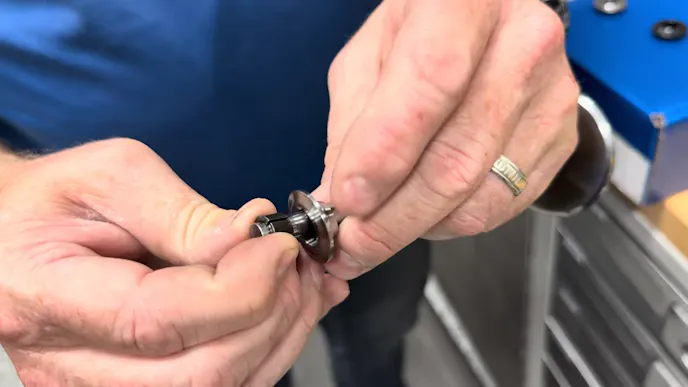
Locks and retainers need to have a precisely matching taper angle. The clamping force is dependent on an accurate taper; when it’s worn or misaligned, the holding capacity is reduced.
In the video, he demonstrates how to properly measure the taper angle and the diameter size. He also shares a quick method of measuring wear using readily available pin gauges. As a builder, it’s just another proactive tool to have in your pocket.
Valve Spring Locator
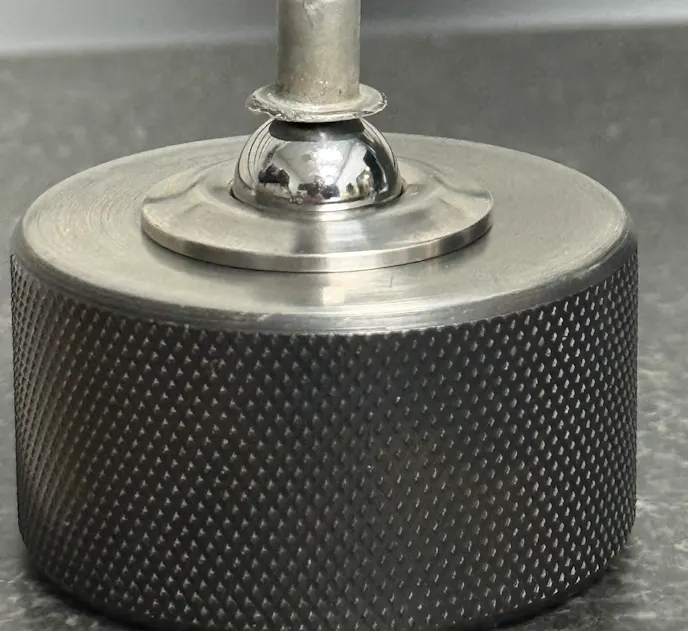
The valve spring locator has a center hole slightly larger than the valve guide, and a step that coincides with the spring’s inner diameter. They are made of hardened steel to protect the head from damage by the bottom coil of the spring. They also do the essential duty of centering the spring over the guide. Some locators even have built-in valve stem seals. In the video, Ben goes on to describe the importance of this locating step as well as the locator diameter matching the inner diameter of the spring.
Valve Spring Shims
Valve Spring shims allow for fine adjustment of the valve spring’s installed height, and by extension, the force the spring is exerted on the valve when closed. Correct shim height is an important step in the process of setting your springs up. Shims come in three standard sizes of .015, .030, and .060 and are used under the locator to adjust the installed height. Shim thickness will also affect coil bind distance.
Accurately Measuring All The Variables
Now that we have covered some of the basics, let’s do a little math.
Hypothetically, per the spring manufacturer, we have the following recommended targets:
1.950 inches installed height
.690 inch max lift
.060 – .090 inch from coil bind
Let’s say our measured coil bind is 1.160 inches and maximum valve lift is .690 inch. If we add them together and subtract the sum from our measured installed height, we will get the distance to coil bind.
Hitting the target distance to coil bind while staying close to the target installed height should give us the correct spring force for the recommended cam selection.
1.160 coil bind +.690 lift = 1.850
1.980 inches measured installed height -1.850 inches (coil bind and peak lift combined) = .130 inch distance to coil bind
Making Adjustments
With a .130 inch distance to coil bind, we need to raise the bottom of the spring to bring it within the spring’s suggested distance to coil bind.
At .130 inch to coil bind, we may be ok, but we want to get closer to hitting those target values. It’s a give-and-take situation. By adding a .015-inch and .030-inch-thick shim for a total of .045 inch under our locator, we will bring our coil bind into tolerance at .085, and it will take us slightly under the recommended installed height. This will slightly increase the spring force, which shouldn’t be an issue.
Now, we need to do that seven more times to make sure each spring is individually within our specifications. That might sound tedious, but that’s just the nature of the game.
You might also like
Torque and Clamping Force: Why Lubricant Choice Matters
Engine builders depend on torque wrenches, but torque alone doesn't tell the whole story. Friction can dramatically change clamping force.