
Computer Numerically Controlled (CNC) machining has been around for years now, but it’s by far mostly considered when it comes to porting cylinder heads for maximum airflow or churning out big runs of identical parts from billet. But talk to savvy engine builders, and you’ll hear how CNC machining is revolutionizing all kinds of engine work, from blueprinting blocks to precision honing and even making custom parts. You might consider CNC machine work the providence of big-buck race teams, but these days, going with an engine builder utilizing CNC equipment is usually about the same cost with more consistent results.
Around the Block
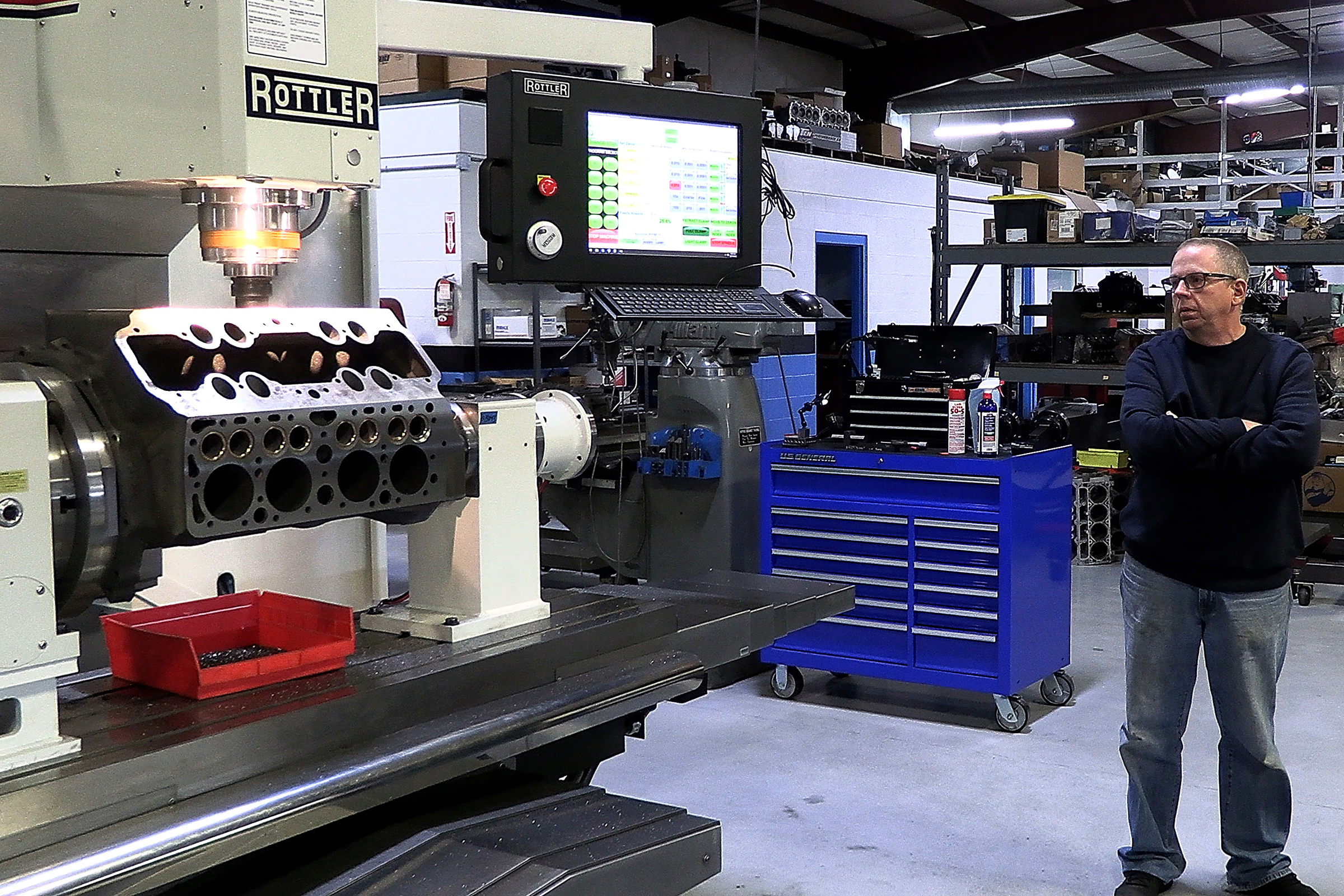
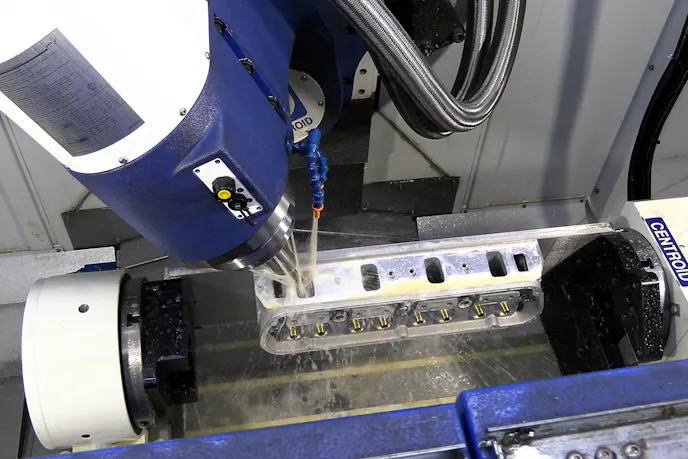
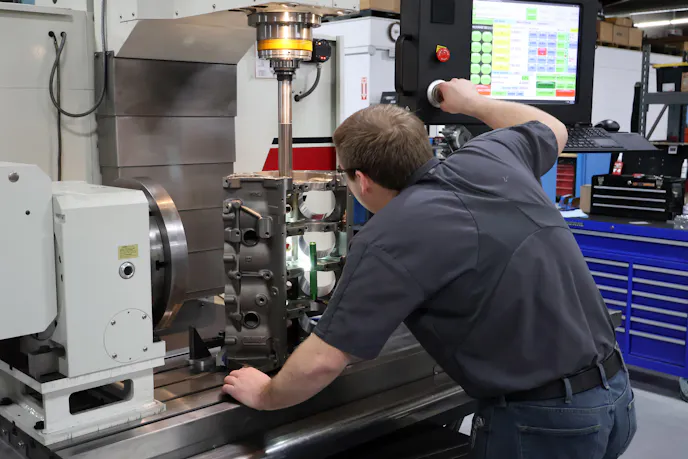
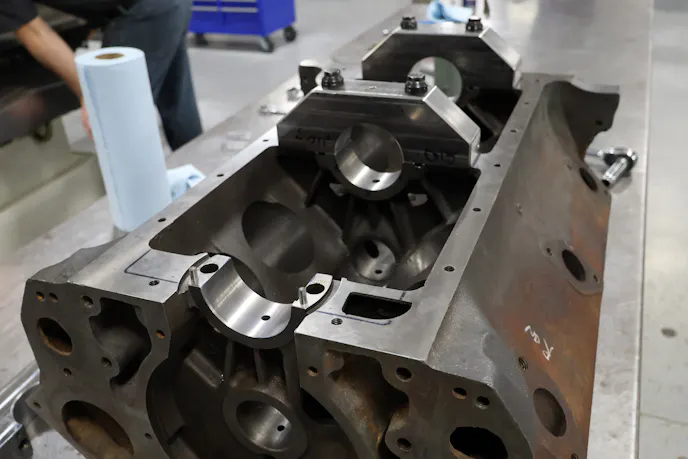
One of the biggest gains from CNC machining is in engine block preparation. Key structural operations, including deck surfacing, boring cylinders, align-boring mains, and machining camshaft tunnels can all be performed by a single CNC machining center with a high degree of accuracy. In the past, an engine builder might move a block between multiple manual machines and use special fixtures to “blueprint” everything to spec. Today, CNC technology consolidates those steps. Instead of hours spent repositioning a block on different equipment and several different technicians getting involved, the CNC uses programmed tool paths and automated probing to handle it in one setup. This not only saves time but also ensures that each critical measurement is cut to exact specifications, every single time.
Keith Dorton, who has been building engines for decades, was one of the first engine builders to use oversize roller cam bearings in race engines, which required precise machine work on the block. “It was not uncommon for us to take more than a full eight-hour day just to do one cam tunnel on one block,” Dorton says of the old way. Indicating the block, correcting alignment by hand, and making careful cuts all consumed large chunks of time.
Now, with a CNC machining center dedicated to block work, he says, “we can do that same job in two-and-a-half to three-and-a-half hours.” And beyond the time saved, he says the consistency is remarkable. “I won’t say it does a more accurate job, because we can be accurate manually, but (manual work) is very operator sensitive. You may have a fantastic manual machinist, but if he retires or takes a job somewhere else, you’re right back to ground zero. Meanwhile, the CNC machine never complains and, as long as you keep it serviced, never takes a day off. You need a good operator, but these days it’s a lot easier to find a quality CNC operator than a competent manual machinist.”
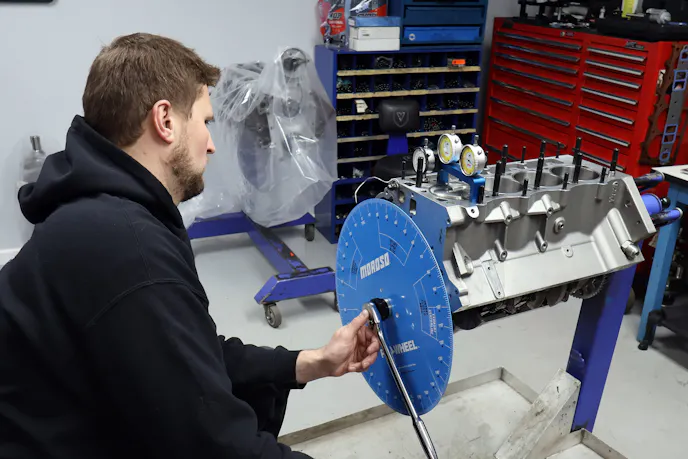
Specialized CNC machining centers excel at full-block blueprinting. Dorton’s utilizes a multi-axis CNC that is focused on block work. With it, his shop can perform an array of operations in one machine: “We can bore both housing bores, cam and main-bearing bore. We can do the cylinders, we can do the deck, we can do the lifter bores very precisely,” he says. He’s even used CNC to solve odd restoration challenges. “We’ve even done some non-standard stuff on some of the flatheads. We’ll machine all the surfaces because they’re so poor quality from being 70 or 80 years old,” he notes.
Another clever use has been resizing connecting rod pin bores using CNC. “We have done some odd things like rebore the pin end on connecting rods for different-size pins,” Dorton says. For instance, converting a rod from a 0.866-inch pin to a 0.927-inch pin is a tricky modification, but Automotive Specialists has developed a way that it can be done quickly and with confidence on the CNC machine. This is a great example of how CNC machining can extend a shop’s capabilities. A task that might have been farmed out or required a dedicated rod machine can be tackled in-house with existing CNC equipment.
Precision Honing and Surfacing with CNC Automation
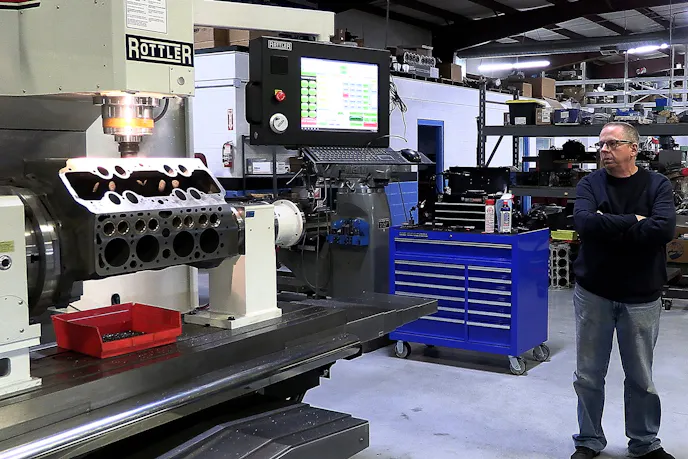
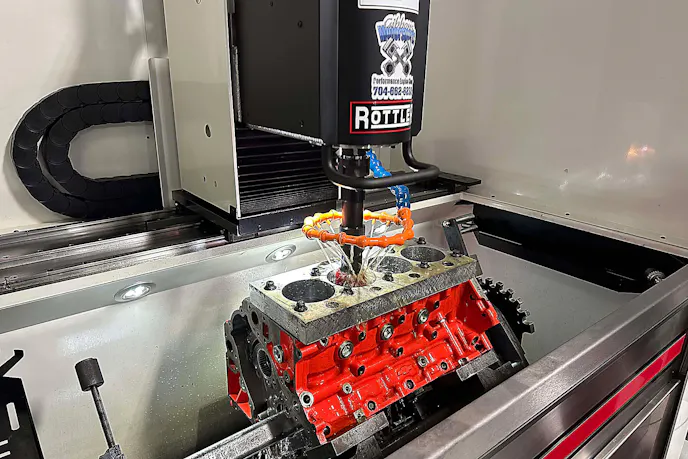
Beyond block milling and boring, shops are also using CNC for finishing operations like cylinder honing and deck surfacing — areas traditionally considered art as much as science. At Gibbons Motorsports, a shop run by brothers Pete and Jake Gibbons, they found that investing in a CNC-controlled cylinder honing machine transformed their workflow. “We were bottlenecked with a lot of work in a small shop. It was like, we’re never going to get all this done,” Pete Gibbons explains. Rather than hiring extra employees, which they really didn’t have room for anyway, they decided to invest in equipment to increase throughput. Their first purchase was a Rottler CNC cylinder hone.
The difference was night and day. “Once we got the cylinder hone, we kind of got addicted,” Jake laughs. Suddenly they could hone a block unattended, leaving that person free to work on assembly or other tasks. “We’re in here and the thing’s honing a block, and we’re in the assembly room working on something.”
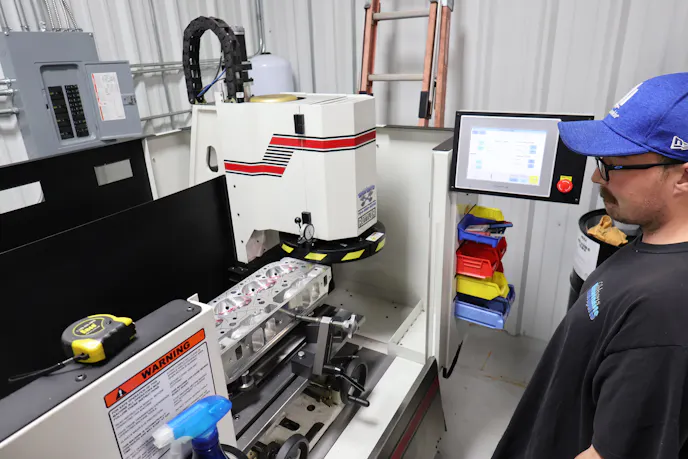
The CNC hone not only freed up time, but also delivered extremely consistent results. “The finished product, I think, is a little nicer too,” Pete notes, referring to the uniformity of the cylinder wall finish.
CNC honing machines bring modern precision to an old-school process. Traditionally, honing cylinder bores to size and finish was a manual job requiring a seasoned touch. “Every bore is exact with the CNC … the crosshatch, all that finish, where it’s really hard to do that on a manual machine. You’ve got to be honing blocks for a long time to develop the feel,” Pete says.
When it comes to cylinder honing, a CNC has advantages that a manual machine and operator simply can’t match, no matter how experienced the operator. The Rottler H85AX, for example, uses diamond stones and a coolant-based system that cuts aggressively without overheating the bore. “It runs a coolant versus conventional honing oil… The combination of the diamonds and the coolant, it just cuts the material out… There’s no waiting around for it to cool off like the old days with the oil,” Pete explains. The machine can also measure the amount of runout from top to bottom while it is cutting (a process called “in-process gauging”) and can correct for issues as soon as they begin to develop.
It’s not just honing either. Gibbons Motorsports also added a Rottler S85A surfacer, a CNC-controlled milling machine for head and block decking. “Same idea,” Pete says. “You can mill on its own, and you can move on to another job.”
Consistency, Repeatability, and Productivity Upgrades
Across the board, the biggest advantages of CNC in the engine shop boil down to consistency and productivity. A well-programmed CNC machine will perform a given operation the exact same way every time, whether it’s the first block of the week or the tenth. Instead of an expert having to check and re-check each cut or hone, the machine can get right to work and even logs the data. Pete Gibbons highlighted how their CNC hone produces identical cylinder finishes, which gives them confidence that every cylinder will seal and perform equally.
The productivity gains are just as crucial. In Dorton’s case, he estimates that for block machining alone, the new CNC has effectively doubled his output. That’s huge for a small operation. The CNC doesn’t get tired or distracted, and it can run while the builder works on something else. Some advanced CNC hone models can even run unattended batches. For example, Rottler’s H85AX can automatically index from one cylinder to the next, and the H85AXY can flip V8 blocks to do all cylinders on both banks without human intervention. This level of automation means the old setup of one person per machine can now be replaced by one qualified technician overseeing multiple machines. It’s like multiplying your workforce without having to hire more people.
Embracing a New Era Beyond Porting Heads
It’s clear that CNC machining is expanding engine builders’ capabilities in ways far beyond the stereotypical CNC-ported cylinder head. In a modern performance shop, the CNC might be just as likely to be found line-boring a block, truing deck surfaces, honing cylinders to perfection, resizing a batch of connecting rods, or carving out a custom billet part. The experiences of Dorton and the Gibbons team show that these machines, while a big investment, can dramatically improve consistency, repeatability, and productivity in a small shop environment. They reduce the manual drudgery and room for human error in critical machining tasks, while allowing one person to supervise multiple operations — effectively increasing the workforce without hiring additional employees.
For enthusiasts and builders, the takeaway is that CNC technology isn’t something to be intimidated by or dismissed as only for high-end builds. It’s becoming a practical tool in the daily workflow of engine building. The consistency in results can translate to better engine reliability and performance. For example, identically honed cylinders contribute to balanced power and longevity across all cylinders of an engine. And by freeing up time, CNC lets builders focus on the creative and fine details of engine assembly and tuning, rather than spending all day on one machining task.
Of course, the human touch and expertise remain vital. A CNC machine is only as good as the person programming and setting it up. But as Keith Dorton’s story shows, a veteran can greatly amplify his capabilities with CNC, and as Pete and Jake Gibbons demonstrate, even a small family shop can punch above its weight with the right equipment. The ROI comes not just in dollars, but in the ability to take on new challenges and deliver top-tier quality consistently.
So, the next time you hear “CNC” in the context of engine building, don’t just think of cutting chips on a cylinder head port. Think of blueprinting a block in one shot, or honing an LS cylinder to perfection. The CNC revolution is here in engine shops, and it’s making life easier for builders while giving enthusiasts better engines. In the end, it’s all about working smarter, building better, and keeping our craft moving forward into the digital age.
You might also like
C8 ZR1 Tuning Unlocked: Serious Gains on the Dyno
Matt Sanford at Tuning Tips and Erik Brooks from HP Tuners unlocked the very first C8 ZR1 ECM and started making changes.