
There’s a certain expectation when you hear the words “stroker build.” Most people picture a bigger crank, maybe a little clearancing work to make it all fit, and a bump in torque. Done right, it’s a reliable recipe. Done lazy, it’s just cubic inches chasing a number. The Ford Godzilla platform doesn’t really allow lazy builds.
Ford handed engine builders something unusual when they introduced their 7.3-liter pushrod V8. It’s big-inches right out of the box, enjoys modern combustion efficiency, and comes wrapped up in a package that actually makes sense for swaps. That alone makes it interesting. But once you start stretching stroke and pushing RPM beyond what most people expect from a truck engine, things tend to get a bit more complicated. That’s where Bryan Neelen and Late Model Engines come in.
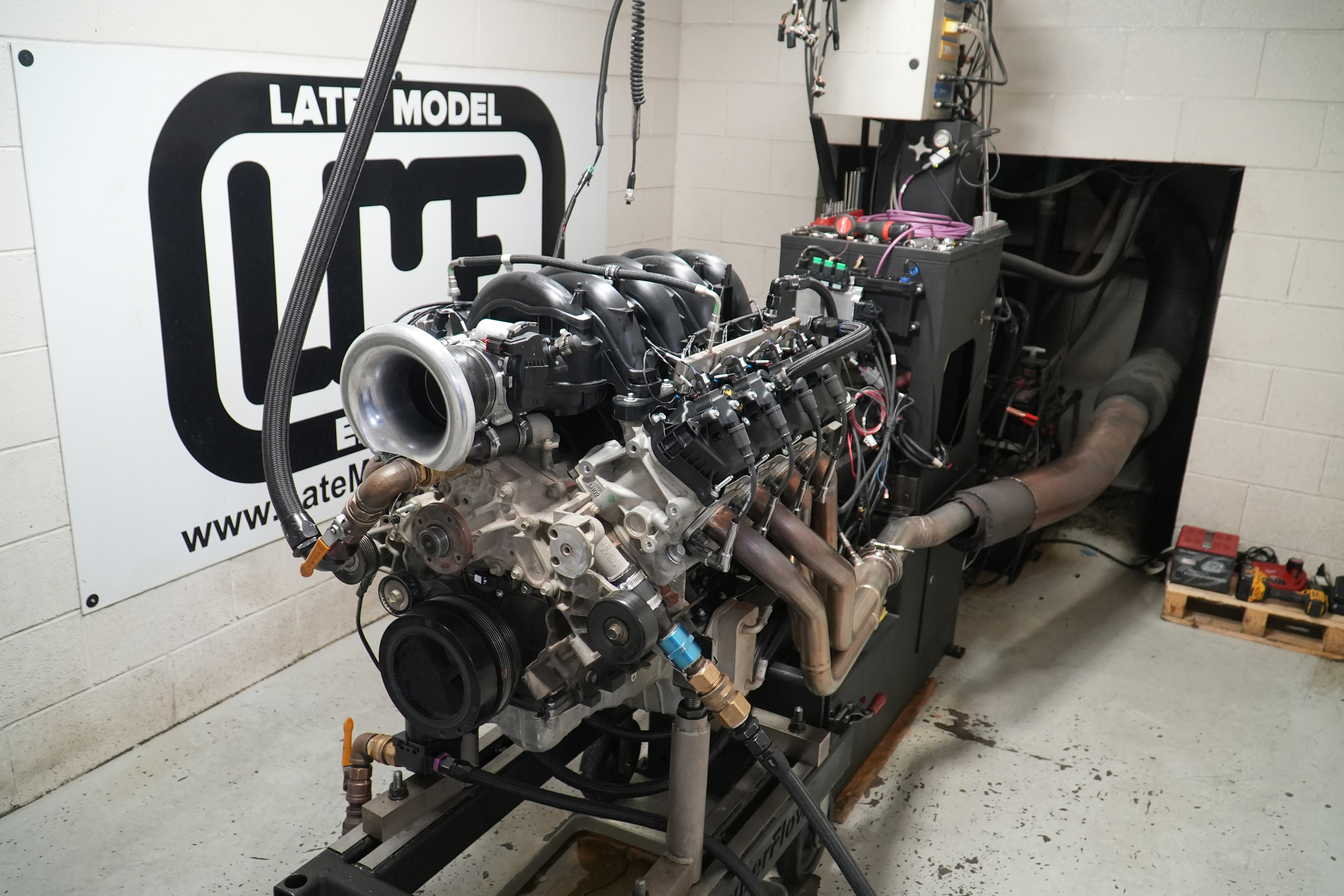
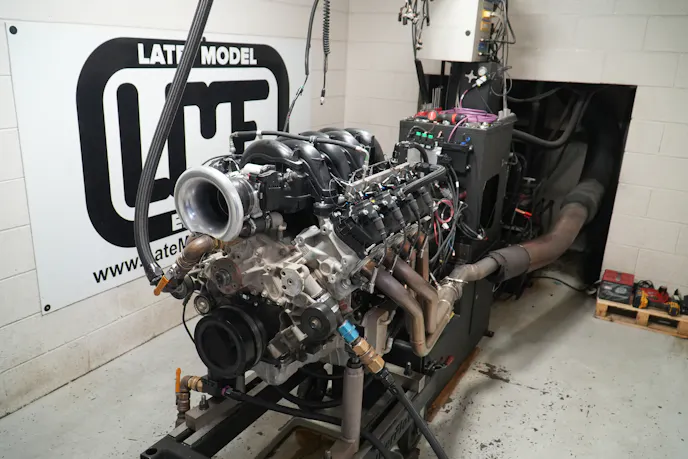
Their answer is a build we’ve nicknamed “Bosszilla,” that we’ve run through the wringer over a handful of stories. The latest (and final, before installing it into something really fun) is throwing in more crank to increase the stroke. But consistent with the way LME does everything, it’s a fully thought-out combination built around displacement, RPM capability, and real-world usability. The result is also a good example of how quickly the Godzilla platform is evolving from “cool swap option” to something that can legitimately power serious performance builds.
More Than Just Stroke
Neelen doesn’t try to oversell it. He just lays it out. “This particular engine is a 460 cubic-inch engine, which is up from 445,” he says. “We can build up to 505 cubic inches.”
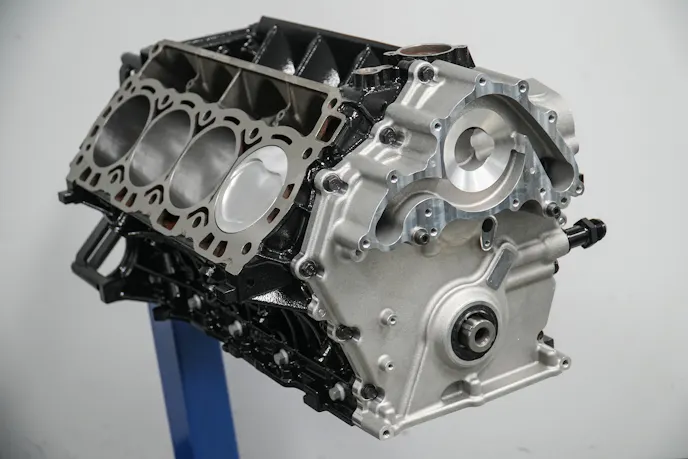
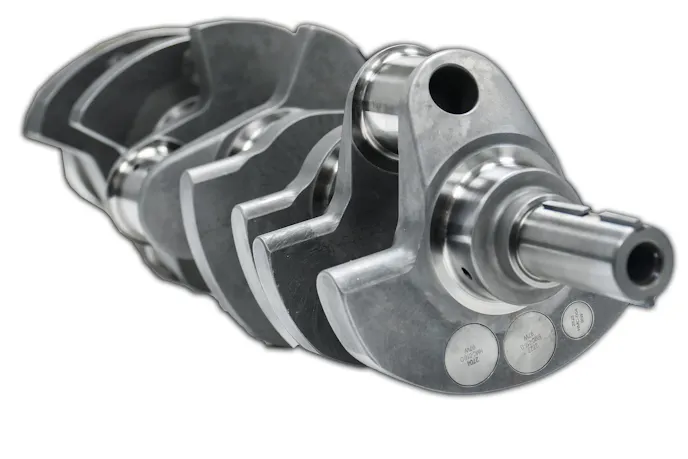
That 460 number is the headline with a nod to Ford’s big-block engine history, but the details matter more. Bosszilla is built around a 4.225-inch bore and a 4.125-inch stroke. For reference, in stock form, the engine comes with a 4.22-inch bore and 3.98-inch stroke. The bore increase is practically negligible at only five thousandths of an inch, which tells you immediately what the goal is. This isn’t about pushing the cylinder walls to the edge. It’s about adding displacement without compromising the foundation.
That’s an important detail. It keeps cylinder wall-thickness nice and beefy to handle the extra side loading created by extra stroke and avoids introducing unnecessary risk. Instead, the extra displacement comes from stroke, which is where things get interesting.
But while Bosszilla stopped at 4.125 inches, that’s not a limit for Late Model Engines when it comes to the Godzilla. Their program extends out to 4.375-inch and even 4.500-inch stroke combinations, landing the engine into 491 and 505 cubic inch territory.
That range gives builders options. Stay conservative with a 460-inch combination, or go big and start chasing serious torque numbers, with around 500 cubes under the hood.
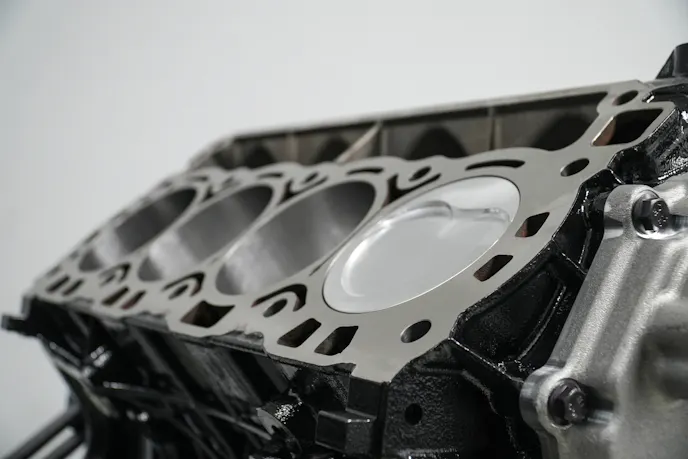
The Godzilla platform actually makes this easier than you might expect. With a deck height of 9.650 inches, it’s nearly a half-inch taller than LS-based blocks. That gives enough room to package a longer stroke and still use a relatively long connecting rod so that the engine doesn’t turn into a geometry nightmare.
Neelen says rod ratio isn’t a major concern in these builds. “It handles it well,” he explains. That’s backed up by experience. Late Model Engines has turned even larger stroke combinations into the 8,000 rpm range in other platforms, and the Godzilla doesn’t fundamentally change that equation. With a 4.125-inch stroke, Bosszilla still has room to rev beyond what most people expect from something that started life in a Super Duty truck.
That’s where this build starts to separate itself from the usual “big-inch equals low RPM” mindset.
The Rotating Assembly: Built For Abuse
Bosszilla’s rotating assembly reads like a who’s who of proven hardware. At the center is a Callies Magnum forged crankshaft with a 4.125-inch stroke. Forged from SAE 4340 steel and heat-treated with Callies Ultra-Case heat treatment, giving it both extreme strength and wear resistance. Gun-drilled mains and lightened rod throws help reduce weight and windage, while a fully counterweighted design with profiled counterweights makes it extra stable at high RPM.
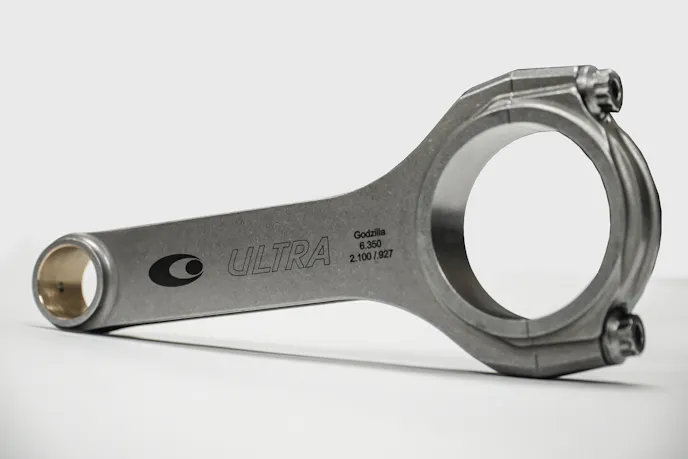
It’s paired with Callies Ultra H-beam rods at 6.350 inches. The Ultra H-beam rods are forged from Timken steel, to Callies’ exact specifications, and are fastened with ARP2000 rod bolts. JE Pistons forged 2618 pistons hang off the rods with a 1.212-inch compression height and a -16cc dish, with only an additional .005 inch of bore size added.
That compression height number matters. When you add stroke, something has to give. The piston moves up, the pin location changes, and ring placement becomes critical. A minimal 1.212 compression height leaves room for a longer 6.350-inch connecting rod, which helps keep the rod/stroke ratio manageable.
From there, it’s all about execution. The build sheet shows piston-to-wall clearance at .005 inch, main bearing clearance at .0025, and rod bearing clearances in the .0024–.0027 range. Ring end gaps are set at .020 on the top ring and .026 on the second.
Those are not “throw it together” numbers. They’re deliberate, and they reflect a build that’s expected to see real RPM and real load.
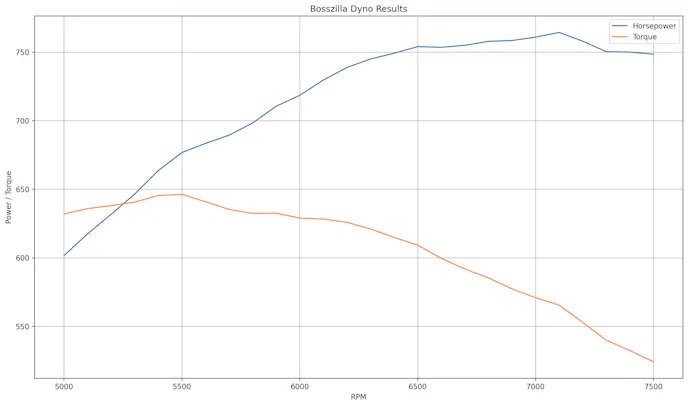
So what did we see? We’ll go ahead and spoil the ending to this movie with some dyno numbers. You can check out the full dyno chart, but the highlights are 646.2 lb-ft of torque at 5,500 rpm and an astounding 764.4 horsepower at 7,100 rpm. That’s improvements of 171 lb-ft and 334 horsepower over the stock ratings!
Quench, Camshaft, and the Personality of the Engine
If the rotating assembly defines durability, it’s the camshaft that brings the attitude. Bosszilla uses a hydraulic roller cam with 254/264 degrees of duration at .050 tappet lift and a 112-degree lobe separation angle. That’s a camshaft designed for performance and not something you’d put in a tow rig. “It’s a pretty healthy cam,” Neelen says.
And he’s right. In a 460-inch engine, that cam will still have manners, but it’s clearly designed to move the powerband up in the RPM range to make the most of the engine’s potential. It’s the kind of profile that makes sense when you’re trying to get a big pushrod engine to breathe at higher RPM.
The compression ratio is another piece of the puzzle. Adding stroke means the compression can jump up in a hurry, but the 16 cc dish in the pistons keeps the compression ratio manageable at 11:1. Just about the maximum you can get away with on pump gas. “The Cometic head gasket we’re using is 0.040 of an inch thick, and we kept the piston at 0.009 in the hole at TDC to keep the compression ratio manageable,” Neelen explains. Keep the mixture active, keep the burn efficient, and avoid detonation.
Godzilla’s Cylinder Heads
Unfortunately, while the Godzilla’s block design makes it easy to add stroke, you won’t automatically unlock bottomless power and torque thanks to limitations in other areas of the design. Namely, we’re talking about the stock cylinder head castings.
Neelen is blunt about it: “In my opinion, the factory casting is just not set up for big power with the real larger cubic inches,” he says. “The bore size being 4.220 inches from the factory allows for some pretty large valves. But with the current head design, you can’t make the changes you need without requiring a lot of work. You can’t just go in there with a grinder and get to where you want to be. Still, for our build, the guys at LME did what they could with some light port work on the cylinder heads.
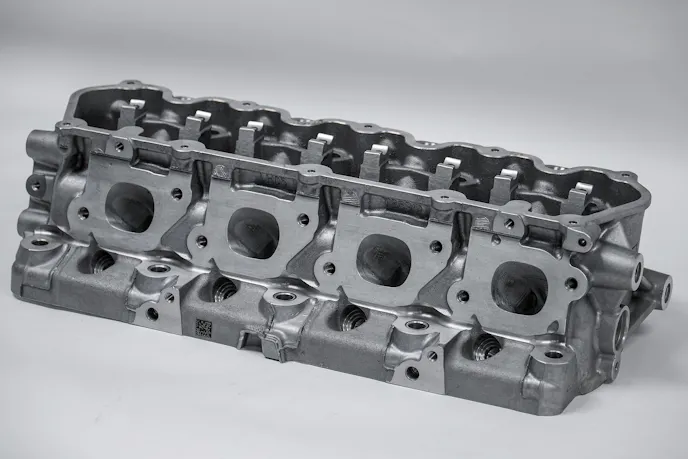
“There are some aftermarket heads that are coming out for this platform,” he continues. “When they get here, they are going to, I think, be a game-changer for the power potential — especially when it comes to these larger-inch engines.”
That doesn’t mean the heads are bad. It just means they become a bottleneck when the displacement (and the need for big airflow) climbs. The 4.225-inch bore opens up a lot of opportunity for airflow, but the factory intake and exhaust port designs can only take you so far.
We’ll be keeping an eye on the aftermarket manufacturers for higher-flowing cylinder heads, and when they get here, we can’t wait to test them to see how high they can raise the ceiling for these engines. Until then, forced induction remains the easiest way to push past those limitations. “You put a bunch of boost to it, it’s going to make power,” Neelen says with a shrug you can practically hear.
Old-School Upgrades On A New-School Engine
Ford performance enthusiasts have had the overhead-cam Coyote for years, but they’re salivating over the potential of the Godzilla package for one main reason. Swaps.
The Coyote is a highly efficient engine that can make great power, but its dual-overhead camshaft valvetrain makes the engine quite wide up top. Meanwhile, the Godzilla is cam-in-block, so even though it has more cubic inches, the outside dimensions are quite a bit more compact. That means it can actually be a lot easier to swap into an old Mustang or Fairlane without cutting up the strut or shock towers.
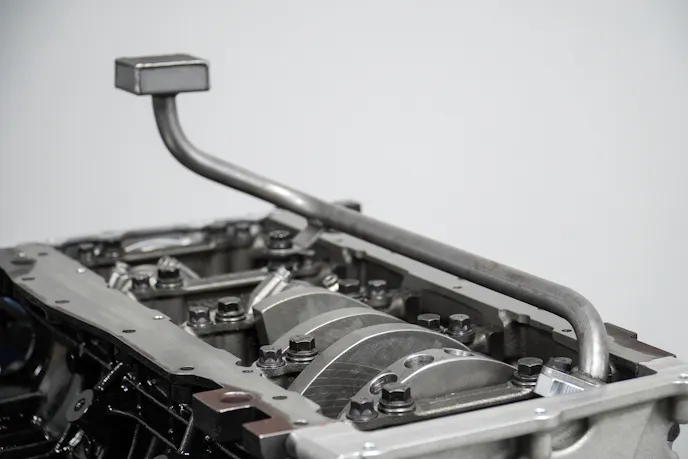
But there are other issues that need to be accounted for. From the factory, the oil pump is part of a variable-speed system driven off a jackshaft. That’s fine in a truck. It’s not great in a swap. Late Model Engines addresses that with a completely reworked front cover.
Their setup eliminates the factory jackshaft and rear sump oil pump, replacing it with a front-driven oil pump using Coyote-style gears. It simplifies the entire system and makes the engine easier to package in a wide range of chassis. “We get rid of that… and just simplify it,” Neelen explains.
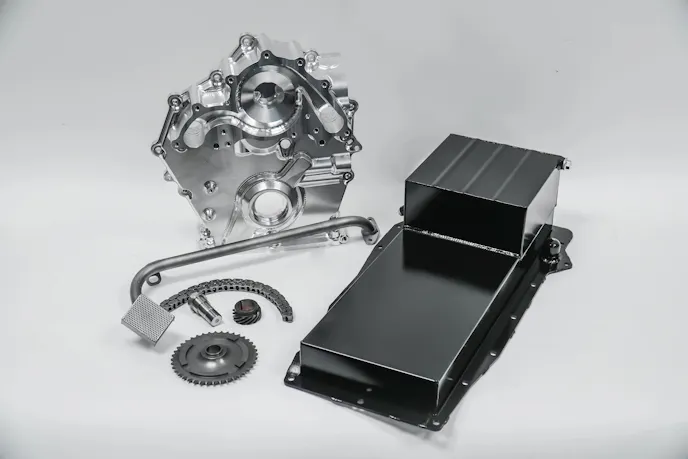
Using the front-drive kit also allows you to choose either a front or rear sump configuration, so the engine can more easily drop into a wider variety of chassis without having to chop up the crossmember. The new front cover also matches up with a wide variety of front accessory drives. It’s a small detail on paper, but it’s a big deal when you’re trying to fit one of these engines into something that didn’t originally come with it.
One of the more interesting features of LME’s front cover system is the ability to run a distributor. That opens the door to something you don’t usually associate with modern engines, a carbureted Godzilla. “We can run it with a distributor, or straight up run a distributor and a carburetor,” Neelen says.
A fuel-injection delete isn’t a novelty. It can be a practical solution for certain builds, especially in older vehicles where simplicity matters more than ultimate control. It also reinforces what makes the Godzilla platform appealing in the first place. It’s modern, but it still speaks the language of traditional hot rodding.
Where Bosszilla Fits
So, where does a unique engine like Bosszilla actually land? Neelen sees it as an alternative to engines like the Coyote, especially for builders who want something simpler and more familiar. “I think it’s a good offering for somebody that doesn’t want the architecture of the dual overhead cam,” he says. There’s also the obvious advantage of displacement.
“You’re talking about being able to punch out 460 cubic inches, and even 490. That’s a lot of cubic inches, but those are also pretty important numbers to classic Ford guys,” he adds. That translates directly to torque. Even naturally aspirated, these engines are capable of serious output. After all, we’re talking about making 646 lb-ft of torque and a whopping 764 horsepower with this combo on pump gas and lightly ported cylinder heads!
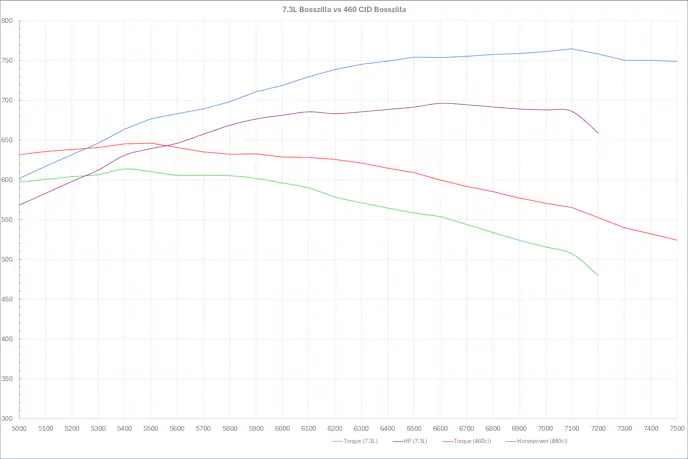
More importantly, it’s torque that comes naturally. No boost required. No complicated packaging. Just displacement doing what displacement has always done. Bosszilla works because it doesn’t try to reinvent the wheel. It just refines it.
Take a strong factory platform. Add displacement in a controlled way. Choose components that support intelligently with a plan in mind. Fix the packaging issues that make swaps difficult. Then build it like it matters. That last part is important.
Neelen describes the build as “a nice, straightforward, solid build,” but that undersells what’s actually happening. The details matter. The clearances matter. The decisions matter. Because once you start pushing any engine into the 750-horsepower stratosphere, everything matters.
The Godzilla platform is still young, and it’s evolving fast. Builds like Bosszilla are a preview of where it’s headed. Bigger displacement, better airflow, more refined combinations. And maybe most importantly, engines that feel just as comfortable in a modern swap as they would in a classic muscle car. That’s not an accident. That’s the result of builders like Late Model Engines taking the time to do it right.
You might also like
Complete Production History Of The Chevy 302 Engine
The Chevy 302 Engine is a rare muscle car legend. We detail the block casting numbers and production changes from 1967 through 1969.