


The Red Bull RB17 V10 engine sits at the center of a limited-production, track-only hybrid hypercar with a carbon-fiber monocoque, built by Red Bull Advanced Technologies in collaboration with Cosworth and racing legend Adrian Newey. It is a bold deviation from today’s supercar powertrain options. Instead of turbos or superchargers, it centers on a mid-mounted Cosworth-built naturally aspirated V10 integrated into a hybrid system, making 1,200 horsepower and revving to an insane 15,000 rpm. Delivering those distinct V10 noises reminiscent of early-2000s Formula 1, while avoiding the short service life that made those engines impractical outside professional racing.
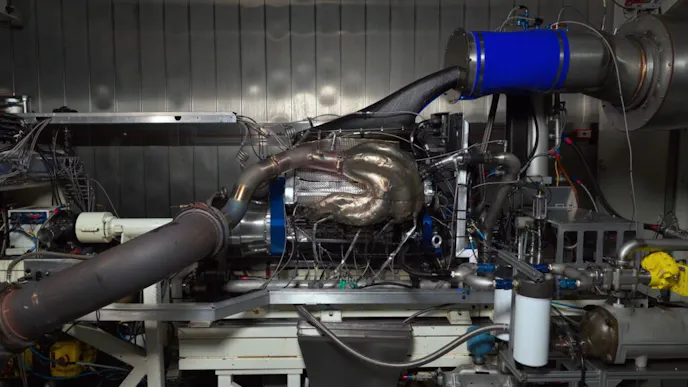
A Bespoke 4.5-liter V10 With Red Bull Ownership
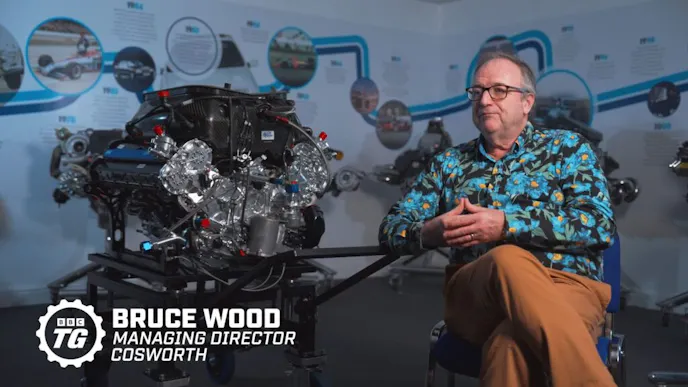
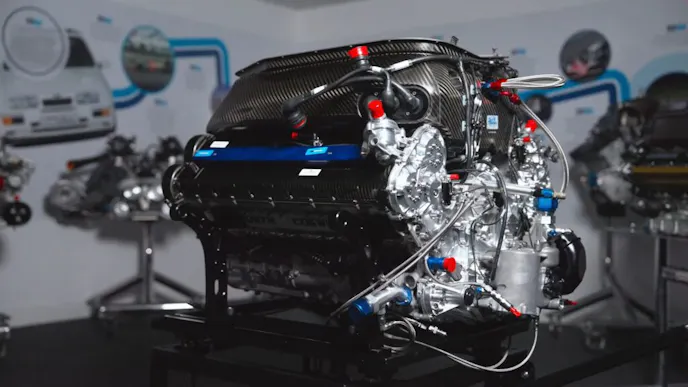
Cosworth managing director Bruce Wood describes the RB17’s V10 as a “completely ground-up” program. With every major component being new, the design is not intended to share parts with other engines. He also notes that the specific engine IP belongs to Red Bull, meaning this exact V10 is effectively exclusive to Red Bull applications.
Why 15,000 RPM Is The Target
The obvious question is why stop at 15,000 when historic F1 engines spun higher. Wood’s answer is reliability. He points out that when F1 engines ran beyond 18,000 rpm, rebuild intervals could be measured in only a few hundred kilometers. Multiple engines were required across a race weekend. The RB17 V10 intentionally prioritizes longevity. The 15,000-rpm limit was specified to support an engine life target of 10,000 km or more before an engine rebuild is required.
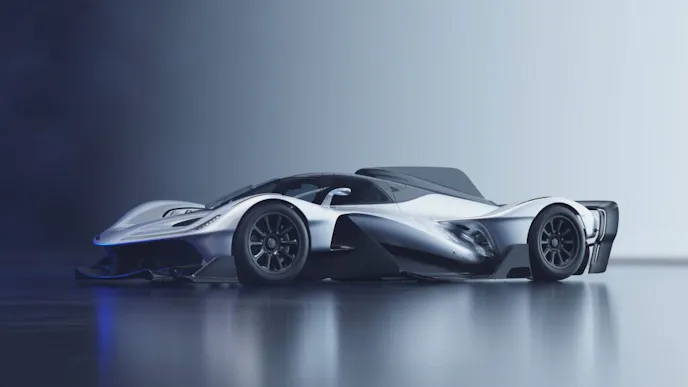
The RB17’s track-only status also changes the constraints. Without road-car emissions compliance, Cosworth did not have to build the engine to legislative guidelines, allowing them to squeeze out every bit of performance. Displacement and cylinder count were derived from the desired power and RPM targets, resulting in the precise selection of a 4.5-liter V10 architecture.
How Newey and Cosworth Landed on a V10
Bruce Wood explains that the program did not start with a V10 as a foregone conclusion. Early discussions explored multiple configurations. These included a more contemporary Formula 1-like, highly boosted turbo V6 and even a normally aspirated V12. Wood characterizes Adrian Newey as a demanding customer who pushes engineering teams to the edge of feasibility, then deliberately pulls the concept back to an achievable specification. The end result was a naturally aspirated V10, chosen as much for its responsiveness and sound as for its performance and power potential.
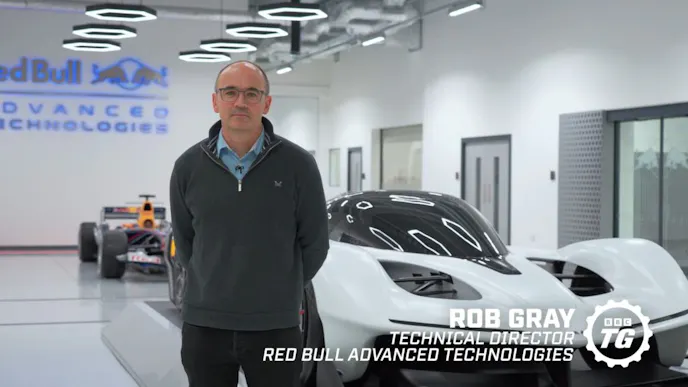
That focus on the sensory centerpiece shows up in many of the RB17’s packaging decisions. Red Bull Advanced Technologies Technical Director Rob Gray describes how one of Newey’s recent changes relocated the exhaust outlet to a central, spine-mounted position on the engine cover. This forced substantial thermal-management work to keep heat under control. It is a difficult engineering problem, but it also ensures the V10’s voice is unmistakable.
Why the Red Bull RB17 V10 Engine Defines The Car
In the end, the RB17’s V10 is less a retro indulgence than a deliberately chosen engineering solution. A clean-sheet, naturally aspirated 4.5-liter built to Adrian Newey’s specification, giving the RB17 the throttle response, packaging intent, and acoustic signature he was chasing, without borrowing compromises from an existing road or race program. The spine-mounted exhaust change underscores that priority, showing that the car’s structure and thermal strategy are being shaped around the engine’s output and placement, not the other way around.
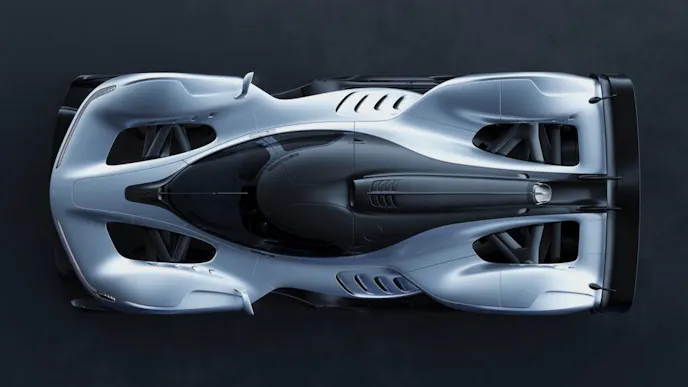
The goal is not to set a record for peak RPM, but to deliver a V10 that can repeatedly do what owners actually want it for, running hard on track without treating every session like a countdown to teardown.
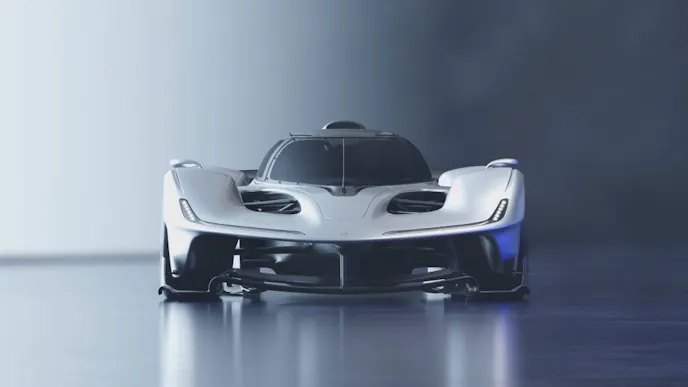
For engine enthusiasts, the RB17 proves there is still room for dedicated internal combustion design if the car is built around it. Red Bull’s RB17 V10 preserves what enthusiasts want: a high-revving performance engine in a vehicle that can be driven hard at the limit.
You might also like
C8 ZR1 Tuning Unlocked: Serious Gains on the Dyno
Matt Sanford at Tuning Tips and Erik Brooks from HP Tuners unlocked the very first C8 ZR1 ECM and started making changes.