


Much like the majority of his projects, Stephan Papadakis’ 1972 Toyota Celica snowballed from minor touch-ups to a full-on revival. Under the hood sat the legendary Toyota 18RG, a 2.0-liter, dual-overhead-cam four-cylinder that was developed the same year as the car, with the assistance of Yamaha. Known for its high compression and roughly 140-horsepower output, the Toyota 18RG was a key building block in Toyota’s DOHC four cylinders for years to come. The Celica’s original 18RG was running well; however, it lacked the modernization that Papadakis desired. This prompted him to build a more robust engine that still honored the original classic.
Strengthening the Bottom End
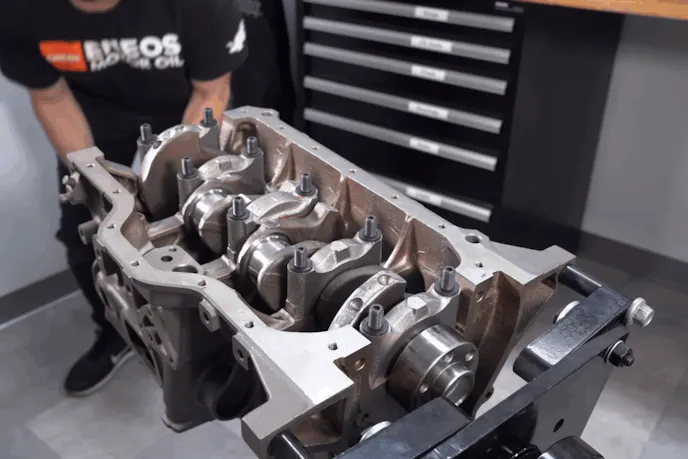
Papadakis is no stranger to Toyota engines. Starting with the block, Papadakis replaced the factory fasteners with ARP main studs to ensure the proper clamping force and stability. Papadakis notes that throughout his career, he has become more diligent in fastener selection, especially on engines of age. While this engine is of modest displacement, it still thrives in higher RPM due to its dual-overhead-cam design. This can be the same point at which the stock fasteners will begin to show their years of wear.
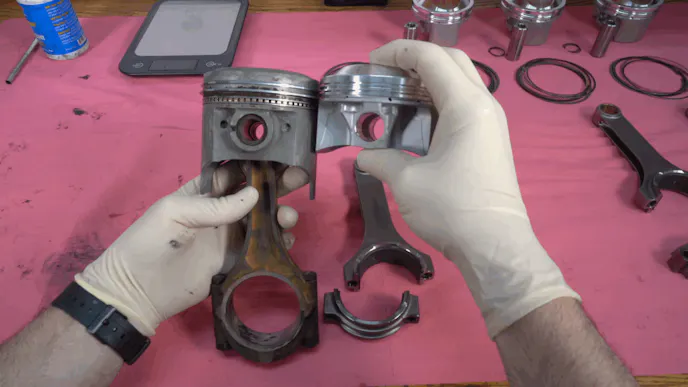
For the new engine, Papadakis made some drastic improvements to the rotating assembly. The stock pistons featured huge skirts accompanied by unusually thick ring packs. When combined, the stock rod and piston weighed in at approximately 1,368 grams, much heavier than necessary. Papadakis chose to replace the pistons with a significantly shorter CP forged piston featuring a much smaller ring pack design. These pistons also carry a prominent dome to raise the compression ratio from the stock 9.7:1 to 11:1. Accompanied by a modern Carrillo connecting rod, the new pair weighed roughly 1000 grams. This substantial drop in rotating mass reduces stress on the crankshaft while improving throttle response.
Trick Rings
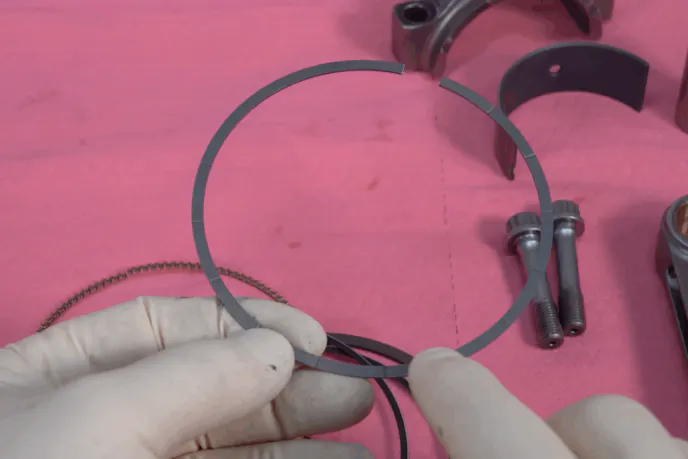
One of the standout components in this build was the choice of piston rings. Instead of having gas ports in the pistons, a set of Total Seal gas-ported rings were selected that feature tiny slots around the entire top ring. According to Papadakis, the combustion pressure is able to go into these slots, behind the ring into the land, and push the ring out to help the top ring seal better against the cylinder walls.
Toyota Quirks
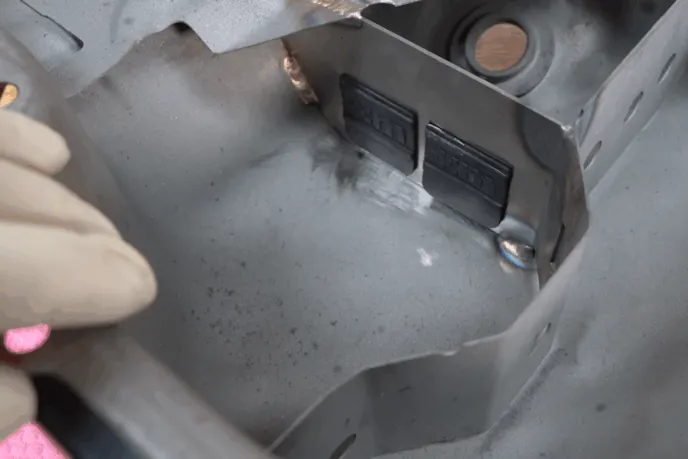
One of the unique mechanical traits of the 18RG is the idler shaft, located above the crankshaft. The shaft is responsible for driving the oil pump, mechanical fuel pump, and distributor. Like many engines of the era, the oil pump is mounted at the bottom of the block with a long drive shaft that mates a top-mounted gear to the idler gear. Papadakis mentions that these engines have a well-known oil starvation issue. This is most prevalent on right-hand turns due to the oil pan design. Since his engine will be using a stock-style pan, he addressed this issue by adding a baffle and one-way flaps to ensure that the pickup remains submerged in oil during cornering.
Modern Top End Upgrades, Classic Induction
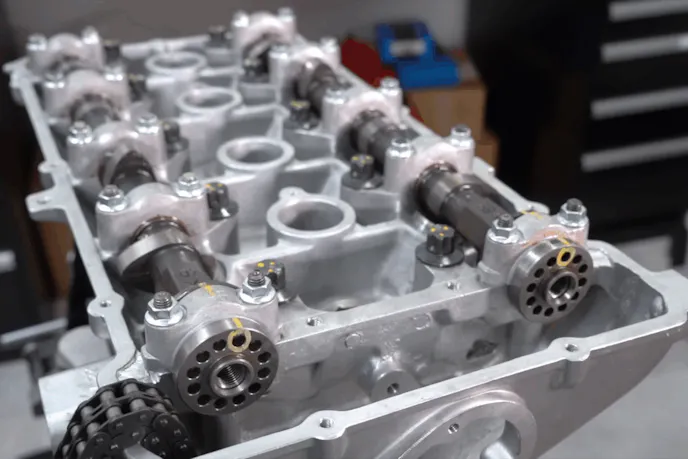
For the top end, the 18RG received a variety of upgrades. Starting with a ported head and a custom set of valves, the head was clamped on with a unique set of head bolts. Sourced from a Nissan GTR R38, these head bolts would provide additional clamping strength, as no aftermarket studs are available in the required size. Additionally, the engine was fitted with 38mm SuperTech buckets. These buckets are the same size as those used in certain BMW applications and much lighter than the factory Toyota ones.
The camshafts themselves are another notable highlight of this build. Utilizing a pair of HKS cams from the 1980s, Papadakis chose to send them to a specialist shop in New Zealand. There they were reground using modern computer-designed profiles, in hopes of adding some additional power. To preserve the classic spirit of the build, the engine will continue to run the dual carburetor setup that is already on the car.
The Revival of A Legendary Classic
Papadakis Racing’s Toyota 18RG is by no means a complete reinterpretation of the iconic engine. Instead, it is a carefully crafted modernization, making it a unique revival of the Toyota classic. With improvements in rotating mass, clamping hardware, oil control, and the valve train, this engine embodies what made the original so special while advancing reliability and performance. For the 1972 Celica, it’s the perfect heart: authentic, durable, and ready to live again.
You might also like
World's First Type Approval For Marine Ammonia Engine
Ammonia combustion engines are becoming more and more of a reality Every day. This engine could revolutionize heavy marine shipping.