
Nissan’s VK56 has become the latest hotness when it comes to engine swaps. They are capable of making big power, and for the moment, they are affordable. Here’s a quick view of what you need to know if you are considering one for your latest build.
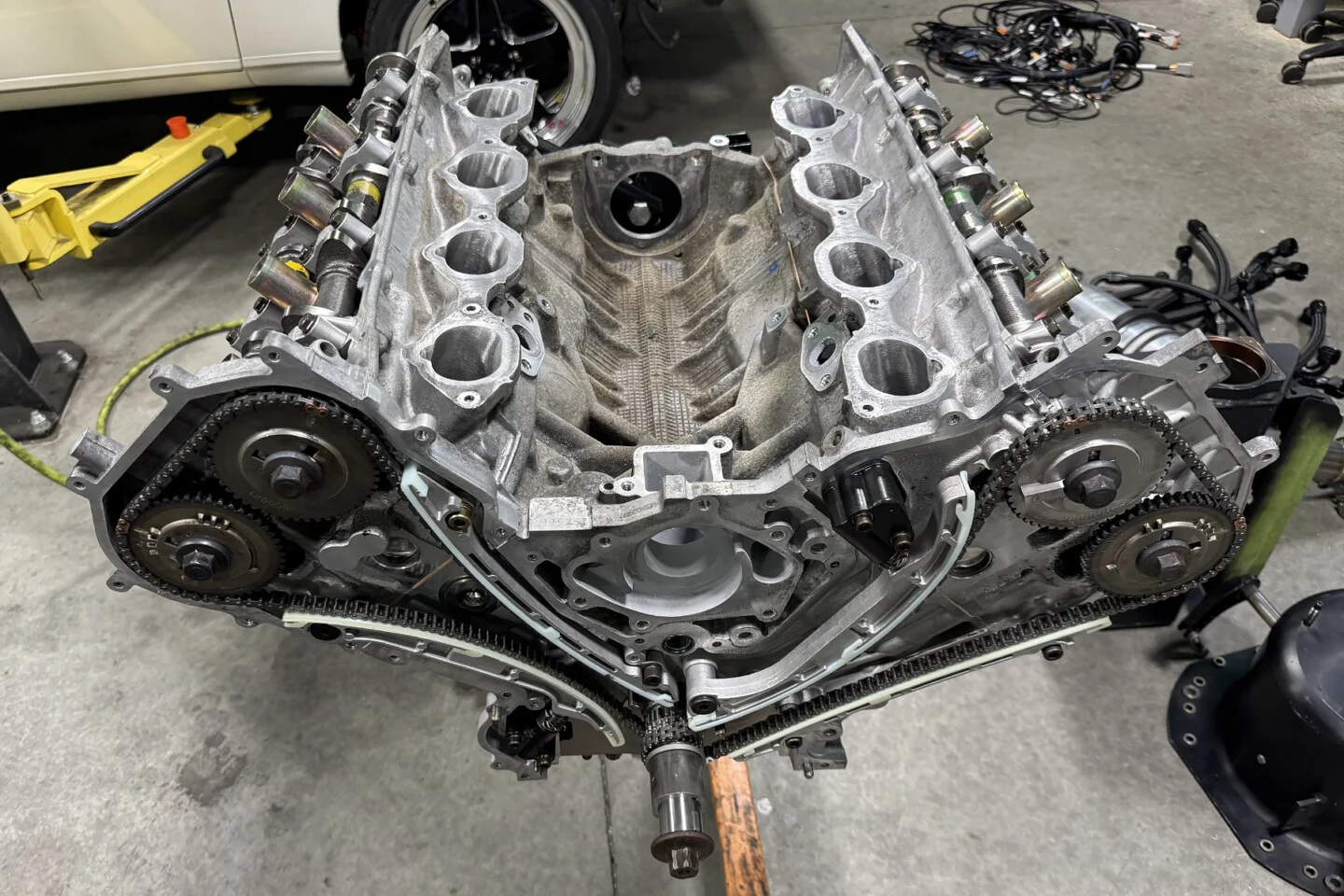
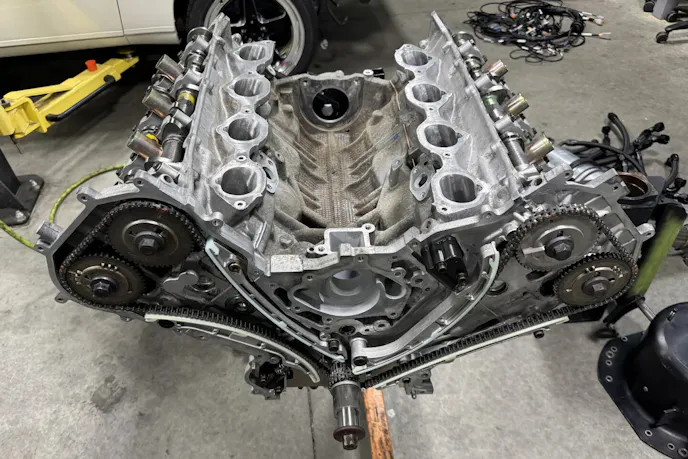
There are two main variants: the VK56DE and the VK56VD. The VK56DE and VK56VD are both 5.6-liter V8 engines from Nissan’s VK family, but they represent two different generations of the same base design with important technological and performance differences. The VK56DE is the older, simpler unit that uses traditional multi-port fuel injection and a lower compression ratio (around 9.8:1) with variable valve timing only on the intake cam in later years. It produces roughly 305 to 322 horsepower and around 385 to 395 lb-ft of torque, and can be more reliable and easier for swaps because of its relatively uncomplicated systems.
In contrast, the VK56VD is a more modern evolution that adds direct fuel injection (DIG) and VVEL (Variable Valve Event and Lift) technology along with a higher compression ratio (about 11.2:1) to improve combustion efficiency, throttle response, fuel economy, and emissions. As a result, the VD typically makes significantly more power and torque—often in the 390 to 420 horsepower range with torque above 410 lb-ft — and has a broader, flatter torque curve suited for towing and everyday driving. The introduction of direct injection and VVEL also makes the VD more complex, with components like high-pressure fuel pumps and variable lift systems that demand more careful maintenance and specialized diagnostics — in other words, you may be stuck with using the factory ECU (though there is limited tuning via an UpRev device).
Mechanically, the two engines still share the same basic displacement, bore and stroke, and aluminum block architecture. But, the VD’s fuel system, valvetrain sophistication, and higher output distinguish it from the DE, making the VD generally more powerful and efficient in stock form while the DE remains simpler, cheaper, and easier to build.
Here’s a list of what US vehicles the VK56DE came in:
- Nissan Titan (2004–2015)
- Nissan Armada (2004–2015)
- Infiniti QX56 (2004–2010)
- Nissan NV2500 HD (2012–2016)
- Nissan NV3500 HD (2012–2016)
- Nissan NV Passenger (NV3500) (2012–2016)
Here’s a list of what vehicles the VK56VD came in:
- Infiniti QX80 (2011–2024)
- Nissan Titan (2016–2024)
- Nissan Armada (2017–2024)
How to Modify
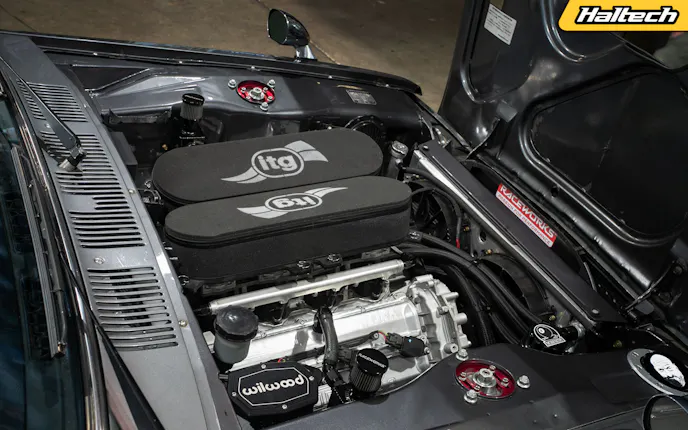
If you are looking to make big power, and I mean BIG POWER, the VK56 is definitely capable. We recently did a deep dive into Jon Rodger’s VK56 (and the platform in general) that recently went 6.88 at 201mph using nearly 2,000 horsepower at the rear wheels. A simple piston and rod upgrade, along with some cams and head work, was all it took — that and a massive Precision turbo. The key, though, is engine management, and thankfully, Haltech is one of a few companies that can control the VK56DE using a basic Elite 550 like this car, or the Nexus R5 like Rodger.
You might also like
Dynoing The EngineLabs Giveaway 632-Cube Big-Block Engine
It's time for the rubber to meet the road for the EngineLabs Giveaway 632 big-block Chevy engine presented by Summit Racing.