


NextGen Performance Center tested the ProCharger P-1SC vs P-1X on a Gen 3 Coyote with a dyno session focused on two street-relevant variables: pump gas versus ethanol, and conservative versus aggressive pulley strategy.
ProCharger P-1X vs P-1SC: Dyno Setup and Test
First, they tested a Ford Mustang equipped with a Gen-3 Coyote and a 50-state-legal P-1X kit. Emissions-compliant setups often include packaging and calibration limits that are absent in race-only builds, which can limit the maximum output. The plan was to set a baseline on 93 octane, then switch to E85 to see the difference.
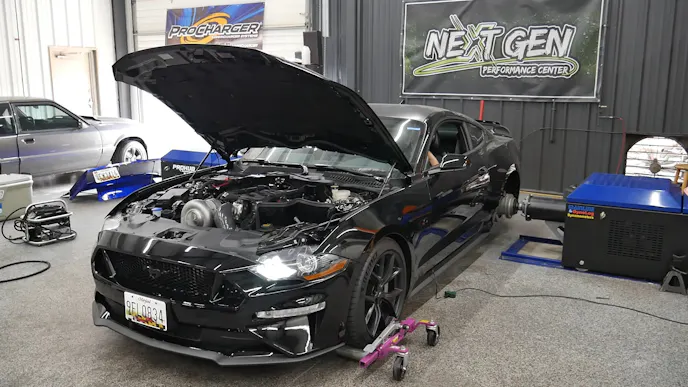
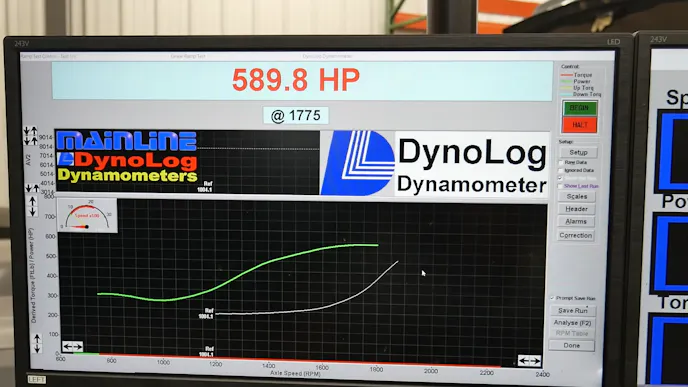
On the first test hit on 93 octane, the combo produced 617 wheel horsepower (whp). After repeated pulls, the numbers fell to 589 whp, still an impressive number and a significant gain over the stock numbers, which are about 415-425 whp, representing about a 10-to-15-percent loss from the Gen-3 Coyote’s factory-rated 460 crank horsepower. The shop noted the conditions were hot, and the 589 whp number came after three back-to-back pulls, similar to what three hot laps would produce in real-world conditions. This methodology gives a realistic picture of what happens when you lean on a street-type combination in poor ambient conditions.
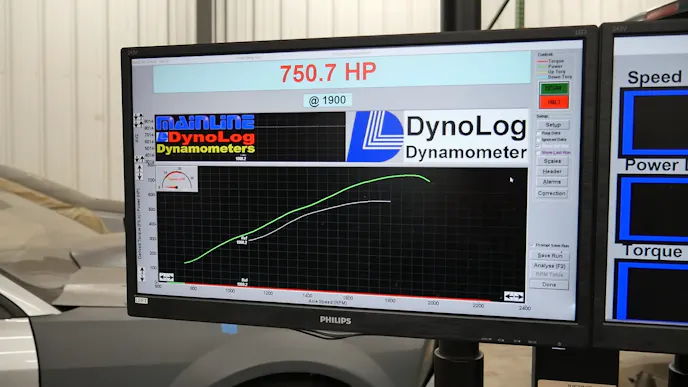
With the fuel changed to E85, the P-1X setup produced about 750 whp on the session’s best pull. As power climbs, belt slip near the top of the RPM range becomes a common problem. The graph shows that when it slips at the top of the rev range, the blower spins slower than it should for that engine RPM, indicating that the blower is not maintaining the drive ratio at peak load and RPM.
A common solution for belt slip is switching from a 6-rib to an 8-rib drive to increase belt grip and stabilize boost at high RPM. This is often the difference between a setup that only makes a strong midrange number and one that carries power cleanly all the way to redline.
Going From A Stock-Pulley P-1X To A Spicy P-1SC
NextGen then put a second car on the dyno equipped with a P-1SC kit on a 6-rib drive. With a 3.60-inch pulley — significantly smaller in diameter than the pulley the kits ship with from ProCharger. It produced 719 whp. Then the shop swapped to an even smaller 3.0-inch pulley. As a rule of thumb, they noted that every tenth of an inch of a pulley change is roughly a pound of boost, suggesting a potential increase of about 5 to 6 psi over the 3.6-inch pulley, assuming the belt holds at high RPM.
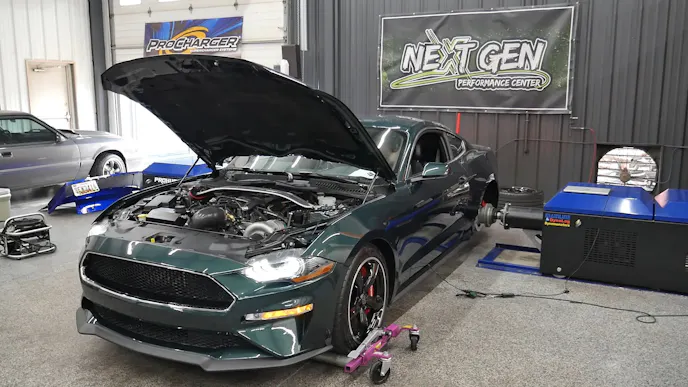
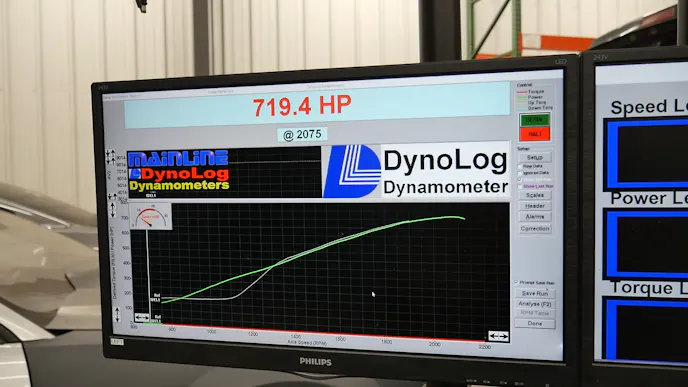
The first pull after the pulley change made 817 whp but blew an intercooler pipe. After fixing it, the car reached 835 whp, tapering slightly toward the end. This shows that the smaller P-1SC ProCharger can still make big power with the right pully setup.
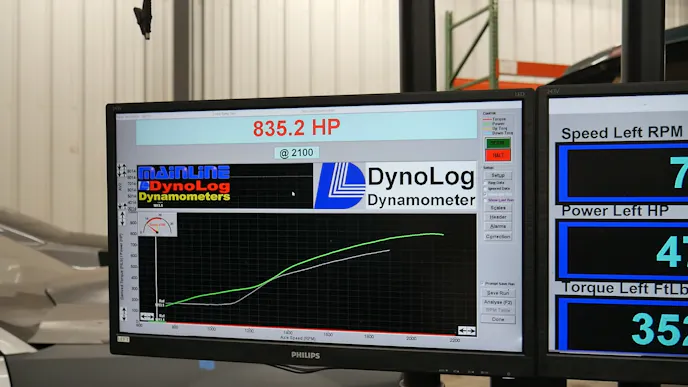
These results show that with a streetable setup, the P-1X falls in the 650-750 whp range, depending on the fuel setup. Even in a 50-state-legal configuration, the P-1X can reach the mid-700 whp on E85, with the main obstacle (in this case, anyway) being belt slip at high RPM, although switching to an 8-rib pulley would likely alleviate this issue. If you have, or are planning on acquiring, a P-1SC, and your target is 800-plus wheel-horsepower, the smaller P-1SC can still get you there with a little effort.
For potential buyers or those who already own one of these ProChargers, it seems that fuel choice and pulley size often have more impact on your results than any other factor. In this test, 93-octane fuel limited the P-1X to the high-500 whp range with heat soak. E85 enabled mid-700 whp, and the P-1SC, with a smaller pulley, reached an impressive 835 whp. Now, the real question is, what would that P-1X do with a smaller pulley?
You might also like
Advertised Duration - Why You Shouldn’t Use It.
Choosing a camshaft with advertised duration in mind is a surefire recipe to find things out the hard way.