



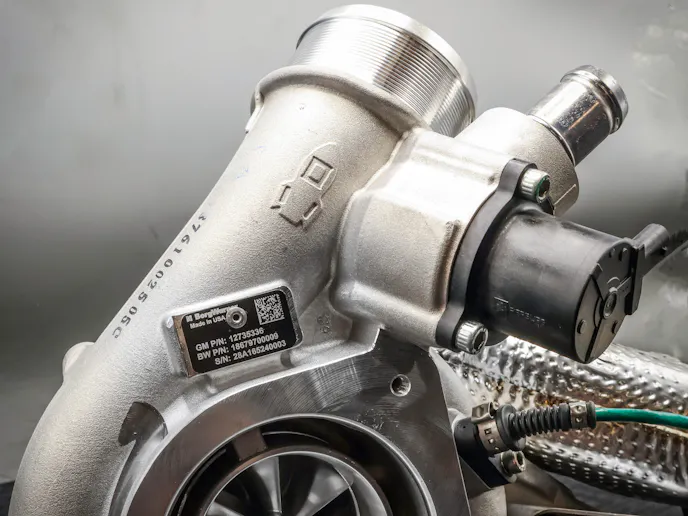
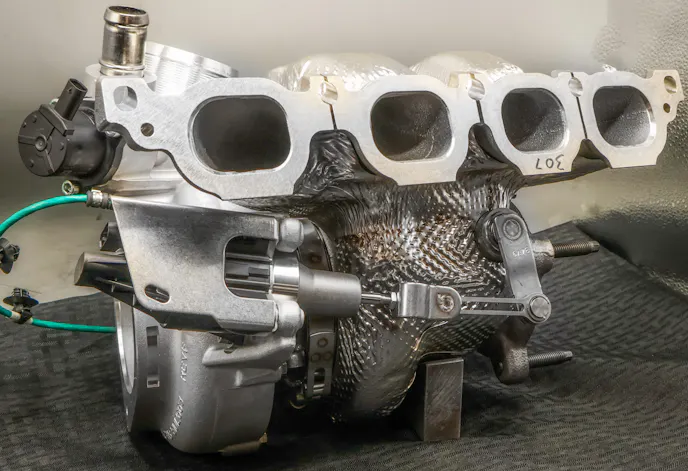
It should come as no surprise that Cleetus McFarland (aka Garret Mitchell) was one of the first to start tearing into the new Corvette ZR1. The twin-turbo 2025-2026 C8 ZR1 utilizes the 5.5L DOHC flat-plane crank “LT7” V8. In factory stock form, it puts out 1,064 horsepower at 7,000rpm, with a healthy 828 lb-ft of torque to boot, using twin 76/67 ball-bearing turbos from BorgWarner to make up to 20psi of boost. We had been dying to see what the LT7 is capable of once C8 ZR1 tuning became available, and mercifully, the wait is over.
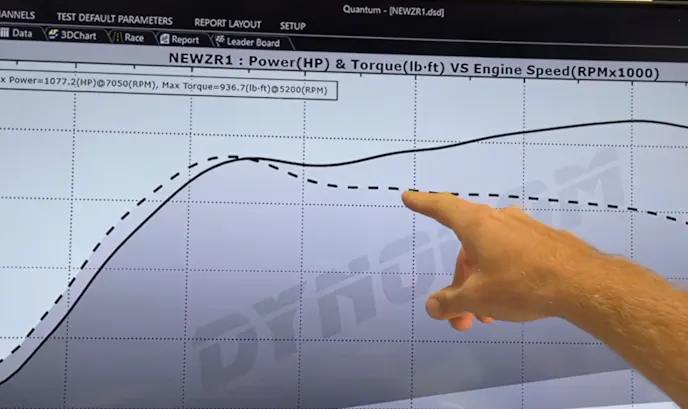
If you’ve been following Cleetus, then you probably know that earlier this month, he swapped downpipes on the C8 ZR1 and made 1,077 horsepower and 936.7 lb-ft of torque at the wheels on their chassis dyno. Perhaps most impressively, it starts making 1,000 horsepower at about 6,000rpm and continues to carry that to 7,500. That’s all with the stock tune, which seems to kick in torque management around 7,000rpm or it may have easily exceeded 1,100 horsepower.
C8 ZR1 Tuning Coming in Hot
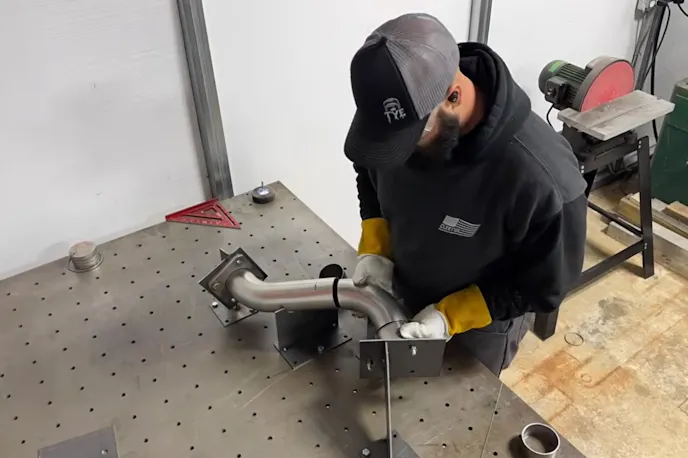
On the latest video, Matt Sanford at Tuning Tips and Erik Brooks from HP Tuners unlocked the very first ZR1 ECM and started making changes. The video is a little light on info, but by the end of the ZR1’s dyno test, it made 1,180 horsepower and 1,094 lb-ft of torque. We caught up with Sanford to get a little more information on C8 ZR1 tuning.
Apparently, the C8 ZR1 uses a Bosch ECM like the Ford EcoBoost, which echoes some of the logic used there, such as managing power through the throttle body blade position. “To tune these cars, you have to understand managing load while maintaining the proper airflow logic to keep the turbos under control, as well as maintaining an accurate torque output for the transmission logic, managing injection events based on full VVT with both port and DI, as well as following the proper logic to manage thermal loads and component protection. They have dual MAF sensors that are based on ‘SENT’ counts, and there are factory limits for those counts as well.”
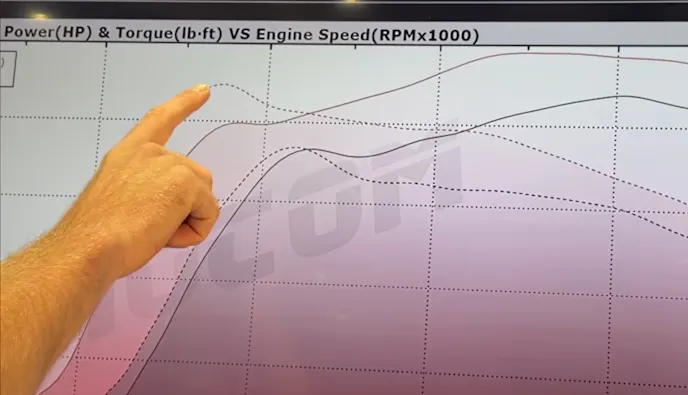
Sanford also informed us that the spark tables were completely untouched on Cleetus’ ZR1, but VP Racing MS109 race fuel was used for safety. “From what I have found, within ‘safe’ limits, there is approximately 15 percent or so to be gained in the mid range on the ZR1 and roughly 10 percent gains up top. This is factoring fuel system limitations as well as maintaining a relatively safe turbo shaft speed. The stock turbo shaft speed seems to run between 130,000-133,000 rpm up top. The factory ‘limit’ is 137,000 rpm.”
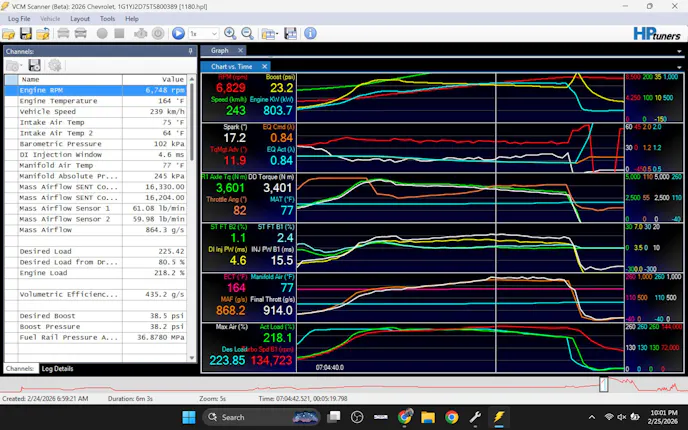
Sanford warned that you could go as high as a 25 percent gain, but that would be without “thermal or component protection” – meaning only with race gas, and it’s still at your own risk. He says some of the old methods of turning up limiters as well as modifying and scaling the airflow model, are an easy way to destroy the LT7 as well as the DCT clutches. “If you want to make BIG power safely, I do recommend swapping out the port injectors so the car can safely be turned up all the way while maintaining enough fuel system to support the component protection strategies.”
For those wondering what the C8 ZR1 is capable of with more timing: “If I added timing, the car would’ve pulled boost to make the power the same. Balancing the desired load is the key. If you look at torque management advance in the log, you will see how much timing the ECM was pulling back to maintain the desired torque. The current transmission torque limit is 1,500 N·m according to the factory calibration. We won’t know if it’s a hard limit until we have the rest of the supporting parts to turn the car up that high. The main limit to stay within OEM safety measures is the size of the port injectors. The car understands the amount of fuel/torque reserve required to hold back to have adequate fuel when needed for component protection.”
HP Tuners software already has the capability to rescale for larger port injectors, so that is the next frontier for C8 ZR1 tuning. Another aspect to explore is improved charge cooling via an ice box or Interchiller. “The car keeps itself cool without issue, but the ECM raises its desired load based on colder air temp. The car will add boost, throttle, timing, etc on its own. That strategy can be maintained with tuning, so we really have the control to add power while staying safe.” That’s a pretty exciting feature because that means you can ice down at the track and the ECM will simply read the cooler charge temperature and act accordingly, instead of having to change tunes.
This new platform certainly is exciting and challenging all at once. From an engine builders’ perspective, now that the ECU is out of the way, we’ll have to wait for transmission upgrades until we find the limit of the turbos or the engine.
You might also like
L8T vs. Godzilla Clash In Horsepower Wars Season 5
The new Horsepower Wars Season 5 lineup features a brutal naturally aspirated battle between the Chevy L8T and Ford Godzilla.