
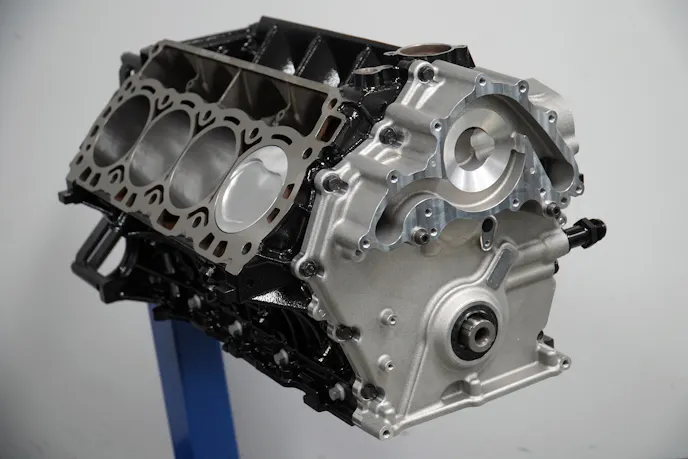
Engine enthusiasts have been eager to see Ford’s 7.3-liter Godzilla V8 unlocked since it was introduced in 2020 for the F-250 and larger Super Duty trucks. This 445-cubic-inch pushrod behemoth was designed as a workhorse with an iron block, ample displacement, and old-school overhead-valve simplicity. In stock form on Late Model Engines’ (LME) dyno, our test mule churned out 512 horsepower and 597 lb-ft of torque, far exceeding the factory ratings of 430 horsepower and 475 lb-ft of torque. Clearly, this modern monster punches well above its weight, but we wanted to see just how much more this engine was capable of producing. So EngineLabs’ Project Bosszilla build series was born. We’re on a mission to explore exactly what each upgrade is worth, and today we’re focusing on the cylinder heads.
In previous installments, we gave the Godzilla a fresh baseline and tried a low-profile intake manifold to replace the massive stock “banana” intake (netting a small bump in power and big gains in packaging). We also bolted in a street/strip camshaft, which woke the beast up to the tune of 660 horsepower and 650 lb-ft on LME’s engine dyno. Now, it’s time for the next evolutionary step with a set of CNC-ported heads from the experts at LME.
Factory Strengths and Weaknesses
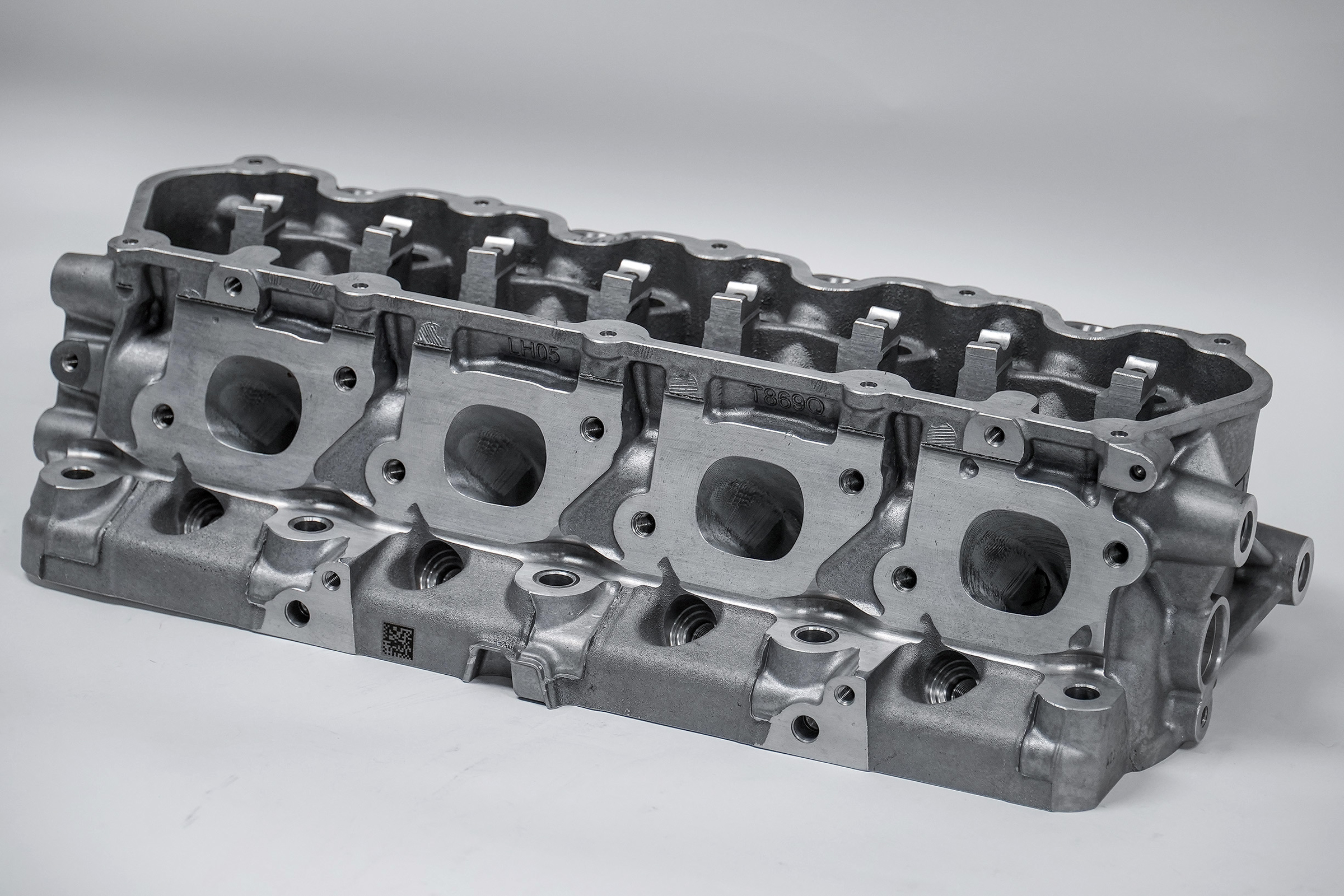
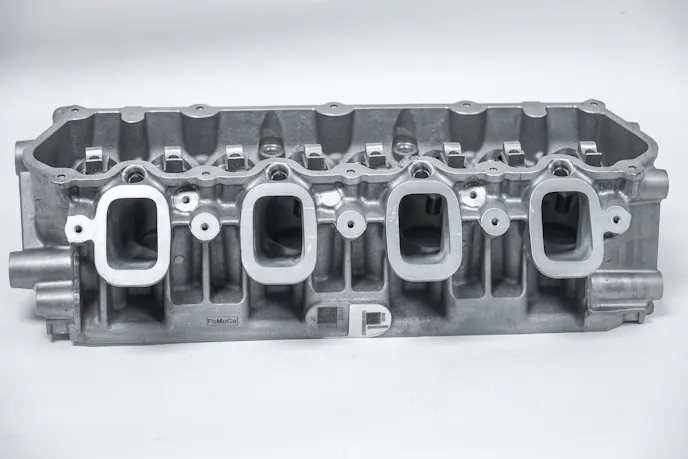
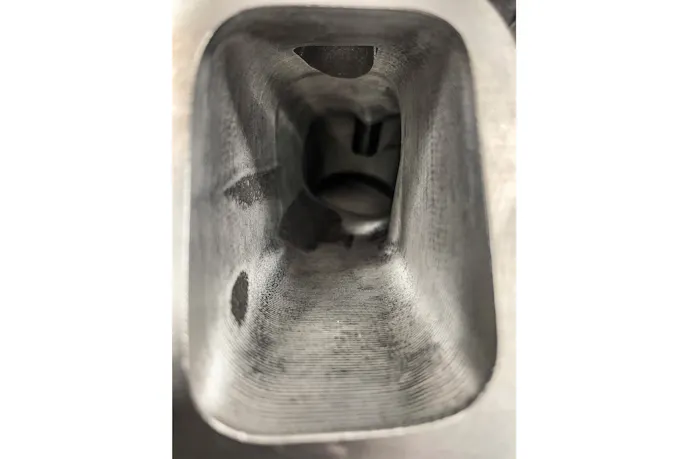
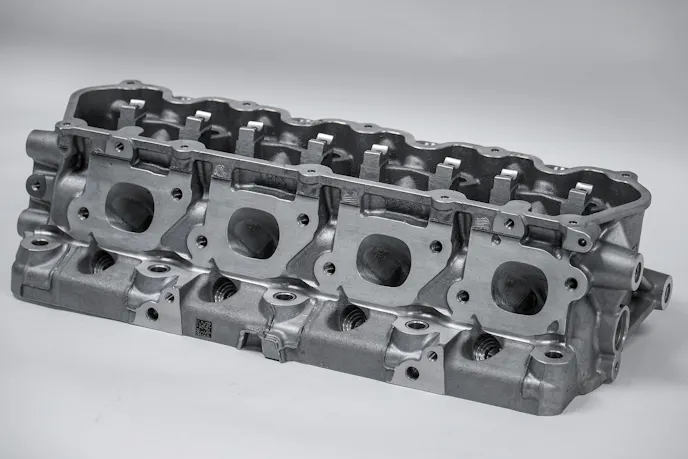
Factory Godzilla cylinder heads feature large valves at 2.170 inches for the intakes and 1.670 for the exhausts. They flow well enough to support the engine’s hefty torque output. But as LME’s owner Bryan Neelen points out, what works for a stock truck engine isn’t necessarily optimized for high performance. “The initial look at the cylinder head, in my professional opinion, is that it is somewhat lacking,” Neelen says candidly. Despite the Godzilla’s huge 4.220-inch bores that could accommodate even larger valves, the factory casting doesn’t fully take advantage of that space.
He says the shape of the intake port and bowl area is “just not ideal” for flow. The casting bulges out below the valve seat, creating a sharp edge where incoming air has to turn the corner into the cylinder. In other words, the port is oddly too big in some areas and not big enough in others, a quirk Neelen jokingly calls “kind of goofy” in its geometry.
What does this mean for hot rodders? Essentially, the stock head has untapped potential, but also presents a challenge. You can’t simply hog out the ports to infinity. In some spots, they’re already on the large side, and in others, critical areas need material added to shape the airflow properly. Neelen says an all-out fix would involve welding and re-machining the ports to completely redesign that short-turn area, though that’s well beyond a bolt-on upgrade.
Porting for Power
LME has made a name for itself CNC-porting heads for modern domestic V8s, so we were anxious to see what they could do with the 7.3L Godzilla. For Project Bosszilla, LME developed a CNC program to reshape the intake and exhaust ports for maximum flow while maintaining good velocity and port stability.
LME’s porting process is a blend of high-tech machining and old-school craftsmanship. First, the heads are digitized and CNC-ported on 5-axis machines to carve out the new port shapes. This ensures consistency from port to port and head-to-head. But CNC alone isn’t the whole story. “Part of our process with anything, just CNC porting the heads, is the valve job,” Neelen explains.
LME spends significant time developing a performance multi-angle valve seat profile to find the best flow for both intake and exhaust valves. Once the optimal valve job is cut, every seat is hand-blended into the CNC-ported throats and bowls, smoothing the interface between the seat and runner. Neelen emphasizes that it’s an important step to get the most out of any CNC program.
While the combustion chambers on the Godzilla heads aren’t radically reshaped, LME does make minor tweaks there, too. Unshrouding the valves for better airflow into the combustion chambers can add a couple of cubic centimeters to the chamber volume, so LME decks the heads to bring them back to stock size (or even smaller) if maintaining compression ratio is important.
Springs, Retainers, and the High-Lift Upgrade
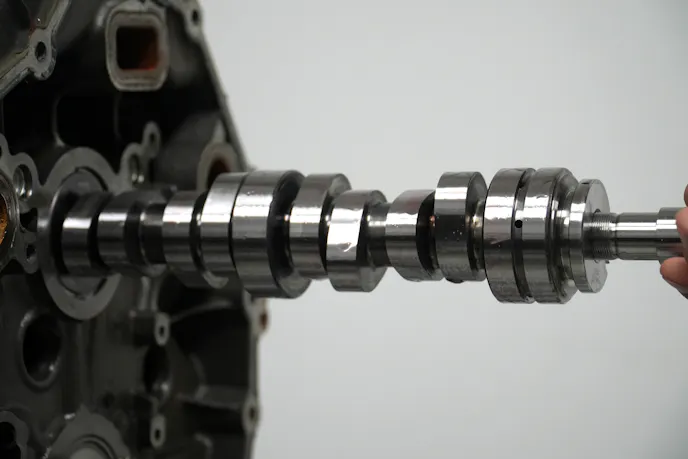
Porting is only half the equation for a performance cylinder head. The valvetrain hardware needs an upgrade, too, especially when running a bigger camshaft. The stock 7.3L heads from Ford were designed around a fairly mild cam, with just over 200 degrees of duration and around .540-inch of lift. And the relatively light valvesprings were spec’d to match.
LME addressed this by developing a bespoke spring kit for the Godzilla heads. “We machine a custom locator that raises everything up so we can get an LS-type valve spring on it,” Neelen explains. In essence, LME adapted the head to accept common performance dual springs that are readily available for big hydraulic-roller cams. The spring of choice in our case is a dual-coil PAC Racing spring. With the new locator, these springs can handle the .650- to.700-inch of lift range with the seat pressure and coil bind safety needed for high-RPM use.
To complement the springs, LME also engineered custom titanium retainers and matching locks. The titanium retainers keep valvetrain weight down and are manufactured to work with the new dual-spring setup and locators. Neelen mentions they use a titanium retainer with no special coating, and in a street application, it’s perfectly durable, as long as the springs are prepped properly by deburring the springs to prevent any sharp edges that could damage the retainer.
We did, however, retain the stock valves in our Bosszilla build. The Godzilla comes with sturdy stainless-steel valves from the factory, and for our naturally aspirated tests, the stock valve material and size were up to the task. By sticking with the stock valve dimensions, we could focus on the gains from port shape alone and also keep the package more budget-friendly. After the CNC porting, valve job, hand blending, and valvetrain upgrades, the heads were reassembled and ready to rock. LME typically has a 7- to 10-day turnaround time for this whole process on customer heads.
Ported vs. Stock Heads on the Dyno
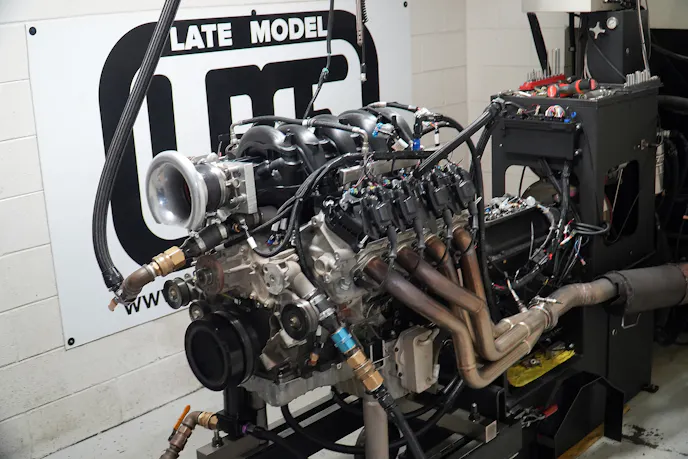
All the shiny CNC work doesn’t mean much without real-world results. So, what did LME’s ported heads do for our 7.3L Bosszilla on the dyno? Well, we spun up the engine dyno to find out.
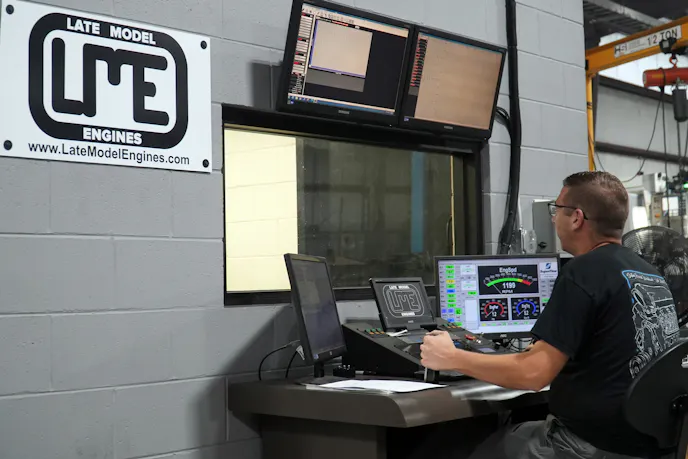
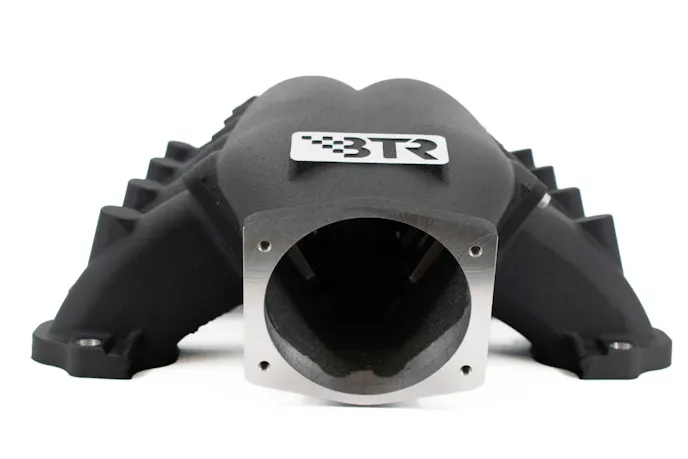
However, we encountered an interesting twist: with the Ford Performance intake manifold, the ported heads initially didn’t show much of a gain. The engine picked up only a few horsepower, indicating that the intake manifold might be a bottleneck once the heads were capable of flowing more air. Neelen and the team suspected the factory-style intake was likely choking the higher-flowing heads at peak RPM. To prove it, we swapped it out for a more aggressive Trinity intake from Brian Tooley Racing and repeated the test (rather than one of LME’s billet intakes to keep the heads/cam combo more budget-friendly). The difference was immediately clear. With the free-flowing intake, the ported heads could finally show their merit, and power shot up significantly.
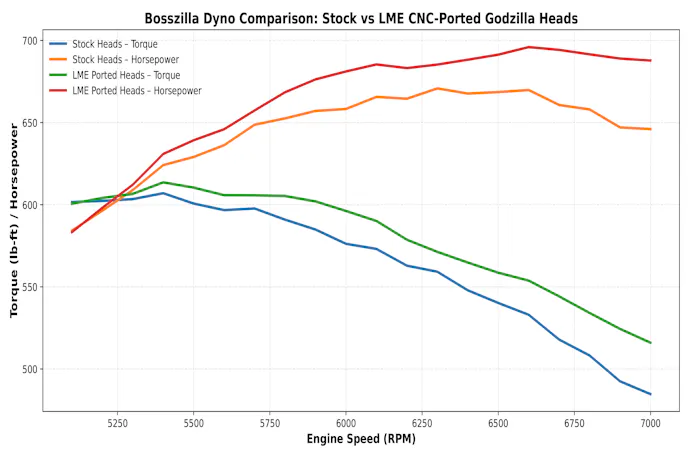
The stock heads with cam and BTR intake manifold peaked at 670 horsepower and 607 lb-ft of torque, while the ported heads screamed up to 696 horsepower and 613 lb-ft. That’s a solid +26 horsepower and +6 lb-ft advantage to the CNC porting at the peaks, just from a cylinder head change. The ported castings extended the powerband and kept making power where the originals were tapped out. Peak torque occurred a little later, and the engine was happier revving past 6,000 RPM. For a street/strip machine like Bosszilla, that extra breathing room up top is exactly what we hoped to achieve.
LME’s Godzilla Head Packages
The success of Bosszilla’s cylinder head upgrade isn’t just a one-off experiment. It’s a glimpse into what LME can offer to Godzilla owners, no matter how they are using their engines. If you’re itching to get a set of these 7.3L heads ported, Late Model Engines offers CNC-porting services with a typical turnaround of only one to two weeks. You can send in your heads and have them returned fully CNC-ported, cleaned, and assembled with upgraded components, ready to bolt on. In our case, LME reused the stock valves and provided its custom spring/retainer kit tailored to our hydraulic roller cam. But they can build the heads to suit your needs, whether that’s a naturally aspirated combo where max airflow is the priority, or a boosted application that might benefit from slightly different port shapes or even upgraded valve seats, etc.
Neelen notes, “We offer a multitude of engine combinations for your specific application, whether it be boosted, N/A, street, or drag race. We have a lot of different options.” In fact, LME has experimented with a 460 cubic-inch stroker version of Godzilla in conjunction with these heads, which you’ll see in the next installment. The larger displacement, combined with higher compression and a bigger cam, really let the ported heads shine. While the stroker only added around 20 cubic inches, it responded well to the increased airflow, confirming that these heads have room to support even more power as you scale up an engine build.
As we wrap up this segment of Project Bosszilla, it’s clear that Late Model Engines’ cylinder head program has given our Godzilla a serious dose of power. We’ve taken the Godzilla from a humble workhorse to a boss-level bruiser, with nearly 700 horsepower on motor and a broad torque curve to back it up. Best of all, this is still on pump gas, naturally aspirated, with a street-friendly cam. The journey isn’t over yet; stay tuned as we continue to push forward with Bosszilla. But for now, we can conclusively say that LME’s ported heads have put some much-needed monster into our monster motor, and we’re one step closer to unleashing the full potential of Ford’s 7.3L Godzilla.
You might also like
L8T vs. Godzilla Clash In Horsepower Wars Season 5
The new Horsepower Wars Season 5 lineup features a brutal naturally aspirated battle between the Chevy L8T and Ford Godzilla.