


 Weighing the pros and cons of switching to a lithium battery usually falls heavily on the cost factor. That is, a lithium battery can cost up to five times the price of a conventional lead-acid model. But here’s a strong argument to consider:
“If you’re replacing a lead-acid battery every two years,” says Kevin Bennett of Lithium Pros, “You’ll save money by going with a lithium battery.”
 Now you can think about all the advantages of a lithium battery:
- They offer five times the cycle life over a lead-acid battery
- They recharge five times faster
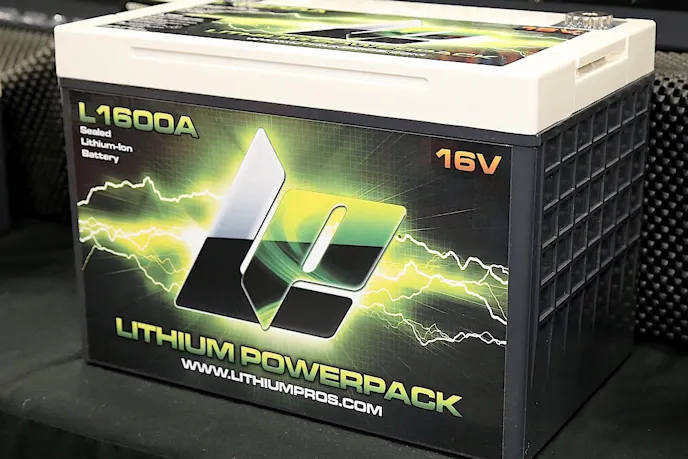
- They weigh a third less. In fact, a Lithium Pros racing battery comes in around 10 to 14 pounds, depending on the model. Even the heaviest Lithium Pros battery is only 18 pounds.
- They have twice the cranking power
Even when the race car is parked the lithium battery has an advantage.
“Usually the lead-acid battery is kept up with a battery tender,” adds Bennett. “A lithium doesn’t need a charge. It will start right up after three or four months in storage.”
There is a slight cultural adjustment when moving to a lithium battery. The charge doesn’t fade slowly to give the user an indication that it’s low on charge or is failing. A lithium battery will provide the promised voltage or nothing. In other words, it can just cut off power right away if there’s a failure or it hasn’t been properly charged.
“Most people come over with a lead-acid experience, so there is a learning curve,” says Bennett.
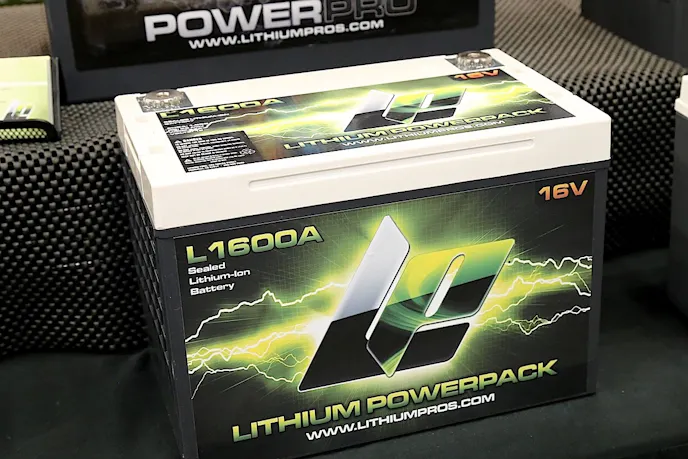
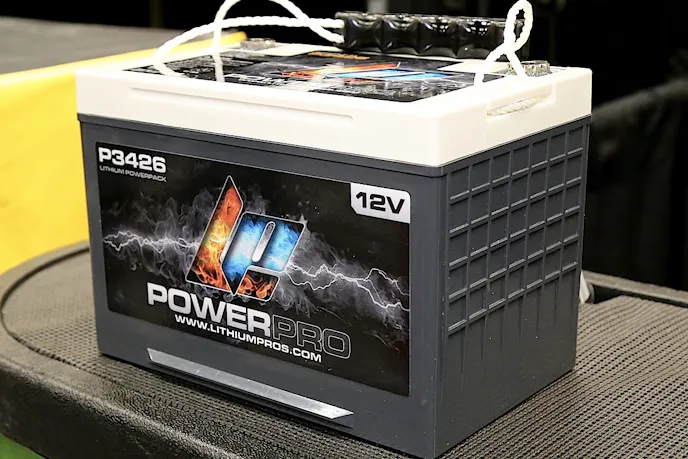
Two of the most popular offerings in the Lithium Pros catalog are the L Series and the PowerPro. The L Series is the premium line for racing. These units are energy dense and optimized for high power output. They feature built-in digital battery management and provide under- and over-voltage protection.
The PowerPro are designed for superior performance in cold-starting environments and it has the widest temperature range of operation. It’s also designed to handle 12-volt alternators and permanent-magnet generators. It’s especially suitable for diesels, heavy equipment and over-the-road trucks that need cold-weather starting.
You might also like
Maximizing Factory Hellcat Cylinder Head Porting With Livernois Motorsports
When it comes to factory cylinder head porting, Livernois has tons of experience making good factoy heads flow even better.