


At this year’s 2026 Holley Ford Fest in Bowling Green, Kentucky, Evan Smith, host of the REVan Evan YouTube channel, caught up with Ben Strader of 10K Technology. During their conversation, Strader gave a detailed look at the company’s new aftermarket Godzilla cylinder head for Ford’s 7.3-liter V8. After several years of development and multiple revisions, Strader says the design is approaching production.
Godzilla Cylinder Head Airflow and Strength
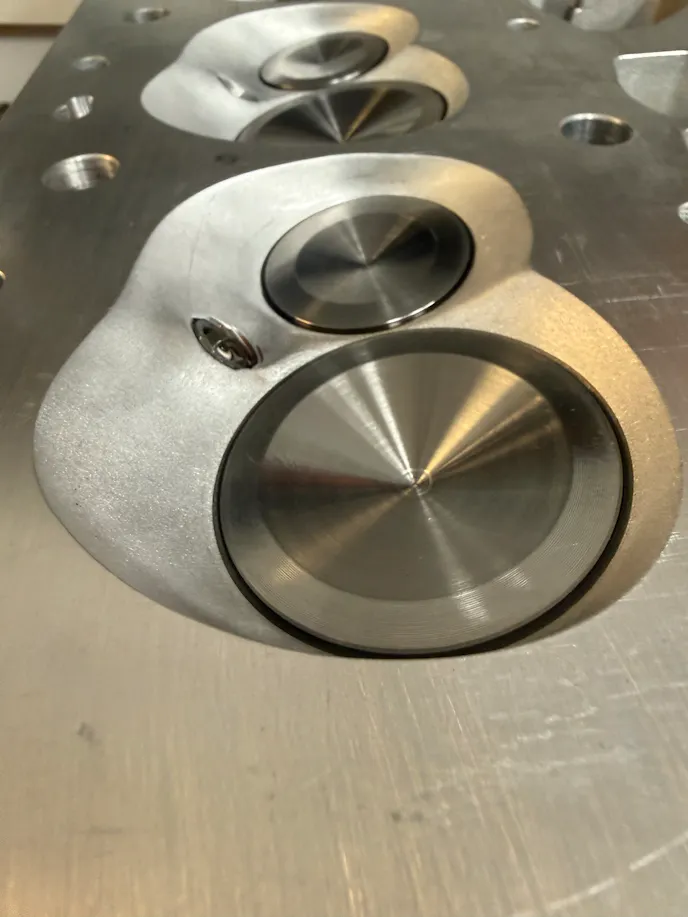
The new aluminum casting improves airflow, strength, and valvetrain flexibility without requiring a fully custom engine combination. Factory intake and exhaust manifolds will bolt up, and builders can retain the original rocker arms. However, the head also provides room for more aggressive combinations. During the interview, Strader displayed castings at several stages of completion. They ranged from a rough casting to fully machined ports, seats, guides, and valve work.
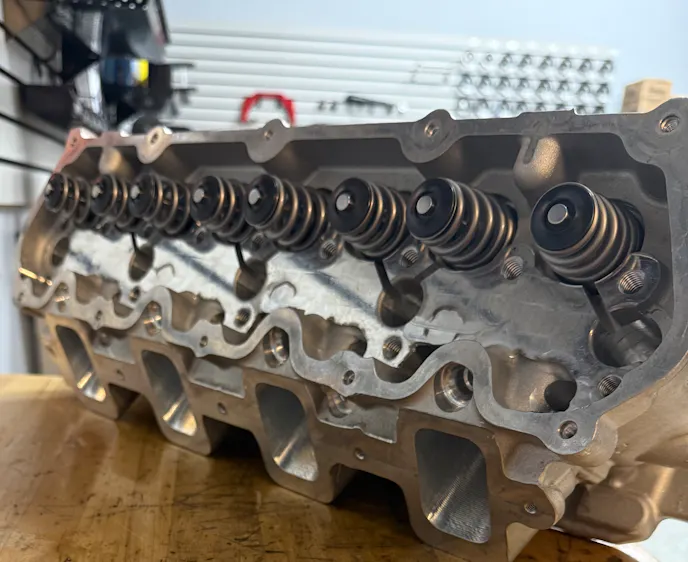
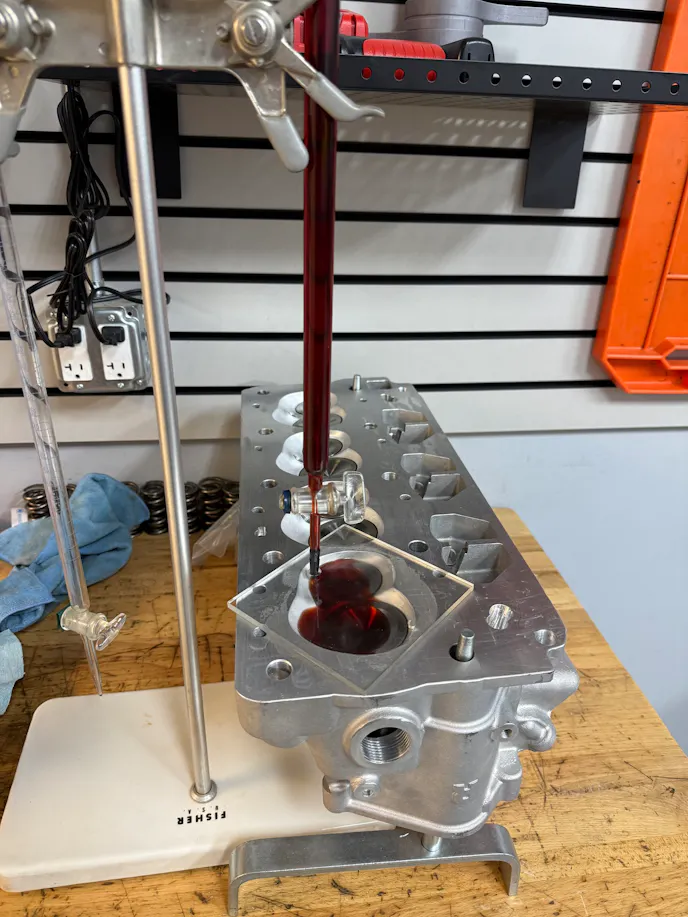
Airflow is one of the biggest selling points of this new cylinder head. Strader said a stock Godzilla head flows approximately 300 cfm, while modified factory castings may reach 340 to 350 cfm of peak flow. The 10K Technology head, with the company’s finished port design, flows around 415 cfm, using a 2.250-inch intake valve and a 1.650-inch exhaust valve. Strader explained that the redesigned intake port provides a more direct airflow path towards the intake valve. An intentional contour in the port helps maintain air speed and promotes even fuel distribution. The heads will be offered both complete and as rough castings. The unfinished castings provide extra material for engine builders to develop custom port shapes themselves. The combustion chambers measure roughly 68 to 69cc.
Cylinder head strength received equal attention. The casting features a deck approximately three-quarters of an inch thick. The substantial deck thickness allows additional milling to reduce chamber volume if desired. According to Strader, the extra material helps reduce cylinder head movement under high combustion pressures, and that added stability helps maintain head gasket sealing under the high combustion pressures found in boosted engines. Threaded coolant passage plugs replace the factory-style press-in plugs on both sides of the head.
Valvetrain Flexibility and Performance Applications
The new head’s valvetrain features a removable rocker stand secured by 18 fasteners. The design supports factory rockers and offers interchangeable stands for aftermarket rocker arms. Strader emphasized the importance of valvetrain rigidity as engine speeds increase. Smith and Strader also discussed injector placement, with Strader noting that moving injectors farther upstream can provide additional charge cooling and horsepower. This positioning can also reduce idle quality and drivability while increasing emissions, explaining why it wasn’t used from the factory.
Strader expects the greatest interest from turbocharged, supercharged, and nitrous-powered Godzilla builders. He also sees applications in large-displacement stroker engines and high-RPM naturally aspirated combinations. The added airflow can help those engines continue making power as displacement and RPM increase. The prototypes have already run on engines, and production tooling is complete. He expects availability in the first quarter of 2027, although final pricing remains undecided.
For builders pushing Ford’s Godzilla beyond its original limits, 10K technology offers a stronger foundation with room to grow.
You might also like
Do Hub Dynos Actually Record Higher Numbers? Big 3 Racing Plays "Mythbusters"
It is commonly believed that hub dynamometers make more power than a roller dyno, but less than an engine dyno. Is this right, though?