
When it comes to making factory cylinder heads flow, Livernois Motorsports has a ton of experience. Some people just slap on aftermarket heads and call it a day. But some platforms don’t have that option, and that is where Livernois cut its teeth, working with factory cylinder head castings and porting them to make them move more air.
For the Gen-III HEMI, there are aftermarket cylinder heads available, but with their ability to massage and rework a stock casting, their porting packages are an economical option that still makes big power, while using cylinder heads the customer already owns.
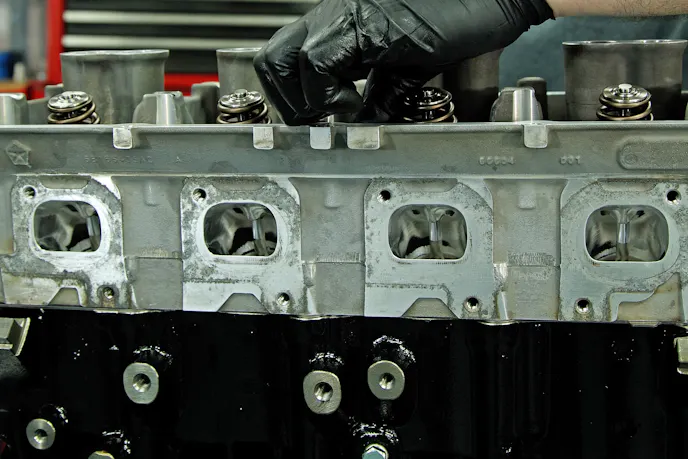
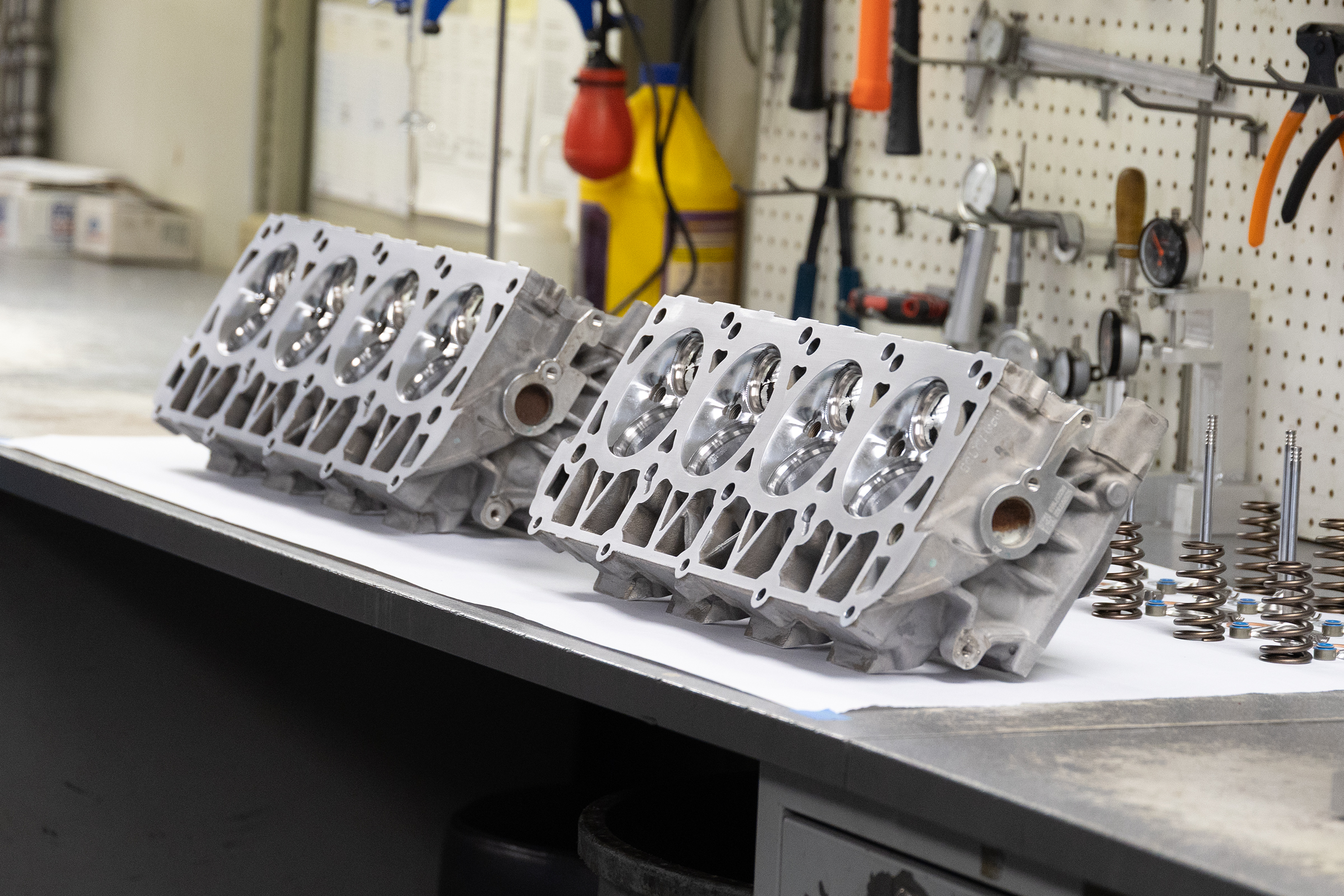
From the factory, the 6.2-liter Hellcat cylinder heads are no slouch, with the intake ports flowing in the neighborhood of 325 cfm at .600 inch of lift and the exhaust ports in the 205 cfm range. No one would scoff at those numbers, and it takes some serious port development to improve that flow without hurting different areas of the curve.
Livernois CNC cylinder head porting program is a combination of decades of experience and a whole machine shop of some of the best CNC mills, valve-seat cutters, and surfacing machines. The engineering team first uses their experience to create port designs in flow simulation software to measure flow. But developing an amazing port design is only part of the equation.
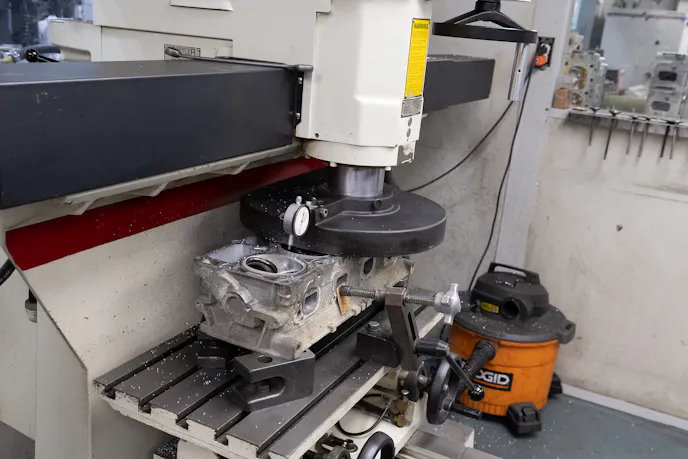
Once the team is happy with the modeled port, it is put into CAD software to be precisely recreated on an actual cylinder head and then tested on the in-house SuperFlow SF600 flow bench. Once the design is confirmed to match the design specifications, it goes onto an actual engine to ensure it provides the projected performance gains.
For the 6.2-liter HEMI heads specifically, Livernois offers three different stages of head porting services. Stage one gets you the intake, exhaust, and chamber machining, a CNC valve job, and new valve seals with the stock valves, springs, retainers, and locks. Stage 2 (Pro Series) adds Livernois’ upgraded valve springs to the mix, and then Stage 3 (Race Series) adds custom intake and exhaust valves and titanium valve spring retainers.
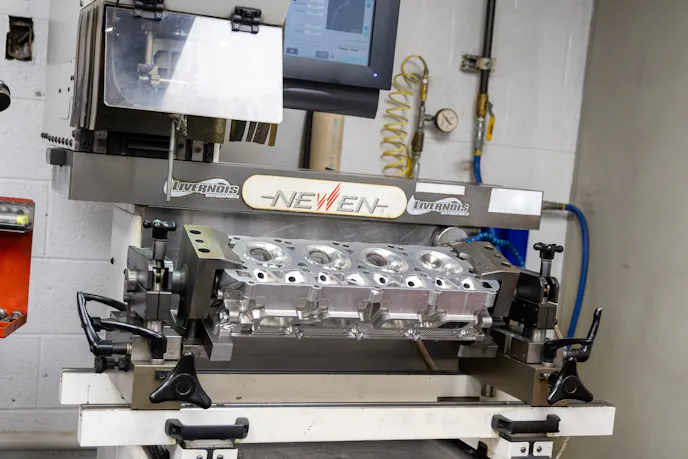
The Stage 3 heads have a slightly better flow curve than the Stage 1 and 2 heads, due to the revised valve seat angle of the custom valves, resulting in a total peak flow at .600 inch of valve lift of 386 cfm intake and 242 cfm exhaust. If you maximize the lift capabilities of the valve spring kit at .700 inch of valve lift, the flow numbers jump to 403 cfm on the intake port and 247 cfm on the exhaust port.
Make sure to check out our full build article with the Stage 3 Race Series Cylinder Heads to see what kind of real-life gains are realized.
Livernois Motorsports HELLCAT 6.2L HEMI Race Series Cylinder Head Flow Chart
| CAM LIFT | Intake | Exhaust |
| .100 | 79 | 56 |
| .200 | 168 | 120 |
| .300 | 254 | 168 |
| .400 | 322 | 210 |
| .500 | 370 | 235 |
| .600 | 386 | 242 |
| .650 | 395 | 245 |
| .700 | 403 | 247 |
You might also like
Newcomer Racing Goes for Big N/A Power With A Jeep Straight-Six
When you think big N/A power, you don't normally think of a Jeep engine. Newcomer Racing aims to change that.