
Matt Field is the owner of Drift Cave Motorsports LLC and a professional Formula Drift driver. Drift Cave specializes in track-ready race car fabrication and preparation under one roof. Services include complete chassis builds, roll cage installation, suspension, and more.
That’s the boilerplate. According to motorsports and engine builder fandom, Matt Field is also the proud owner and builder of one of the most inspiring, custom-built, LS-powered Chevy Corvette C8 drift cars to hit the track. Rescued as a flood-damaged salvage title and debuting at the 2024 SEMA Show, his 468 cubic-inch, 1,000-horsepower sensation is already a long-running social media hit and is well documented on Drift Cave’s YouTube channel.
I never knew how intoxicating RPM was. After driving the C8 at 9,000 rpm, I find myself wanting to turn all my race engines higher and higher… — Matt Field
Time allows us to reflect. In this interview-style article, between hectic Formula Drift travel and a full shop schedule, Field shares his inspiration, decisions, mistakes, and technical insights. Build collaborator, Semir Metovic, owner and operator at Gromm Racing Engines, chimes in to share the trials and tribulations of finding the weakest parts. Finally, Stefan Braun, Field Application Specialist at LIQUI MOLY joins in to explain how specially formulated oil is key for this engine’s durability.
EngineLabs Exclusive Interview With Matt Field & Guests
EngineLabs: Why choose a mid-engine Corvette C8 chassis for a drift car?
Field: “We’re Corvette people and have been drifting a Corvette for eight years. When the new mid-engine platform was being discussed at GM, we knew if it was actually going to be built this way, we would have one hell of a learning curve. But, I knew if anyone was going to build a drift car out of a mid-engine Corvette, it had to be us.”
EngineLabs: The C8 comes equipped with a 6.2L LT2 engine. Why did you decide to swap it out?
Field: “I’m just not a LT guy. I know they are amazing engines, I just have years and years of experience with LS engines. I’d also been dreaming about building an absolutely insane, naturally aspirated, high-strung LS for quite some time.”
EngineLabs: Well, you certainly accomplished that. Looking back, can you tell us about the engine build? Why did you choose the parts you did?
Field: “The Concept Performance LSR block was chosen because it is one of the few blocks that are aluminum, have the option for a tall deck, and a raised crankshaft location. This enabled us to build a huge LS-based engine. This engine worked out to be 468 cubic inches, which is huge in the LS world. Especially since we are turning 9,000 rpm.
“The rotating assembly is a custom Callies 4.25-inch stroke crankshaft. This thing is actually made out of the same material they make sprint car cranks out of, due to the RPM demand and forces that will be put directly into the crankshaft. The car has no driveshaft, so there is very little shock load damping from the tires directly to the crankshaft.
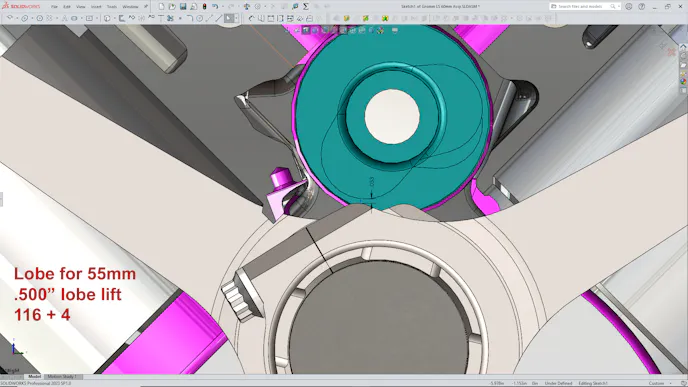
“It uses Victory1 Performance titanium valves and Jesel Pro Steel Series rockers in Competition Induction Design (CID) LS-CR cylinder heads. CID LS-CR cylinder heads were used because we have been seeing some of the largest flow numbers come from those castings. The porting is super important, of course, but if you don’t start with a big enough cylinder head, you will never be able to get to the proper flow numbers. Trying to make a cylinder head flow at 9,000 rpm is not an easy task! All engineered and machined by Semir Metovic at Gromm Racing Engines.
“The pistons are custom built from RaceTec. This project for pistons was quite intense. The heads needed to get sent down to them because the valve location is not standard LS. So the heads needed to be 3D scanned, put in the computer, and a custom piston designed around it.
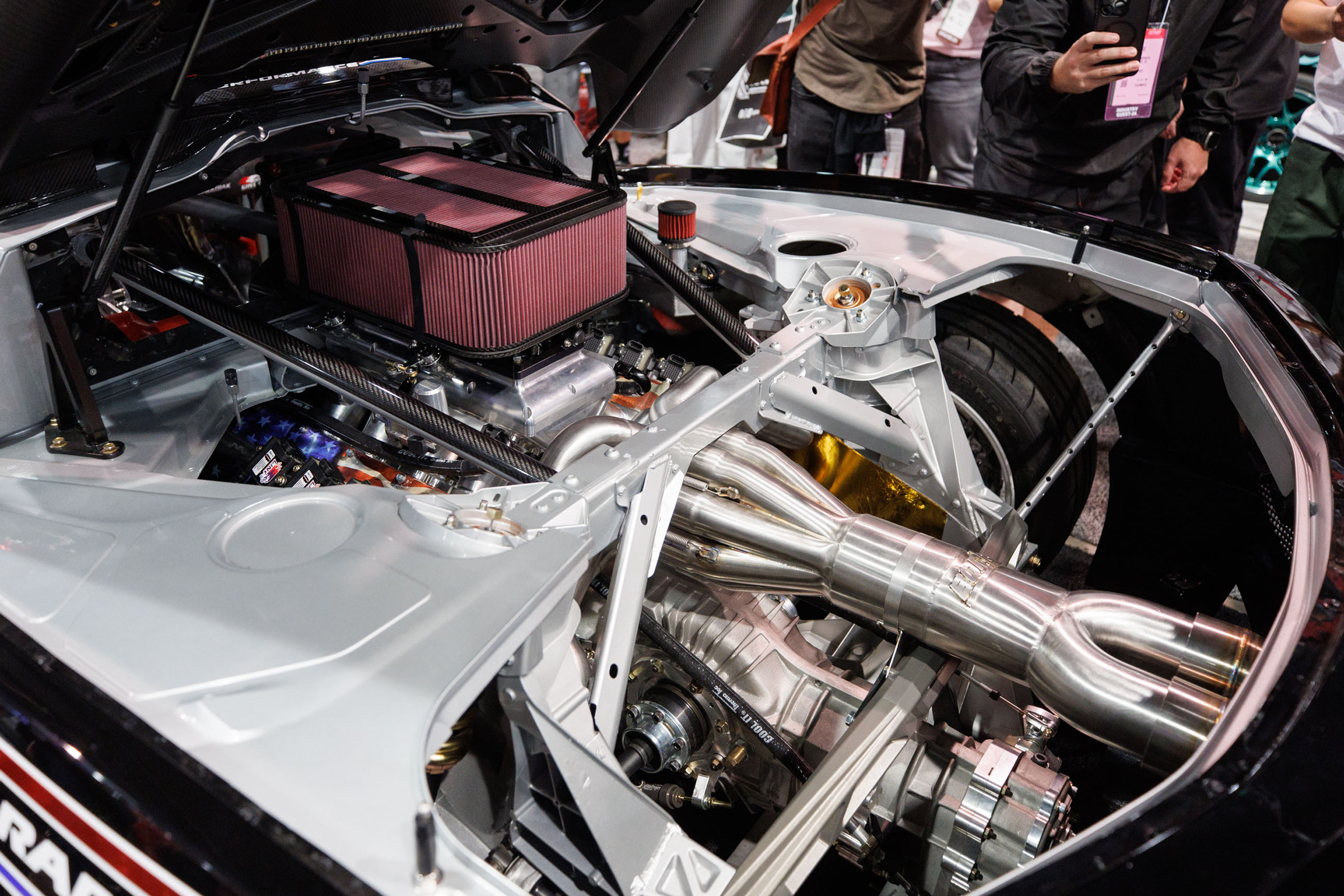
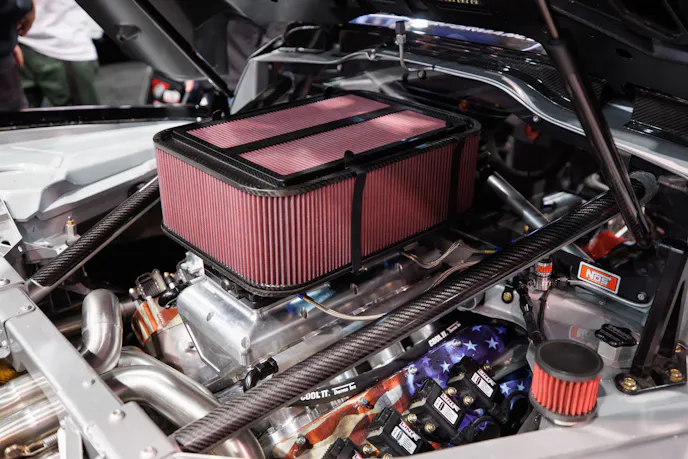
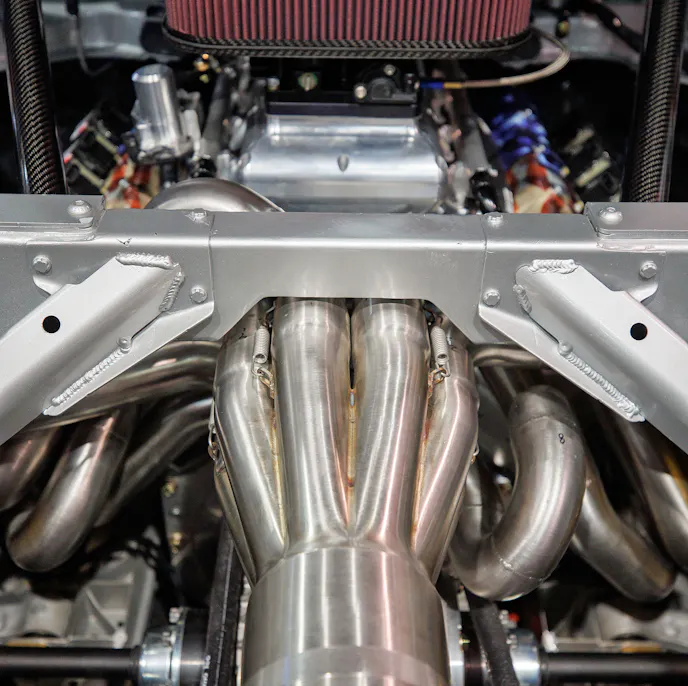
“For induction, we went with a Hogan’s dual 4500 intake manifold. The exhaust system is completely designed and built by Borla. The exhaust is the most important part of this car, as it is a true sequential-fire 8-into-1 collector. All of the huge 2.25-inch runners are all completely equal length. This exhaust was designed in CAD, laser cut, CNC bent, and welded together by Borla.”
[Author’s Note: Most V8s dump exhaust into a header on each bank. By routing all cylinders into one collector, using equal-length runners, Borla creates highly efficient exhaust scavenging. The vacuum created by each pulse pulls remaining exhaust gases out of the cylinder, while helping draw in a fresh air/fuel intake charge for the next cylinder to fire. Due to the tight mid-engine bay layout, CAD modeling and CNC bending were mandatory to route those massive pipes within the limited space.]
EngineLabs: Oil is the lifeblood of the engine, and in drifting it gets tossed around a lot in the pan. Can you go into detail about why a dry-sump oil system is important and your setup?
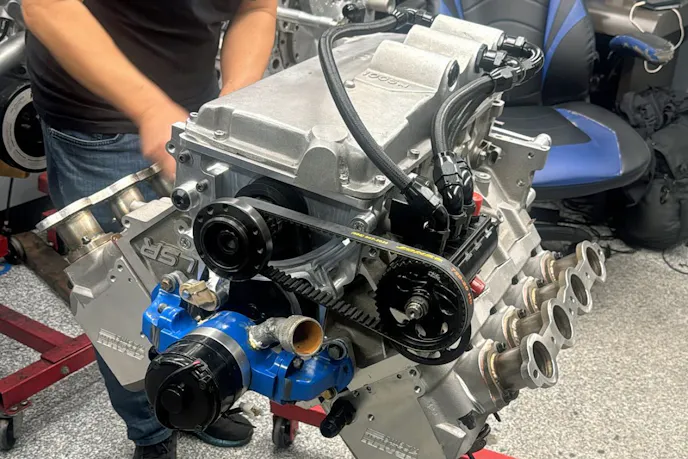
Field: “This is a true dry sump engine. The system is built by Gary Armstrong at Armstrong Race Engineering (ARE). There are four stages of scavenge and one stage of pressure. The engine oil sits in the ARE oil tank right behind the passenger seat, but in the engine bay. The oil pan is very shallow, which allows us to mount the engine very low in the chassis and still have proper ground clearance.
“The oil pump sucks oil out of the pan and pushes it through an air/oil separator called a Spintric, before it returns it into the oil tank. The purpose of the tank is to allow the oil to calm down and get the air out, before it is sucked out the bottom and into the oil pump pressure stage. The pressure stage runs the oil through an oil cooler, and then directly into the engine. This block is set up for priority oiling, which means it pushes oil to the crankshaft first.”
To summarize thus far, Field’s LS-based aluminum-block engine is naturally aspirated, with a 4.25-inch stroke Sprint car-based crankshaft spinning up to 9,000 rpm and putting out over 1,000 horsepower. The oil itself becomes extremely important and key to surviving. It needs to deliver proper lubrication under drift g-loads at high temperature and high RPM. For an insider look, Stefan Braun, Field Application Specialist at LIQUI MOLY contributes.
EngineLabs: This is a very demanding engine, in an equally demanding drift application. What engine oil are you running to make it survive?
Field: “We’re using LIQUI MOLY MoS2 20W-50 in the engine and LIQUI MOLY 75W-140 gearbox fluid.”
Braun: “MoS2 Antifriction SAE 20W-50, is a high-quality mineral-based oil with a unique additive package that includes a solid friction reducer for maximum heat protection and efficiency.
“The additive package is unique to LIQUI MOLY and specifically designed to provide maximum engine protection and power output in extreme heat and during high-RPM operation, such as drifting. The additive package features high-zinc, Molybdenum Disulfide (MoS2), and a carefully selected base oil, making this oil exceptional for not only race engines, but classic muscle cars and more.”
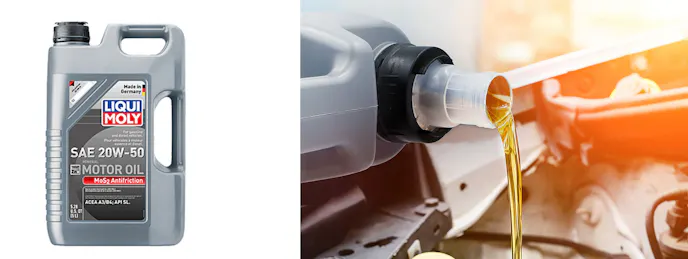
Image source: LIQUI MOLY
EngineLabs: Racing is the ultimate test. Prior to putting the engine on the track, did you do any validation testing? How did the development process unfold?
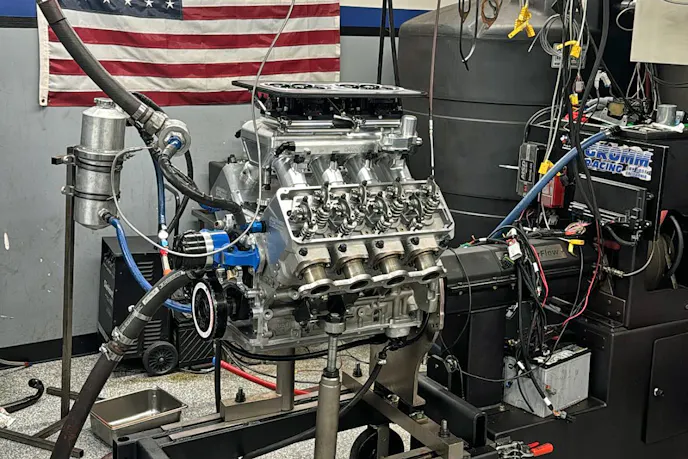
Field: “This engine was put on the Gromm Racing Engine’s dyno, and lots and lots of discovery and learning was taking place. We had to work through two different piston designs, and sort out how to properly maintain crankcase vacuum. Once we sorted those two things out, it was time to pull it off the engine dyno and put it in the car.”
Field calls in Metovic for some deeper insights into the parts iterations and dyno tuning results. Metovic was the key engine builder at Gromm Racing Engines and collaborator with leading industry performance parts manufacturers.
Metovic: “Originally, the pistons were intentionally very conservative with the valve pockets. The result was approximately 0.300 inch of piston-to-valve clearance, which created several unintended compromises. The deep valve pockets forced the ring lands lower on the piston, reduced the compression ratio I was targeting, and shifted more of the engine’s scavenging strategy toward the blowdown event instead of allowing higher cylinder pressure to help evacuate the chamber during each induction cycle.
“The original design also exhibited ring flutter. During testing, we saw a direct correlation between crankcase vacuum and the power curve once the engine exceeded 8,000 rpm.
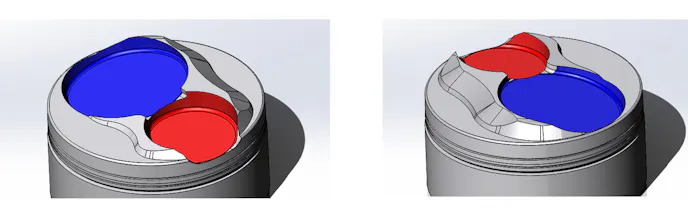
Image source: Gromm Racing Engines.
“After reviewing the data from the first piston design with RaceTec, we made several key changes. The ring lands were moved higher, the valve pockets were significantly shallower, and piston-to-valve clearance was reduced to just over 0.100 inch on both the intake and exhaust. Those changes also allowed us to achieve a 16.5:1 compression ratio, which better utilized cylinder pressure to improve combustion efficiency and aid cylinder evacuation.
“The results were dramatic. With the revised pistons installed, the engine maintained approximately 12 inches of crankcase vacuum beyond 9,000 rpm. By comparison, the original piston design would transition to roughly three to five inches of positive crankcase pressure in the same operating range. The improved ring stability and increased crankcase vacuum were worth over 100 horsepower, while extending stable power production by approximately 1,000 rpm.”
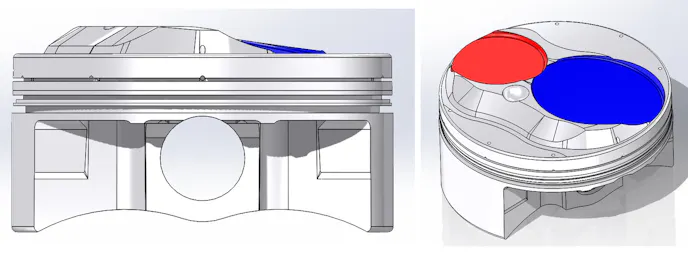
EngineLabs: Looking back on the build, were there any mistakes or words of wisdom you’d like to share with EngineLabs readers?
Field: “I think the biggest mistake I made during this build was over-gearing it [laughs]. The transaxle that this car runs is called a Weddle S5. This is a sequential five-speed that is mostly used in off-road racing. While I was doing some gear calculations and selection, I totally overshot the wheel-speed number that I thought I wanted. This chassis is very different than the C6 that I usually use, so I was going off the C6 wheel speed number.
“Because this chassis has so much more mechanical grip, I now know that I would like lower wheel speed, so that the engine would be more responsive. I really built a four-speed gearbox, with an overdrive, so I could cool down during full-track drifting. I wish I had done a close-ratio five-speed. Luckily, this is an easy fix, as Weddle has thousands of gear ratio options, and I just need to send the transaxle in to them.”
EngineLabs: Now that the car is well into exhibitions, what do you like most about the engine?
Field: “I never knew how intoxicating RPM was. After driving the C8 at 9,000 rpm, I find myself wanting to turn all my race engines higher and higher, to the point where I know I am getting greedy with RPM. No doubt, my absolute favorite thing about this C8 engine is that it is large enough to have some serious grunt, but it will snap to the rev limiter with the blink of an eye. The engine is incredibly responsive and drives like a big-CC two-stroke dirt bike. I love it.”
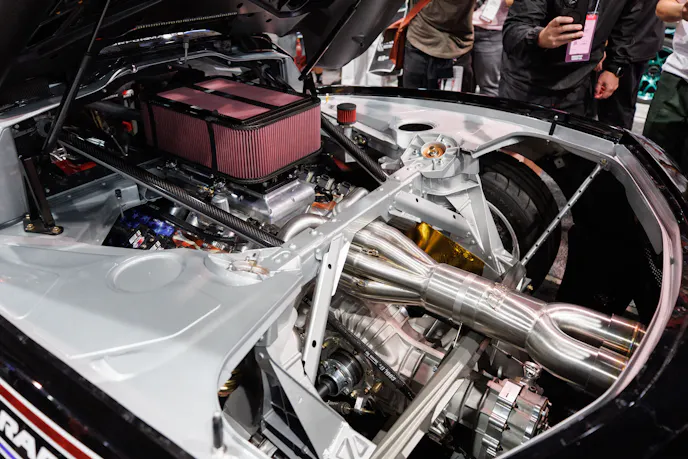
Conclusion: Passion First
Field’s build is a perfect example of leading with passion first. Field started with a car platform he’s passionate about. Chased his dream to build a big-inch, high-RPM naturally aspirated LS engine. Then he adjusted to a new chassis layout and recruited lead engine builder, Semir Metovic of Gromm Racing Engines, and many of the leading brands in the industry, including LIQUI MOLY, to make it durable under extreme performance.
For more on the build process, check out Drift Cave’s build series on their YouTube channel.
You might also like
Engine Pro Releases Sportsman Series Flexplates And Bolt Kits
Engine Pro's new line of Sportsman Series flexplates proves that you don't need a big pricetag to handle big horsepower.