


Welcome to the July installment of EngineLabs Tech Talk, where we not only summarize some of the coolest articles this month, but also share some interesting news items, a weird engine, and some project updates. This month, we’re going to talk about
- Nilu 27’s 1,070-horsepower, 11,000-rpm naturally aspirated V12
- Mercedes-AMG’s M139 remains the world’s most powerful production four-cylinder
- Mercedes-AMG confirms the return of the V8
- Bosch’s hydrogen-powered Maserati Le Mans engine
- The Engine vs. Motor debate—what do the dictionaries actually say?
- The winner of the EngineLabs 632 Big-Block Chevy Giveaway
- Ford’s forgotten X-8 prototype engine
- Garage54’s ridiculous square piston experiment
- Throwback 347 supercharged small-block Ford project update
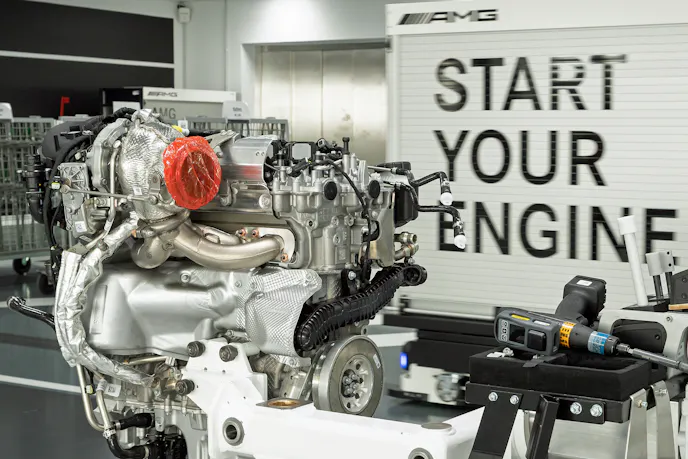
Mercedes-AMG M139 Is Still King Of The 4 Cylinders
Released seven years ago as the most powerful production turbocharged four-cylinder engine ever, the M139 was packing 416 horsepower and 369 lb-ft of torque. Those numbers dethroned the previous generation AMG four-cylinder, the M133, by 40 horsepower and 19 lb-ft of torque.
Now, seven years later it’s still king, but with another 50 horsepower and 23 lb-ft, making 469 horsepower and 402 lb-ft. That extra power comes mainly from a refined cylinder head design, where they relocated the valves in order to refine the port design for improved flow. Addditionally, a hyper-efficient turbo making 30.5 psi and spinning to 169,000 rpm provides the airflow for the extra power.
Since the engine was designed from the start to be high-stress and high-strung, there was plenty of strength and rigidity already built into the design to withstand the significant increase in power. The big question is, can the M139 be dethroned? An even bigger question is, is the high-power four-cylinder even a competitive market segment anymore, with reduced CAFE standards now in place? Now that larger, less-efficient engines are possible again, will the small, hyper-efficient engines find themselves relegated to the history books in performance applications?
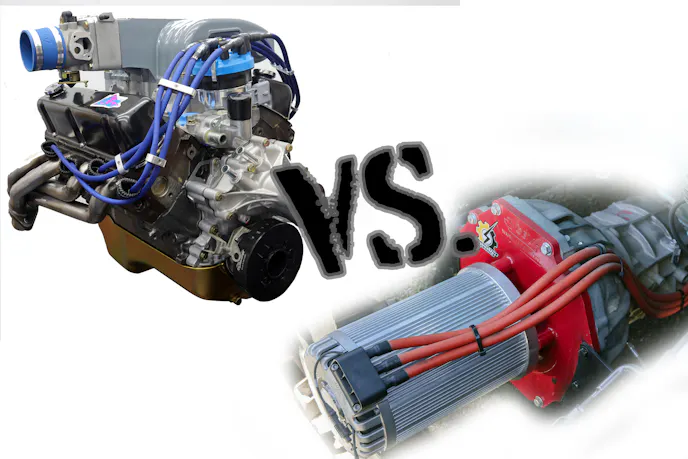
Trying To Settle The Motor Vs. Engine Debate Once And For All
Ok, this one is a good argument starter. In this article, we discuss the definitions of “Motor” and “Engine” from three of the most respected English dictionaries in the world: Merriam-Webster, American Heritage Dictionary, and Collins English Dictionary. Here are the most relevant definitions:
Merriam-Webster Dictionary
Motor:
2,b: INTERNAL COMBUSTION ENGINE
especially: a gasoline engine
American Heritage Dictionary
Motor:
1. Something, such as a machine or an engine, that produces or imparts motion.
2. A device that converts any form of energy into mechanical energy, especially an internal-combustion engine or an arrangement of coils and magnets that converts electric current into mechanical power.
Collins English Dictionary
Motor:
2. an engine; esp., an internal-combustion engine for propelling a vehicle
At the end of the day, the words “engine” and “motor” are grammatically interchangeable when it comes to internal combustion powerplants. There is a common colloquial separation of the two terms, but calling an internal combustion engine a “motor” isn’t wrong. Unfortunately, I’m sure people will keep arguing over it and trying to correct others, thinking they are smarter than the dictionary.
EngineLabs Giveaway Winner Announcement
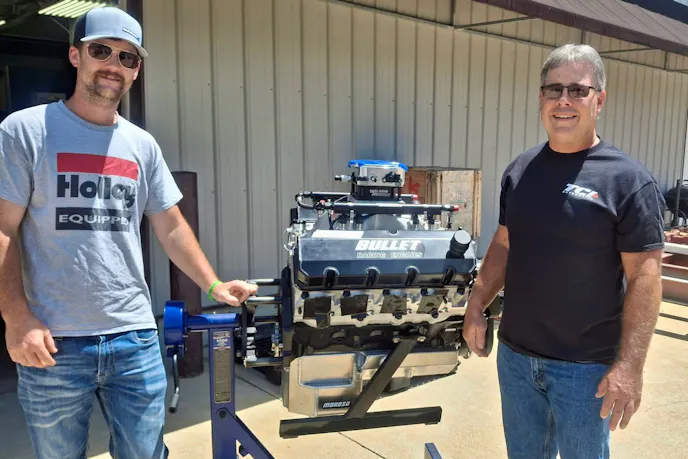
One of our favorite articles to post last month was our EngineLabs Giveaway winner announcement. After crossing the Is and dotting the Ts, we were finally able to announce the winner of the EngineLabs Giveaway Presented By Summit Racing. As a quick recap, we built a 632-cube N/A big block Chevy live on the PRI Show Floor with the help of Nick Bacalis of Bullet Racing Engines.
After the show, we took it to the dyno where it made 962 horsepower with a torque plateau so flat you could build a house on it. The winner, Dylan Stoffer, is likely going to shoehorn the massive beast into a Chevy Silverado, since he’s a truck guy, and already has a pretty awesome S10 that he drag races.
Dylan and his dad actually road-tripped out to Bullet Racing Engines to pick up the engine in person, and get a tour of the shop from Nick. We’re excited that the winner is so enthusiastic, and that it has turned into a family project. We couldn’t have hoped for a better winner.
QUICK NEWS
BOSCH and Maserati Team Up On Hydrogen Combustion For LeMans
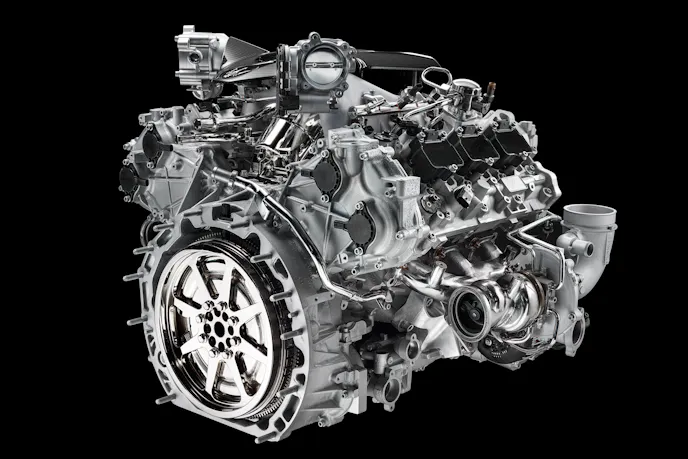
Recently, Bosch Engineering developed a new hydrogen-combustion engine specifically aimed at a demonstration lap at the 24 Hours of LeMans. The engine is based on the Maserati Nettuno engine, a 3.0-liter V6 with twin turbos and dry-sump oiling.
While the cylinder head design and turbochargers remain original to the production gasoline engine, the pistons had their crown shape optimized for burning hydrogen and reducing the compression ratio from the standard gasoline variant. A Hydrogen Direct Injection fuel system was fitted using Bosch’s hydrogen injector technology, which has been at the forefront of the movement.
Producing 644 horsepower and 649 lb-ft of torque, the hydrogen variant actually made a touch more than the production model. While the two laps at the 24 Hours of LeMans are being touted as the glory runs, the real impressive performance is the 10,000km of track testing that has taken place without a failure. We’re genuinely excited to see hydrogen combustion continuing to move forward.
Mercedes-AMG Is Bringing Back The V8
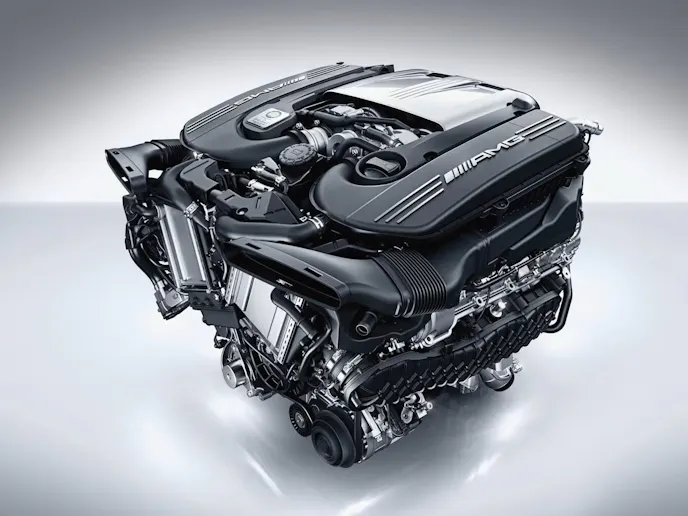
After moving away from V8 powerplants in AMG vehicles (see the above article on the M139) it looks like the Mercedes-Benz CEO is reversing course. In the announcement, it appears the engine will be a version of the M177 twin-turbo V8 currently in the S-class and used in previous AMG vehicles.
However, AMG doesn’t just use the same engines as standard Mercedes vehicles. There will actually be two performance variants of the engine: an AMG spec and a “go crazy” AMG spec. Both will feature a flat-plane crankshaft, and it’s rumored that there will be 650 horsepower in the base AMG spec. There’s no official word on the “Go Crazy” version, but it is said to power the most extreme version of the AMG GT Black Series, so you know that it will have to be something special. According to the CEO, we’ll see the V8’s return by the end of the year.
Nilu 27’s 6.5L V12 Runs On The Dyno For The First Time
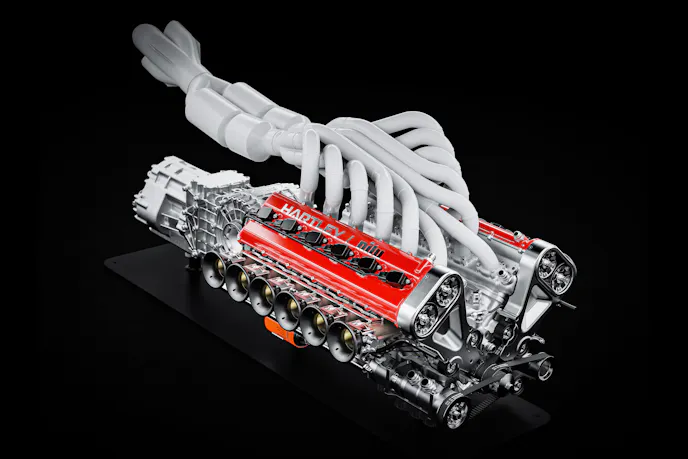
Developed for the Nilu 27 Hypercar project, the 6.5-liter V12 engine was developed in conjunction with Hartley Engines in New Zealand. On paper, it’s a hot-V 12-cylinder engine design that spins to 11,000 rpm. Well, the engine recently made its first start and dyno pulls, going from theory to practice.
The project goals for the engine were to achieve 1,000 horsepower on the engine dyno and to reach the 11,000-rpm projected redline. The engine easily did both, with the final output after the first session at 1,070 horsepower, eclipsing design goals on the first shot.
Looking at the engine, it seems like they might be trying to emulate the Cosworth engine in the Aston Martin Valkyrie, but in Hot-V form. If they are, we’re not complaining, as we’d love to see a five-digit-RPM, thousand-horsepower naturally aspirated engine become commonplace. Expect to see a full article soon on this wild engine.
WEIRD ENGINE OF THE MONTH
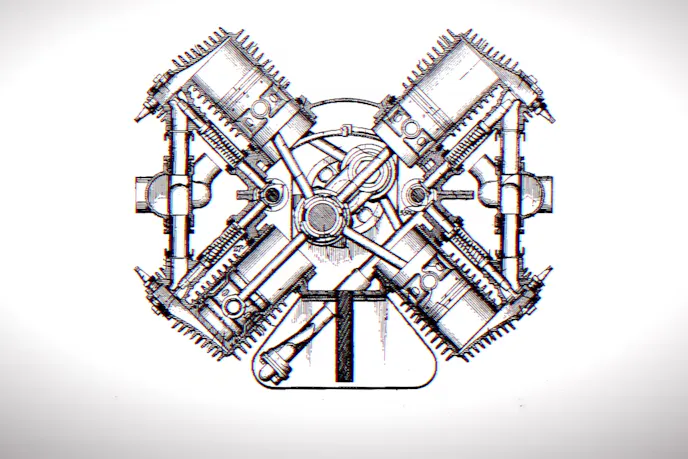
Ford’s X-8 Engine
Ford’s X-8 engine was so named for the X-layout of its 8 cylinders, not X as in “experimental: which was a common naming convention at the time. 100 years ago, it was the wild west and everyone was chasing the next best thing ever in automotive engine design. Having seen the X layout in aeronautical engines, Henry Ford thought it would be a great way to fit eight cylinders into a Model A.
The engine had four banks of cylinders, each 90 degrees apart from each other with air-cooled “L heads.” The project lasted seven years, and saw displacements ranging from 110 to 120 cubic inches with undersquare cylinders trying to get the design to be powerful enough as well as practical. It never made it out of the prototype phase, and the Model A ended up with an inline four-cylinder engine.
However, there are some who believe that the knowledge gained in the X-8 project led to the Ford Flathead V8 coming to life and being so incredibly successful. With the impact the Flathead had on hot-rodding and aftermarket performance, that makes the X-8 an incredibly important part of Ford’s engine history.
INTERNET RANDOMNESS
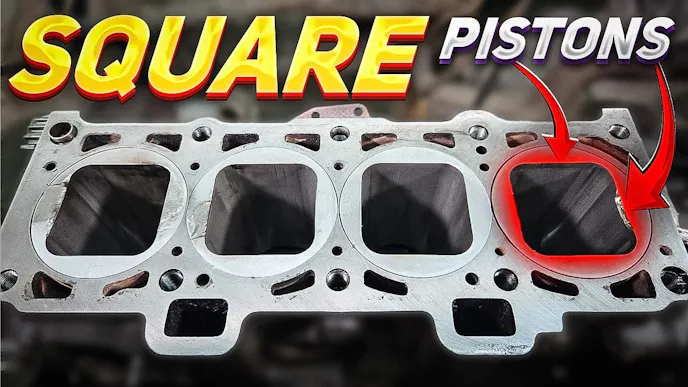
SQUARE PISTONS?!
When I first saw this pop up, my first thought was, “This seems like something Garage54 would do,” and well… If you aren’t familiar with Garage54, they are a group of Russians who test very strange concepts that have a near-zero chance of working, but is interesting nonetheless.
This is literally a case of trying to fit a square peg in a round hole, except that they ended up making the hole square, too. They wire EDM’d square pistons and sleeves to fit into the cylinder bores, and initially the square pistons hit the crankshaft counterweights. They used rubber O-rings as piston rings, and that, surprisingly, wasn’t the biggest problem.
Once that was cleared up, the engine did end up running for a little bit, and even moved the car the engine was installed in through a couple of gears. Unfortunately, between the rubber piston rings and the huge amounts of clearance needed, the engine leaked like a sieve. But at least we now have a provable answer to a question I’m not sure anyone actually asked.
PROJECT UPDATES
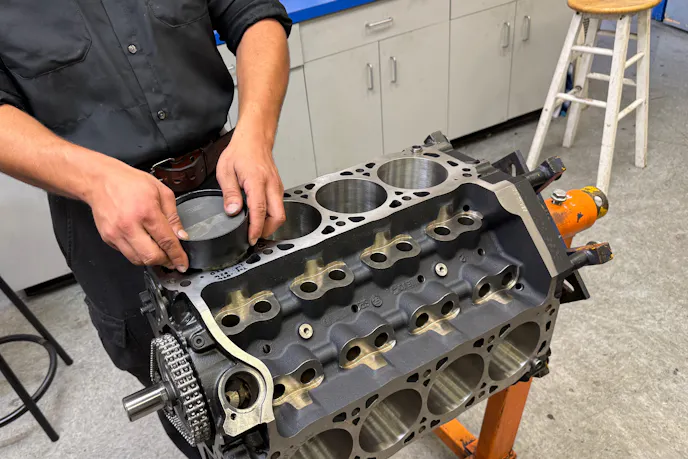
Project Throwback 347 Comes Together
Ford fans listen up; we have another Small Block Ford engine build coming really soon. Dubbed “Throwback 347” the engine is part of our sister magazine’s Project Fox Dreams. It’s a tried-and-true stroker combination to make the iconic 347 cubic-inch displacement, and it will feature a Vortech Ti-Trim supercharger to make for a fun, reliable, big-power driver.
The build video will be coming very soon, so stay tuned!
That wraps up the July installment of EngineLabs Tech Talk. A reminder that our newsletter subscribers see some of this information first, before it’s on the website or in a video, so if you aren’t already, get subscribed to that. Until next month…
You might also like
10K Technology's Wild Aftermarket Godzilla Heads Flow Like Crazy
Ben Strader previews 10K Technology’s new Godzilla cylinder head at Holly Ford Fest, highlighting airflow and strength.