
There are plenty of parts on a high-performance engine that grab attention. Cylinder heads get the glory. Camshaft lobe specs are the source of endless debates. Turbos and superchargers dominate gearheads’ social media feeds. Oil pumps? Not so much.
But, ask experienced engine builders where reliability lives, and the conversation always circles back to lubrication. It doesn’t matter how much horsepower an engine makes if the oil system can’t keep up with the demands placed on it. Beyond just the pump that you bolt up, bearing clearances, oil temperature, crankcase vacuum, drainback, and pressure stability are all parts of getting the oiling system right.
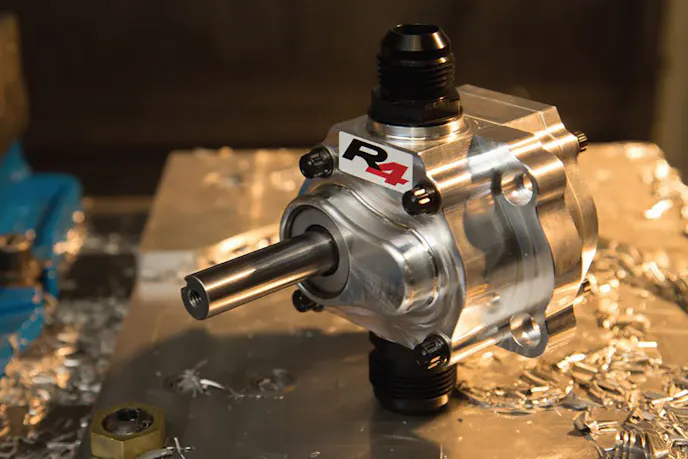
That’s one reason Peterson Fluid Systems has earned a reputation among professional racers, engine builders, and high-end enthusiasts. Peterson specializes in external oil pumps for both dry- and wet-sump systems. And while they’re best known for their oil pumps and dry-sump tanks, most racers appreciate that they take a holistic view of the oiling system and can help solve problems that don’t specifically include their pumps.
According to Peterson’s Peter Byrne and Technical Manager Wade Moon, the company’s approach goes far beyond simply moving oil from one place to another. The goal is to build pumps that improve efficiency, maintain stability under extreme conditions, and adapt to the increasingly specialized demands of modern racing engines.
The Twisted-Lobe Difference
One of the most distinctive features of Peterson’s pumps is something most racers rarely actually see once the pump is installed.
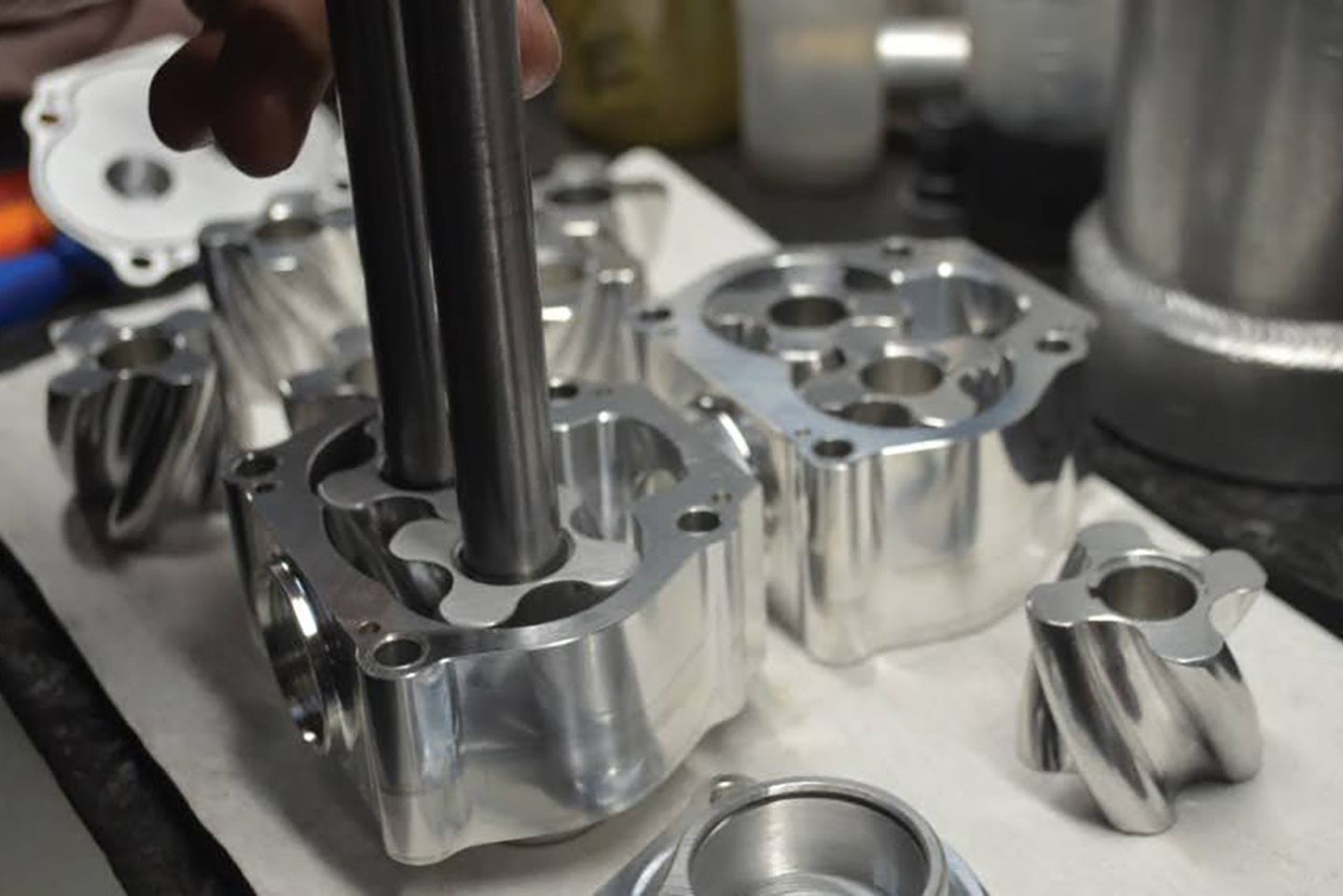
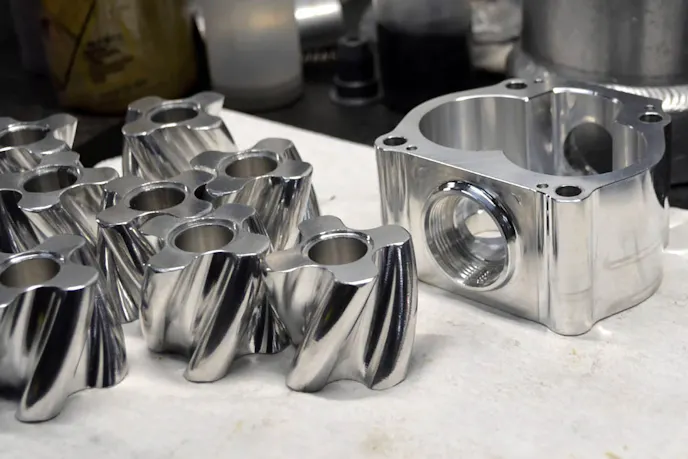
The company’s pumps utilize a four-lobe twisted rotor design that differs from many traditional external oil pumps. Byrne explains that the twisted-lobe arrangement eliminates the need for additional timing gears inside the pump body. Instead of requiring spur gears to synchronize the rotors, the design of the rotors automatically aligns. That may sound like a small detail, but it creates real advantages.
“It simplifies things inside the oil pump,” Byrne explains. “We’ve eliminated parts inside the pump because you no longer need a spur gear to keep the lobes properly timed. So that’s fewer parts, less mass to spin, and less complexity. And we can use the same lobes for both the pressure and scavenge bodies, which also simplifies things.”
Removing the spur gears to time everything up is all mass and friction that no longer has to be spun by a belt off the crankshaft pulley, and any drag that can be removed here is just more power that can make it to the rear tires.
The twisted rotor geometry also creates a slight increase in displacement compared to an equivalently sized straight-lobe design. Byrne describes it as a modest gain, but every bit of efficiency matters when chasing performance.
The end result is a pump that’s lighter, mechanically simpler, and highly efficient.
The Benefit of Crankcase Vacuum
Most racers understand that crankcase vacuum can improve performance, but the conversation often gets simplified into a single question: “How much horsepower does it make?” The reality is a bit more complicated.
Well-designed dry-sump systems remove both air and oil from the crankcase, which helps reduce windage losses. Pulling vacuum in the crankcase will also improve ring seal, reduce oil aeration, and stabilize oil pressure during extreme acceleration, braking, and cornering.
Byrne notes that the company’s pumps can pull exceptionally high vacuum levels. “We’re in the Denver area, so we are a mile above sea level,” he says. “The most you can pull at this elevation is about 25 inches or so, and we’re getting very close to that.”
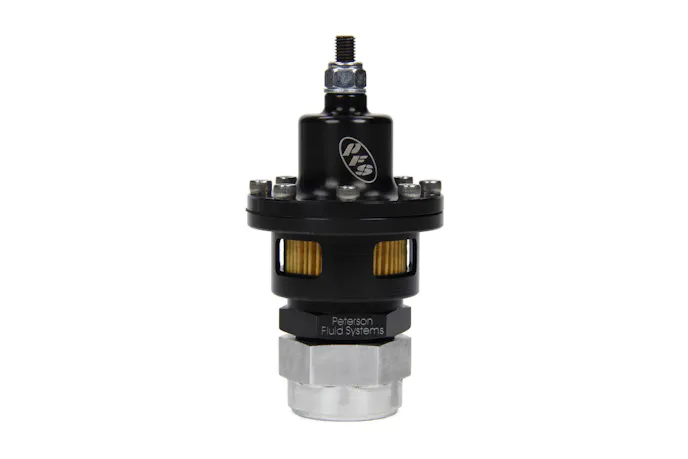
That’s why Peterson also offers vacuum regulators that allow engine builders to dial in a target vacuum level. The reason is that many engines simply aren’t sealed well enough to hold that much vacuum, so the owner can dial down the negative pressure so the engine doesn’t pull dirt into the crankcase.
For many combinations, especially engines not specifically built for extreme vacuum levels, Moon recommends limiting vacuum to around 14 to 15 inches. That’s typically where racers see the largest horsepower gains. Beyond that point, additional vacuum often delivers diminishing returns. So, pulling another few inches of vacuum may only produce a small horsepower increase while increasing demands on the rest of the engine package.
There Is No Such Thing as a “Standard” Oil Pump
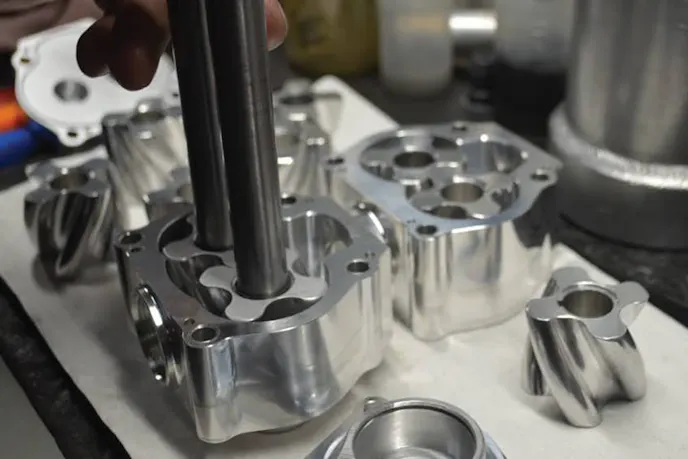
Obviously, there is no “one-size-fits-all” solution when it comes to oil pumps. But what surprised us is just how particular Moon gets when helping customers select a pump. He starts by asking questions. Lots of questions.
“Is the block aluminum or cast iron?” “Are the connecting rods aluminum, steel, or titanium?” “Does the engine use squirters to spray oil on the underside of the pistons or the valvesprings?” “Are you running hydraulic lifters?” “How much crankcase vacuum is being targeted?” And even, “What type of racing are you doing?”
Every answer influences the final recommendation. Consider aluminum blocks, for example. As temperatures rise, aluminum expands significantly more than cast iron. Moon points out that bearing clearances in an aluminum block can grow dramatically as the engine reaches operating temperature.
“An aluminum block can grow so much when it gets hot, the main bearing clearances can open up 0.004 to 0.006 of an inch. And it also depends on the application. So, the drag racers don’t usually see a big temp gain on a single pass, but now drag-and-drive is really popular. They take their car out on the road, maybe it doesn’t have the most powerful cooling fan because they’ve never needed it, and sitting at a stop light, it sees a ton more temp than it will on the track. All of a sudden, their oil pressure is through the floor.”
Moon says this is exactly what happened to one of Steve Morris’ racing engines, which are extremely popular in drag-and-drive events. The race car was experiencing extremely low oil pressure during extended street driving because the engine’s lubrication requirements changed dramatically once everything reached full operating temperature.
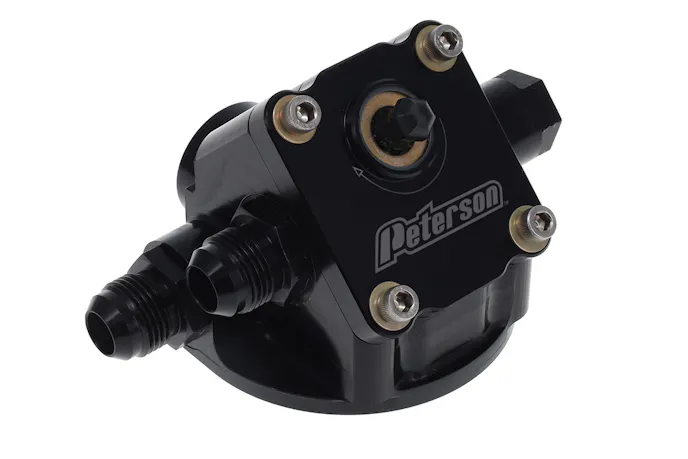
Peterson developed a dual-pressure-section pump configuration that feeds into a manifold with a single outlet. Multiple scavenge sections on a dry-sump oil pump are common because engine builders like to be able to pull air and oil from multiple areas of the engine and oil pan, but two pressure sections are practically unheard of. But it was necessary to meet the race engine’s needs for high oil pressure on the long driving sections. And then at the track, when everything is nice and cool, an external bypass routes excess oil back to the tank, where it is cooled and kept ready for use.
Today’s drag-and-drive events are incredibly fun and offer inventive ways for racers to spend more time behind the wheel of their beloved cars. But, extended drives at 60 miles per hour and eight-second blasts down the drag strip place very different stresses on a race engine, and unique solutions are sometimes required.
Oil Temperature Is the Hidden Enemy
One area many racers underestimate is oil temperature. Water temperature gets all the attention because it’s easy to monitor, but oil temperature can often tell a more important story.
Moon notes that some circle-track engines regularly see oil temperatures approaching 280 degrees Fahrenheit while water temperatures climb well beyond what most drag racers ever experience. Tractor pullers face similar challenges as engines operate under tremendous load for extended periods. This is where oil tank sizing in dry sump systems becomes critical.
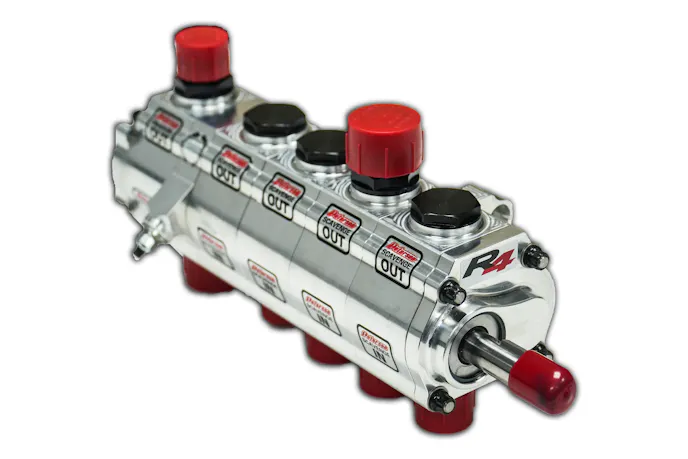
A larger dry-sump tank doesn’t just hold more oil. It also increases the amount of time the oil spends outside the engine, allowing additional cooling and de-aeration before it re-enters the punishing gauntlet of a high-revving performance engine. According to Moon, many endurance racers use substantially larger tanks specifically for that reason.
The value of carrying a larger tank and more quarts of oil more than offsets the weight penalty with cooler oil temps and a ready supply of oil, no matter how long the engine is held at redline.
Real-World Knowledge Still Matters
Perhaps the biggest advantage Peterson Fluid Systems offers isn’t a rotor profile or a billet housing; it’s a deep well of experience in practically every popular form of motorsport.
Moon’s role as Technical Manager involves helping racers work through combinations of oil pumps, scavenge sections, and tanks that don’t fit neatly into a catalog description. That extensive list of questions he regularly asks reveals just how critical dialing in the right lubrication system is to an engine’s long-term health.
Every factor matters.
That technical support only becomes more valuable as race engines continue to push horsepower boundaries ever further. A modern dry-sump system is now an integral performance component that influences horsepower, reliability, durability, and consistency.
You might also like
Torque and Clamping Force: Why Lubricant Choice Matters
Engine builders depend on torque wrenches, but torque alone doesn't tell the whole story. Friction can dramatically change clamping force.