
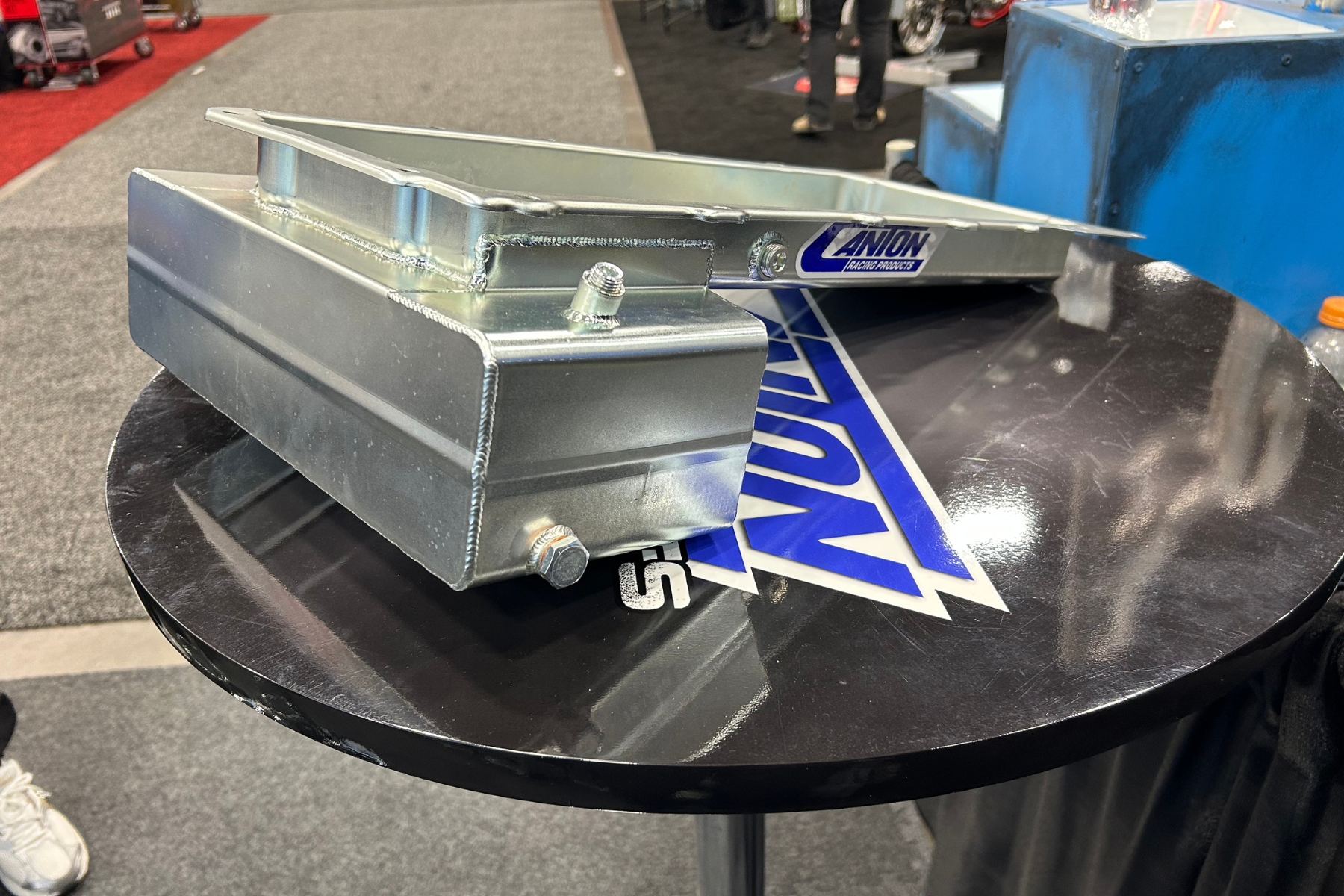
Putting an LS engine into a Nissan 350Z is practically the standard formula for building a competitive drift car right now. The chassis is rigid, the wheelbase is right, and the LS makes reliable torque. However, anyone who has actually wrenched on this swap knows the headache of finding an oil pan that clears the front crossmember without hanging dangerously low. Canton Racing Products has fixed that geometry puzzle with their new 350Z LS-swap oil pan, a front-sump setup that prioritizes chassis clearance and engine survival.
Community Driven Design
This part actually has an interesting backstory. It didn’t start as a mainline Canton product. Canton’s Christian Goncalves explained that it began as a private label piece they manufactured for another company. But, as these swaps became more common, builders kept calling Canton asking for that specific configuration. They eventually brought it in-house to the main catalog, and it has quickly become one of their most requested items. It directly addresses the biggest hurdle of the swap: getting the engine seated low enough in the bay without smashing the sump on the asphalt or interfering with the steering rack.
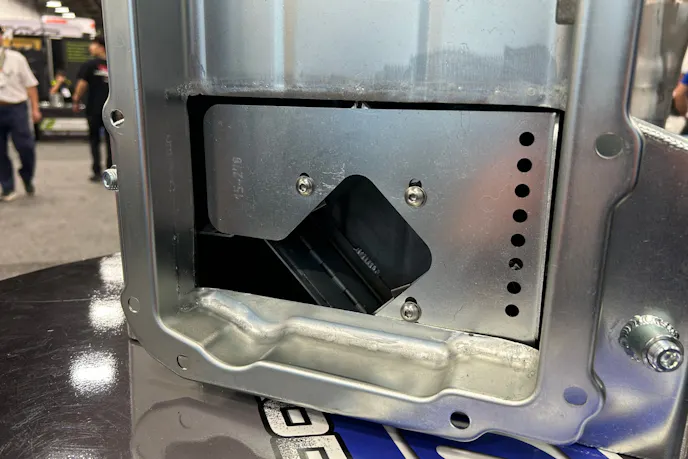
4-Door Baffle System
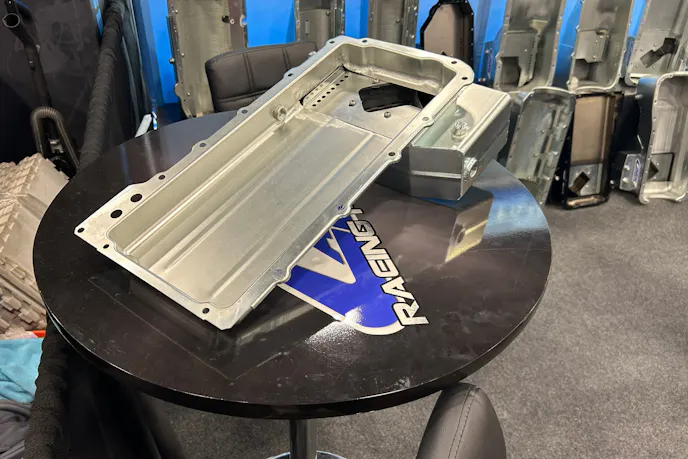
Fitment is only half the battle, though. The Z33 is a chassis designed to be thrown sideways, and high-G cornering is usually where LS engines starve for oil and spin bearings. Canton addressed this with a diamond-shaped internal baffle system. Inside the sump, four trap doors control the oil flow, allowing it to move toward the pickup tube but blocking it from sloshing away during hard transitions. There is also a removable anti-slosh baffle that works in tandem with the factory GM windage tray. It is a setup designed specifically to keep oil pressure steady when the car is sliding or transitioning weight violently.
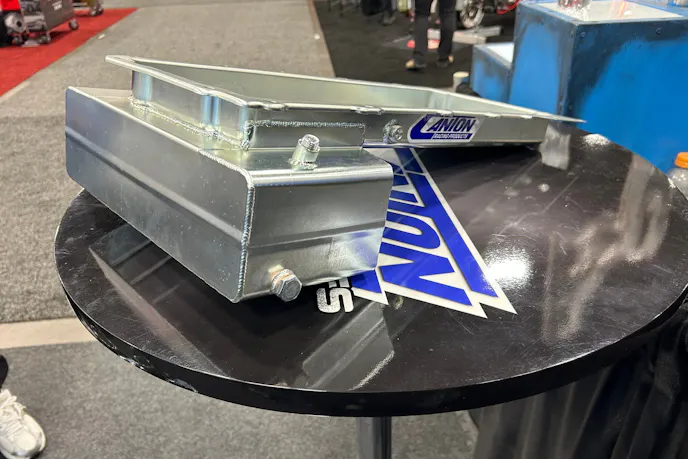
Built for Boost
Canton also packed in the features that usually require a drill and a tap. The 350Z LS-swap oil pan comes with a 3/8 NPT bung already welded in for a turbo drain, which is a massive time saver if you plan on adding boost later. It retains the provision for the factory oil level sensor and has spots for a dipstick on either side of the block. With a 6.5-quart capacity, it holds enough fluid to be safe without being too bulky. It is a practical, well-thought-out solution for keeping a swapped engine alive on the track.
You might also like
Do Hub Dynos Actually Record Higher Numbers? Big 3 Racing Plays "Mythbusters"
It is commonly believed that hub dynamometers make more power than a roller dyno, but less than an engine dyno. Is this right, though?