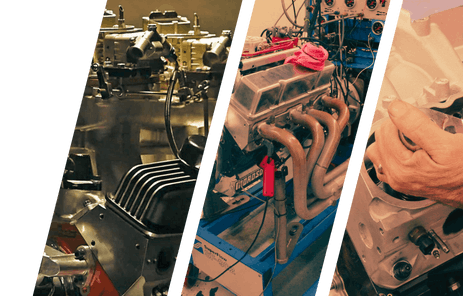

Sometimes you just want to make horsepower the old-fashioned way.
Here at Engine Labs, we can appreciate modern technology. Heck, we love it. Turbochargers, electronic fuel injection, water meth injection, high-strength alloys, you name it. If it helps spin the crankshaft harder, we’re down for it.
But sometimes you have to get back to your roots.
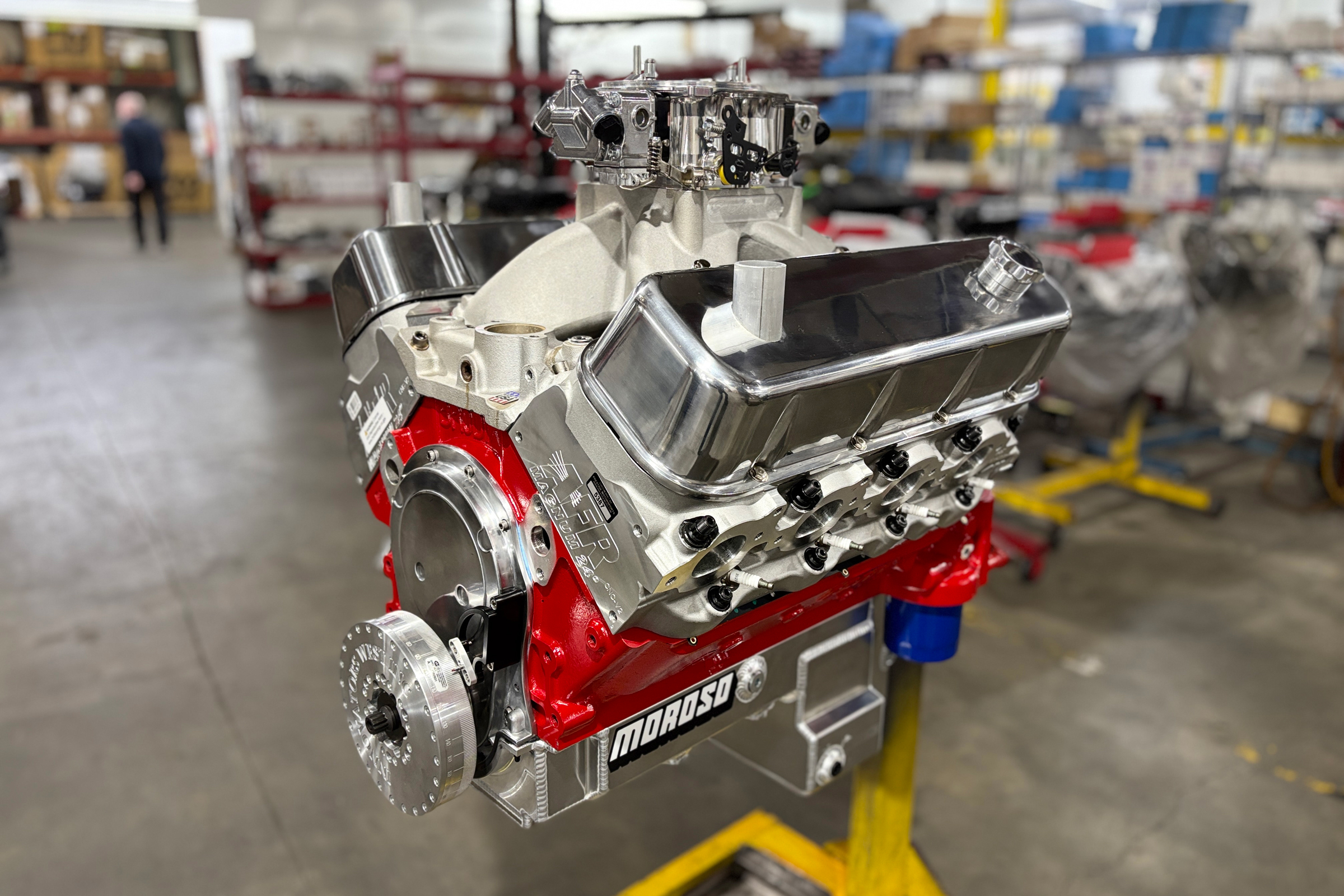
You know what we’re talking about: big inches and a carburetor. That’s why we were intrigued when the mad scientists at Prestige Motorsports told us they were working on an aluminum 565 cubic-inch big-block to go into a ground-pounding 1978 Chevy Nova and hoped to make at least 850 horsepower with it. The owner, Dillon LaDuke, plans to install a new intake manifold and port fuel injection later down the line, so for simplicity, Prestige started with a single-plane intake manifold and a high-flowing carburetor.
The fourth-generation Novas weren’t exactly the greatest when it comes to automotive design, but LaDuke’s restomod has made this particular bowtie downright menacing. “It was just a local car that I was able to get at a decent price,” he says. “It took about seven years to build the whole car. I built the car with my dad and my uncle, and then my cousin helped me paint it.” Now that the car was ready to rip, he plans to take it to autocrosses and other events, so a power upgrade was on deck to motivate this American iron around a track.
“The car was originally a big block,” LaDuke says. “I originally built a 502 for it with a family friend, and it’s been a good motor. But it was time to freshen things up. Plus, I wanted to take some weight out of the car. So I got with the guys at Prestige to build a lighter engine that really improved the power.”
Building An Aluminum 565 Cubic-Inch Beast
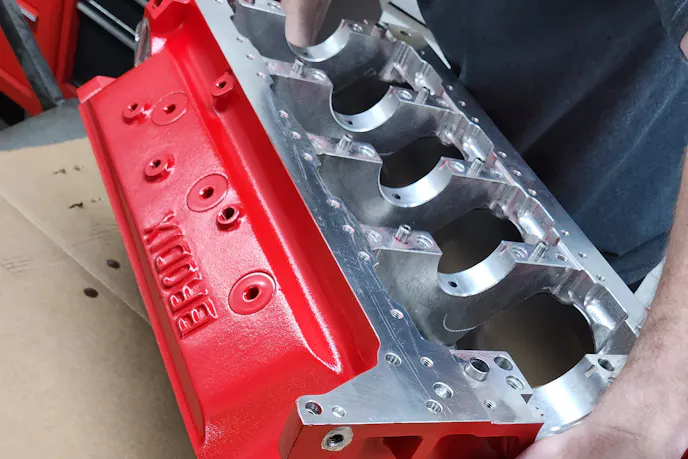
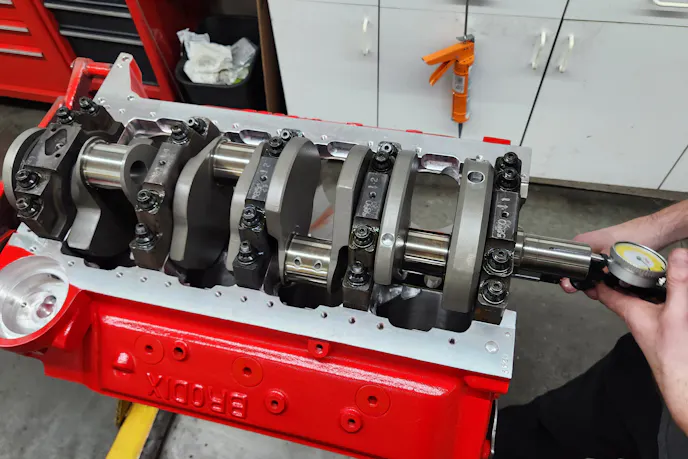
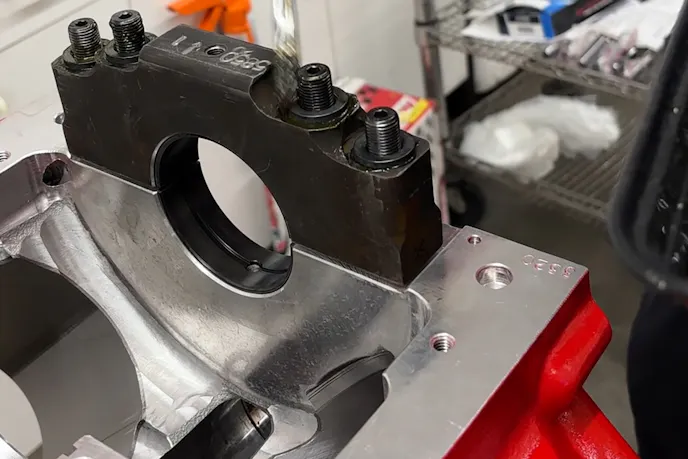
So, Prestige answered the call for horsepower with an aluminum 565 cubic-inch big-block Chevrolet. But because LaDuke’s Nova needs to turn and stop as well as it accelerates, the engine also needs to be light. So they went with a new aluminum block from Brodix. To keep the center of gravity just a bit lower, they went with the shorter 9.800-inch deck height. The bores are bored to 4.600 inches in diameter, and while the cam is still in the standard location, it has been opened up to 55 millimeters to allow for a beefier camshaft. The block has been HIP’d (a process where the metal is heated under extreme pressure to align the molecules) for added strength.
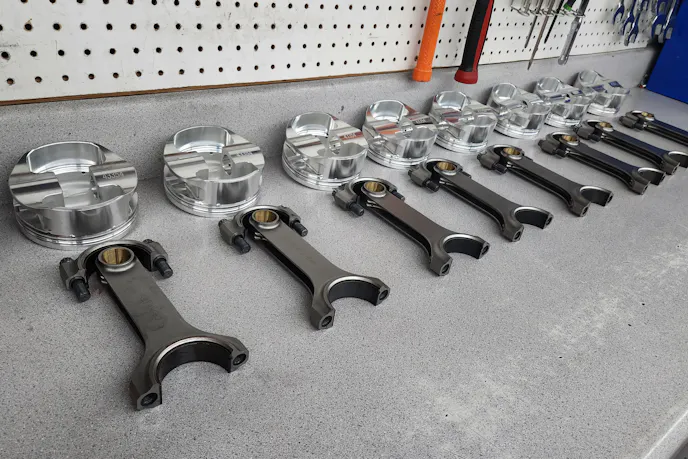
The rotating assembly is based around a forged crankshaft and eight connecting rods from Eagle Specialty Products, carefully chosen to help reach a 7,000 rpm redline — sky-high for a big block. To go with the 4.600-inch cylinder bore, the crank’s stroke is 4.250 inches to get to those 565 cubic inches of displacement. And then the 4340 alloy forged H-beam connecting rods are 6.385 inches from center to center to bring the pistons to within 0.003 of an inch of the deck at TDC.
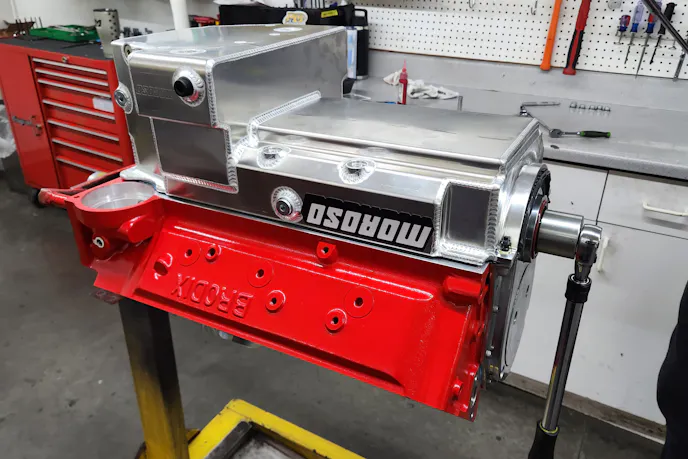
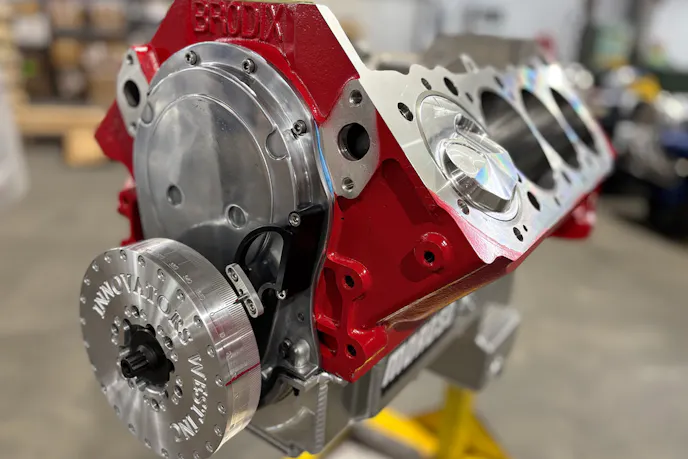
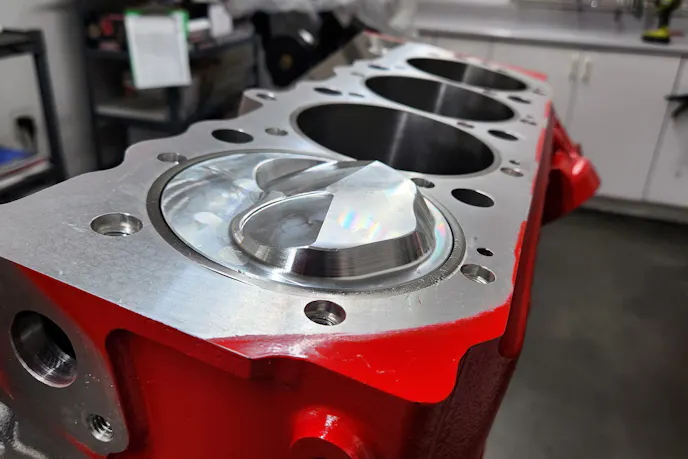
A set of Racetec pistons connects to the rods to finish the rotating assembly. To work with the longer connecting rods, they have a short compression distance of just 1.270 inches. They weigh in at 712 grams and have a 36.6 cc dome to help dial in the 13.0:1 compression ratio.
The camshaft is a solid roller from COMP Cams made from tool steel. It is also a custom grind to make the most of this specific package. Gross valve lift combined with the stock ratio 1.7:1 rocker arms is 0.746 inch for the intakes and 0.750 inch for the exhausts. Meanwhile, the duration at 0.050 tappet lift is 275 and 286 degrees, respectively. Lobe separation is 110 degrees, while the intake centerline was placed at 105.
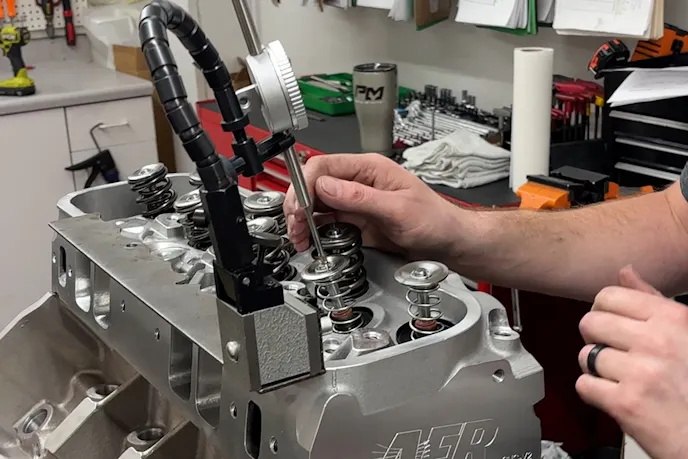
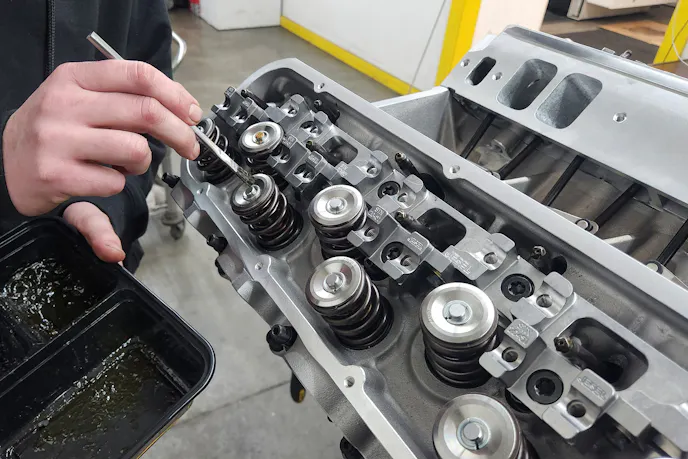
Up top, Prestige chose to go with a set of aluminum cylinder heads from Air Flow Research for the Aluminum 565 short-block. Big-block combustion chambers are always large, and these are no different at 121cc, but the domed pistons make up for it to keep the compression ratio, as we’ve already mentioned, at a healthy 13.0:1. Because of that, it will be burning C16 race fuel, which clocks in with an octane rating just a touch over 118. That knocks this Nova out of the daily driver category, but sometimes sacrifices have to be made when it comes to competition.
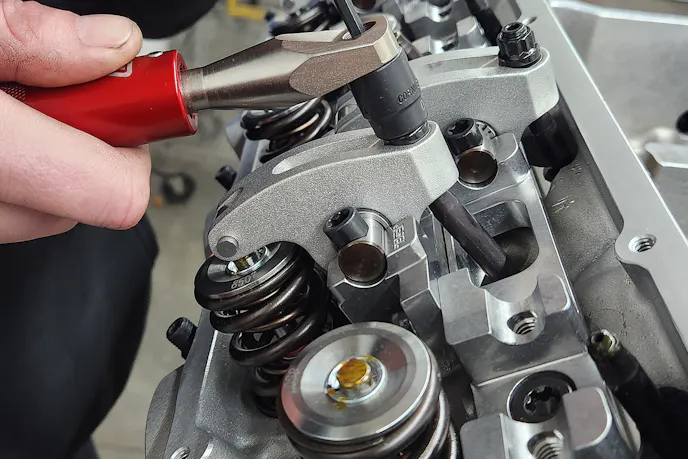
Anyhow, back to the heads. Both the intake and exhaust runners, as well as the combustion chambers, are all CNC cut. The rectangular intake ports are sized at 357cc, and the valves are sized at 2.300 inches in diameter for the intakes and 1.880 inches for the exhausts. These heads came assembled from AFR, although Prestige pulls everything apart and checks everything. But, the cool thing about this is they come with lightweight titanium retainers right from the factory.
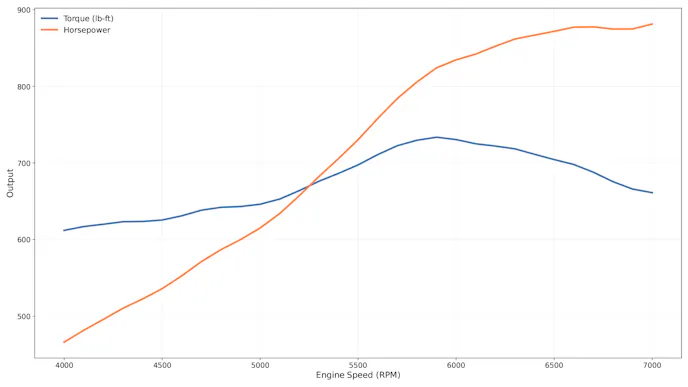
The end result turned out to be quite impressive. Prestige put the big aluminum 565 on their engine dyno, complete with a tall single-plane intake and a big 1,150 cfm double pumper carb from ATM Innovation. After running a thorough break-in process and a lash check, they were finally ready to make some pulls. It only took a little tuning before this big block was pumping out 878.8 horsepower at the top of the pull at 7,000 rpm and 733.6 lb-ft of torque at 5,900. Best of all, this engine made tire-shredding torque all through the pull, producing way more than 600 lb-ft of torque all the way from 4,000 to when we finally pulled back on the handle at 7,000.
No matter how heavy that Nova turns out to be, that kind of torque is going to make the car a beast at any autocross competition!
You might also like
Converting An LS To A Front Roller Thrust Bearing With Steve Morris
Steve Morris addresses a weak point in the high-horsepower LS/LT drag and drive engine world: beating your thrust bearing.