
Those of us who are serious about performance know ATI Performance Products well. They are one of the leading manufacturers of SFI-certified harmonic dampeners, belt-drive systems, and performance parts. ATI has continued to introduce new products over the years, literally driving motorsports innovation into the future.
When it comes to accessory drives, having a cog drive interlock with the belt provides a positive transfer of power, especially in the case of something like an external oil pump arrangement. Using this style of setup eliminates worrying about belt slippage. ATI added the HTD (High Torque Drive) options to their damper hubs a few years back, and this integrated design places it at the rear, behind the damper, allowing for a tighter installation drive point.
Accessory Drives
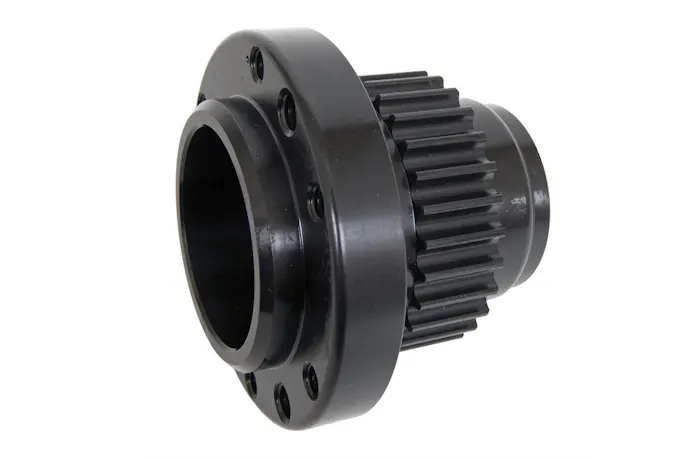
ATI makes a wide range of belt drives, and today we’re looking specifically at their cogged accessory drive version. The HTD is an interlocking tooth-driven cog belt system designed to turn oil, fuel pumps, or other accessories.
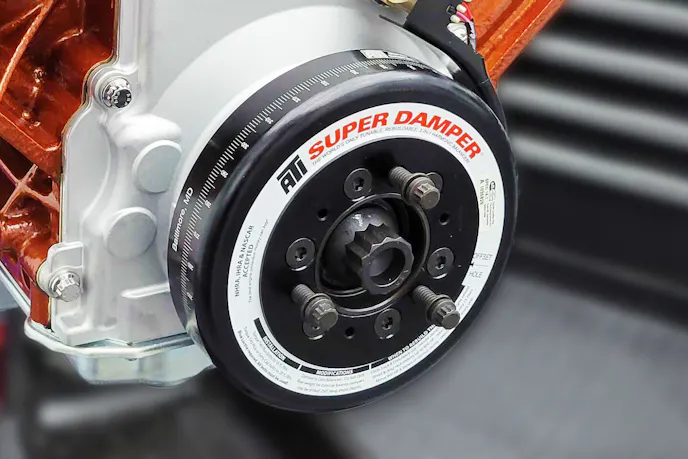
These unique Belt Drive Hubs are designed to work in conjunction with ATI’s Serpentine Series Super Dampers. In plain terms, they let the super damper do double, or even triple duty.
Many of you are probably aware of ATI’s ribbed belt dampers as a game-changer, but adding a cogged drive behind the damper takes things to the next level. This is vital when available real estate is at a minimum.
What They Do
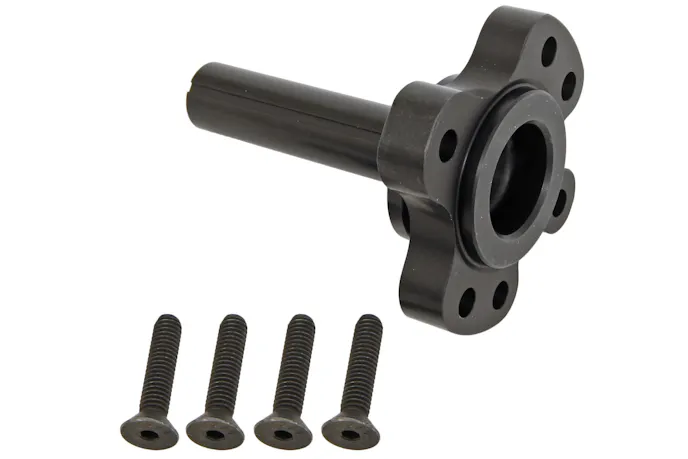
The HTD belt drives a fuel pump or external oil pump from behind the damper. The damper helps suppress crankshaft vibration and drives the engine’s serpentine accessory belt. This leaves the front of the damper open to a separate ignition trigger wheel or other accessories. All while in a compact, high-performance package.
Pros and Cons
This advancement is not 100-percent without fault. Either an aftermarket front, or the ATI rear mount cogged HTD belt systems have similar pros and cons:
As previously mentioned, having an interlocking connection between the belt and pulley eliminates any potential slippage. This is also a reliable way to transfer power in higher torque applications. Another positive attribute for a front-mount system would be the ability to quickly change belts, avoiding tensioning or alignment issues.
The ATI rear mount belt drive offers a compact, close-fitting setup, freeing up much-needed space in tight engine compartments.
On the flip side
Because there is no slip, high shock loads and abrupt deceleration are detrimental, along with the risk of transferred torsional vibrations potentially damaging the belt as well.
Having this direct drive connection and experiencing a sudden shock load opens the door to other issues. A very real risk is to strip the belt cogs, bend the pump mounting brackets, or possibly damage the driven shaft.
They also tend to produce more noise. Now, some people like the whine, some don’t. This is a personal preference, and to each his own!
I would be remiss if I didn’t address one of the more pronounced drawbacks; that would be the price of the entire setup. This is one of those situations that I think we are well aware of before even opening a catalog. Anytime we seek to make changes while looking for more power or better performance and design, just plan on breaking out that checkbook.
Whatever your needs or inspirations are, adding a cogged accessory belt drive system is sure to take your build to the next level!
You might also like
Chevrolet’s Sixth-Generation Small-Block Brings Back The Big Inches
The new lineup of Chevrolet small-block engines revives the 350, 400, and 409 cubic-inch displacements for the sixth generation.