
When we talk about engines here, usually we’re focusing on something that will help make more horsepower. However, Tool Of The Month is usually about looking at the supporting players — parts that make your life easier in the shop, allowing you to more efficiently and effectively build serious powerplants. And this month’s tools — Speedway Motors’ BlockDock tools — are far more helpful and effective than you might think at first glance.
BlockDock Engine Cradle Storage Stand
Once you’ve finished building an engine, it will likely sit for a bit before it heads to its next home, be it the dyno or an engine bay. Letting it sit on an engine stand works, and has, until now, been our way of storing it. However, there are a couple of drawbacks to just leaving the engine on the stand. Number one, it ties up the engine stand. Maybe not the biggest problem for someone with a bunch of space and a bunch of engine stands, but for us, occupying our “good” engine stand means a backup in projects getting done.
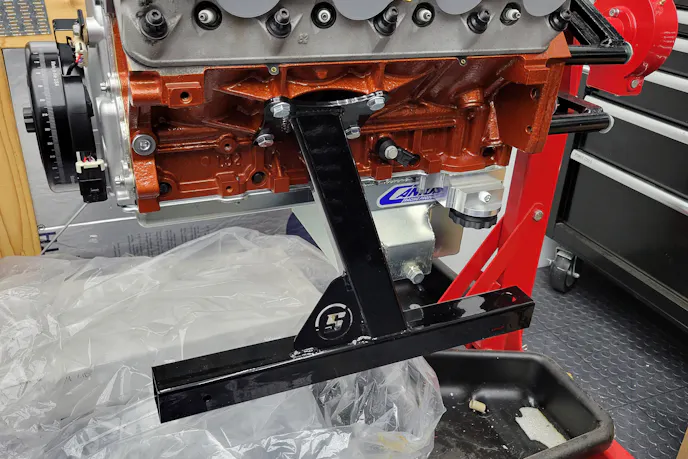
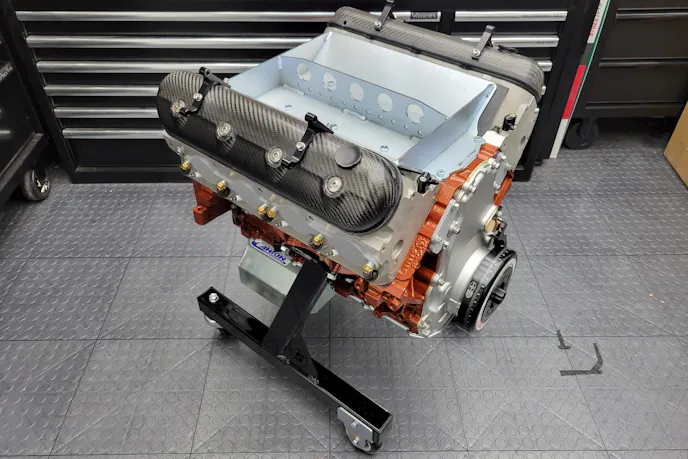
That also brings up point number two: storing an engine on an engine stand takes up a significant amount of floor space. In order to be stable, a full-size engine stand needs to have a wide footprint. Speedway’s BlockDock Engine Cradle Storage stand fixes that by using triangulated feet that mount to the engine mount pads on the block, and extend just far enough to clear the oil pan.
While you might have seen other cradle designs, the individual leg design of the BlockDock is far more convenient than the full cradle designs we’ve used in the past, which can be a pain to line up and get all the bolts into. Additionally, the BlockDock engine stand is made from significantly thicker steel tubing and plates. The tubing is 10-gauge steel, and the mounting plates are a full 1/4-inch thick, making for seriously beefy pieces that will hold a fully-dressed engine with ease. The thick powder coating not only looks good, but also provides heavy-duty protection for the steel.
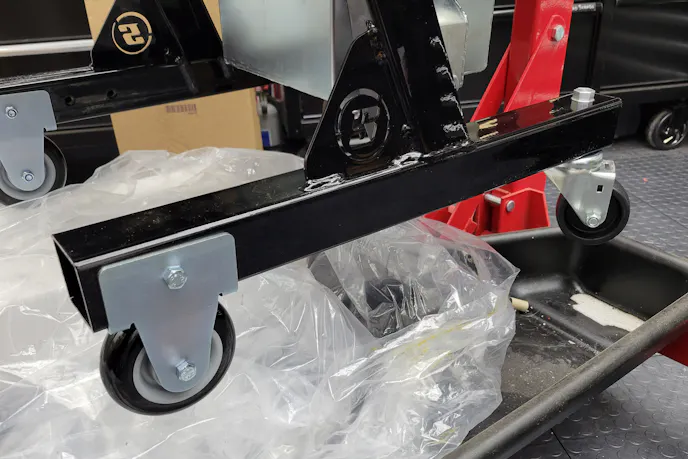
The example we’re using here is for all LS and LT engines (P/N: 91081174): Gen III, IV, or V engines all use the same part number stand, thanks to the dual bolt patterns in the mounting pads. For convenience, the legs have built-in storage for the included motor mount bolts, and come with a full set of casters. The front wheels are fixed, while the rear wheels are full swivel casters to allow easy maneuvering in tight confines. The neat design allows you to roll the engine around the shop as needed, and also easily remove the wheels when you are loading the engine for transport, like into the back of a truck.
BlockDock Valley Cover Engine Lift Plate
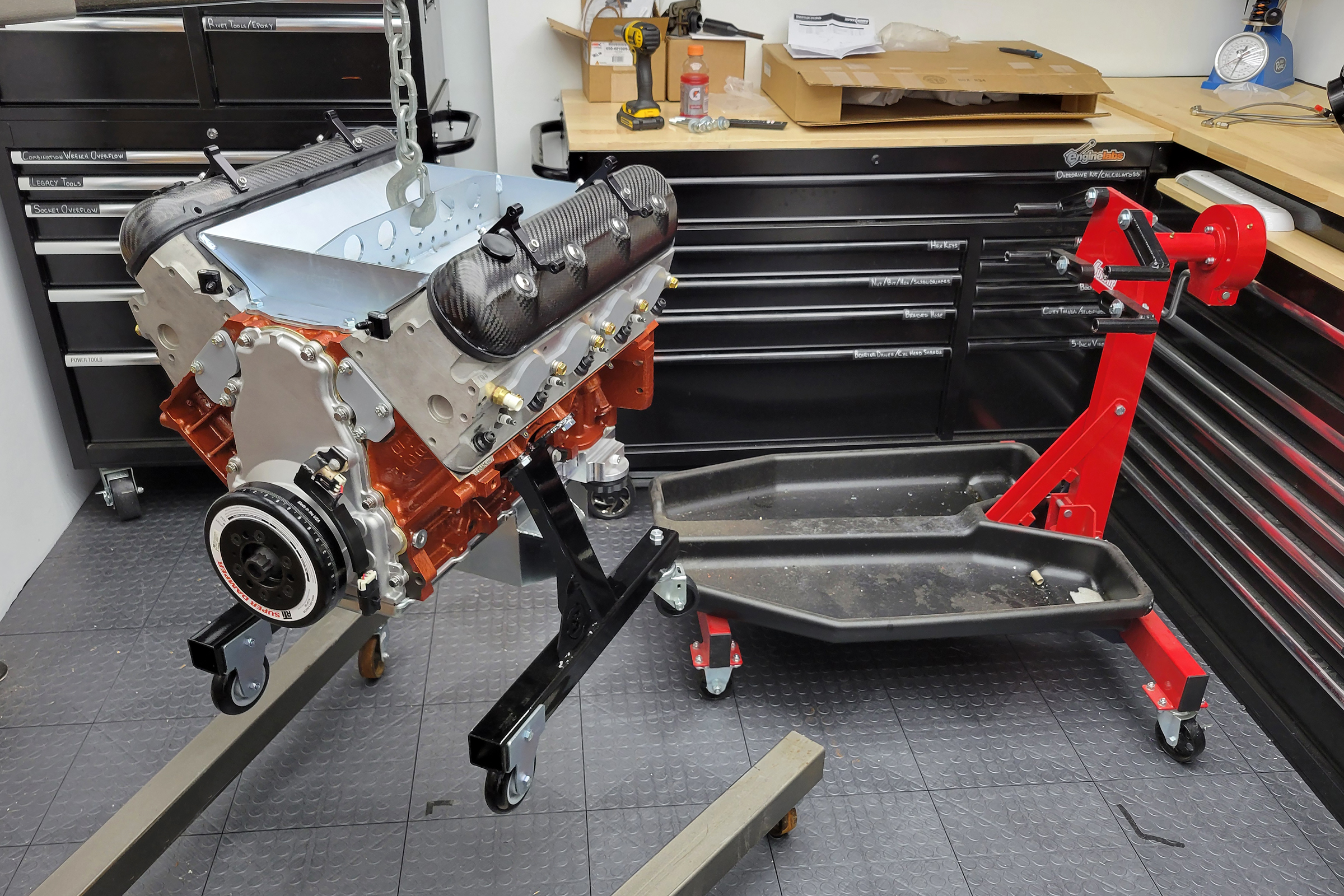
Speaking of loading the engine, that brings us to the second BlockDock engine tool — the valley cover lift plate (P/N: 91089441-GEN4). And before you go, “what’s special about a lift plate,” read on to find out. One of the advantages of the LS engine design is that the valley cover plate design makes for an easy lift point for the engine. Lift plates that bolt into the area aren’t new by any means, but Speedway’s BlockDock valley cover engine lift plates incorporate some very handy features.
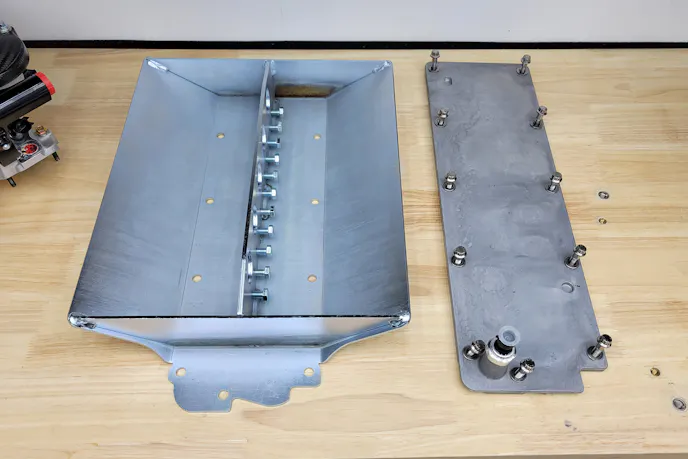
The first, and most obvious feature not usually found on valley cover lift plates, is the integrated port covers. The raised sides of the plate serve two purposes. First, they cover the intake ports, preventing anything from getting into the ports, or even worse, through an open valve into the cylinders themselves. Secondly, the raised walls make for a convenient parts tray for your ratchets, sockets, and any other small parts you might need close at hand while working on the engine. That makes the lift plate ideal for both storage and transportation.
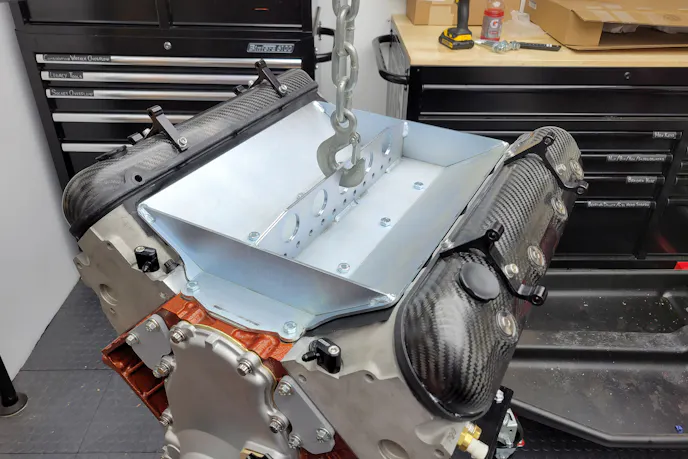
The second interesting feature of the engine valley lift plate is the center rib design. First, and most obviously, is that it has five different holes to run the lift hook through to balance the engine when being lifted. These can be incredibly useful if you are lifting an engine with a power adder or even just with the front drive accessories installed. Additionally, that lift bar has a line of threaded holes at the base to hold the included 8mm plate mounting bolts. So when the plate is on the shelf, you aren’t at risk of losing your bolts like you are with other designs (ask me how I know…).
BlockDock in Use
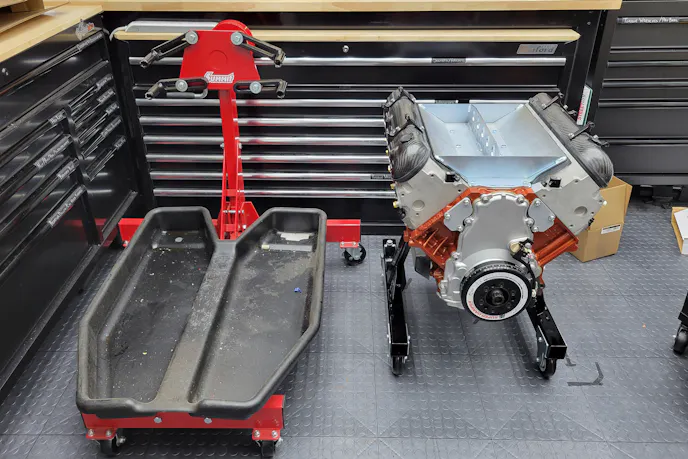
All the coolest specs and features on paper don’t mean much if the parts don’t perform as advertised, and in the case of the BlockDock, the features are as awesome in use as they sound on paper. The beefy 10-gauge steel of the legs and the 1/4-inch flanges are immediately noticeable. Even though we have a bunch of carbon fiber on LS5.0, it’s still an iron block, and the extra sturdiness is an appreciable feature.
They bolt up far easier than the full cradle we have (which now lives up in the rafters), and the wheels are smooth and provide very little rolling resistance, allowing us to scoot it all over the shop way more easily than on an engine stand. And yes, it takes up far less space, too. It’s extremely noticeable in the tight confines of the EngineLabs shop/studio.
As for the valley cover engine lift plate, it works exactly as advertised. It’s a sturdy lift plate, and all of its features work exactly as advertised — especially the parts-tray design, as it has already started to accumulate items stored in the valley cover in the shop.
So, back to that initial question you likely had when you first clicked on this article, “how is this any different?” Well, the Speedway Motors’ BlockDock engine cradle storage stand and BlockDock valley cover engine lift plate both differentiate themselves through thoughtful, functional additional features, noticeable quality, and heavy-duty construction. They are a welcome addition to our shop.
You might also like
Dynoing The EngineLabs Giveaway 632-Cube Big-Block Engine
It's time for the rubber to meet the road for the EngineLabs Giveaway 632 big-block Chevy engine presented by Summit Racing.