
From the research world, to publications, garages, and engine builders everywhere, and many internet corners, our collective conversations are not short on debating motor oil. It could very likely be one of the hottest, most hotly contested — and misunderstood — gearhead subjects around. Yet there are highly qualified professional chemical engineers who truly know how it all works, because they manufacture it for us. One expert and unsung voice of modern oil design is Oliver Kuhn, Deputy Head of LIQUI MOLY’s oil laboratory.

LIQUI MOLY was founded in Germany in 1957 and became a pioneer in developing additives to improve oil performance. As its additives and oils proved themselves time and again over the decades, they grew into an international supplier to the automotive aftermarket, exceeding 4,000 items in around 150 countries today. In addition, they’re a well-known brand chosen for and proven in high-performance racing. Kuhn has been working in the oil industry for decades, handling all technical aspects of oil. His primary responsibilities at LIQUI MOLY include analytics, product development, the approval process, and contact with OEMs.
In this article, we’ll cut through the sludge (pun intended) with Kuhn’s insights and experience. With fundamental knowledge, you’ll be better educated to make informed decisions of what to run through your engine and why.
How Motor Oil Begins: Base stocks.
The American Petroleum Institute (API) groups oils based on their source stock. What we think as conventional motor oil, or API Group I and II, is refined from crude petroleum pumped out of the ground. It contains widely varying lengths of hydrocarbon chains and impurities. During the refining process, it’s distilled and separated to create different base grades. The end result, however, still contains irregularly shaped hydrocarbons. In an engine development sense, various batch-to-batch irregularities mean constant unpredictability, and that poses an engineering and manufacturing reliability challenge.

Enter what’s become known as synthetic oils, or API Groups III, IV, and V. Instead of conventional crude petroleum refinement methods, many synthetic oils on store shelves start at Group III, which involves an intense hydroprocessing technique to remove impurities and reform the hydrocarbons into more uniform structures. Truer synthetic API Group IV oil is built up from olefin monomers to create uniform hydrocarbon chains. Last, API Group V base oil uses other chemical variants to create specialized lubricant performance. By chemically engineering the structure of the hydrocarbon chain, developers can introduce consistent, measured results and deliver repeatable, higher quality.
We see the benefits of running synthetic oil every day now, in longer intervals between oil changes and longer engine life. Synthetic oil’s structural uniformity does a superior job because it handles cold-weather start-ups, thermal stability, and oxidative decay much better. As Kuhn purely states, “synthetic oil is tailor-made for today’s requirements.”

How Motor Oil Advances: Base Stock + Additives
There’s far more to it than just base stock, though. A bottle of motor oil, either conventional or synthetic, contains only approximately 75- to 85-percent base oil stock. The remaining volume is an additive package. It is the additive package chemically blended in that gives oil its added performance boost. According to Kuhn, “The additive packages contained in oil play a crucial role. While the base oil used to be the most important performance component in motor oil, today it is the additive package. These additives are what provide cleaning, corrosion protection, cooling, and lubrication. The actual oil often merely serves as the carrier fluid for the additive packages.”
Why Synthetic Oil Has Become The Standard
Holistically, modern combustion engines over the past 25 years have become smaller, hotter, with higher cylinder pressure, and require cleaner operation. With synthetic oil providing a durable, reliable base, and additives packing the performance boost, the combination has largely become standard. “Synthetic oil is a must for all modern engines,” Kuhn remarks. “That’s because synthetic oil can fulfill the requirements of the engines. Today, virtually all oils use individual additive packages as part of their formulation because these mixtures of various chemical substances can affect the properties of the oil. For an oil to receive official manufacturer approval, a high-quality additive package must be used that is tailored to the required oil specification. That’s only possible with synthetic oils.”

Myth Buster: Can Conventional and Synthetic Oils Mix?
If the additive package has become the key ingredient, can conventional and synthetic oil be mixed? The myth says no, they can’t, and Kuhn dispels that. Recall, the main difference between the two stocks is the uniformity of the hydrocarbon chains. As Kuhn states, “You can, in fact, mix synthetic and conventional oil, or substitute conventional for synthetic oil, depending on the viscosity and specifications, of course. Today, synthetic oil is always the better choice for vehicles not older than roughly 25 years.”
Which Oil Is Best For My Application?
As with any lubrication discussion, individual engine design, operating conditions, and manufacturer specifications ultimately outweigh anecdotal experience or one-size-fits-all conclusions. That distinction and direct experience lead us to why LIQUI MOLY offers application-specific motor oils. What’s ideal for a modern engine may not be what’s best in a classic. In fact, as Kuhn emphasizes, “Classic cars usually don’t tolerate modern additives.” He continues to say, “Every application has its own specific requirements resulting in the need for a specific oil to guarantee full functionality of the vehicle.”
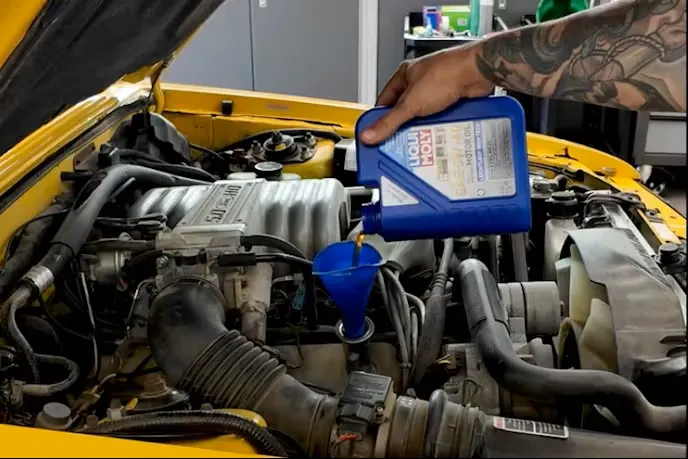
To provide the best for consumers, LIQUI MOLY offers specific oils for modern cars, classic cars, trucks, motorbikes, and boats. The base oil being used may be nearly the same, but the additive packages being used result in different blends based on needs. “Looking at the different engines, every one of them has its specific requirements. For example, regarding performance or corrosion protection. Motorbikes are usually not ridden over long distances, unlike cars. Furthermore, motorbikes with a wet clutch require oil to lubricate the transmission. Boat engines need water-and saltwater-resistant oil. That’s why we offer different oils for different applications.”


The Oil Recommendation You Should Follow
Choosing the proper synthetic oil now depends much more on the application you’re running. LIQUI MOLY comes to this conclusion through close connections to OEMs. “Development of new oils, no matter for which application, is done primarily by the vehicle manufacturer and the additive industry rather than by the oil producers themselves. They follow their usual rules, based on the general oil classifications done by organizations like the API and Japanese Automotive Standards Organization (JASO) for example.”
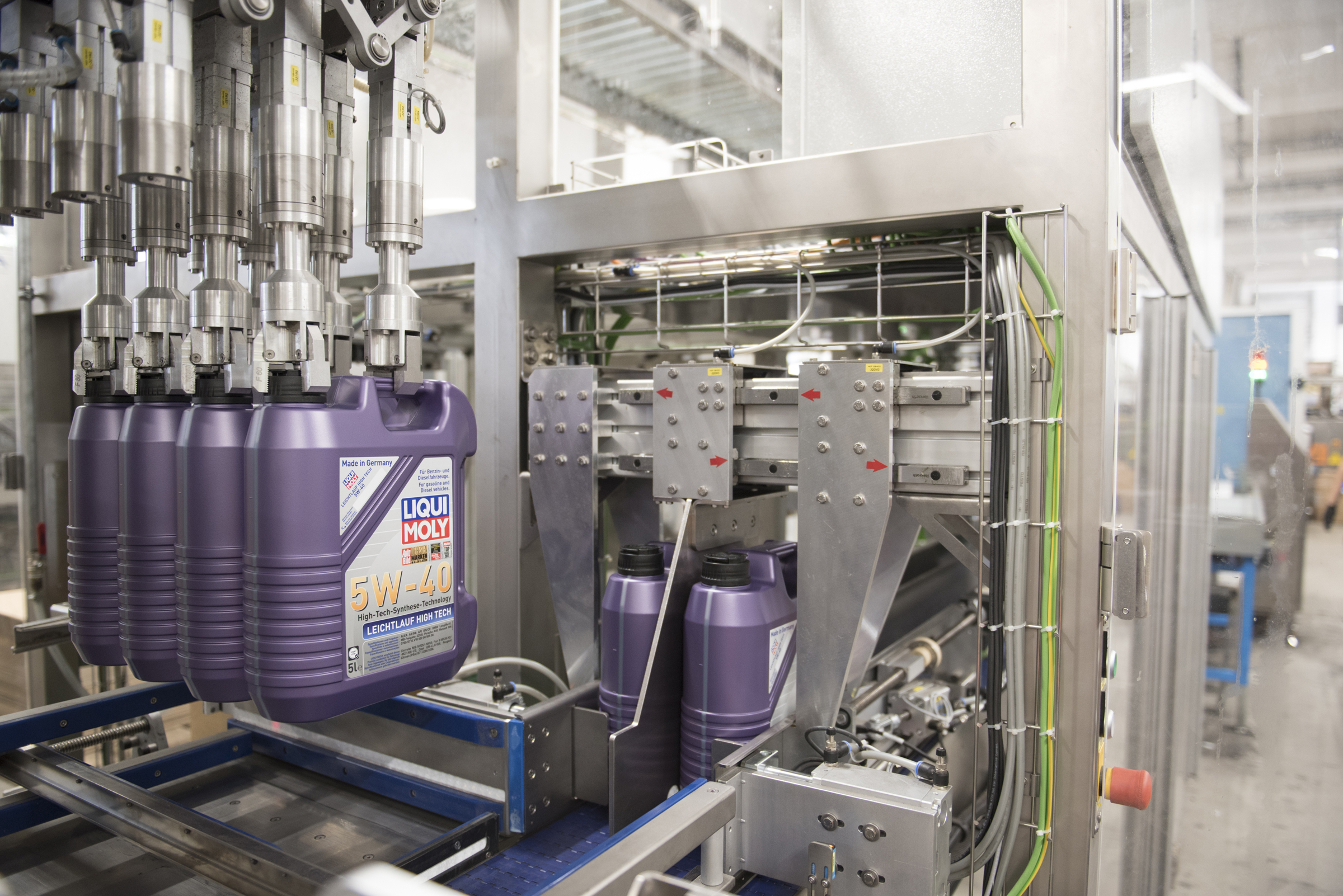
In terms of a supplier, Kuhn says, “Quality awards for us are receiving OEM approvals for our products, such as BMW Longlife-17 FE+ or VW 51100.” Both speak volumes of LIQUI MOLY’s production quality when put through the severities of OEM requirements and testing.
When selecting a motor oil, Kuhn concludes, “the decisive factors are the quality and the manufacturers’ approvals, not the viscosity.” This information can be found in the vehicle’s owner’s manual and on the oil canister label. In addition, LIQUI MOLY provides an online oil guide to choose the right product. “Users simply have to type in make/model/year, and they will find the right motor oil, as well as other suitable lubricants or operating fluids.”
In conclusion, oil simply isn’t universal anymore. The application requirements vary too much, and within them, the expectations run too deep. Over the past 25 years, synthetic oil has surpassed conventional. Additive packages have become the differentiator. Specific blends are needed, and often required, by the manufacturer to meet consumer and regulatory demands. The long-held debates are settling from achieving consensus to recognizing individual market and application needs. LIQUI MOLY’s approach reflects where the industry is headed.
You might also like
L8T vs. Godzilla Clash In Horsepower Wars Season 5
The new Horsepower Wars Season 5 lineup features a brutal naturally aspirated battle between the Chevy L8T and Ford Godzilla.